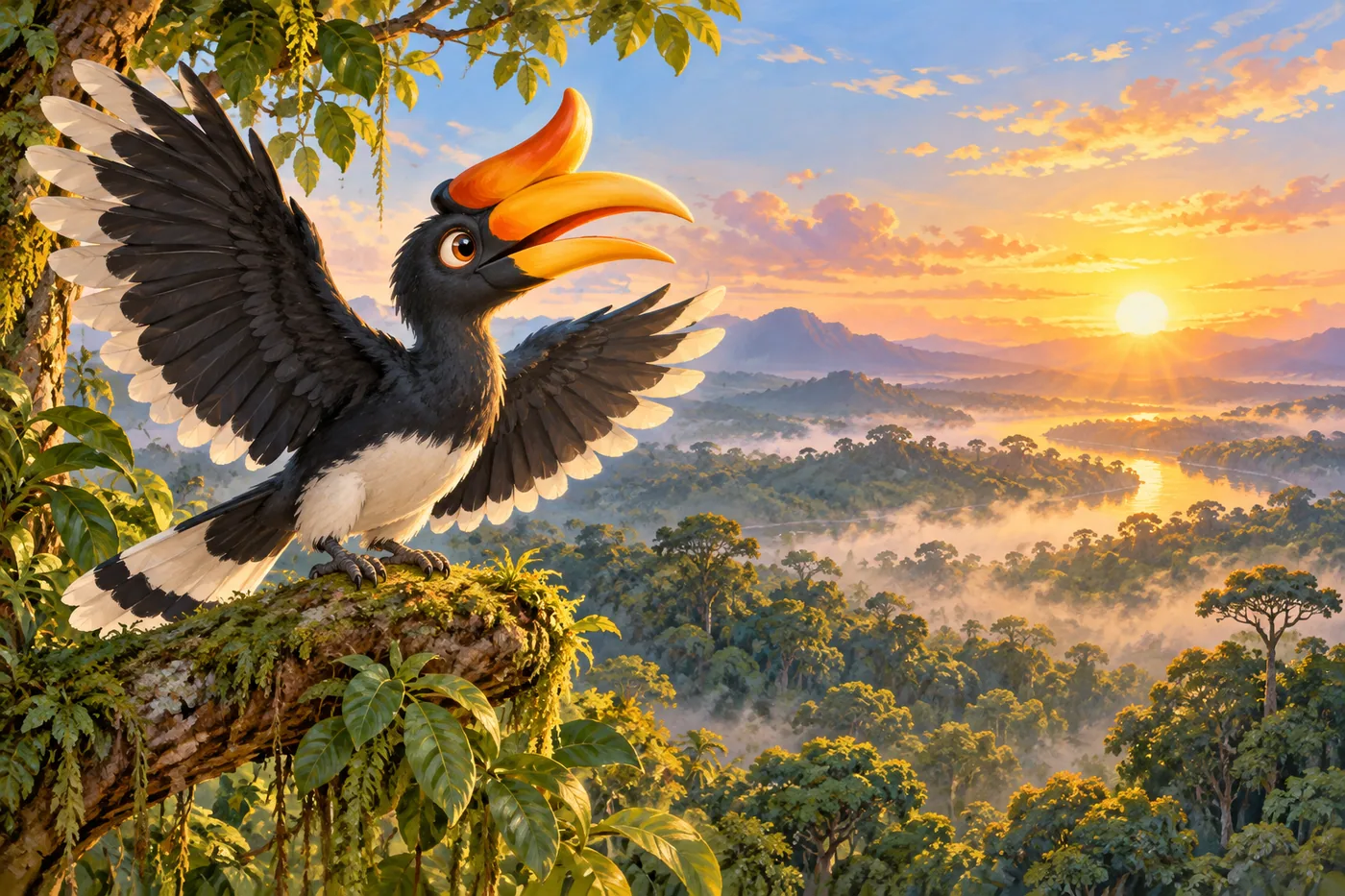
Raka and Biji Exploring the Forest
Follow the rhinoceros hornbill through the canopy, searching for fruit, and helping the forest grow new trees
Ages 6–10 years · 7 min · 25 scenes
Morning above the header
Morning illuminates the forest canopy of Kalimantan. Raka, a young rhinoceros hornbill, opens his wings and greets the wind from a high branch.
Special beak
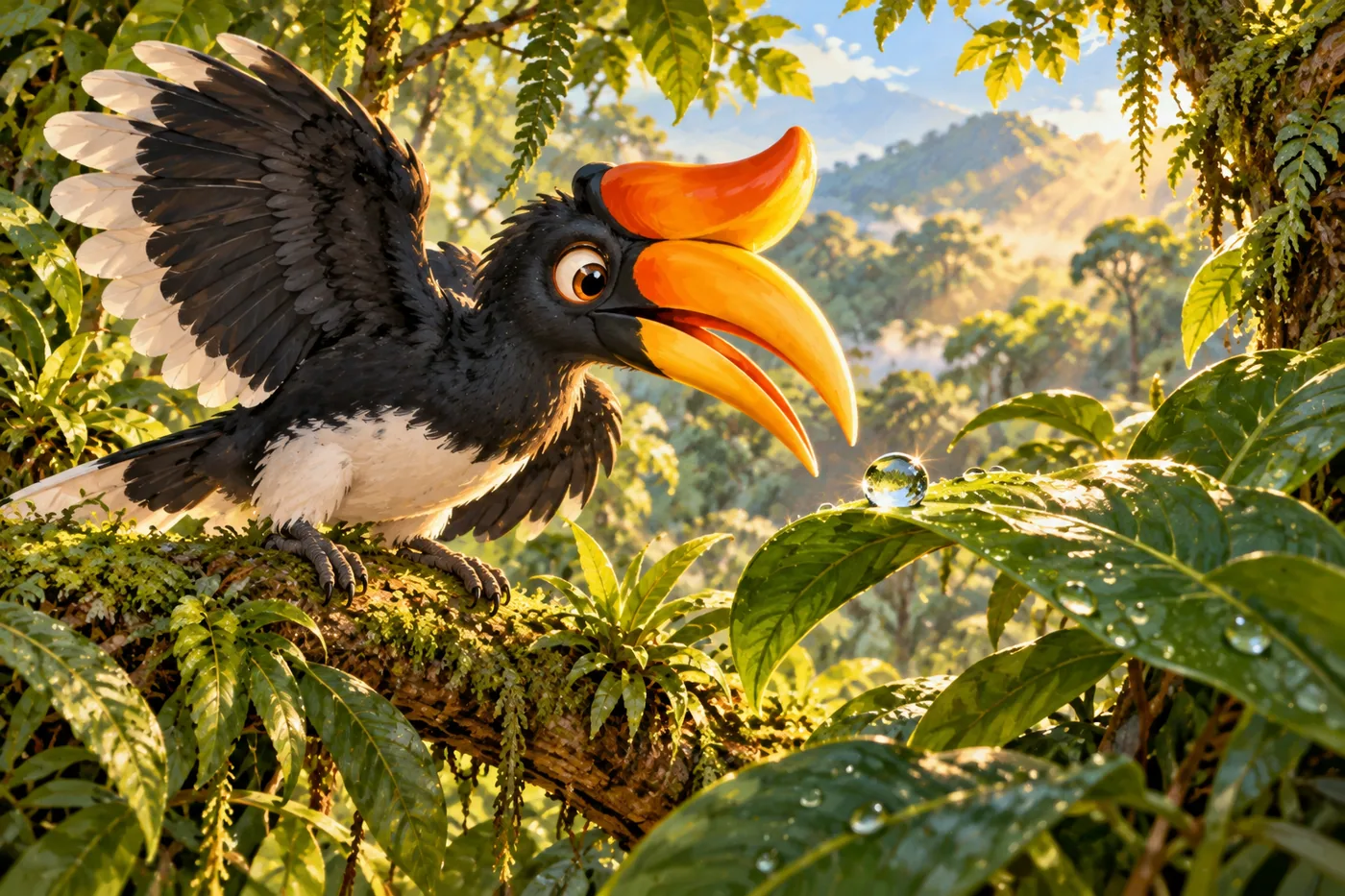
Above its beak an orange-yellow horn grows. The shape looks sturdy, but the inside is light.
A call from a distance
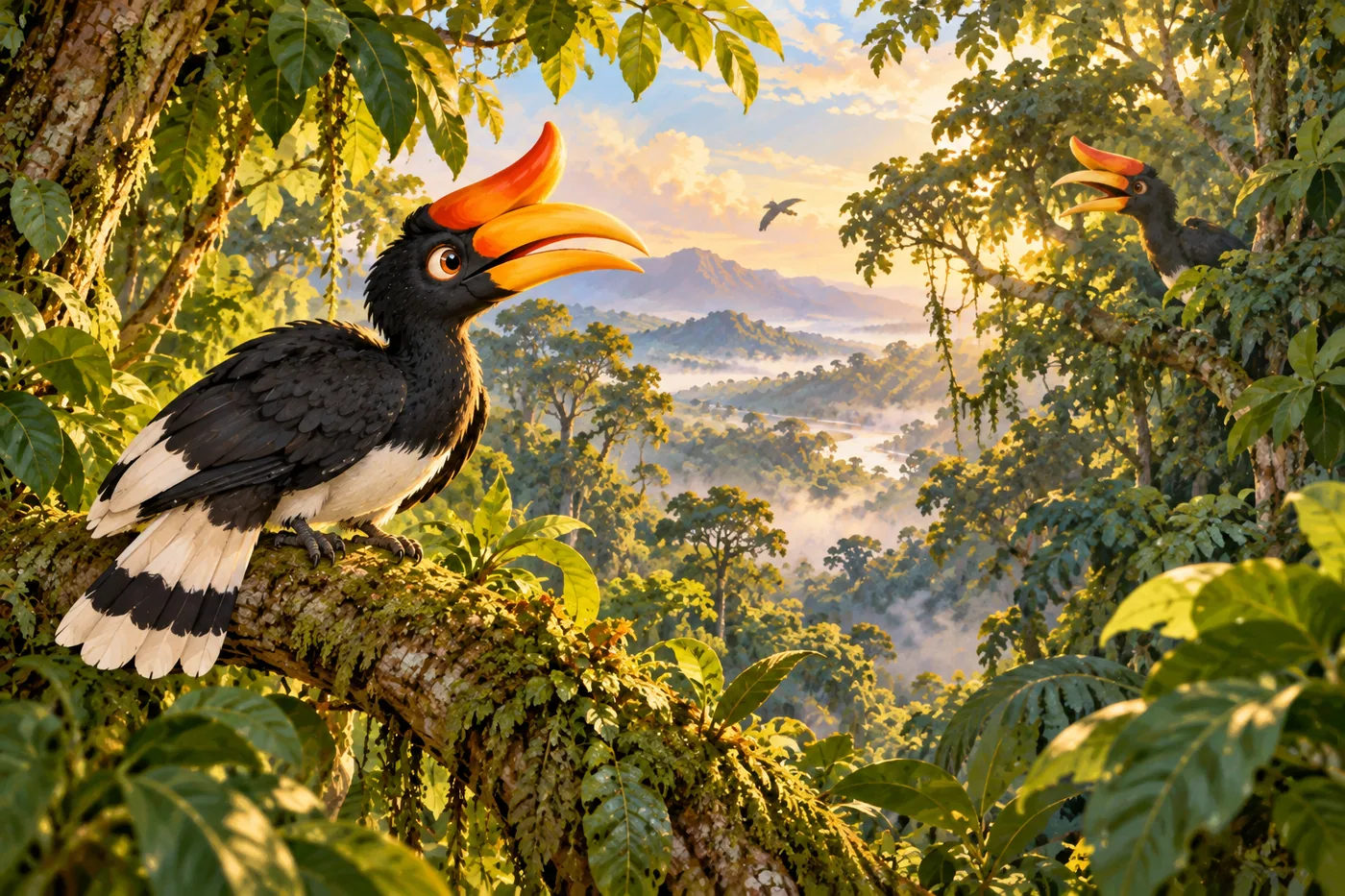
There was a call from behind the trees. Raka stopped for a moment, then replied to let her know that he was there.
Fly between the trees
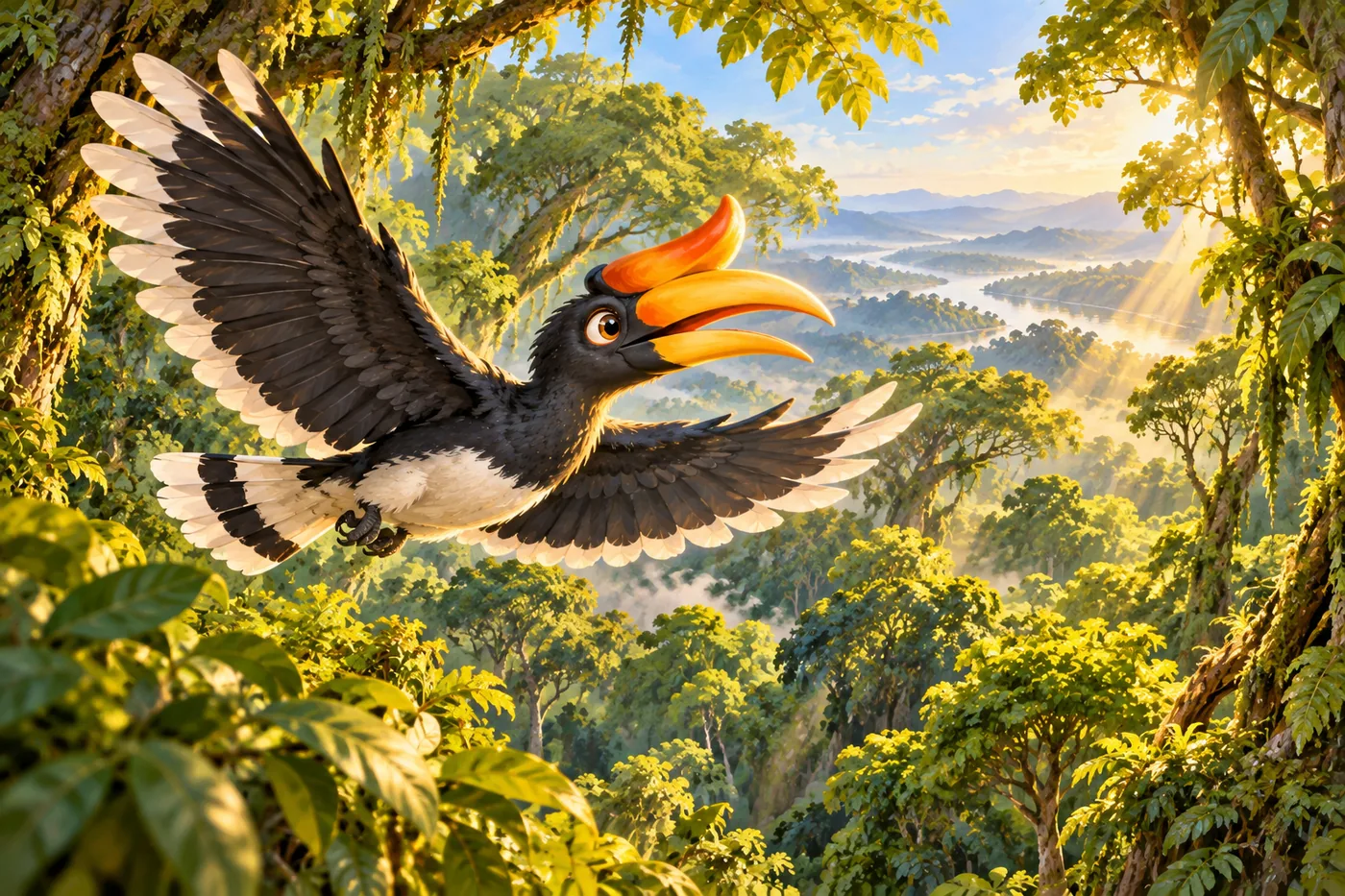
Raka flapped his wings wide, gliding from one canopy to another. From above, he looked for trees that were bearing fruit.
Red berries on the branches
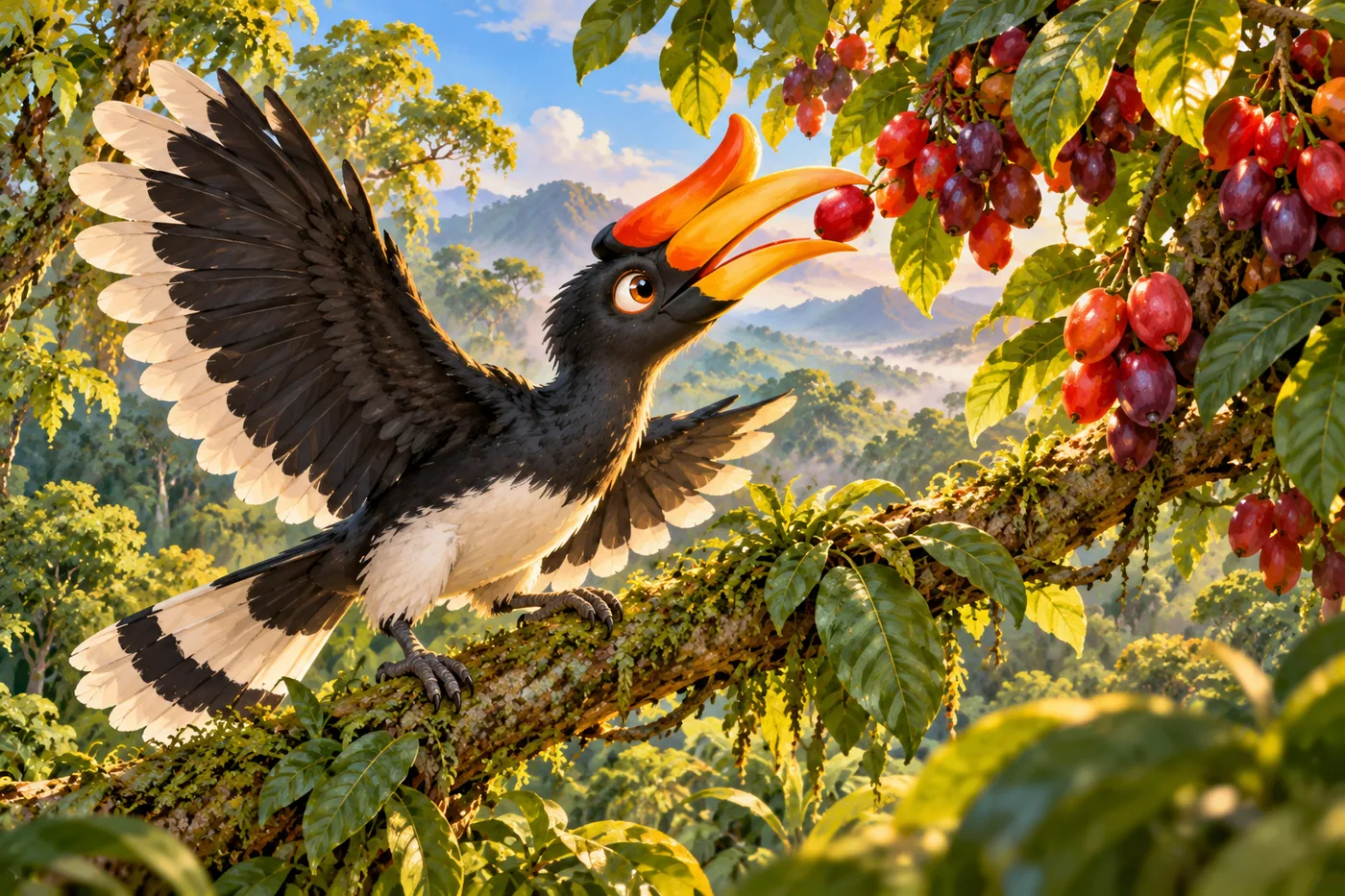
Aha, ripe fruit hanging from the branches. Raka chose one with his beak, then swallowed it carefully.
Diverse jungle menu
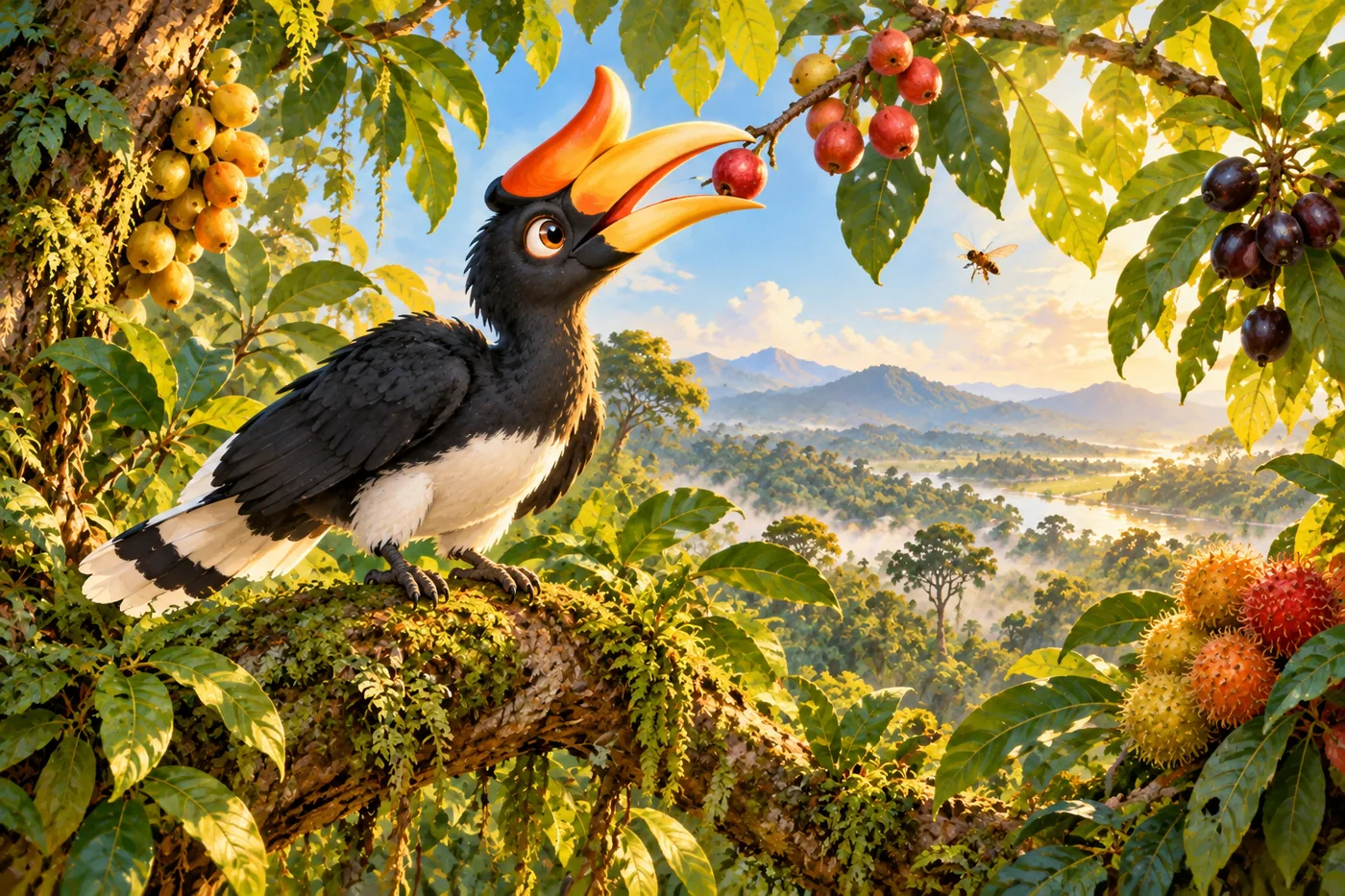
Fruit is an important food for Raka. Sometimes hornbills also eat small insects or other tiny animals.
The journey brings seeds
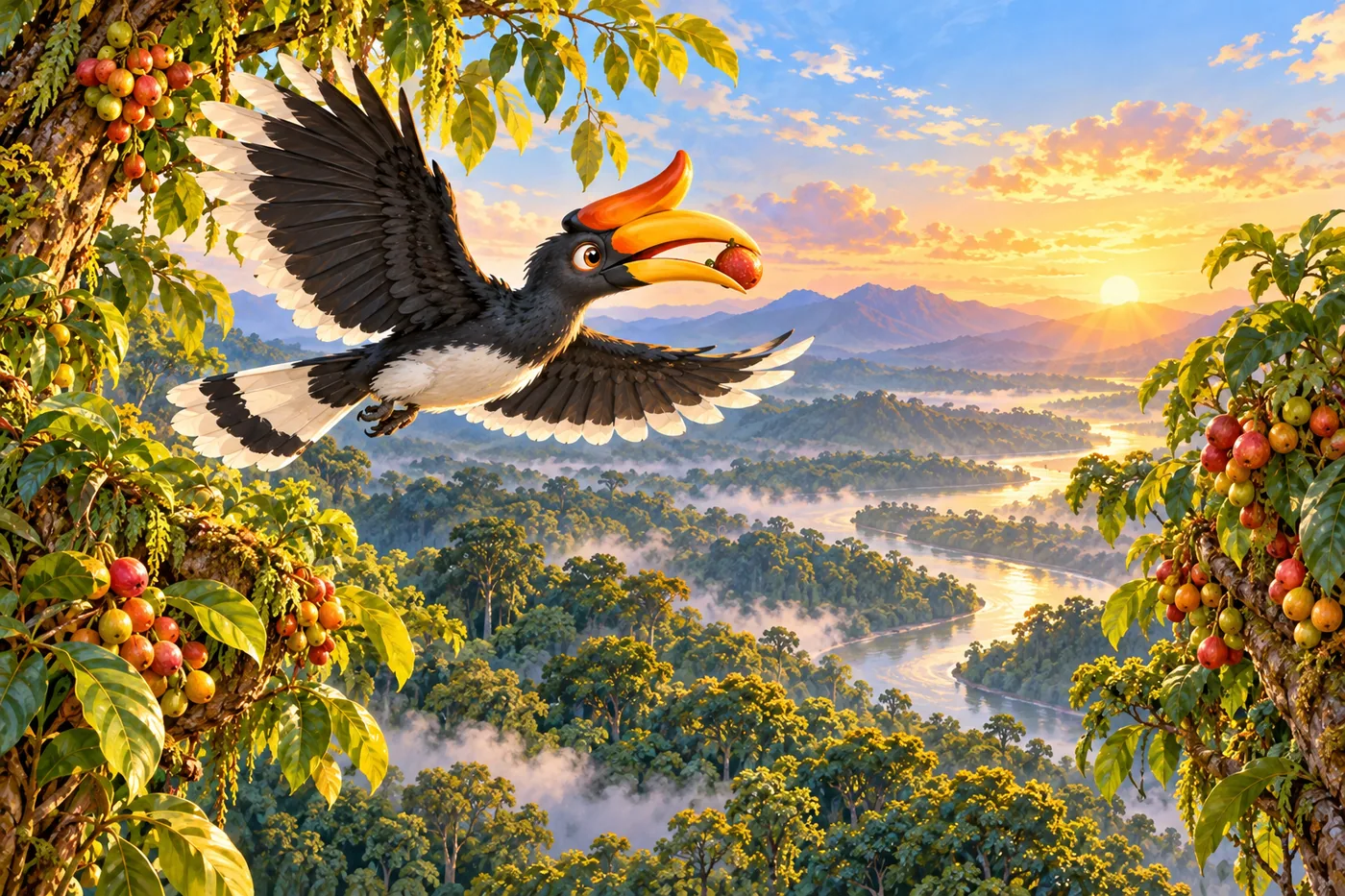
After he was full, Raka flew quite far. The seeds from the fruit he eats travel through the forest.
A new place
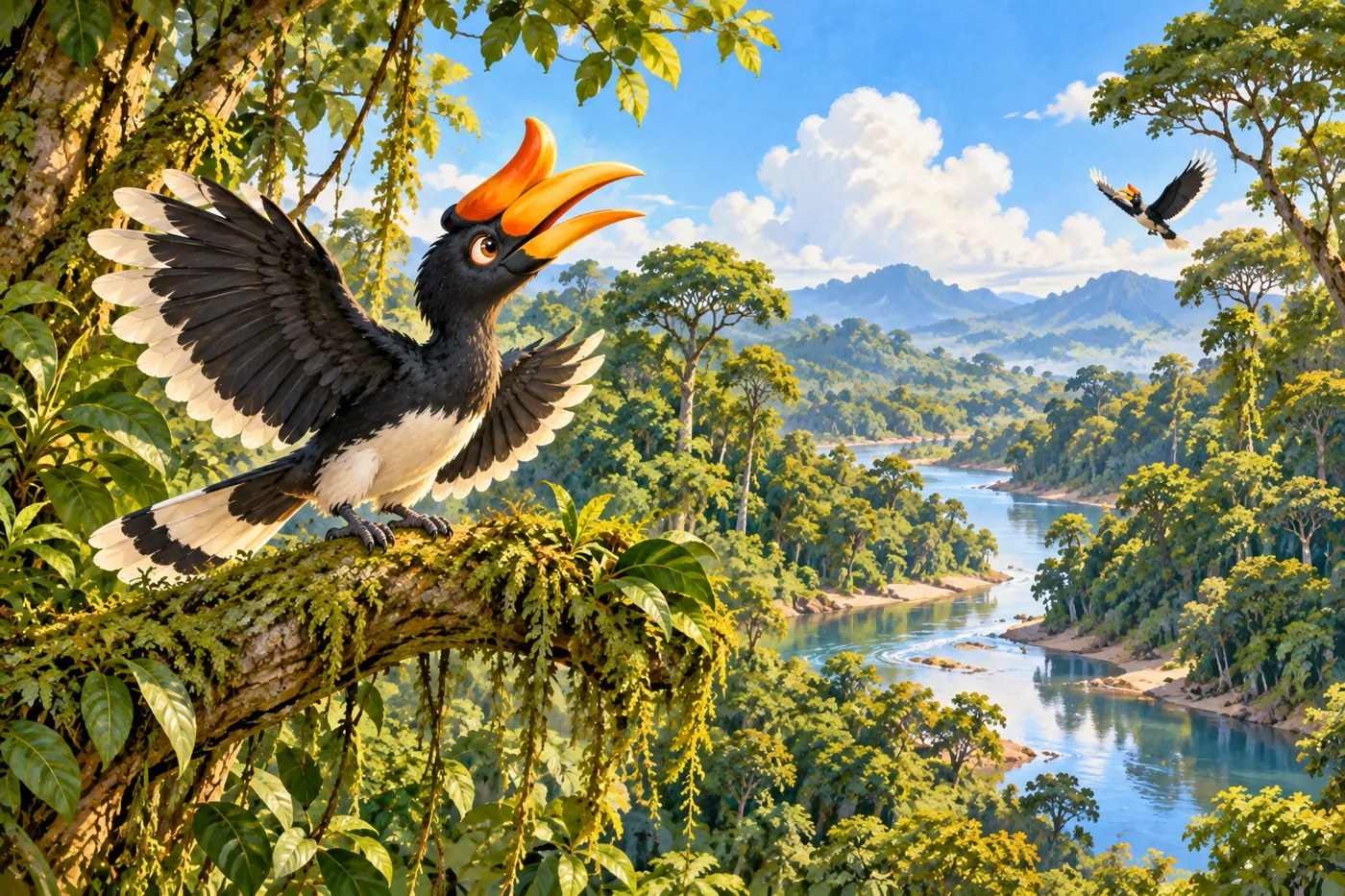
On another tree, Raka perched to rest. He called his friend who was looking for fruit near the river.
Seeds fall to the ground
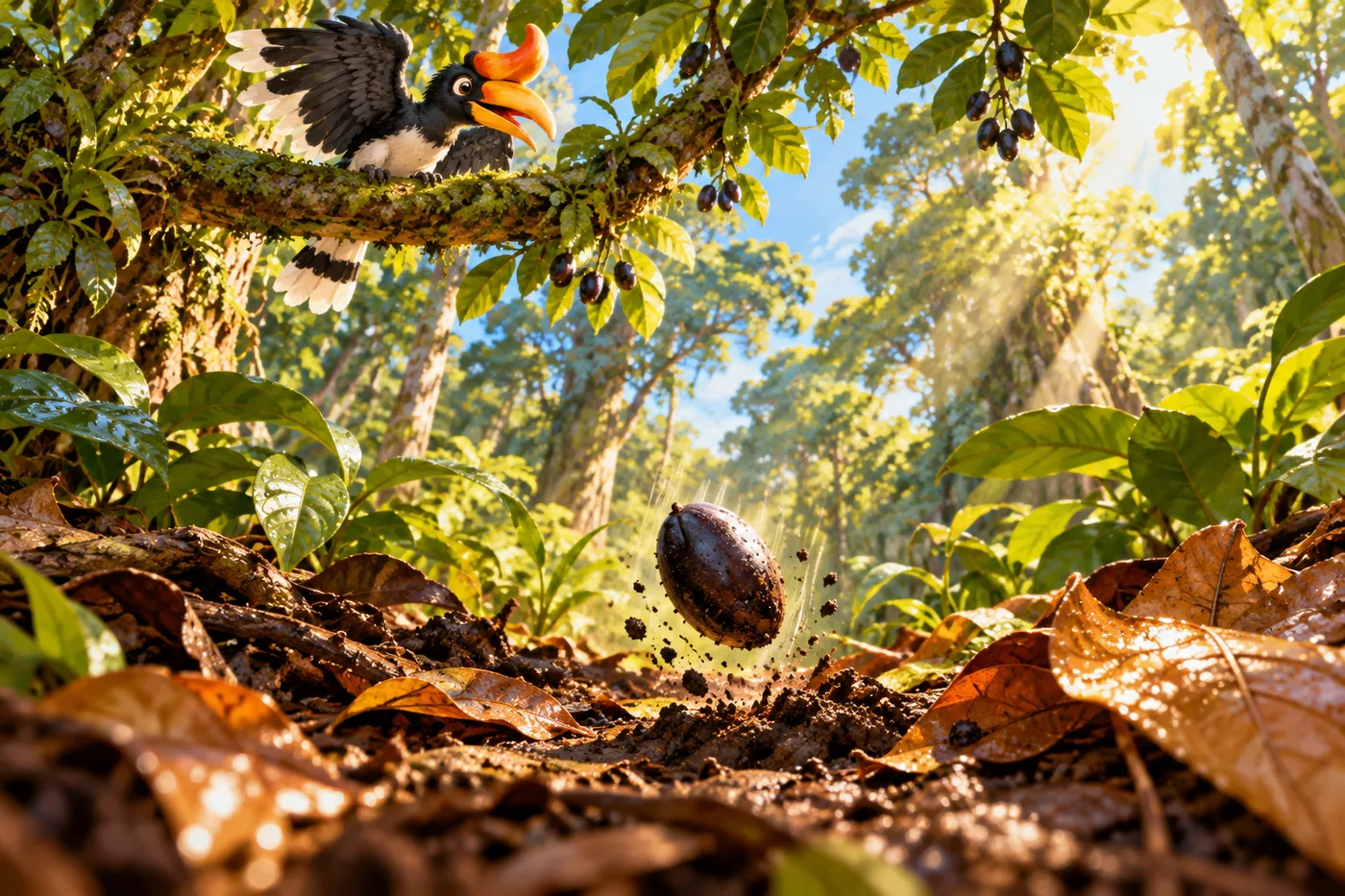
Under the tree, an acorn fell to the damp earth. Rain and time help the seeds start to grow.
Tiny shoots
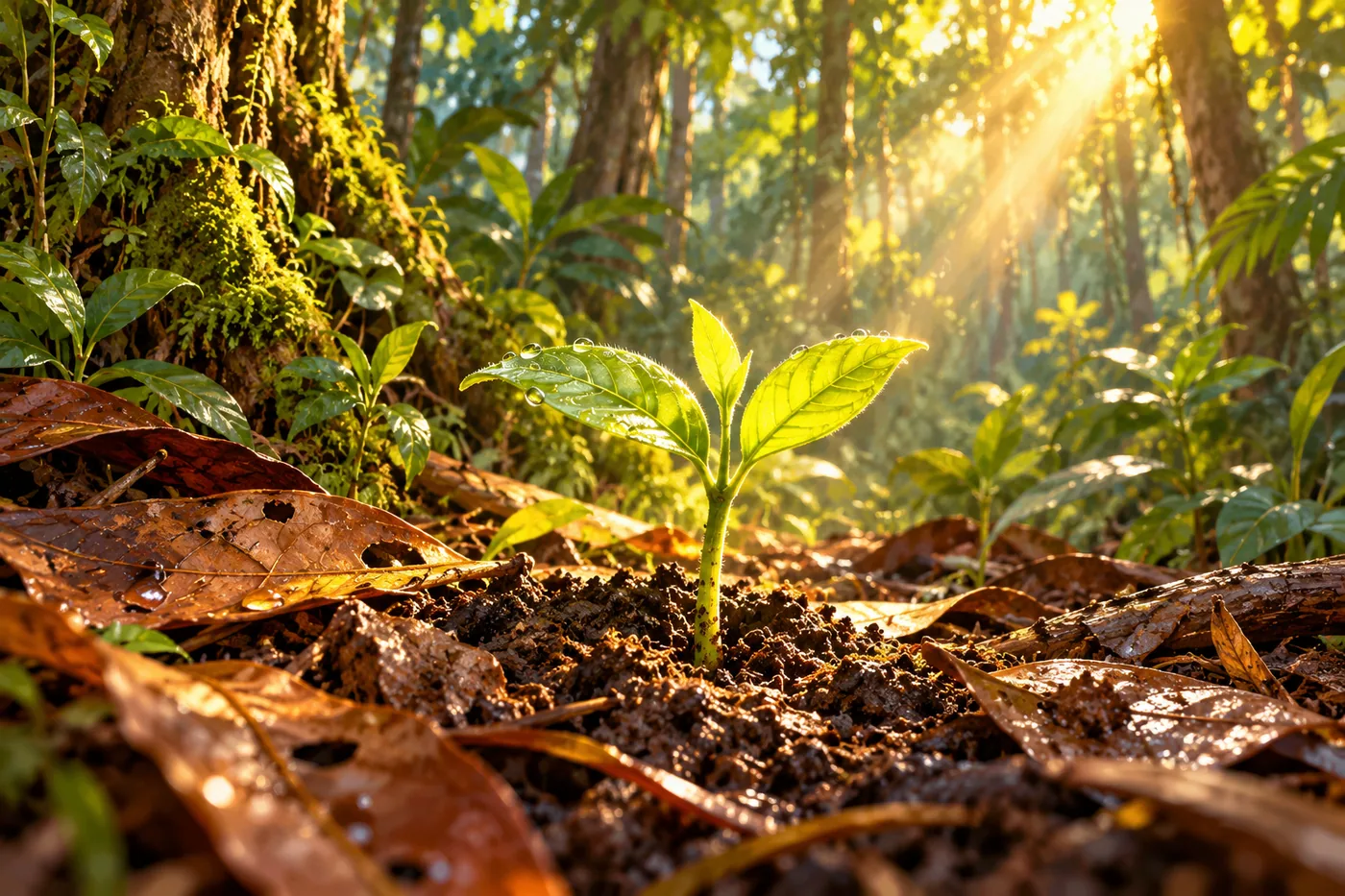
Day by day, tiny shoots appeared. It looks for light among the dry leaves and spreading roots.
Safe branches
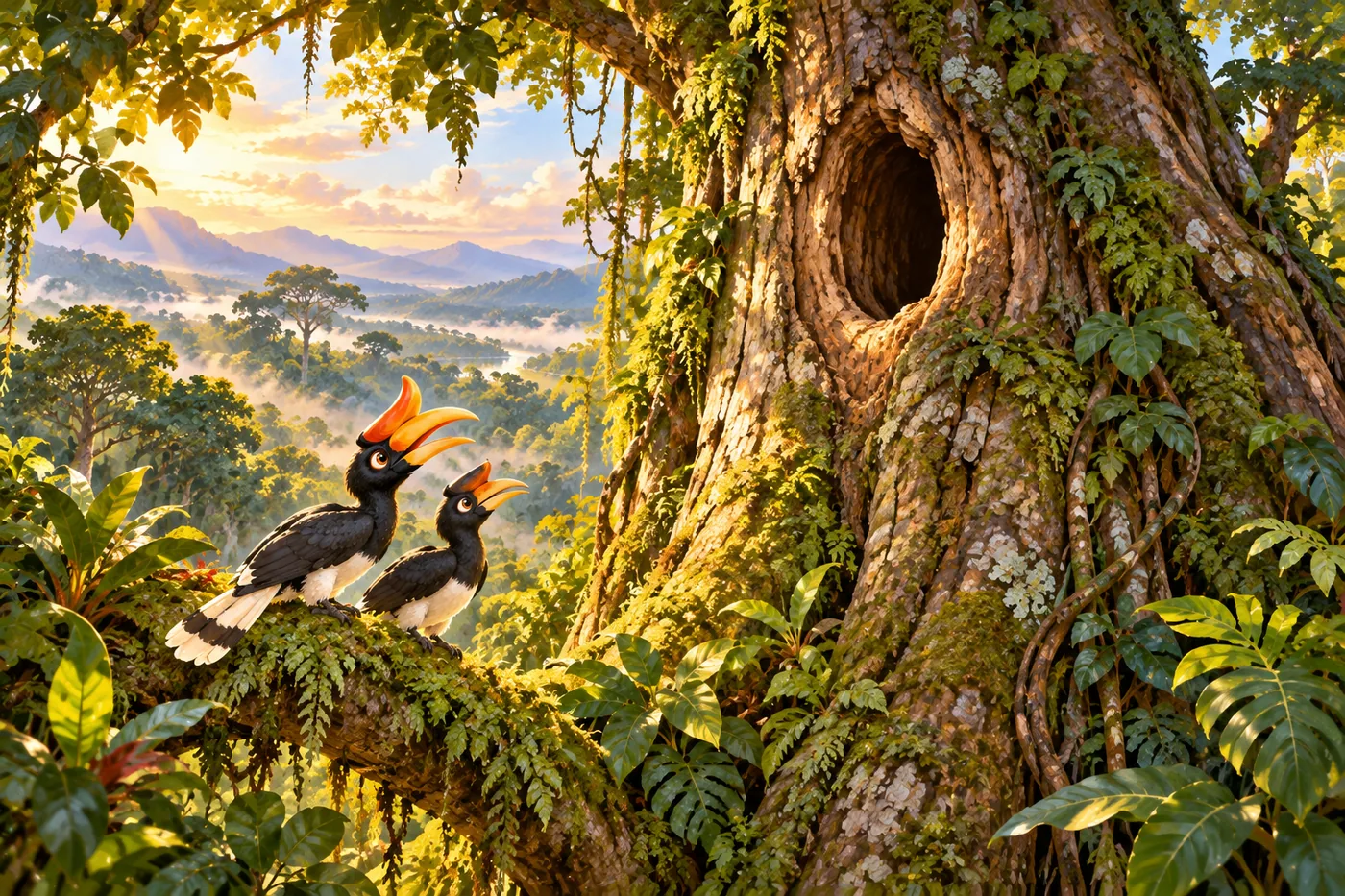
Raka and his partner looked for a large, hollow tree. They need a safe place to raise their children.
House in the trunk
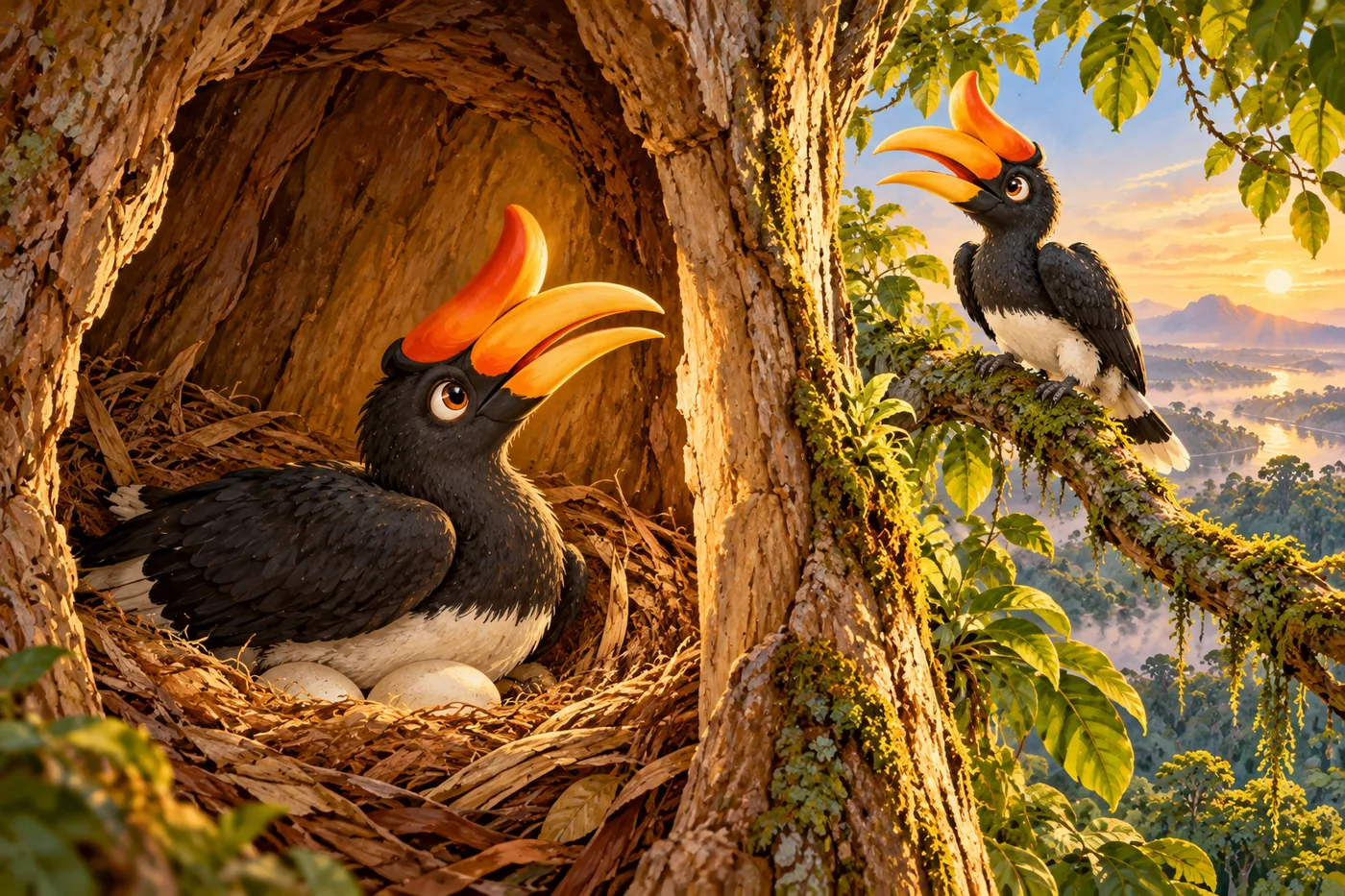
The female hornbill enters the tree hole. It will stay inside during the nesting period, protected by strong stems.
The nest door is closed
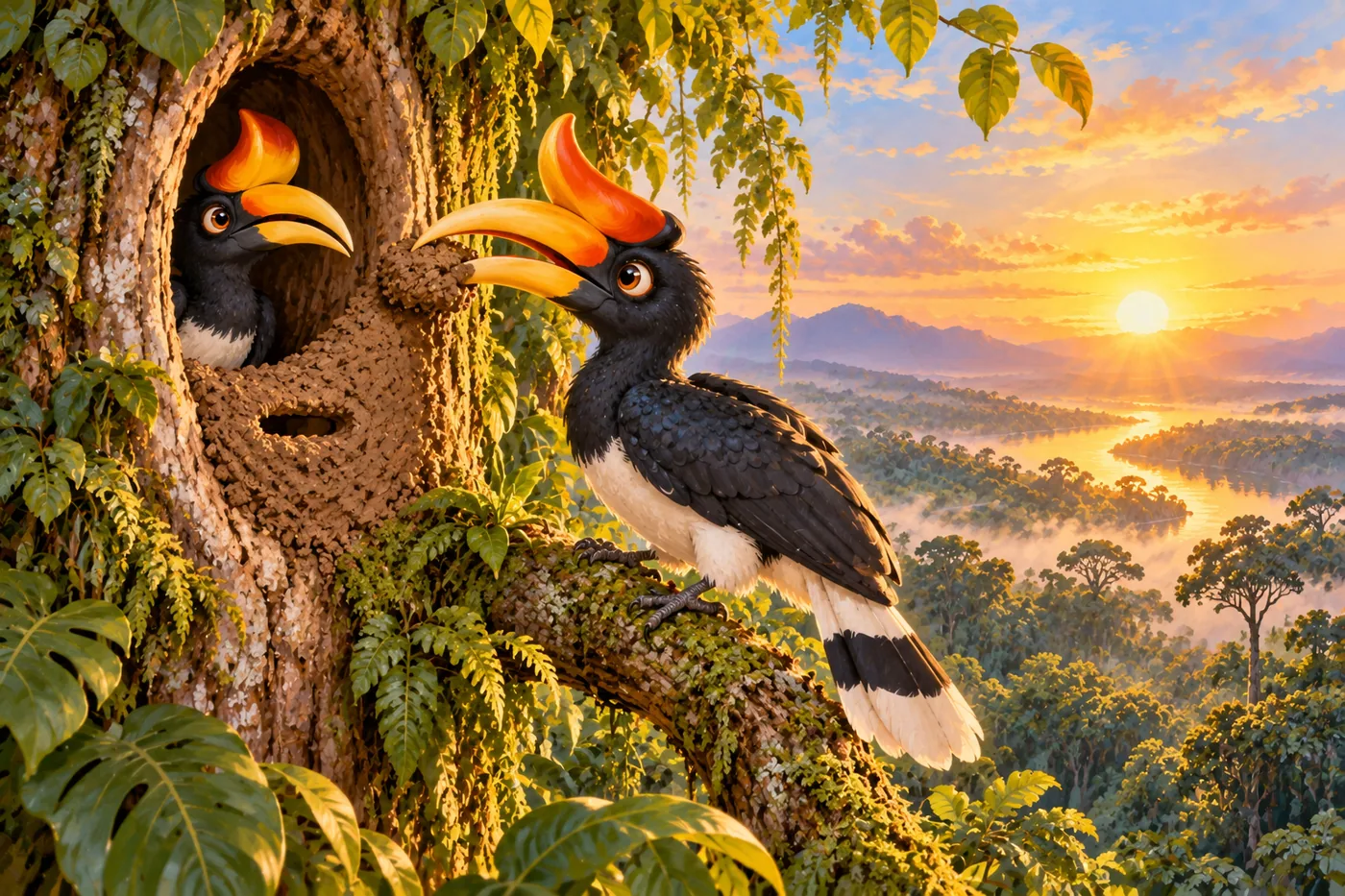
His partner helped fill part of the hole with a mixture of mud and natural materials. A small gap remains to receive food.
The nest guard calls
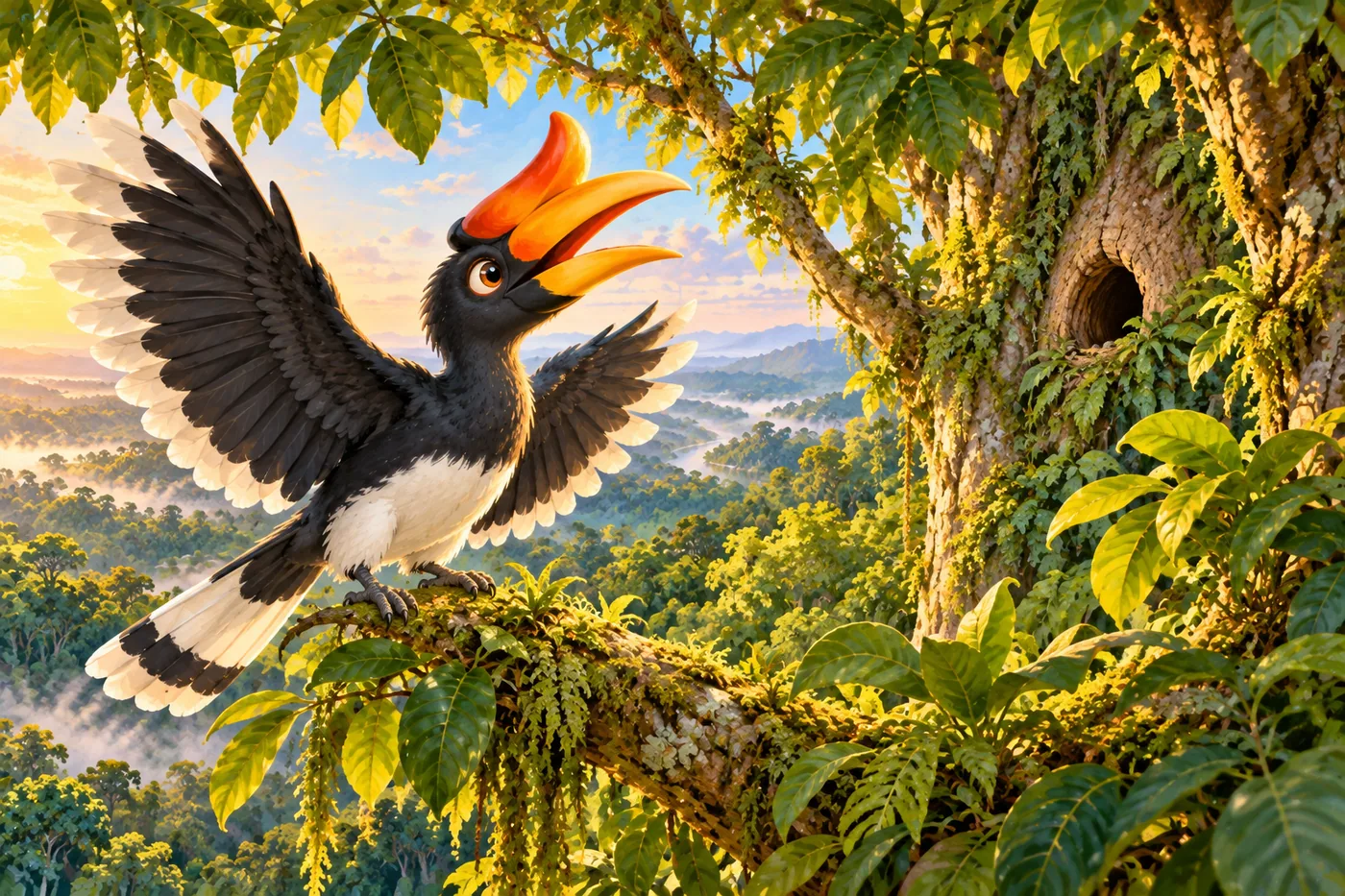
Raka stands guard on a branch near the nest. He vocalizes when his partner needs to know that he has returned with food.
Fruit for the family
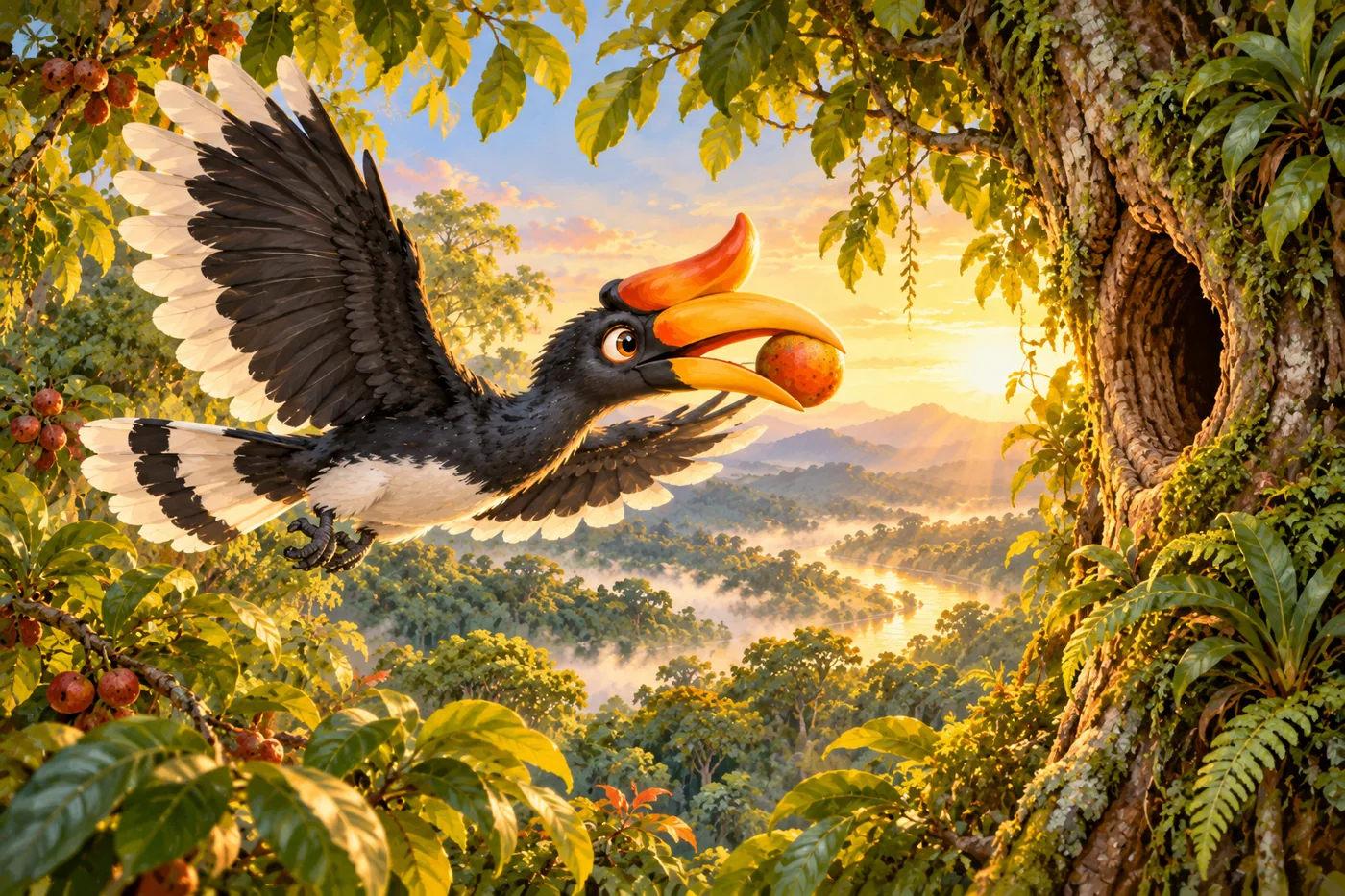
Raka went back and forth bringing fruit for his family. The surrounding trees provide food and shelter.
Hornbill baby peeking
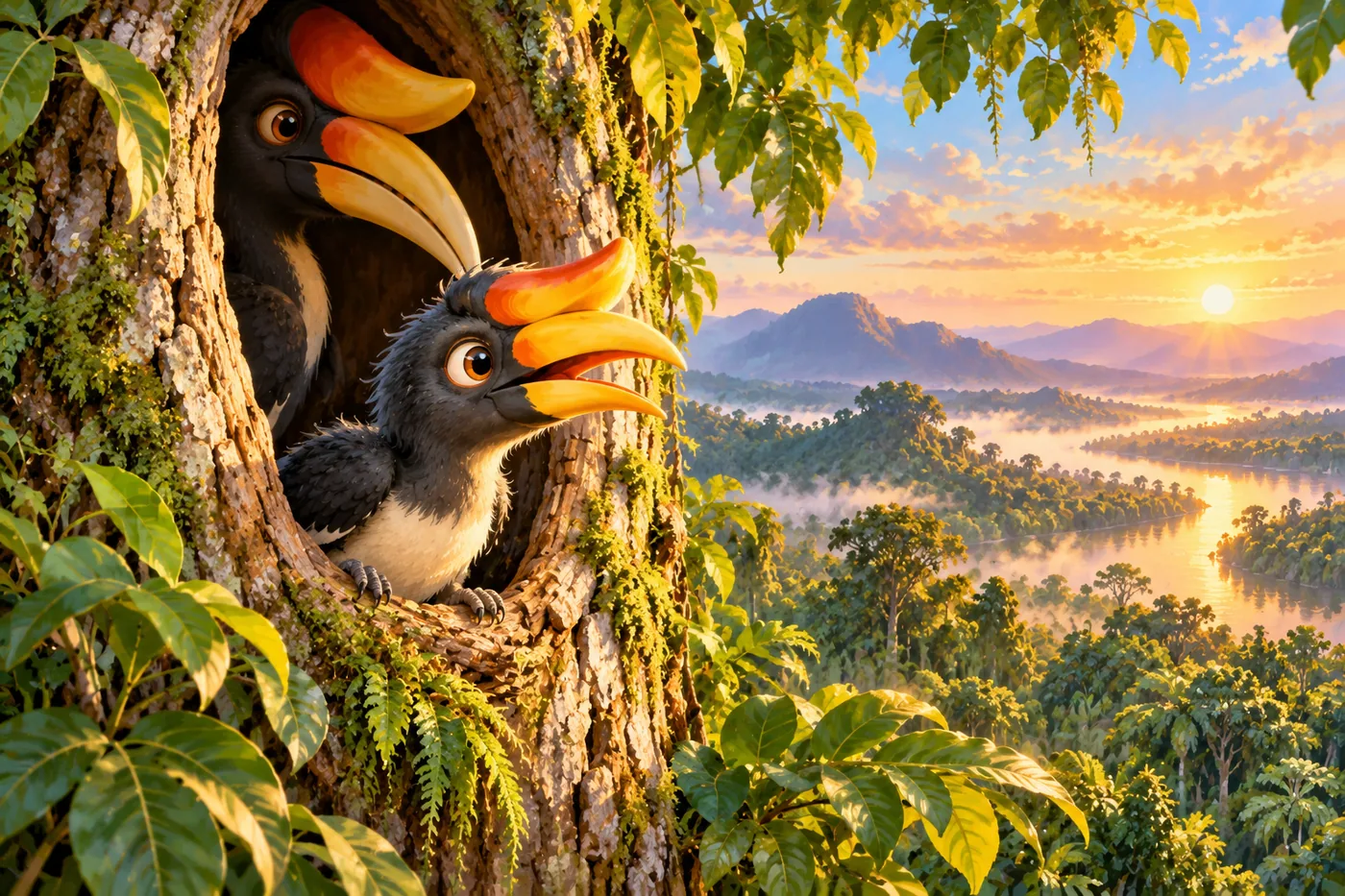
Some time later, a baby hornbill peeked through the gap. The quiet forest became his first home.
A small voice answered
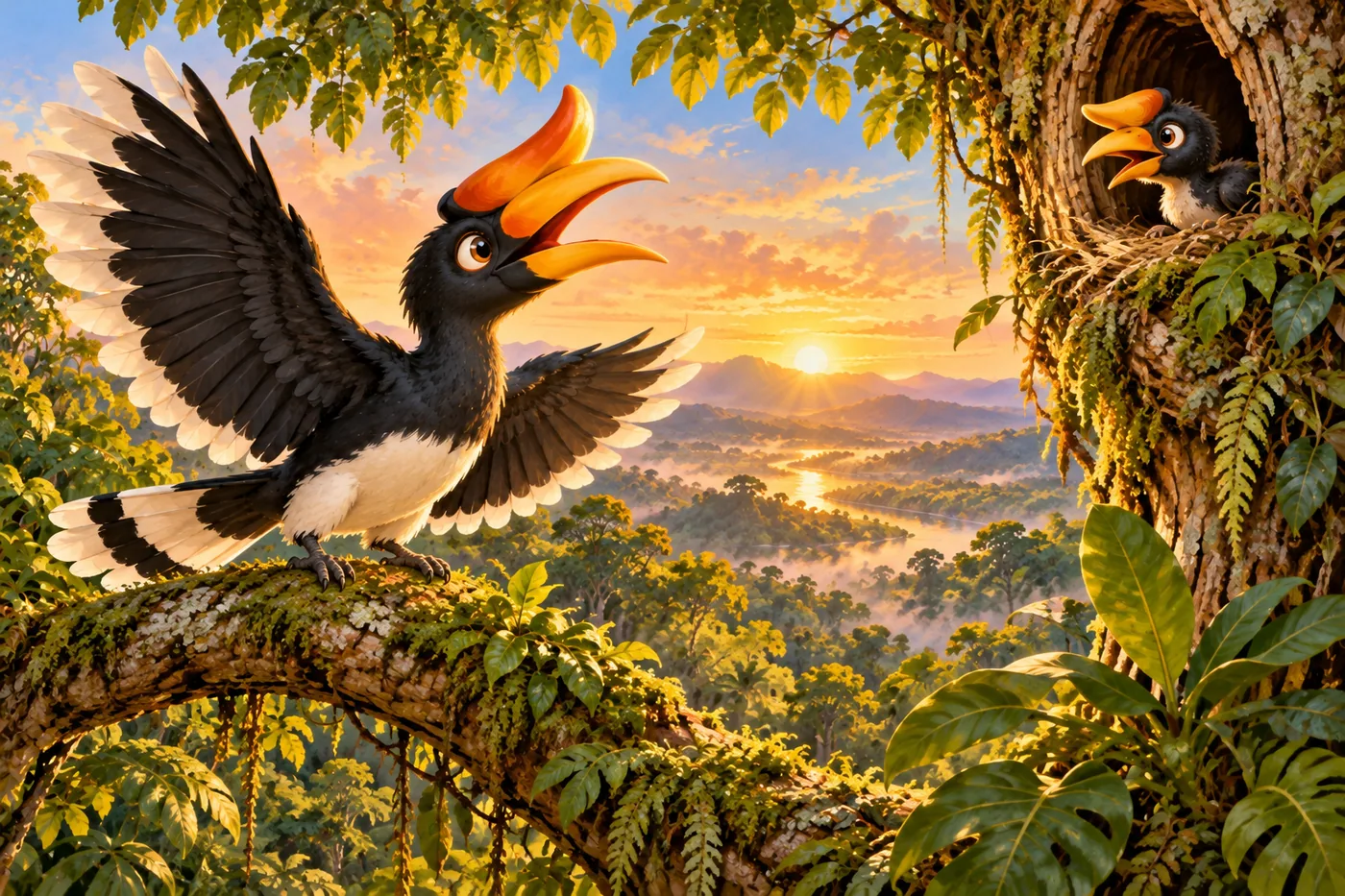
From the nest came a small sound. Raka replied from the branch, then came bringing fruit for his son.
Connected forests
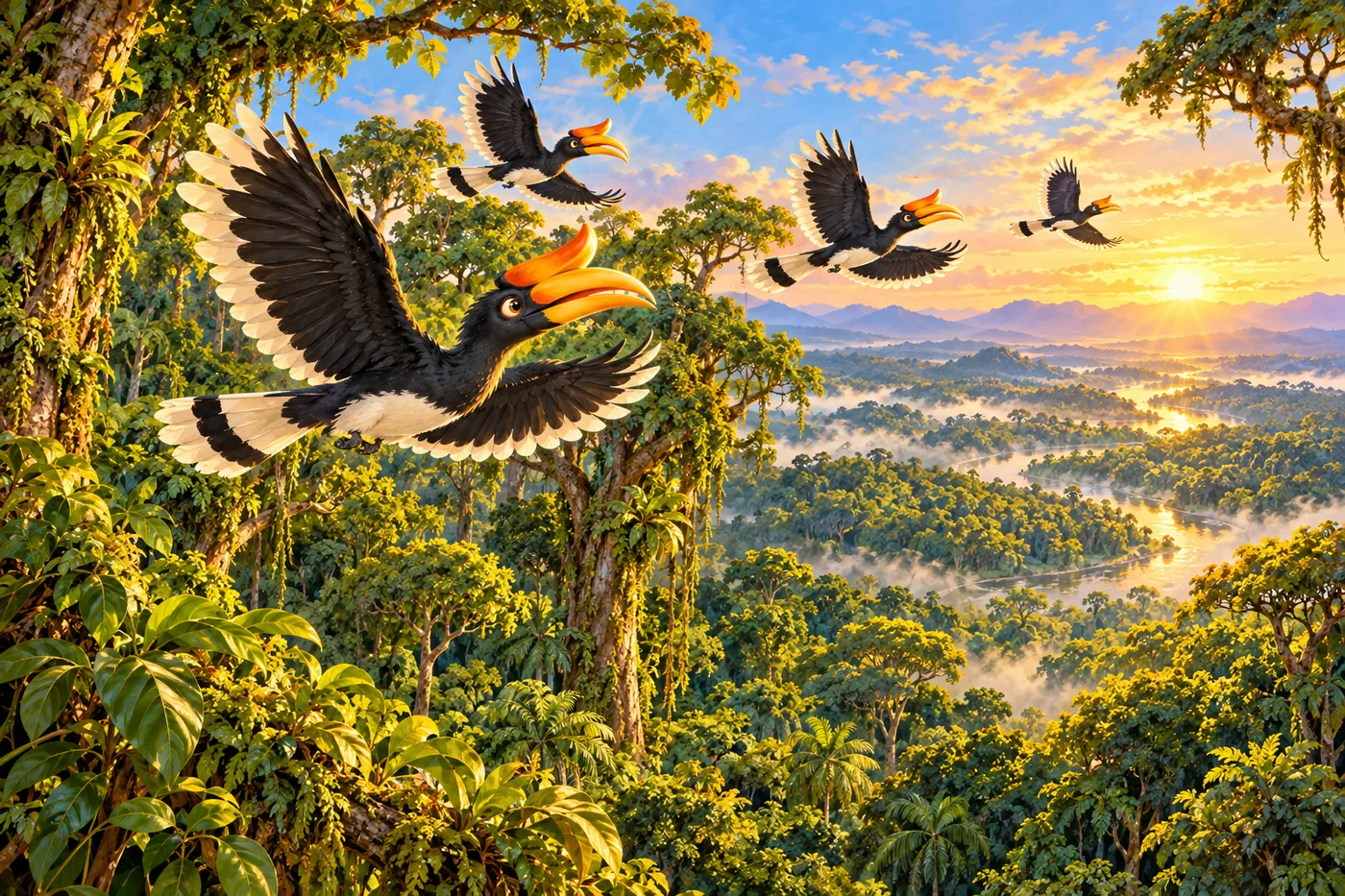
Connected trees provide hornbills with routes to find food, move, and return to their nests.
Header that starts to open
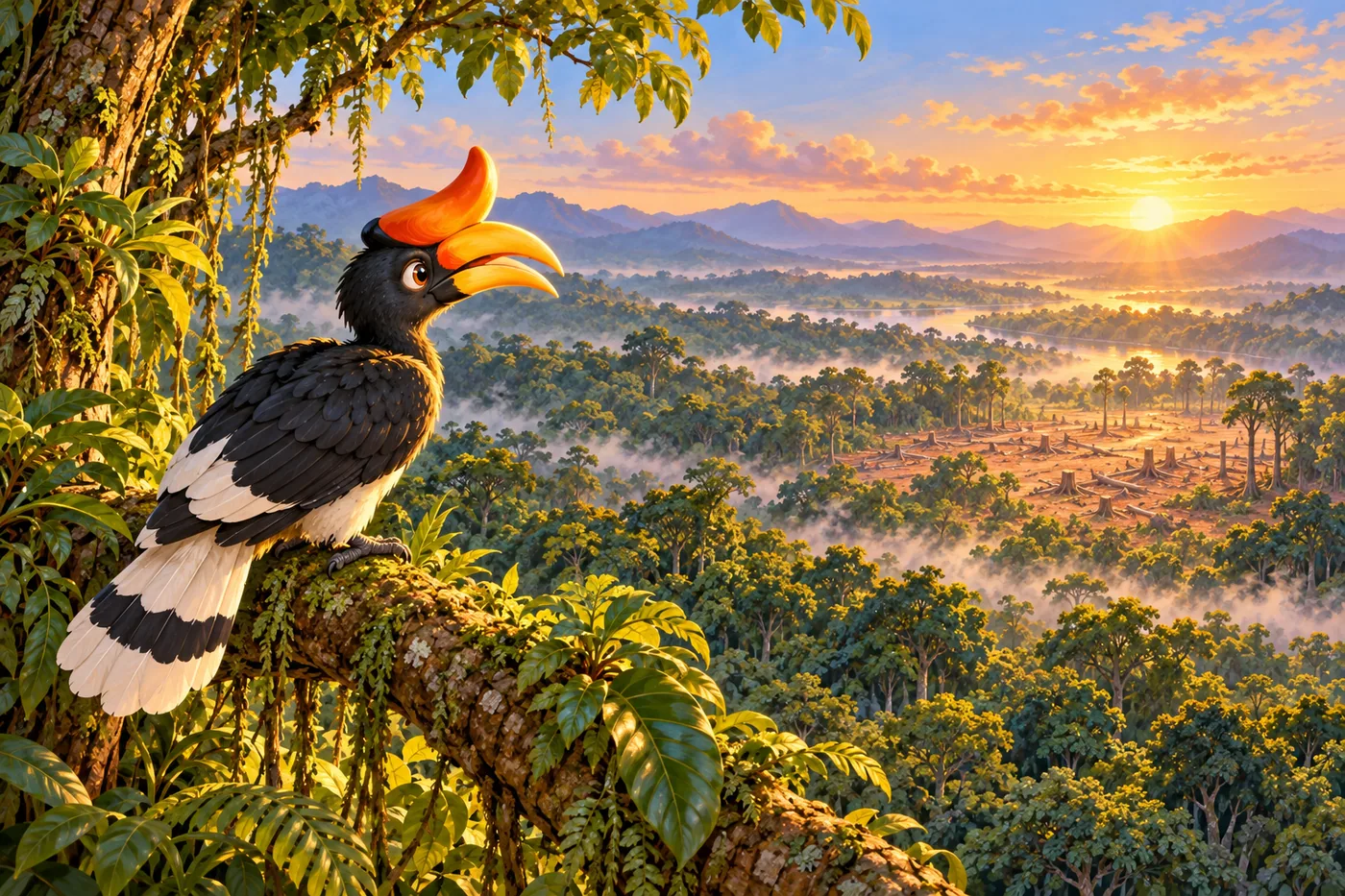
In the distance, several large trees were gone. Without nesting places and food, the hornbill family's journey becomes more difficult.
Guarding big trees
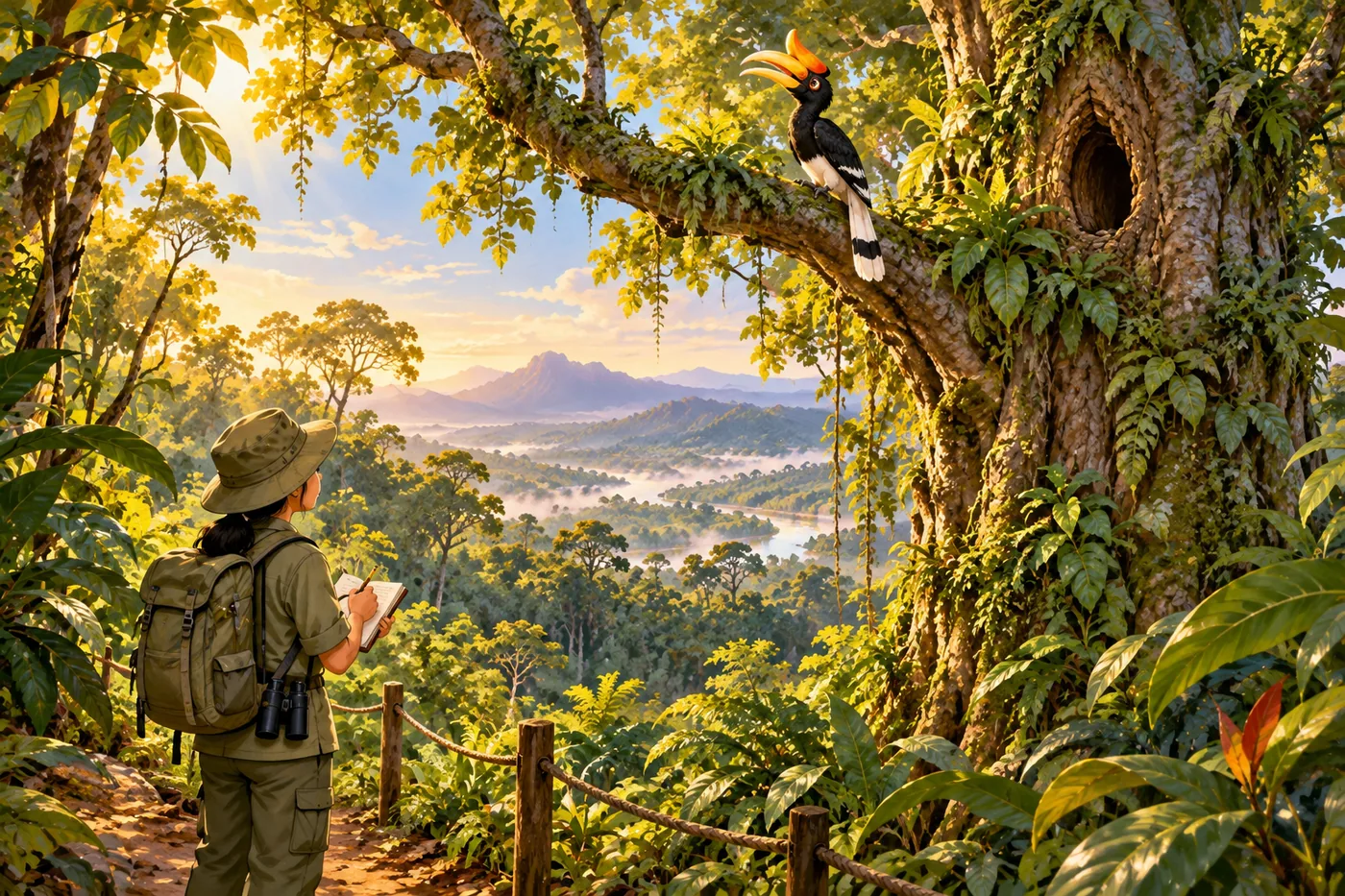
Forest officials noted the nest tree from a safe route. They ensure that Raka's family is not disturbed.
Call from the branches
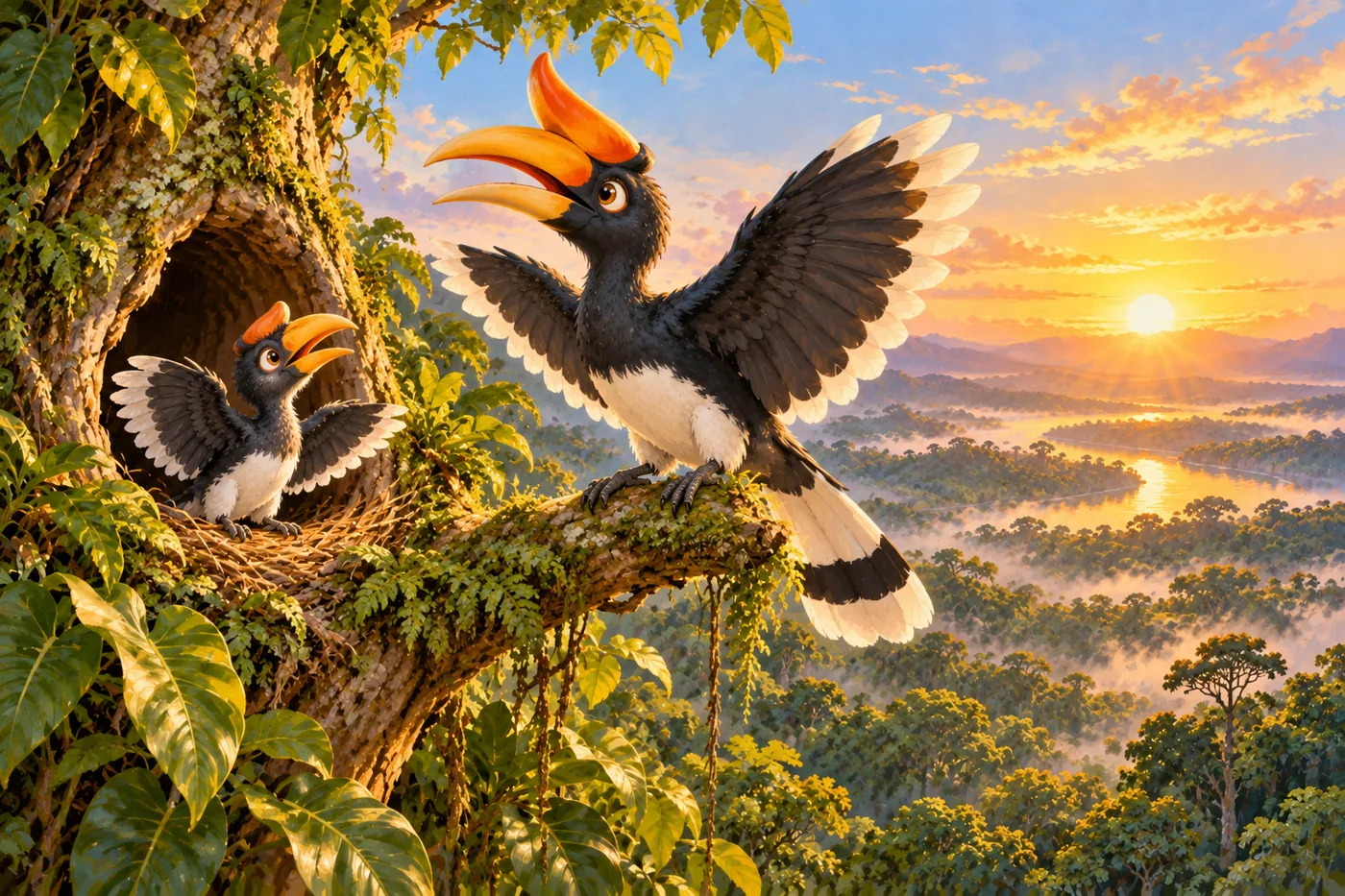
Raka's cubs practice flapping their wings near the nest. His father's gentle call guided him to stay close.
First flight
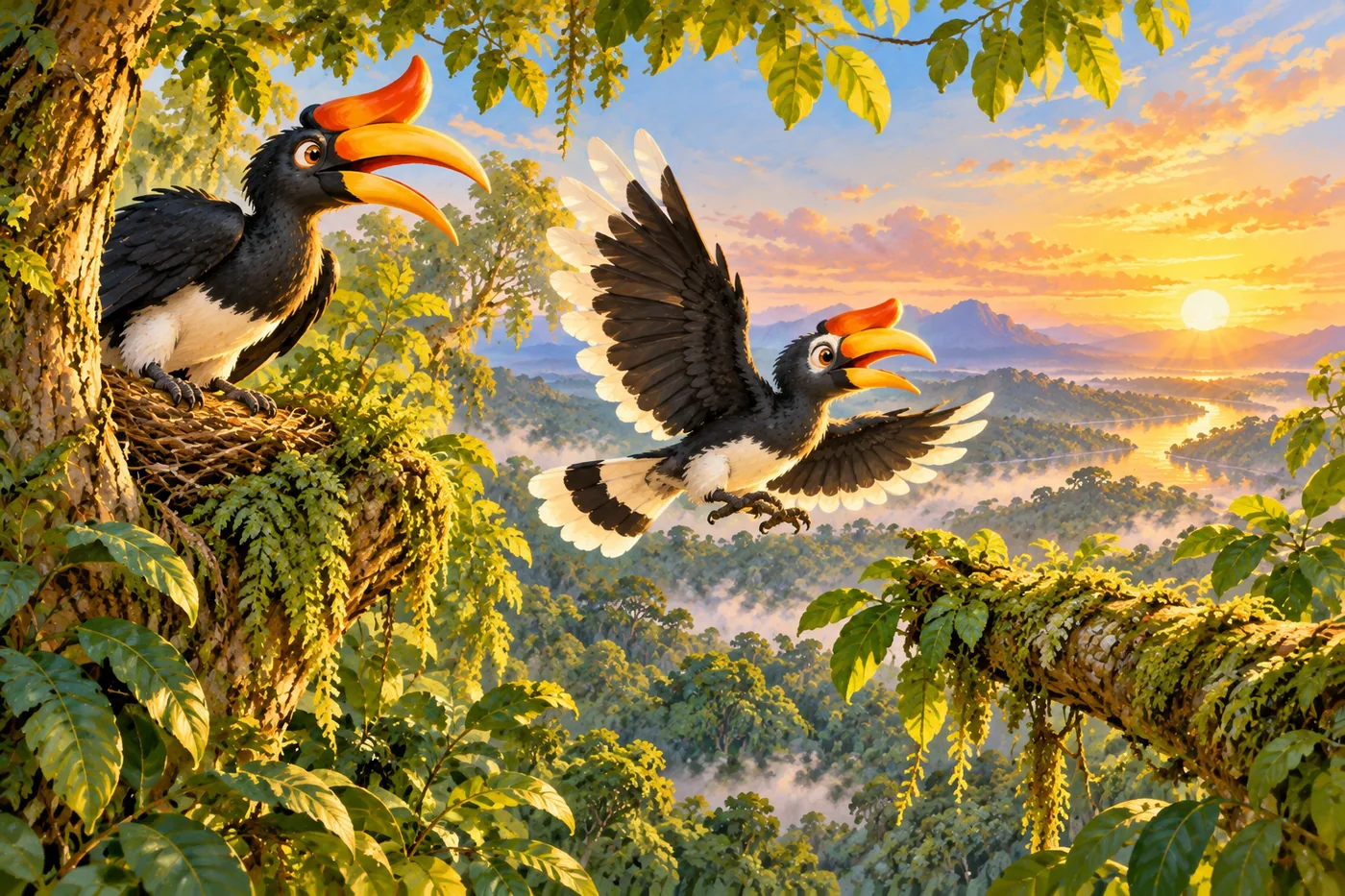
With one bold flap, the baby hornbill flew to the next branch. Raka waited, giving him room to try.
Learn to look for fruit
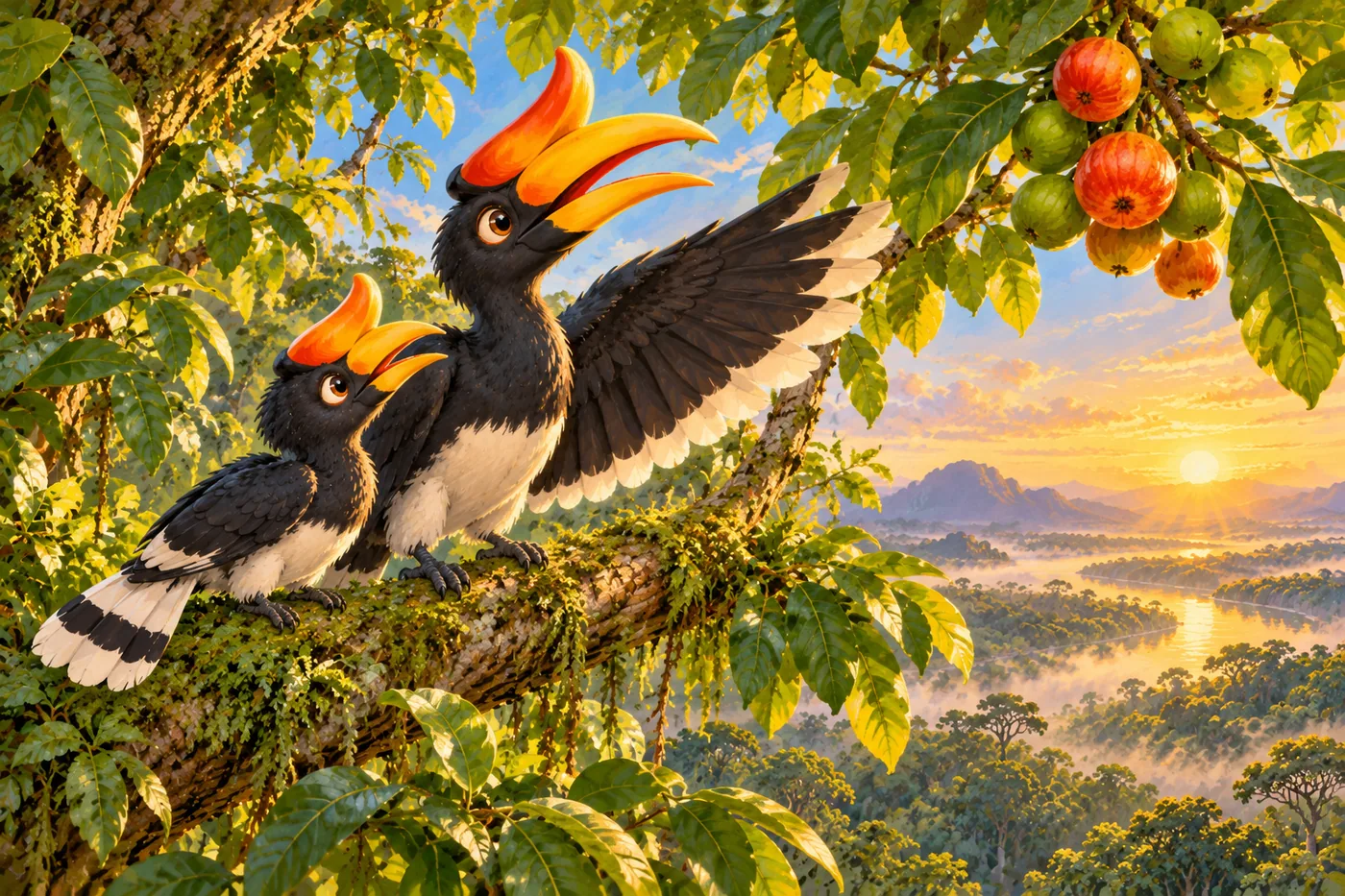
Raka took his son to look for ripe fruit. They moved slowly and stopped when they heard another hornbill call.
The seed becomes a tree
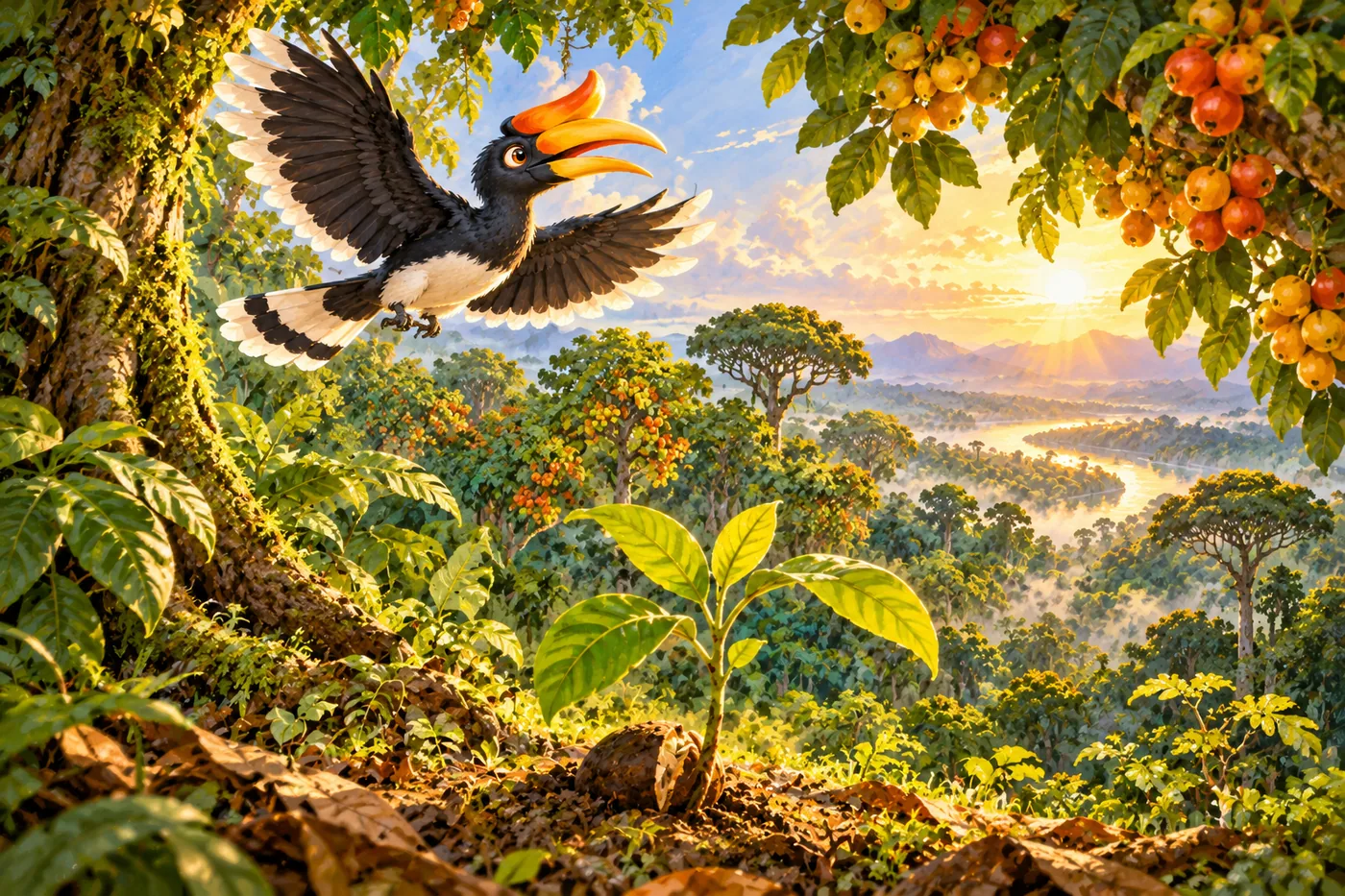
Under the canopy, the shoots from the scattered seeds grow higher and higher. Later, the tree can provide fruit again.
Jungle seed explorer
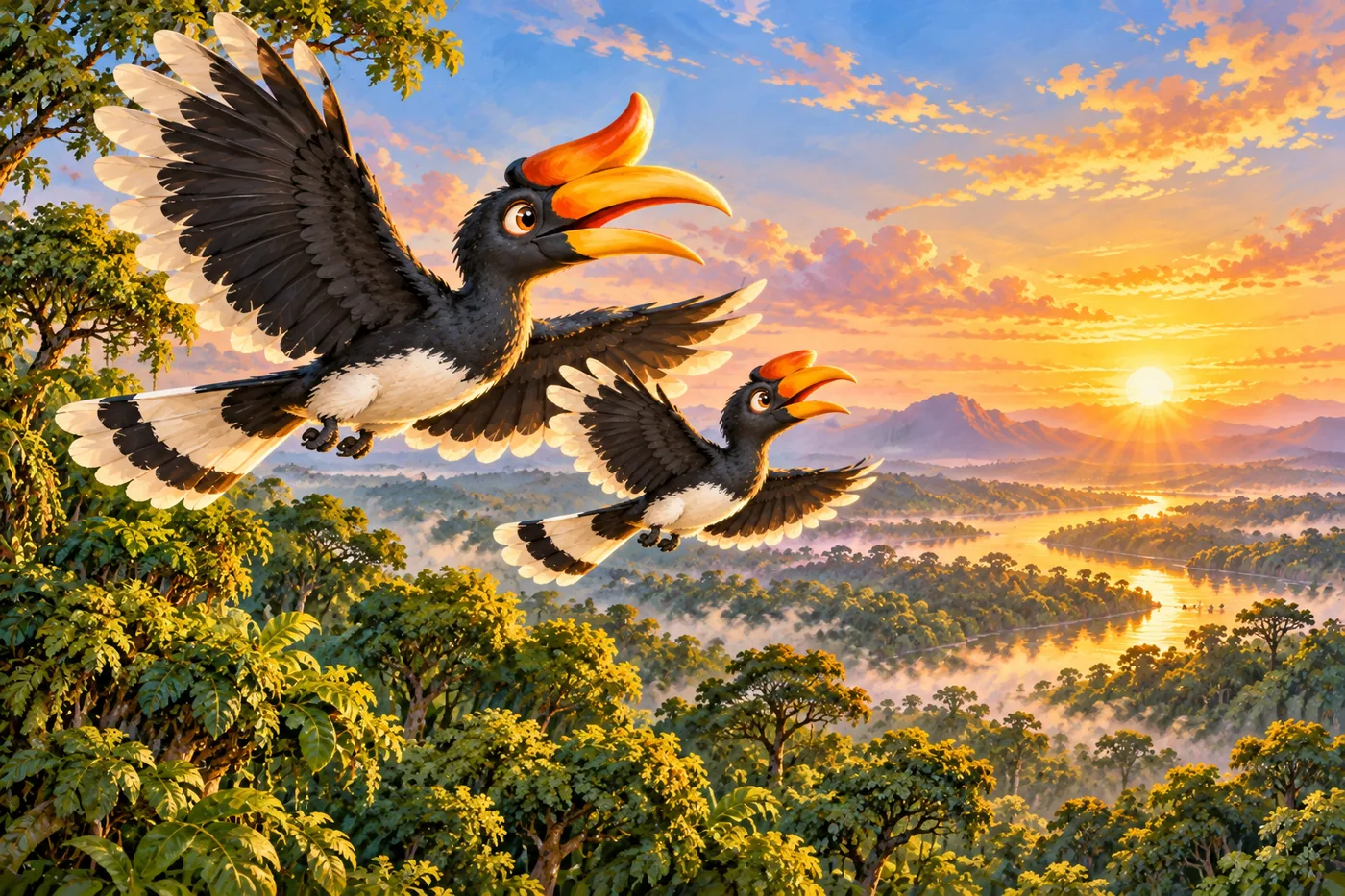
Raka and his son flew home at dusk. By protecting forests and big trees, we help protect the hornbill's home.