Piko and Sun-crested
The adventures of a curious yellow-crested cockatoo, cheerful sounds, and lessons about keeping wildlife home
Ages 6–10 years · 7 min · 25 scenes
Honey colored morning
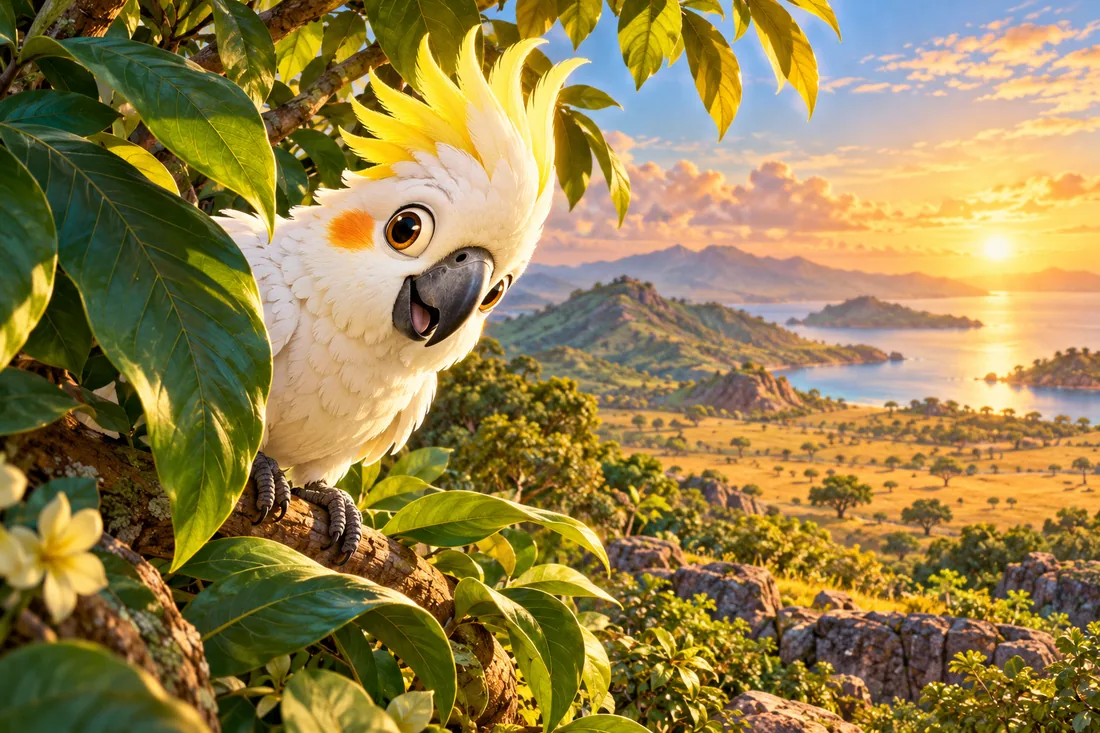
Morning washes the island with the color of honey. Piko the little yellow-crested cockatoo peeked out from behind a leaf, and then—hop!—his crest stood up like a mini sun.
The topknot tells the story
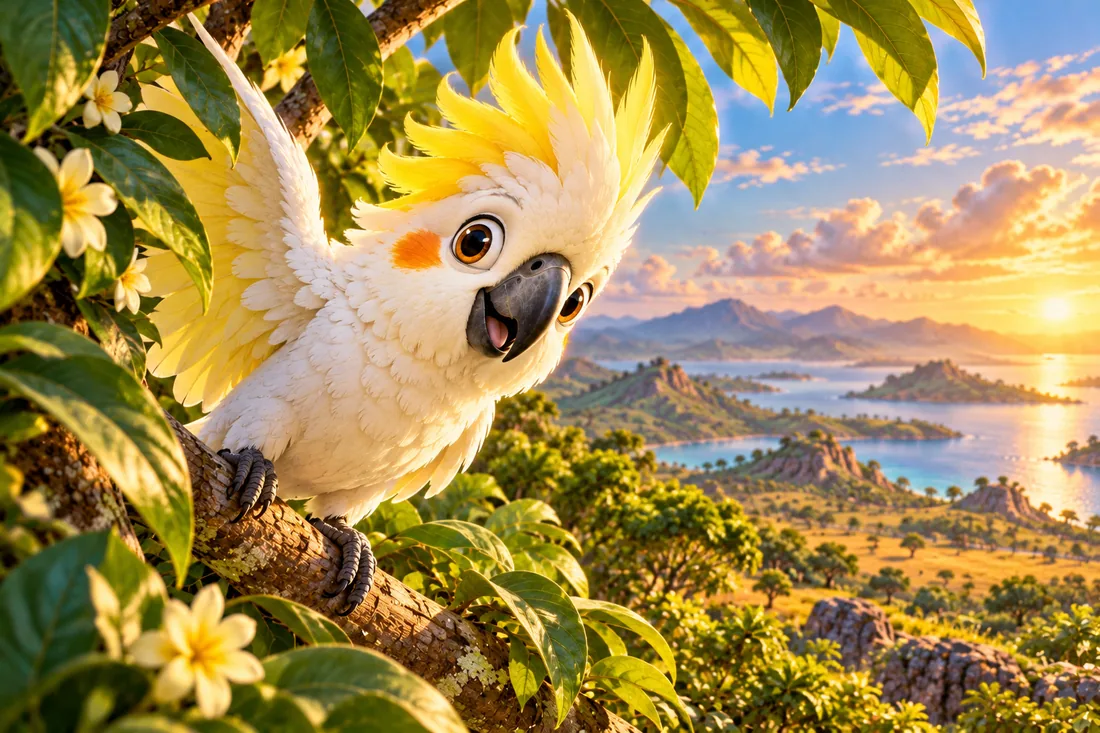
When curious, Piko's topknot rises high. When relaxed, the crest falls down again. Today, the topknot is upright—a friend is calling!
Hello from behind the tree
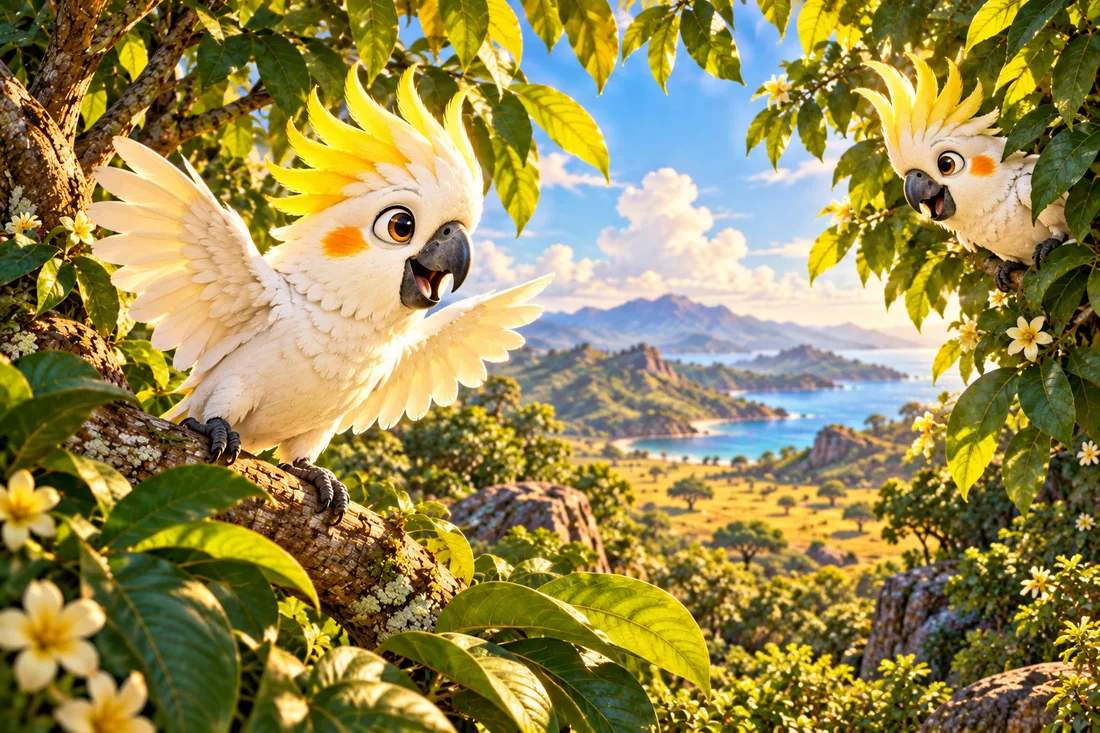
“Hello, who is there?” Piko exclaimed. From the next tree came the answer. He laughed a little—uh, what kind of sound does a cockatoo laugh, huh?
Small wings, big sky
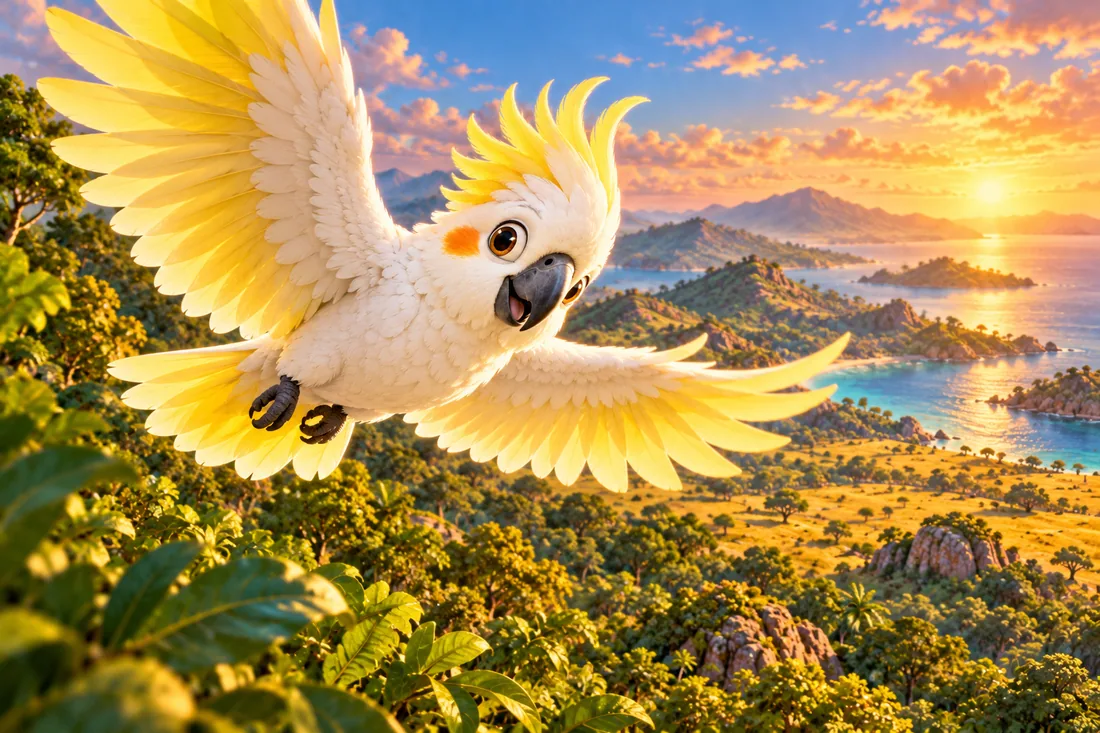
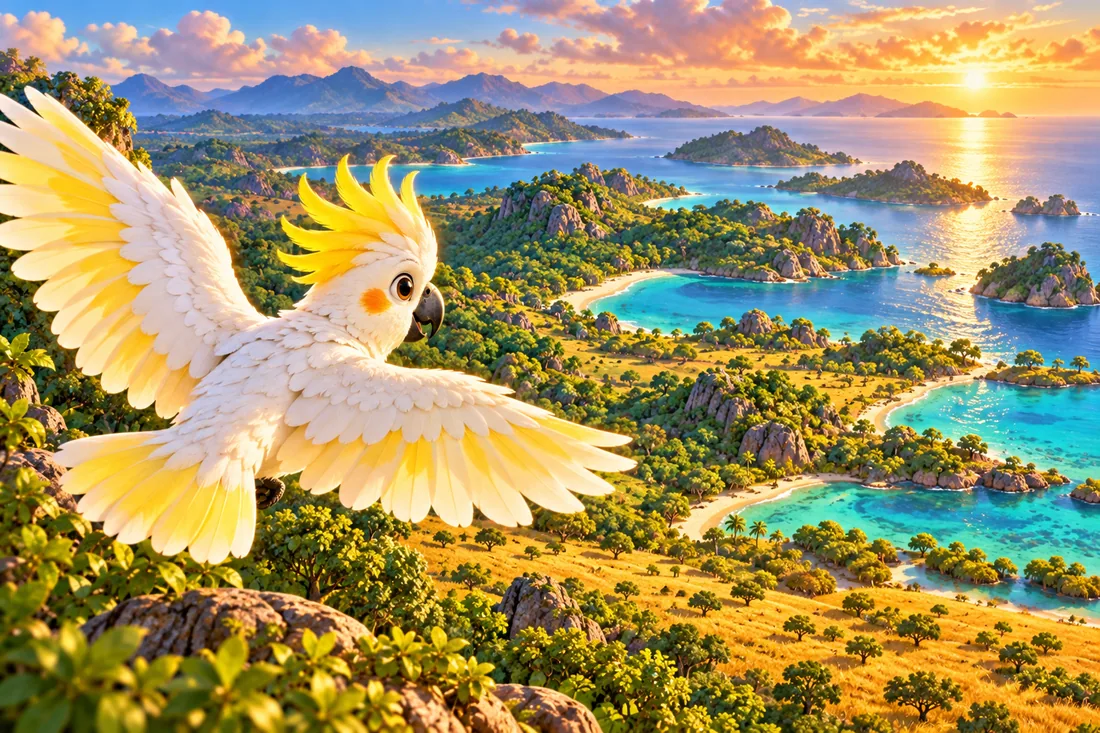
Piko flapped quickly through the header. Below him, green forests met golden grasslands. The wind tickled his feathers—flying was fun!
Crunchy breakfast
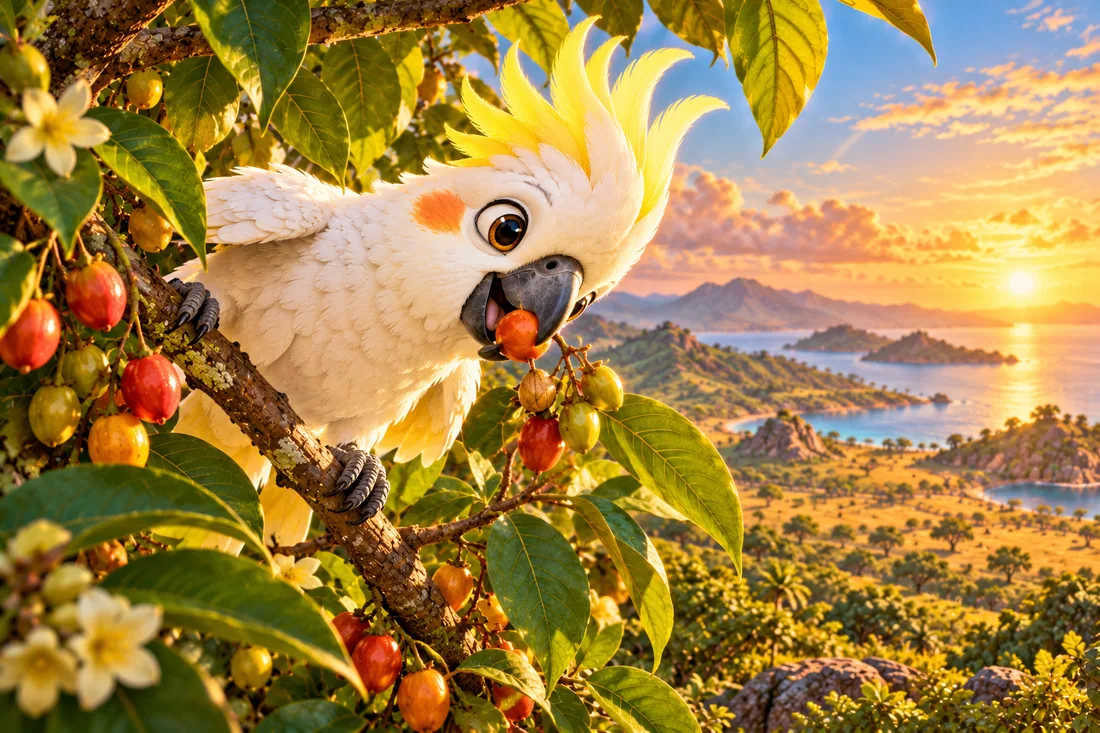
Krruk! Piko found seeds and small fruit. Its strong beak helps it pick up food, while its legs grip branches steadily.
Fruit sticks to the beak
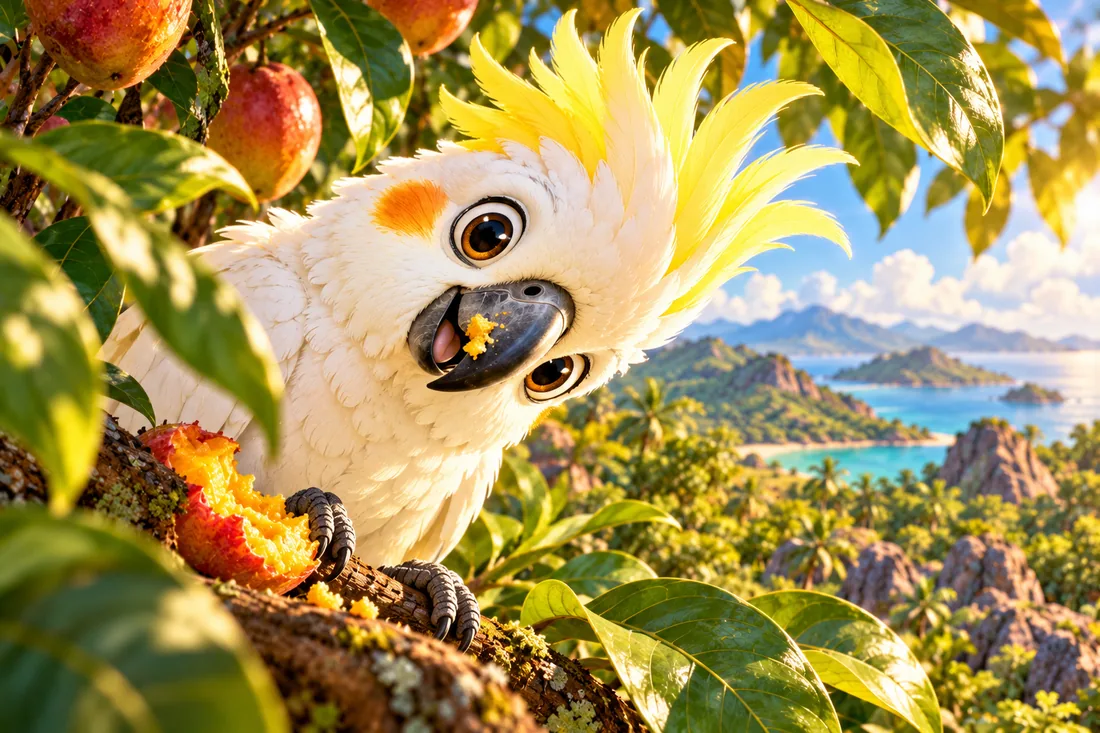
Oops! A bit of fruit stuck to Piko's beak. He shook his head left, right, then it worked—and a tiny crumb fell right on his nose!
Sip from the leaves
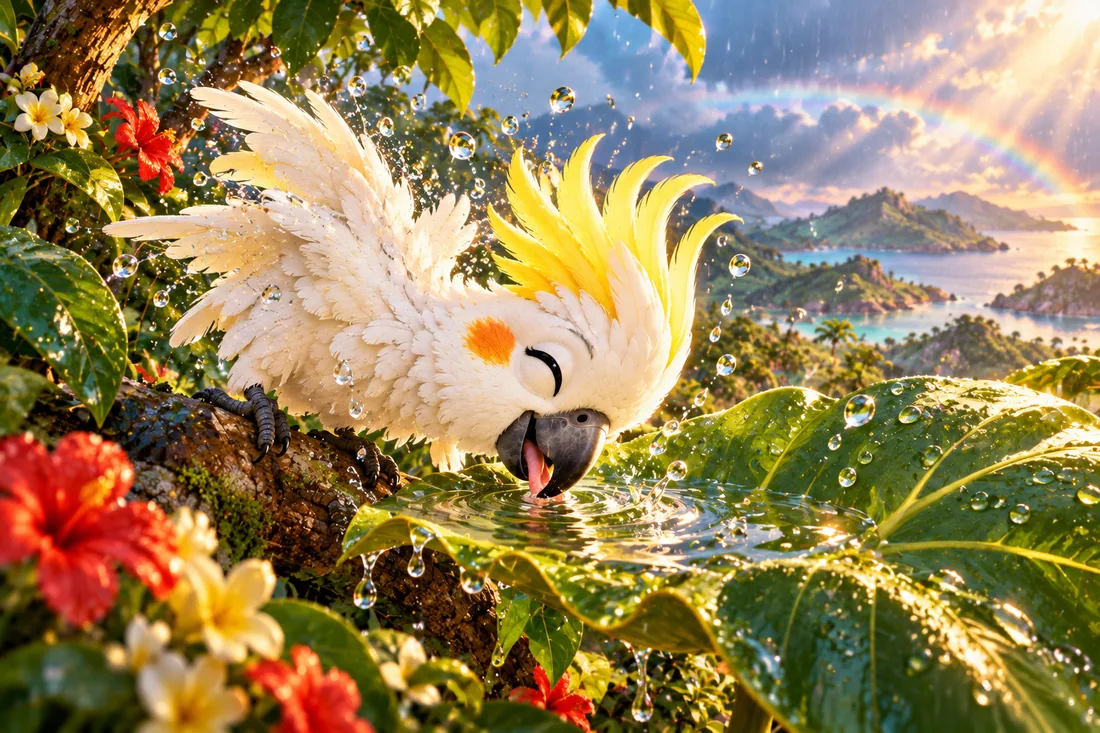
After flying, Piko drank rainwater that was collected in the wide leaves. So fresh! He fluffed his feathers, making water droplets shimmer in the air.
Friends arrive
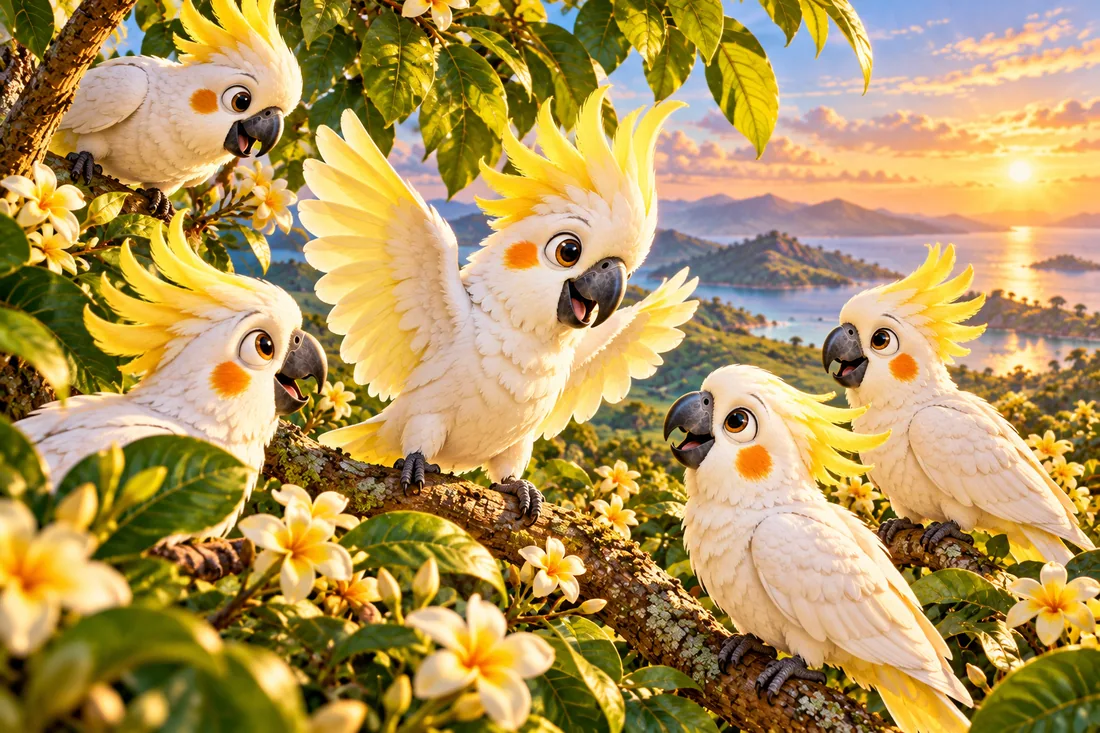
Not long after, Piko's friends arrived. They perched close together, greeted each other, then together looked for fruit trees.
Shady old tree
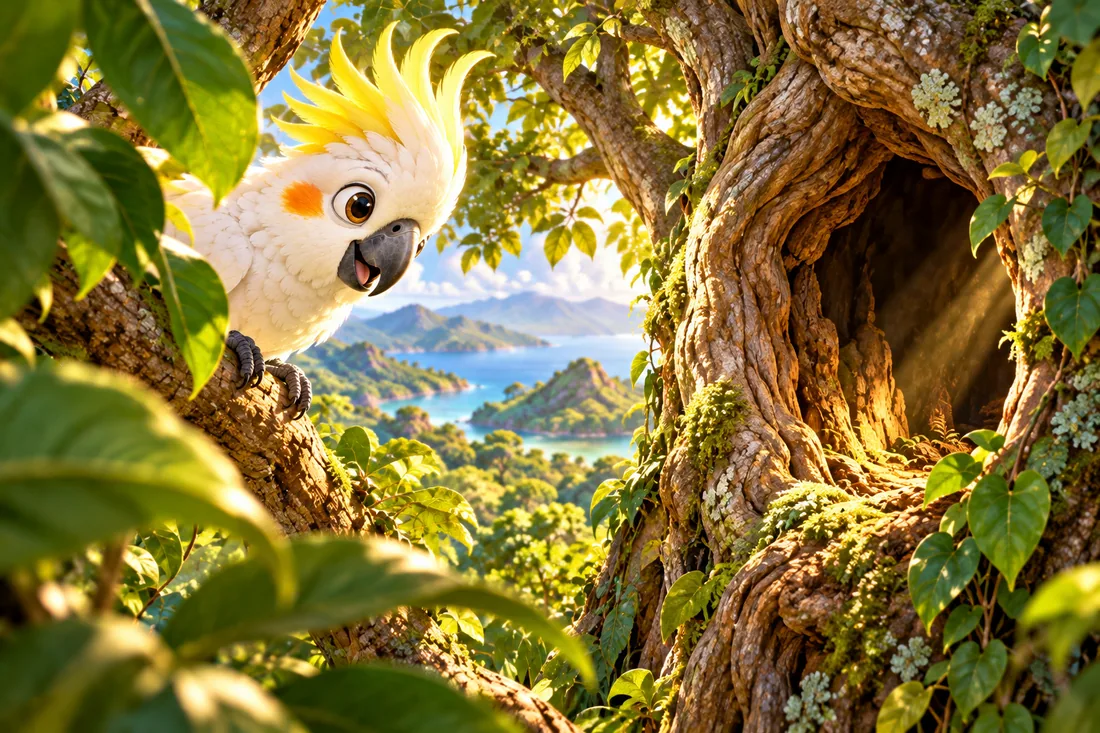
On the way, Piko saw an old tree with a natural hole. "Wow, whose house is this?" he asked, peering from the safety of the branch.
House in the trunk
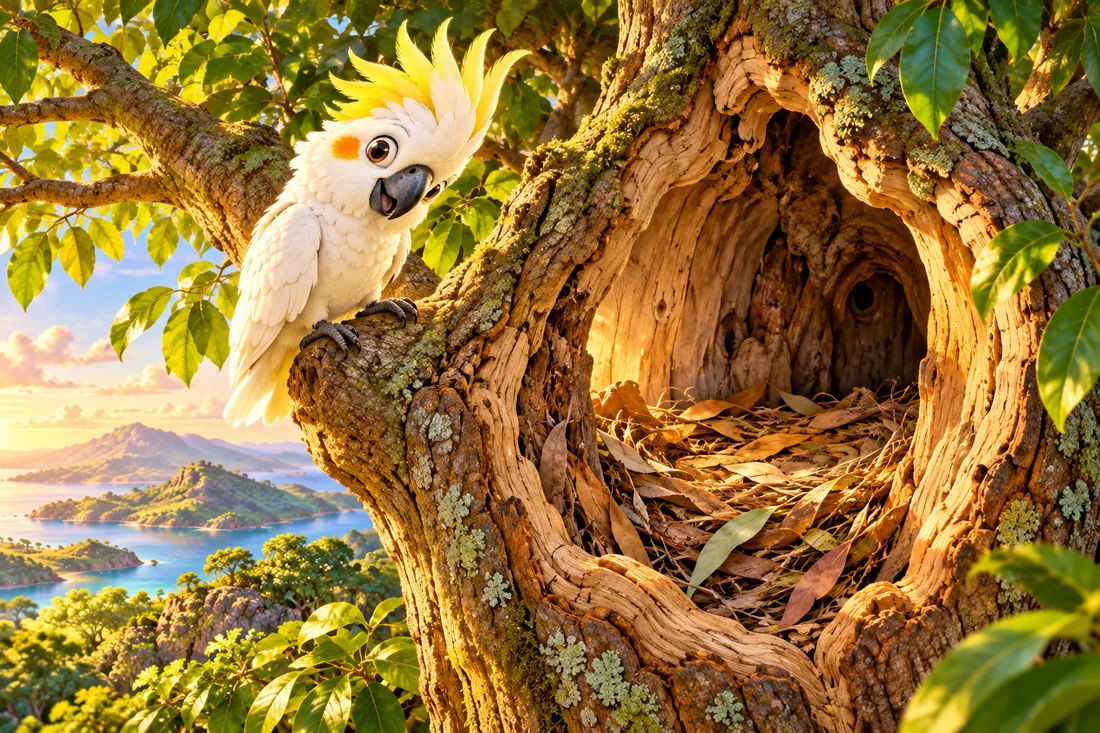
Cavities in large trees can become nesting places for birds. Trees like this grow a long time, so it's important to keep them in check.
A small sound from the nest
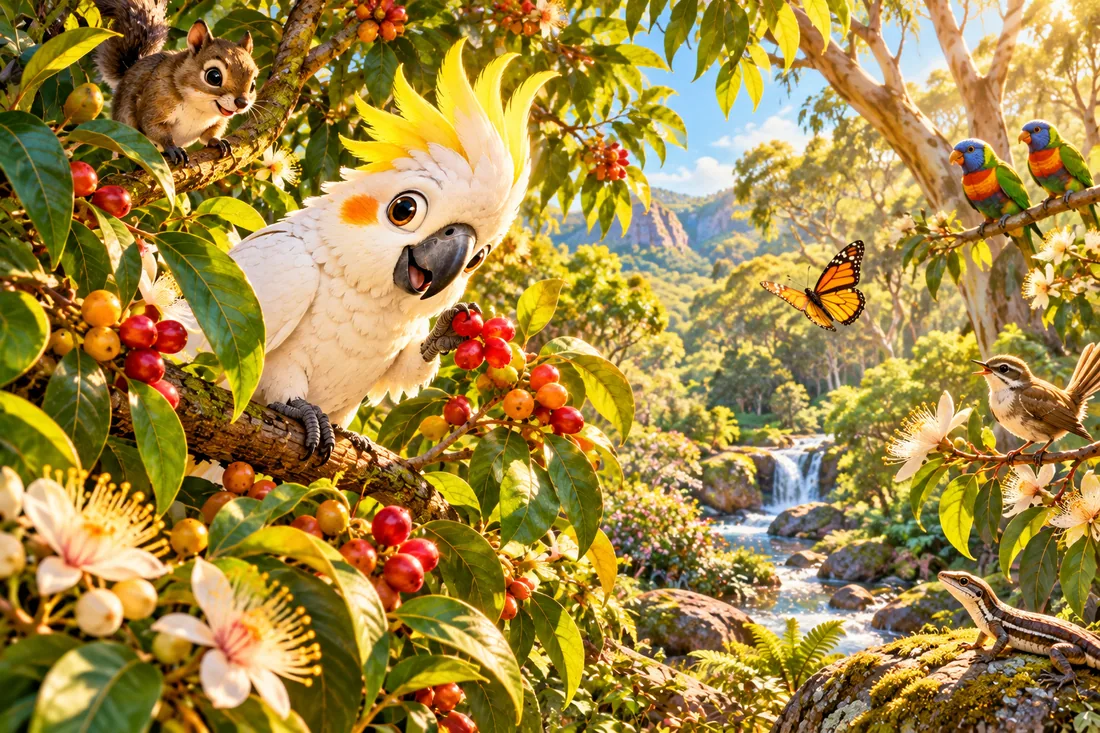
Tweets were heard from inside the cavity. Piko smiled. There is a baby bird growing with its mother, protected in a tree house.
The forest gives a lot
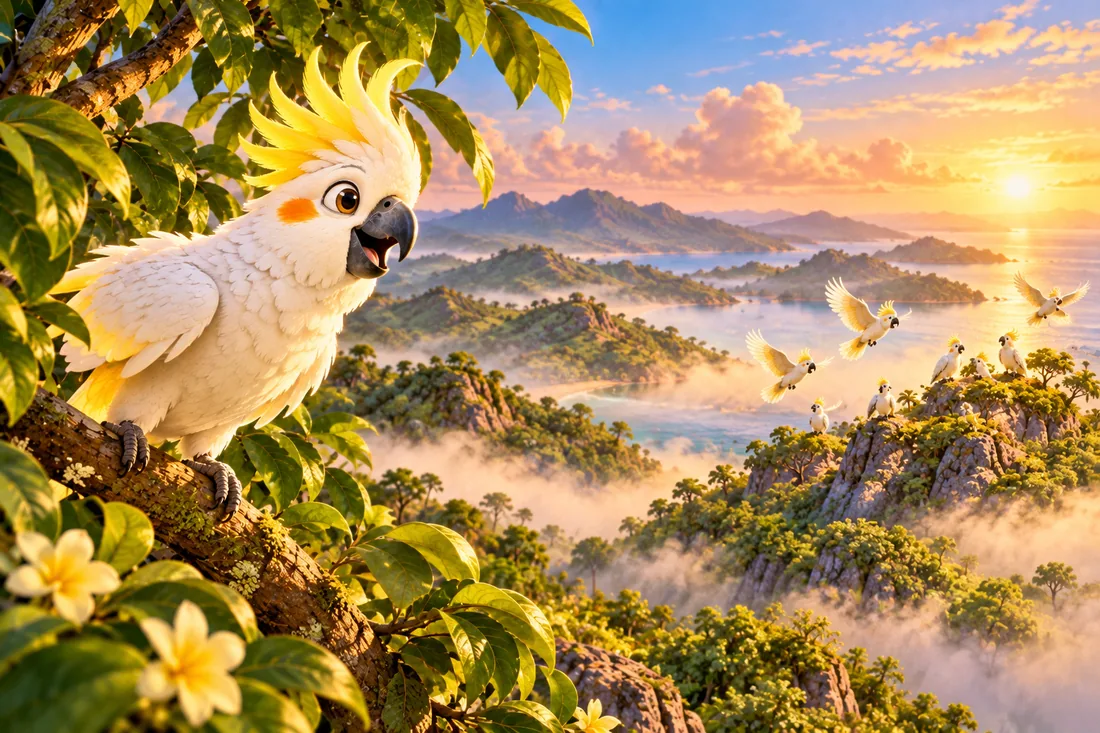
The forest gives Piko food, a place to rest, and space to fly. Every tree has a story—and many creatures depend on it.
Call sought
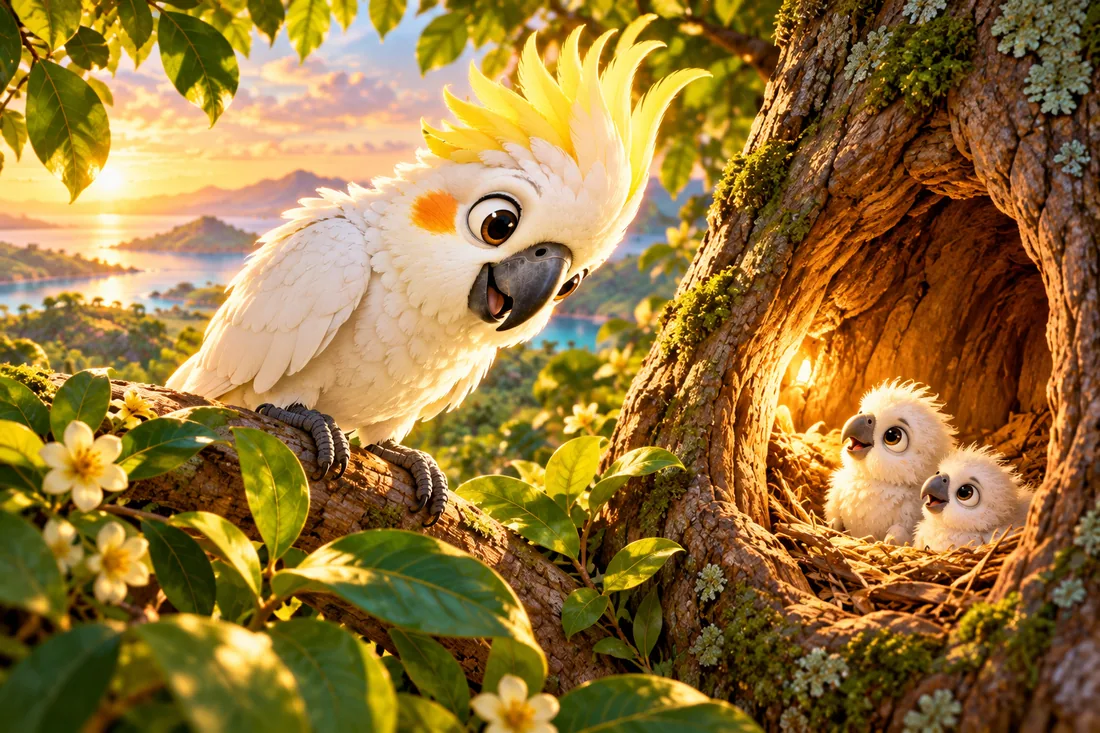
A thin mist came. Piko didn't see a herd nearby, so he called out. A few moments later, a voice came from behind the hill.
Neat fur
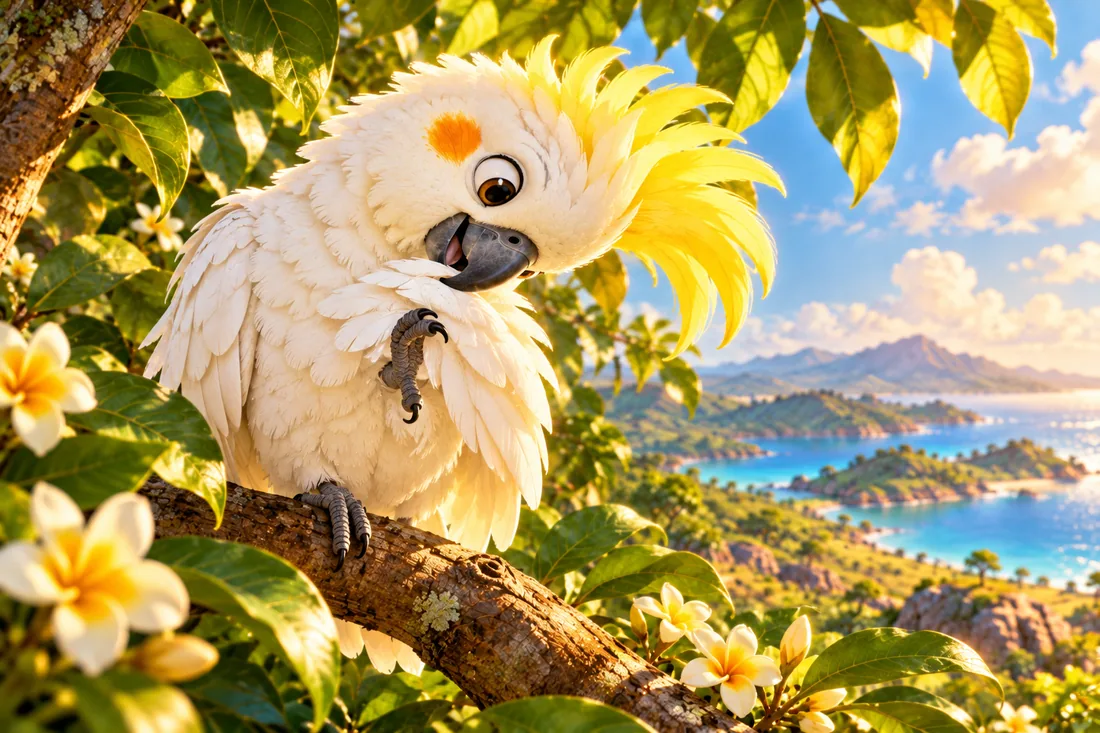
After gathering again, Piko smoothed his feathers with his beak. He combed it slowly, then shook his topknot like he was dressing up for a leaf party.
An island that needs to be looked after
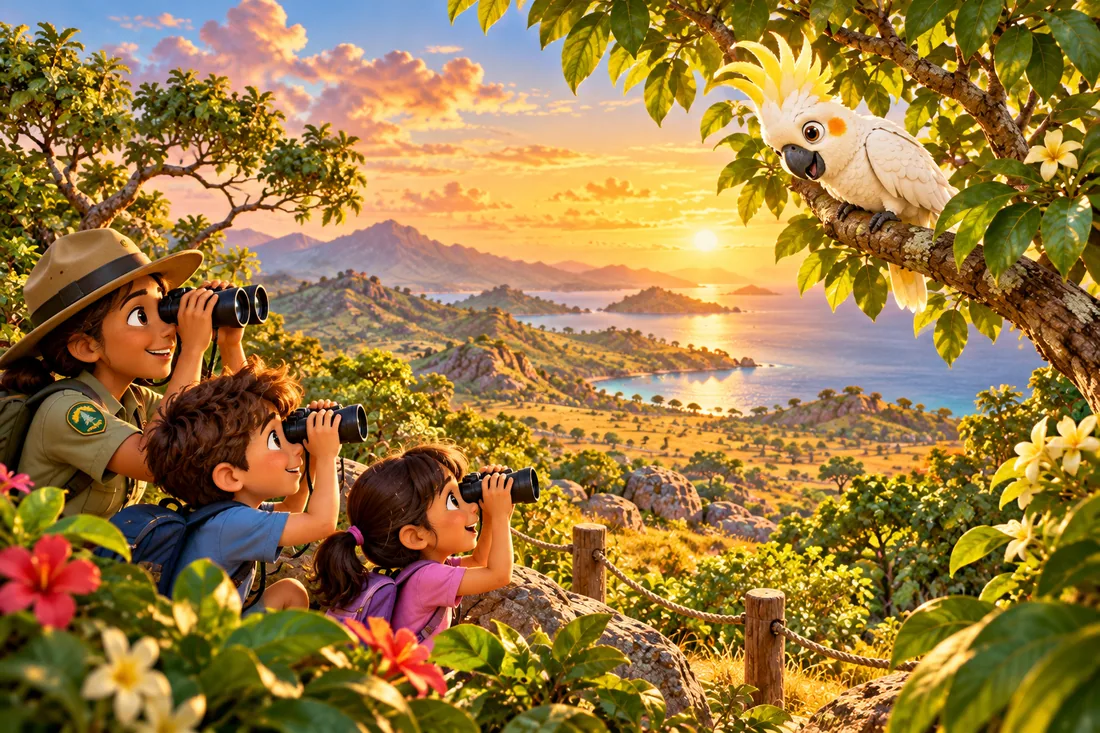
From above, Piko saw connected forests and bushes. If living spaces are divided, finding food and a safe place becomes more difficult.
Don't take it home
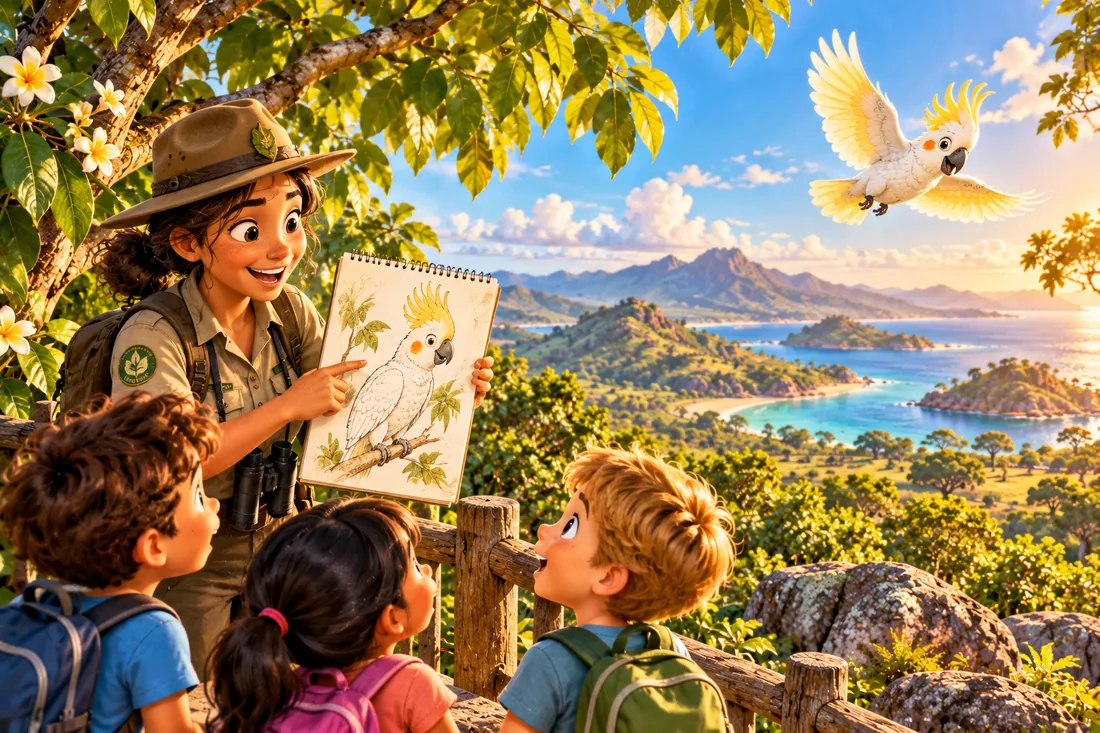
A ranger tells the children: cockatoos are wild animals. The best home is still nature, not a cage at home.
Observe calmly
Children observe from a safe route. They don't chase, touch, or feed Piko—just look and be amazed.
The tree remains standing
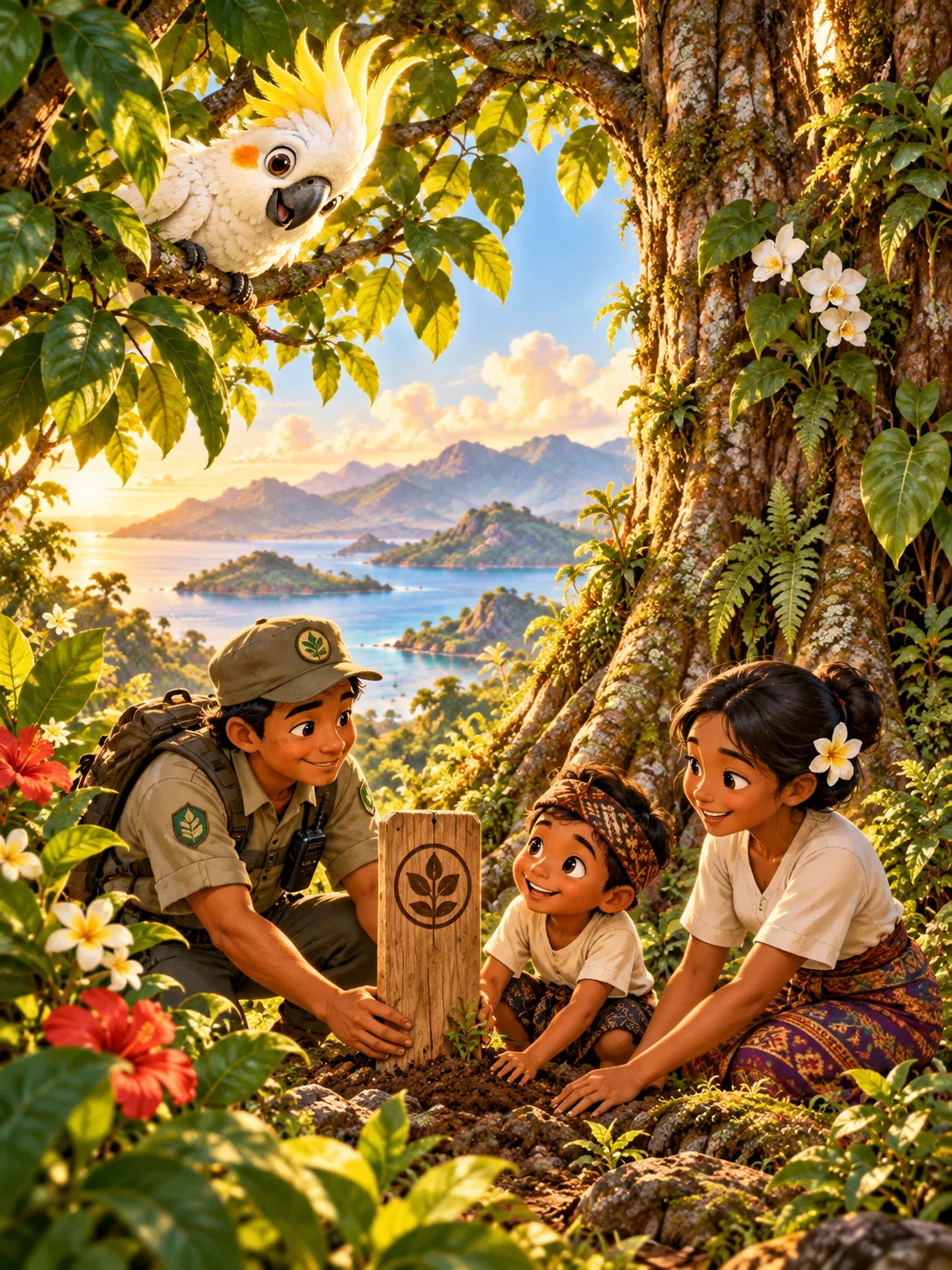
Rangers and residents look after the old trees. With a well-maintained habitat, Piko and his friends have more space to live.
A safe quiet place
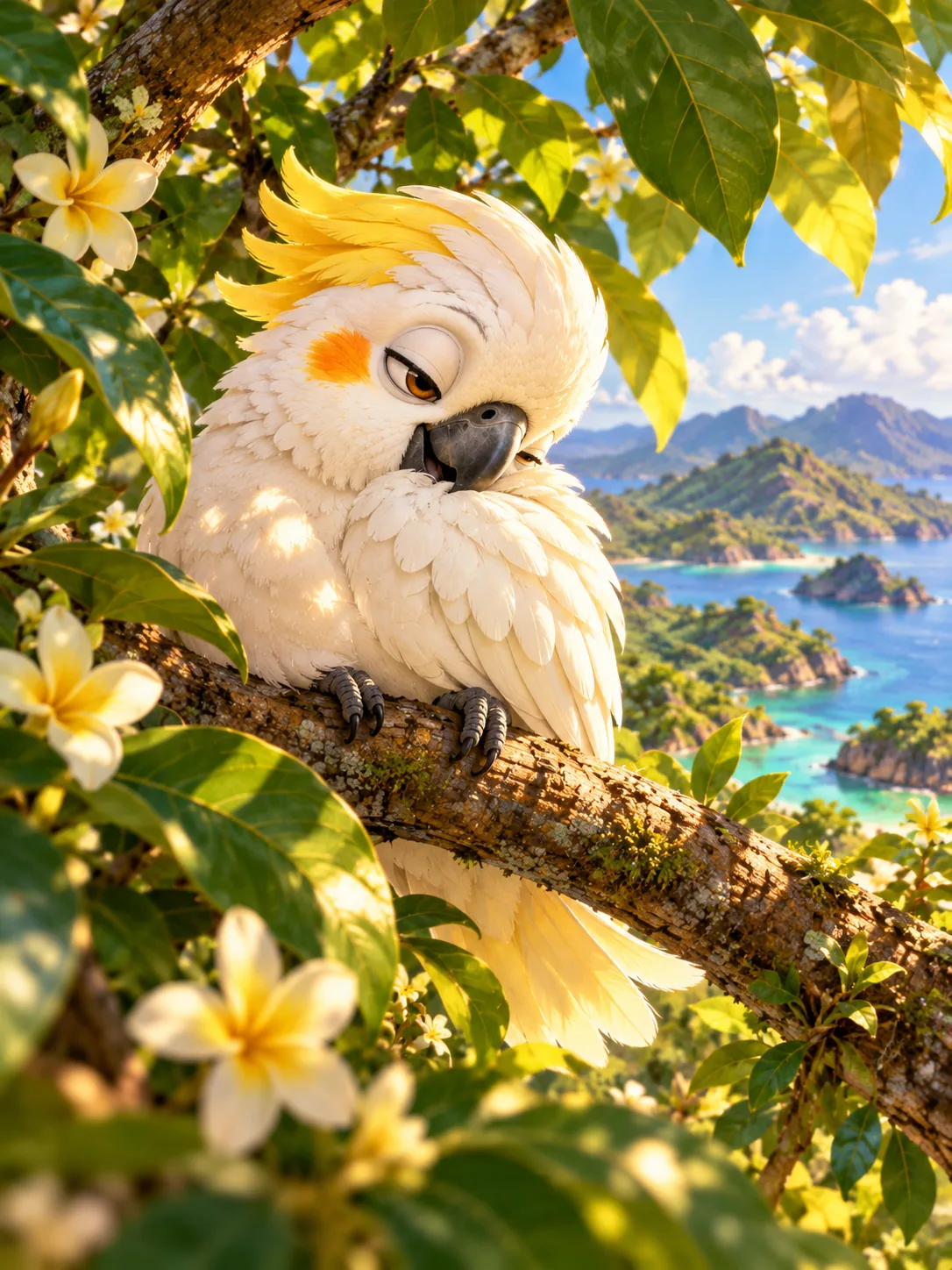
When the sun is high, Piko rests on a shady branch. His crest was down, his eyes were glazed, and his tail was swaying with the wind.
The evening sky is calling
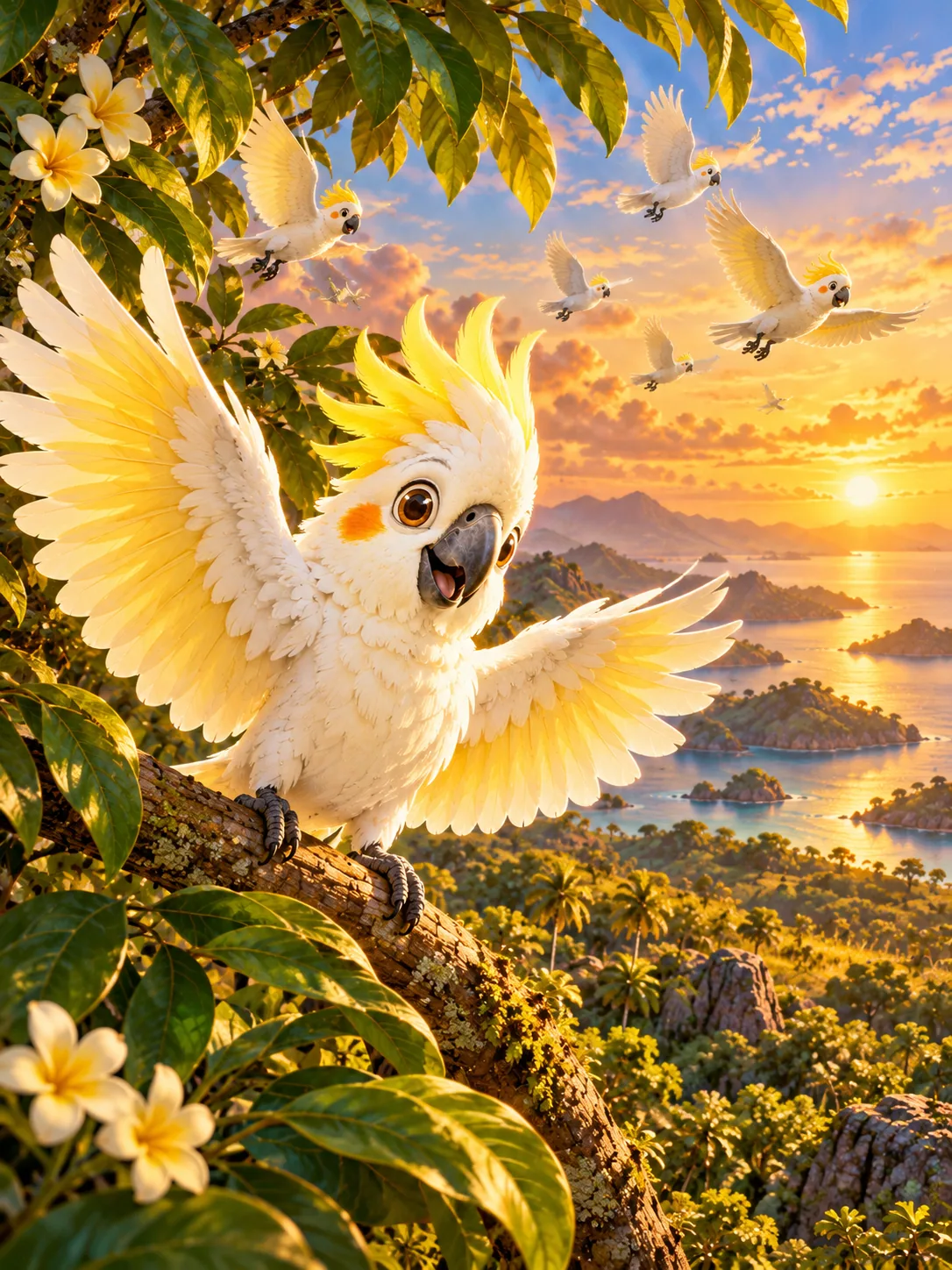
The afternoon started to turn orange. Piko wakes up, stretches his wings, then invites the flock back to the tree where they usually rest.
Twilight response
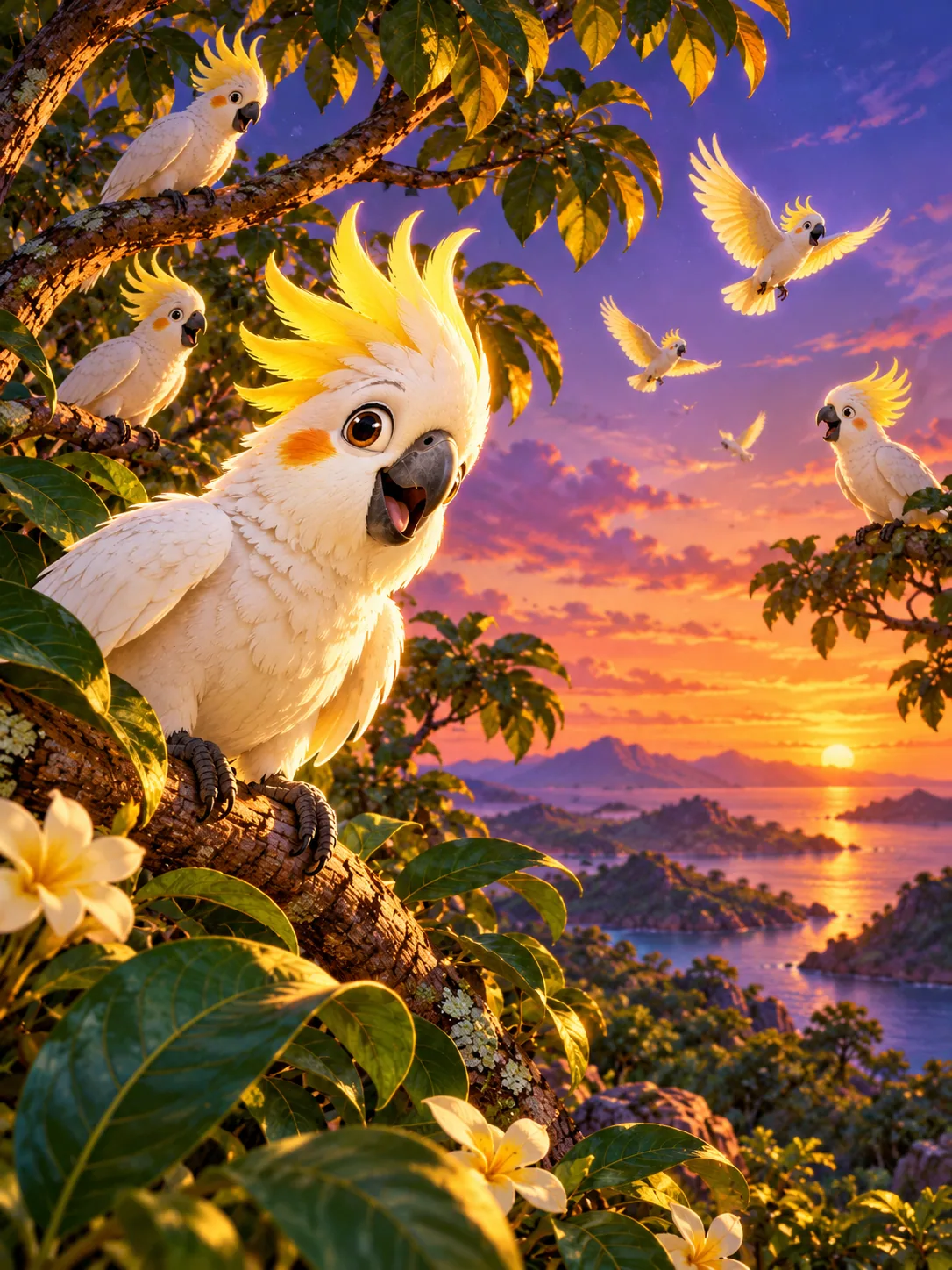
“Is it complete?” Piko called. One, two, three answers were heard. The herd is ready to go home together before the sky darkens.
Fly together
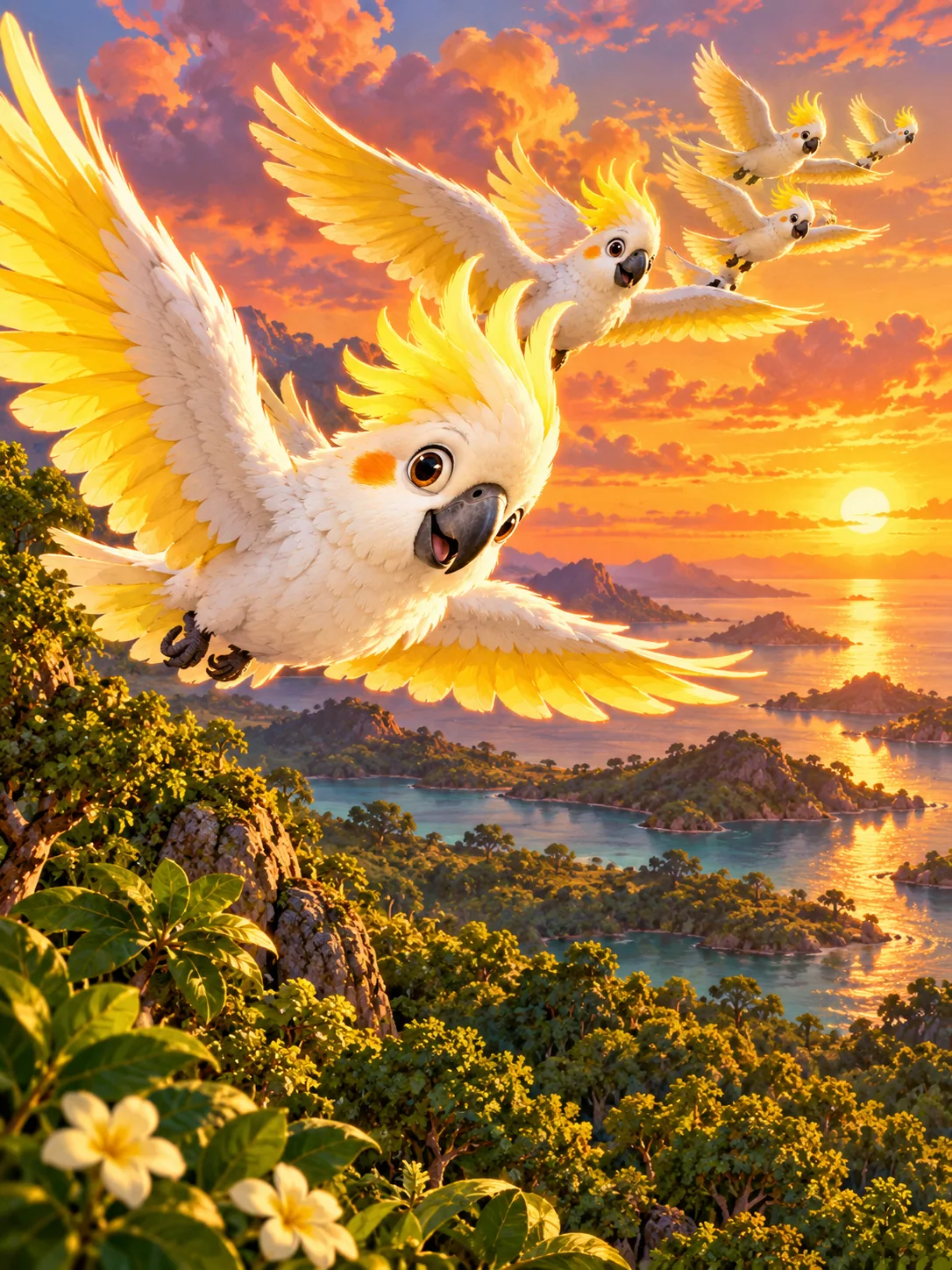
They flew hand in hand, white and yellow flashing across the sky. Piko stays close to his friends, feeling safe in the pack.
First star
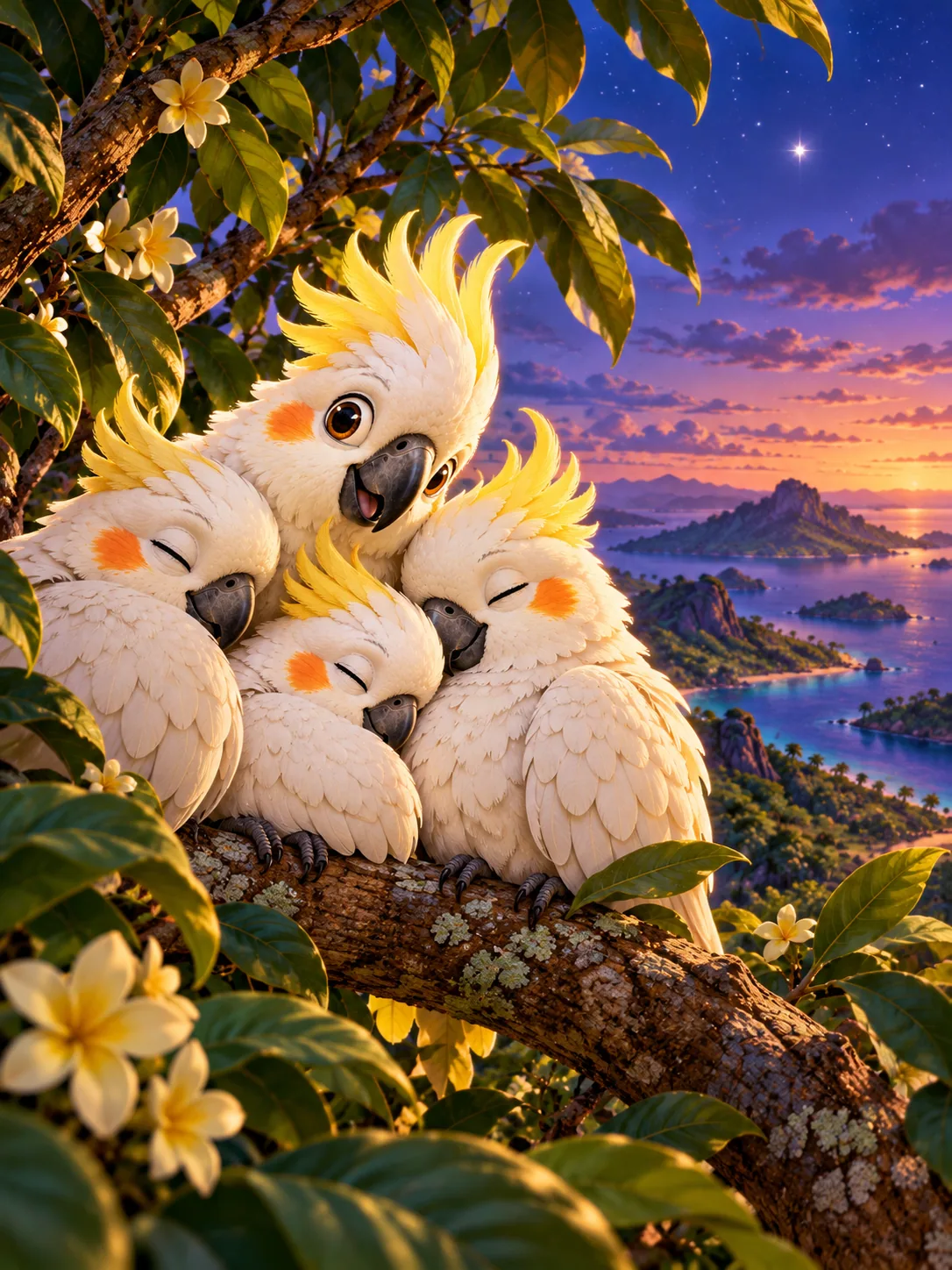
In the resting tree, Piko perched close to the flock. One star appears, and the crest expands briefly—wow, how beautiful!
A small promise to nature
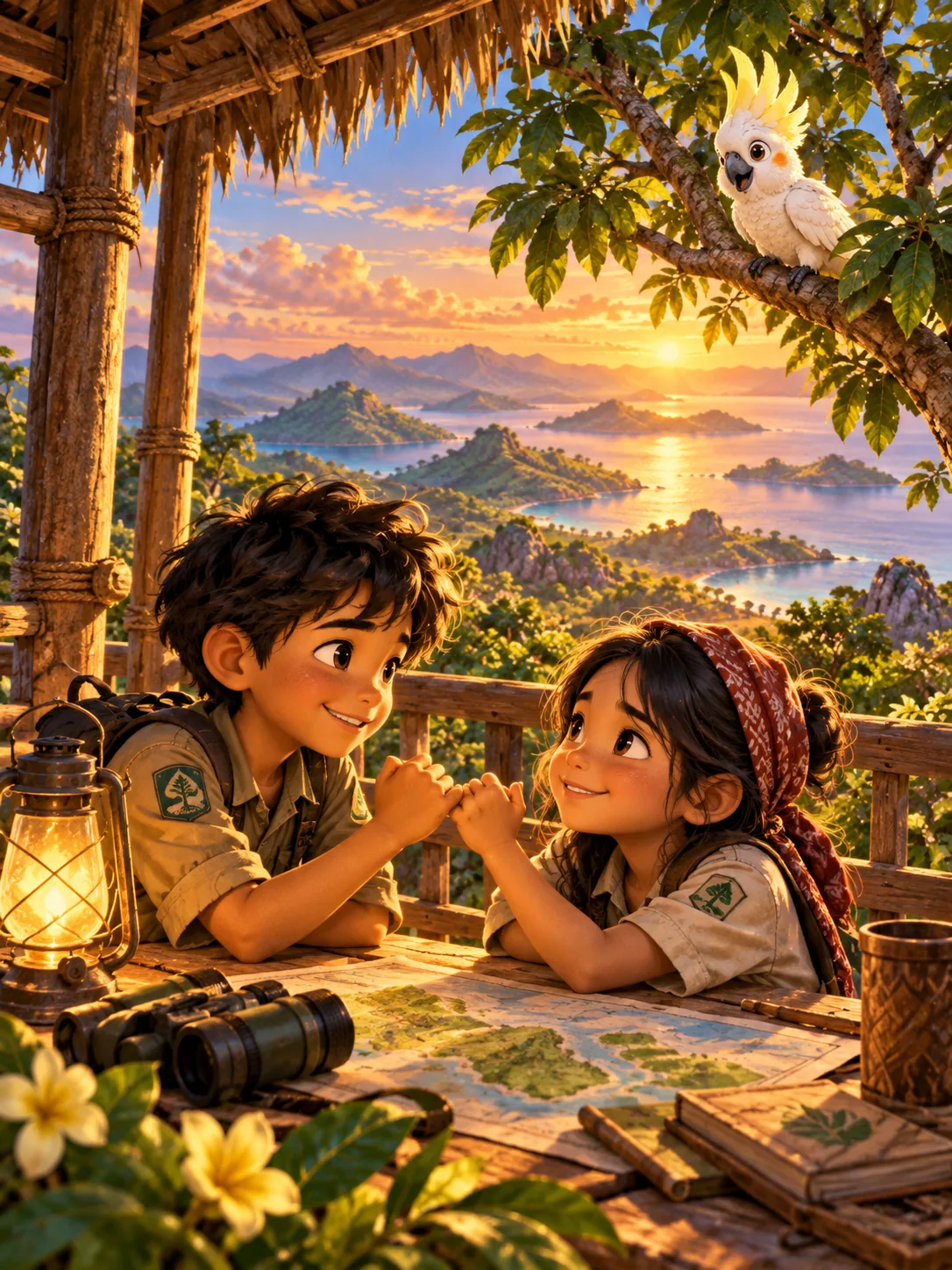
The children promised to help: not to buy wild animals, to protect the forest, and to tell friends that cockatoos should live freely.
Good evening, Piko
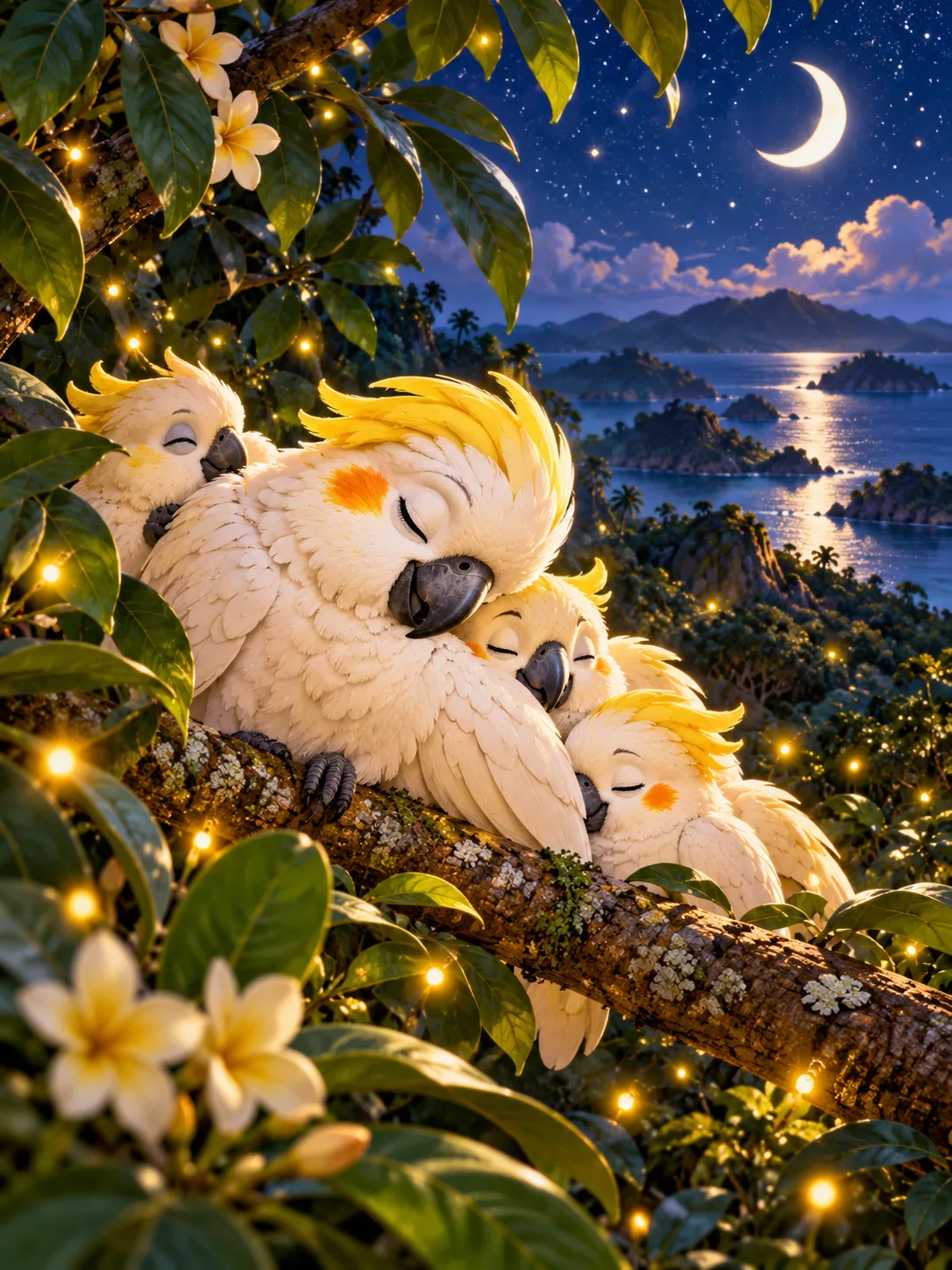
Piko closed his eyes. Tomorrow there is new fruit, new winds, and friends to greet. "Good night, my house," he whispered to himself.