
Nara the Anoa and the Rain Trail
Nara's hilarious adventure explores the forests of Sulawesi, follows the sound of water, and learns why anoa homes need to be guarded.
Ages 6–10 years · 8 min · 20 scenes
Morning after rain

That morning, the forests of Sulawesi were still wet from last night's rain. Nara opened her eyes, sniffed the air, then sneezed a little. "Hacim! I think my nose got caught in the rain." The leaves glistened, the soil smelled fresh, and from a distance the sound of water could be heard: tick… tick… plup! Nara raised her ears. What is that sound? He waited a moment, making sure the sound was not his own stomach asking for breakfast.
Leaves make a hat
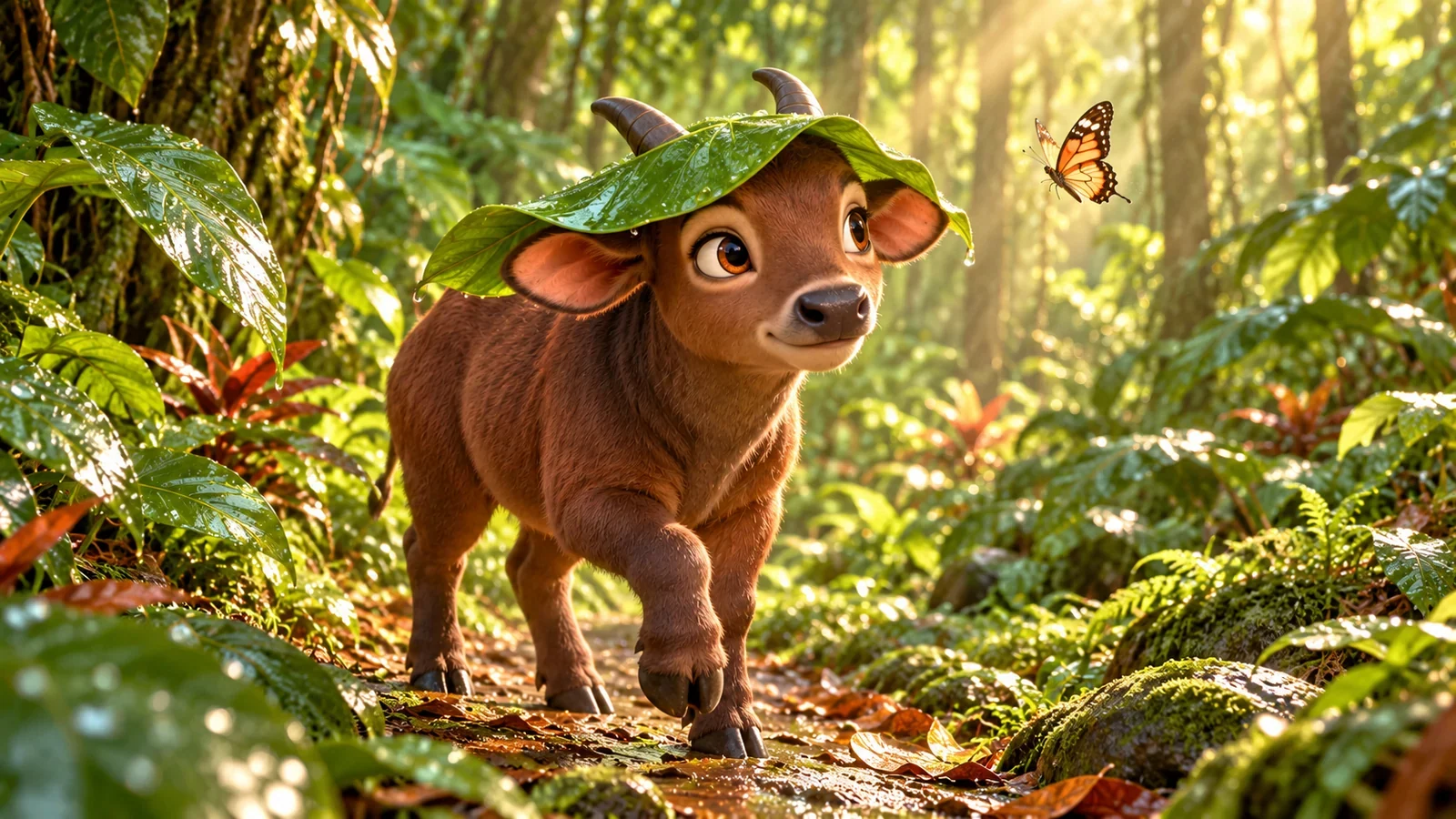
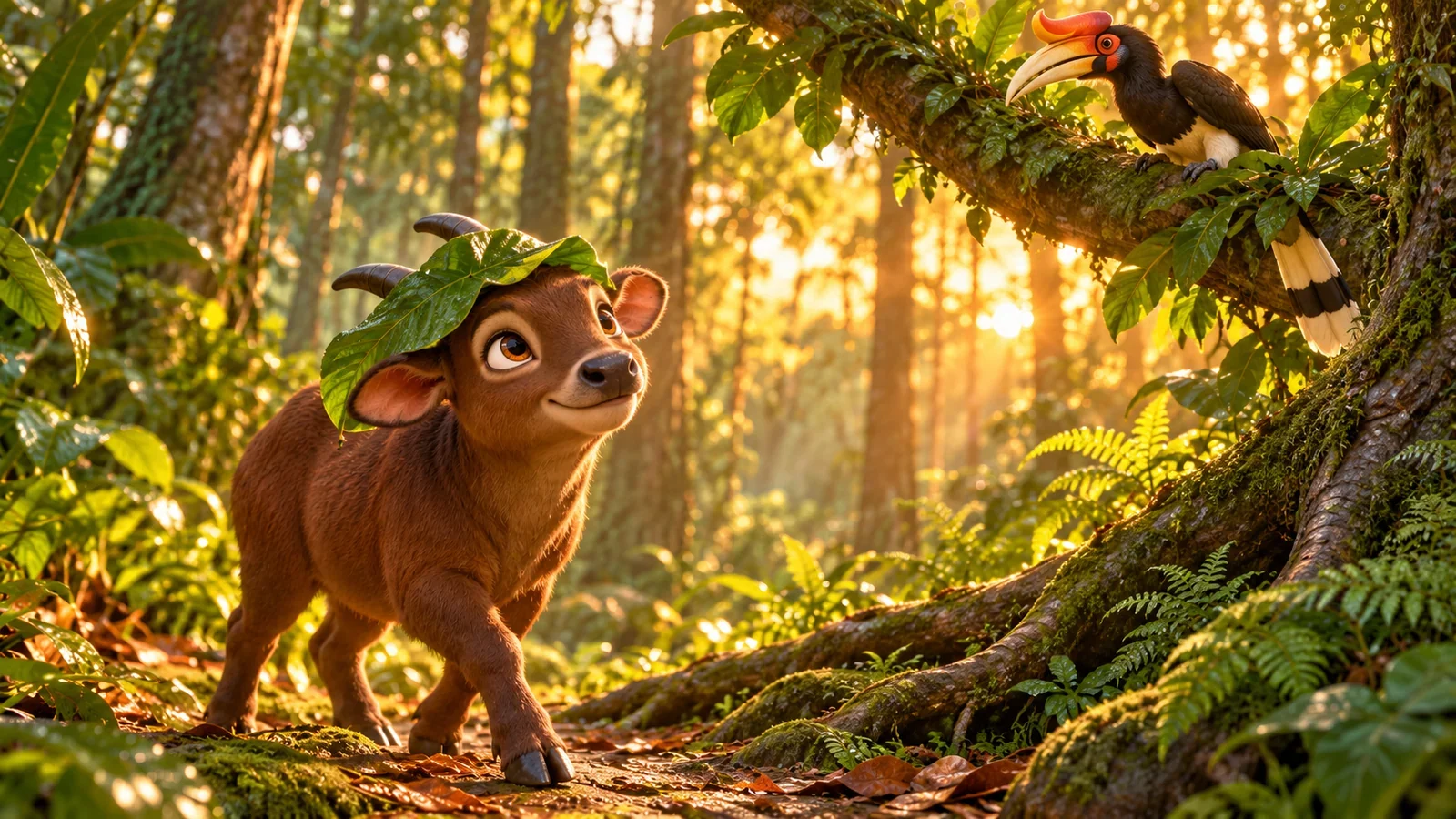
Nara walked slowly. Pluck! The broad leaves fell right on his head like a hat. He looked to the right, then to the left. "How, suitable?" he asked a passing butterfly. The butterfly just flies. The leaves on Nara's head swayed, while the sound of tick… tick… plup was heard again. Apparently the butterfly was busy looking for flowers, not being a stylist.
Anoa's favorite breakfast

Before looking for the sound, Nara had breakfast first. It chews young leaves and shoots, then finds fallen ripe fruit. Kres… yum! Anoa are plant eaters. "Breakfast is finished. The hat leaves are still free," muttered Nara. He sniffed the ground and saw a small trail leading to a shadier part of the forest. There, sunlight danced among the leaves like golden flecks.
A sound from behind the ferns
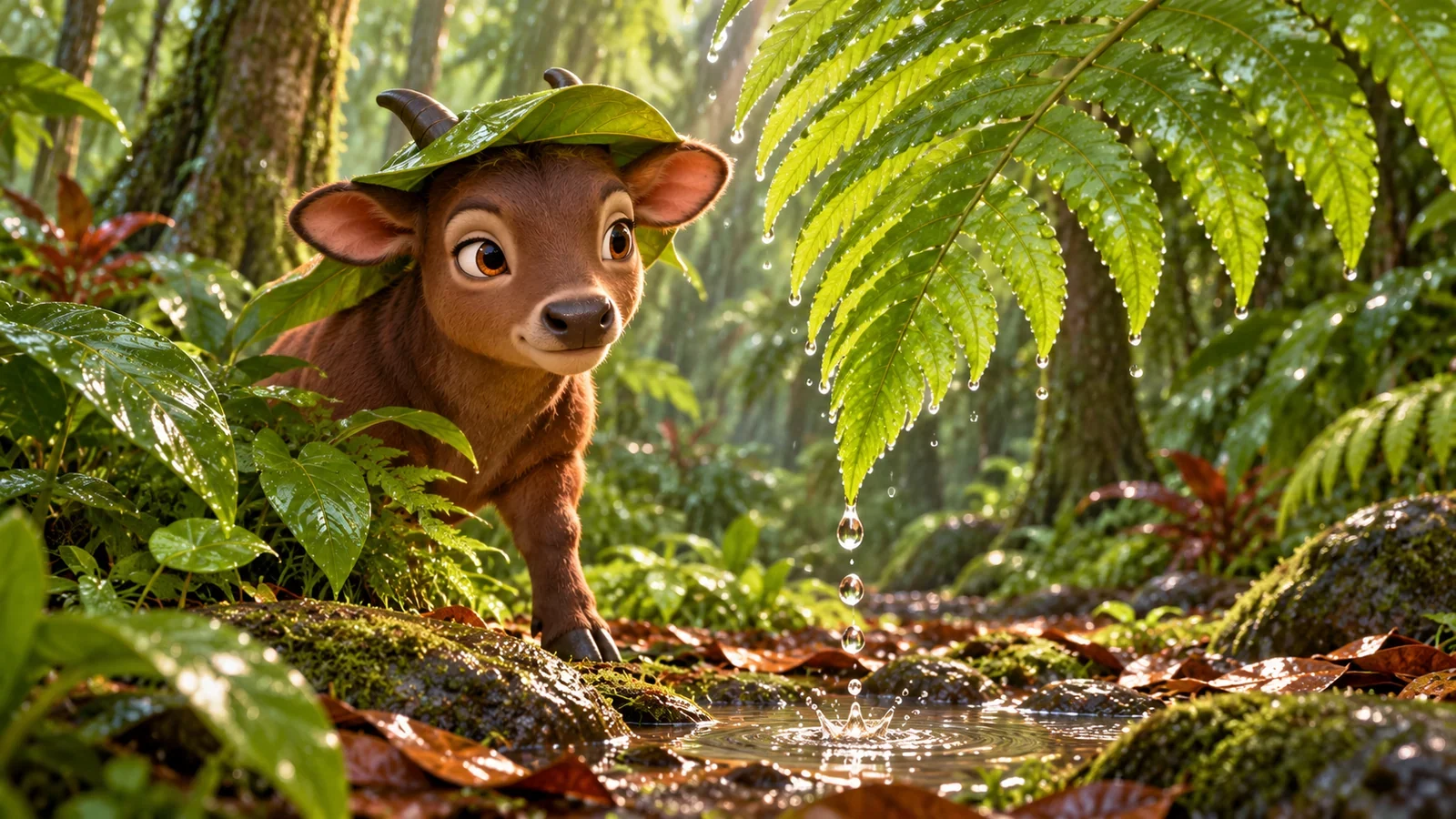
Tick… the sound came from behind the ferns. Nara ducked, but the leaves of her hat ducked too. Water drops fall into a small puddle: plup! “Oh, the water is drumming!” he said. He followed the sound with light steps, while choosing a path that was not too slippery. He knows that the ground after rain can make your feet slip easily.
Friends from high branches
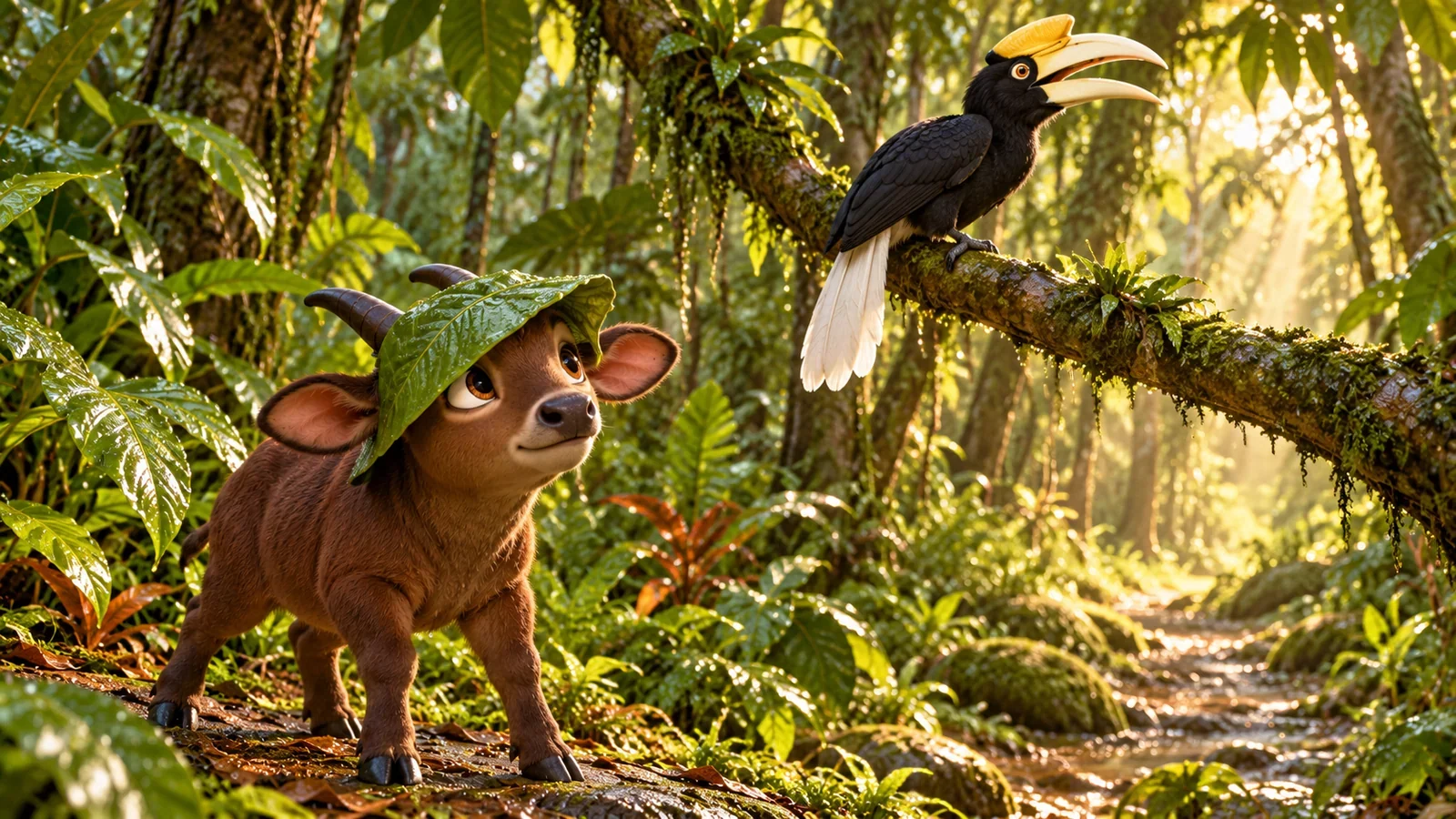
From the branch, a hornbill called out, “Sis-kak!” Nara looked up. "You know the sound of that water?" The hornbill flapped its wings and flew towards the brighter light. Nara followed from below, not in a hurry. The leaf of his hat finally drooped over one eye. “Now I have an eye patch too!” The big-headed hornbill flapped strongly, then glided between the trees.
Tiny footprints on the ground

On the damp ground, Nara saw small traces. He sniffed it, then heard the sound of water from the same direction. The forest has many small paths, but not all of them are easy to follow. Nara chose a wide and shady path. He walked carefully so as not to slip like the banana in the funny story. Traces on the ground help Nara notice anyone who might pass by.
Slippery ground
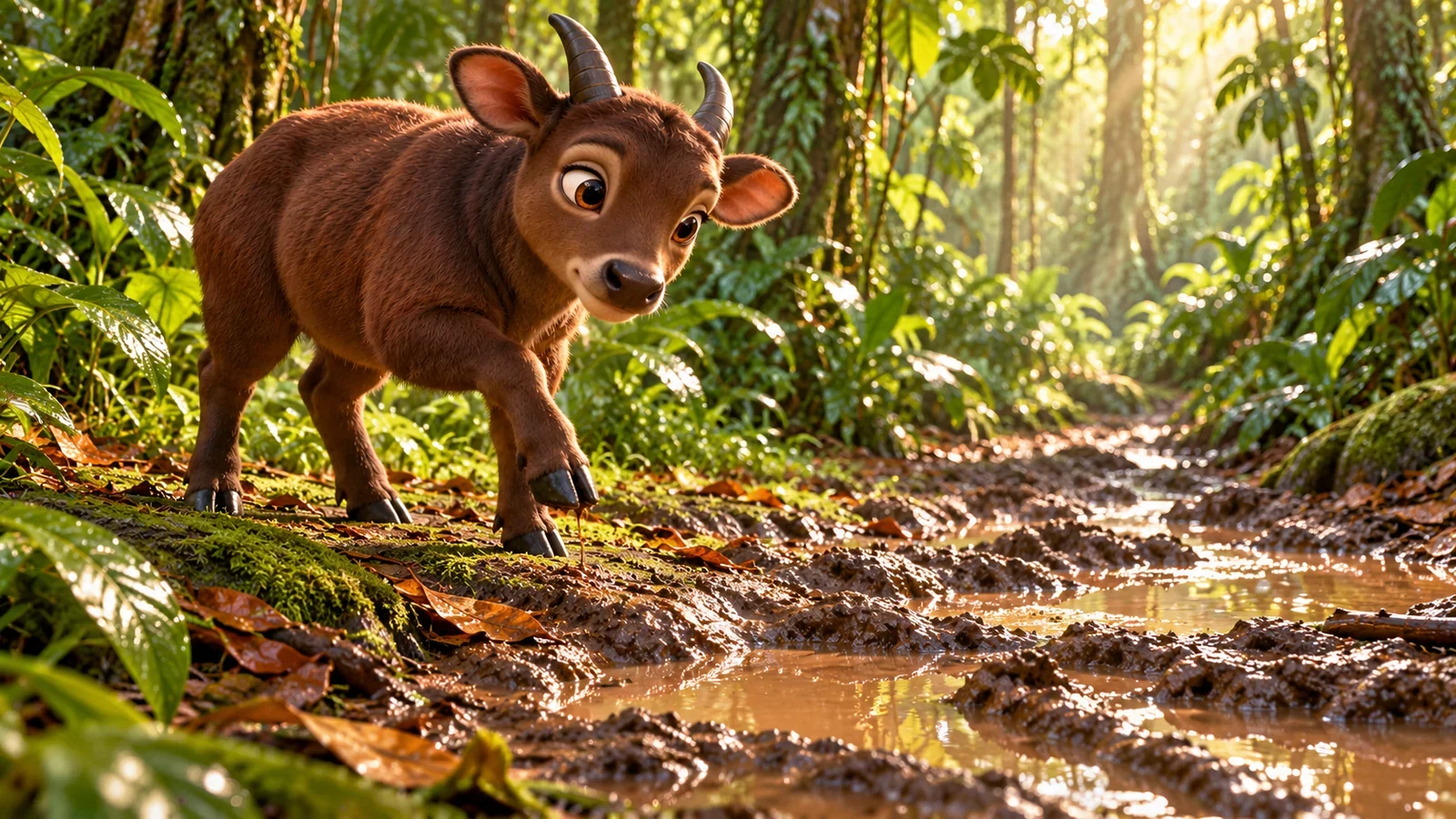
Ouch, the ground ahead is so slippery! Nara stopped and lowered her head to look at the footing. One leg forward slightly, then back. "It's not suitable yet. We're looking for a more stable path." He didn't force himself. After finding a drier part of the ground, Nara walked calmly again. Stopping for a while is sometimes the smartest way to continue your journey.
Sounds like a spoon
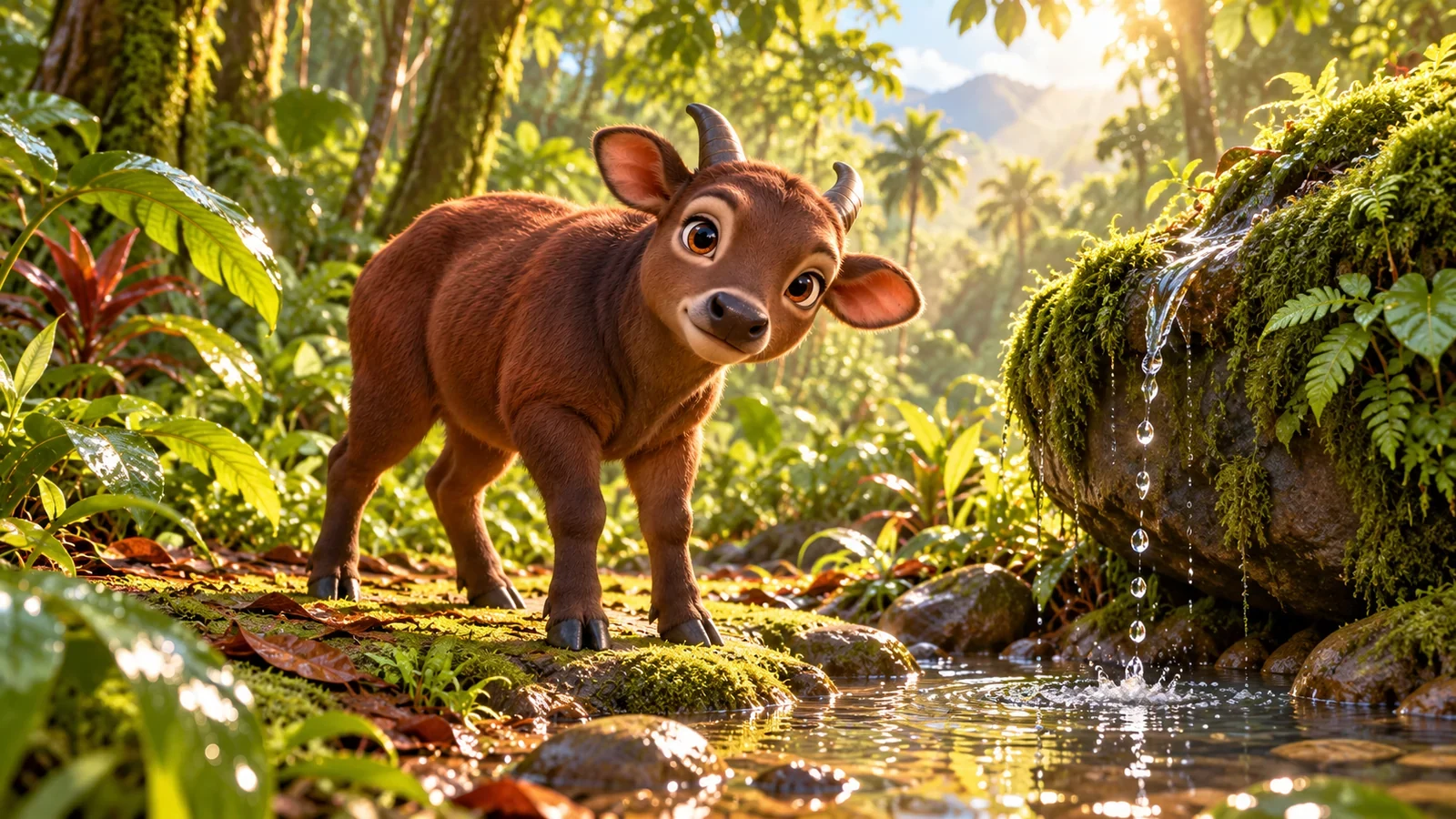
Tick…tick…plup! The sound was clearer now. Water drips from mossy rocks into shallow pools. Nara sniffed from the safety of the edge. “Like a spoon falling into a bowl!” It doesn't go into deep water. He just watched, listened, and remembered the way home. Clear, shallow water still needs to be approached with caution.
The sound of the forest is busy
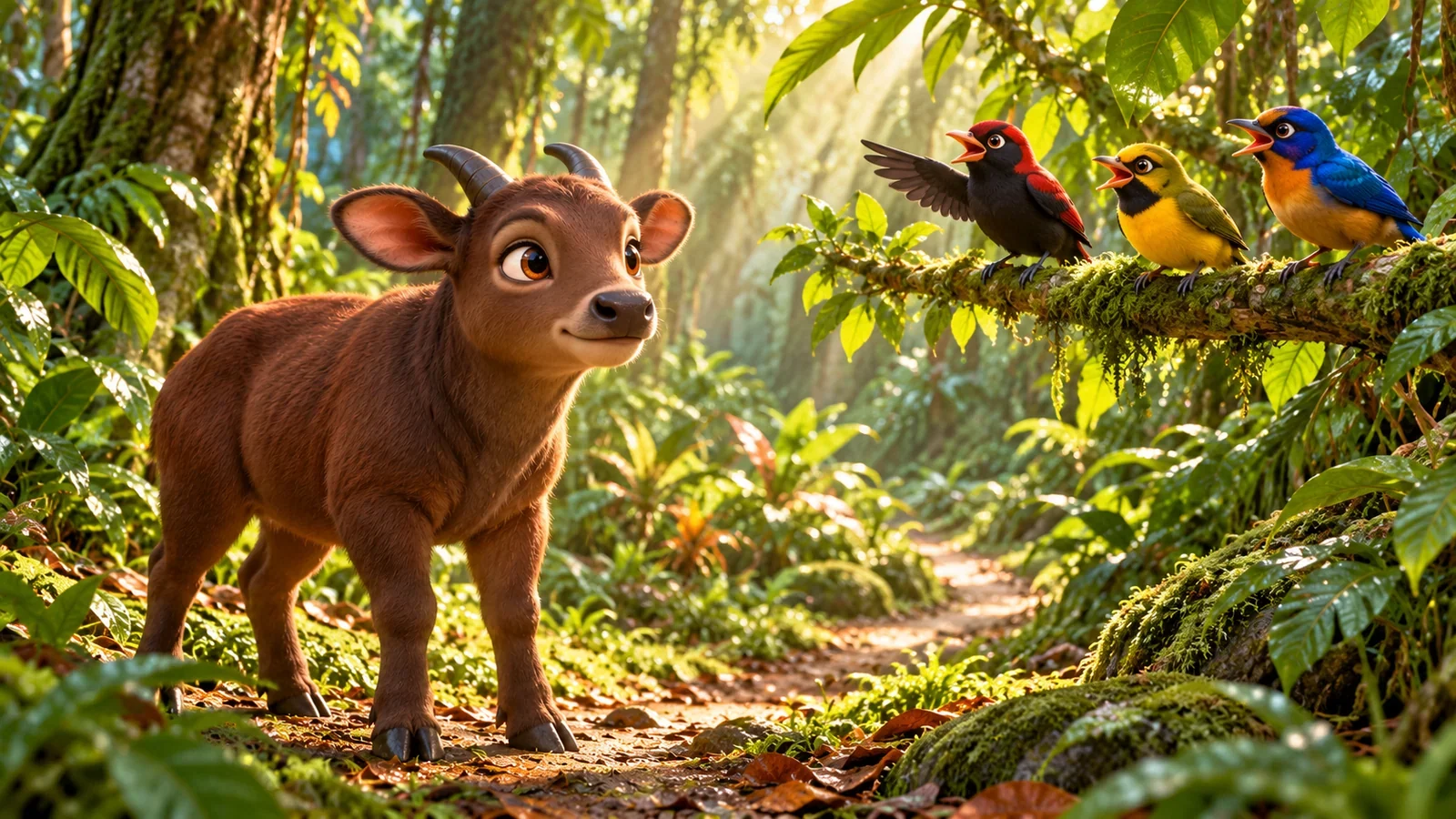
Suddenly the forest was busy: cheep-cheep, yoke-kuk, creak! Nara cocked her ear. The sound of the water was almost covered by the sound of birds and branches. "If everyone sings, who is the conductor?" He was silent for a moment. After the atmosphere was calmer, small rustling was heard again from behind the trees. The sounds of nature do come from the many residents and changes in the surroundings.
Two paths diverge
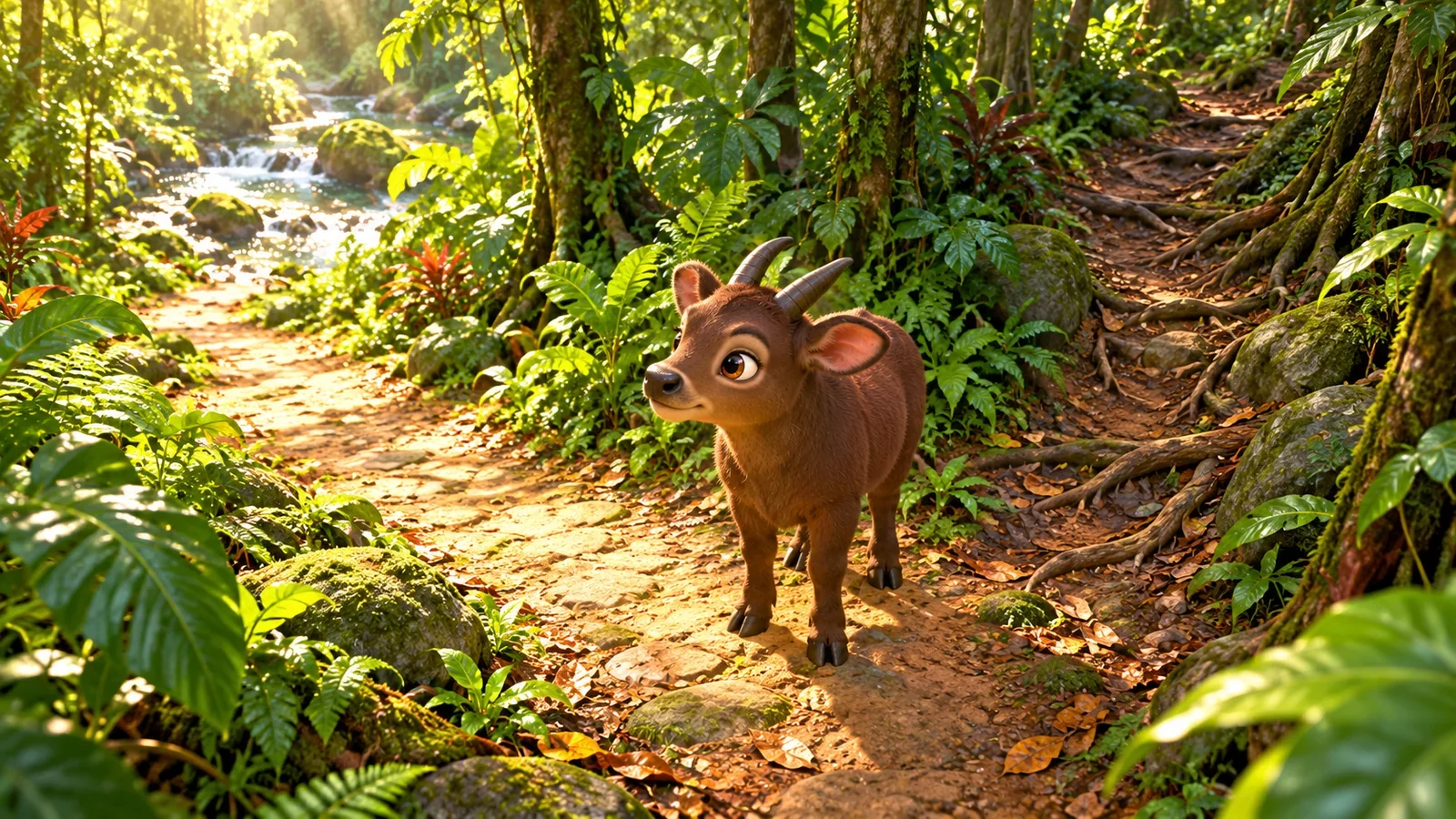
Ahead there are two paths. One is narrow and full of roots; others are more open. Nara sniffed the air. The smell of wet earth came from the open path. "Choose the safest route, not the one that seems fastest," he said. He stepped to the left, and then the leaf of his hat fell again. Plap! This time the leaf landed right on his back like a small bag.
The hornbill gave a hint
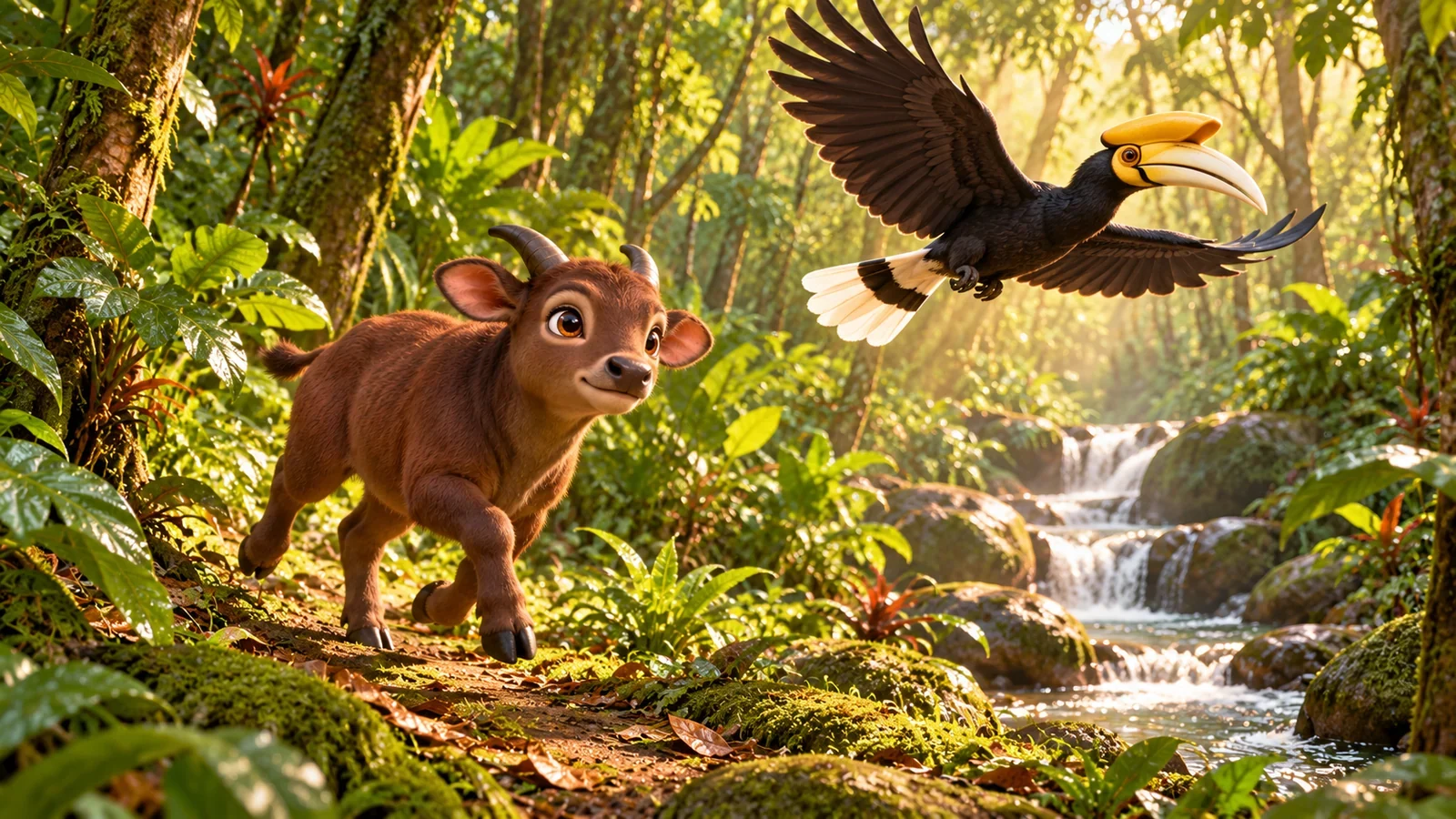
The hornbill flew past again. He stopped on a branch near the sound of water, then called, "Sis!" Nara nodded. “Thank you, winged guide!” They don't need to talk long. The hornbill hovers above, the Nara follows below, and the gurgling sounds grow closer. From above, the hornbill can see the trees from different directions.
Roots are like stairs

Large roots run across like a ladder. Nara lifted her foot slowly past him. One… two… success! He turned, making sure the path was still visible. The dense forest makes it shaded, but also worth looking closely at. "Roots are not a fence. But you still have to excuse me," he joked, sniffing the moss. He still let the small leaves near the roots grow.
The cobblestones sway
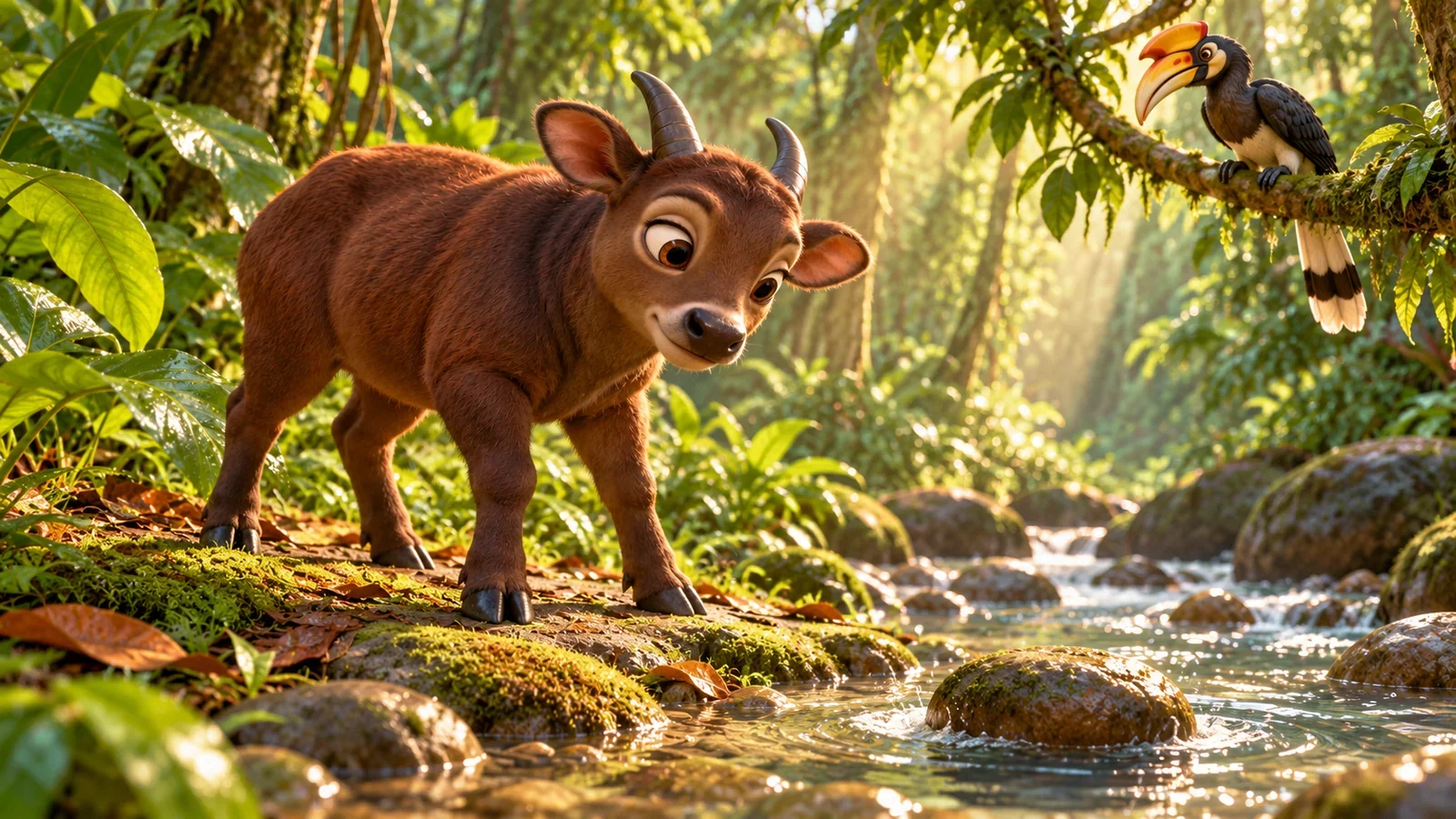
Ahead there is a round stone. Nara touched it with the tip of her fingernail. The rock swayed slightly. “Wow, the rocks are dancing!” Nara stepped back and looked for another solid footing. He didn't jump carelessly. The sound of rushing water was close, but safety was still more important than getting there quickly. Wet stones can be slippery, so Nara chose to look first before stepping.
Sparkling water behind leaves
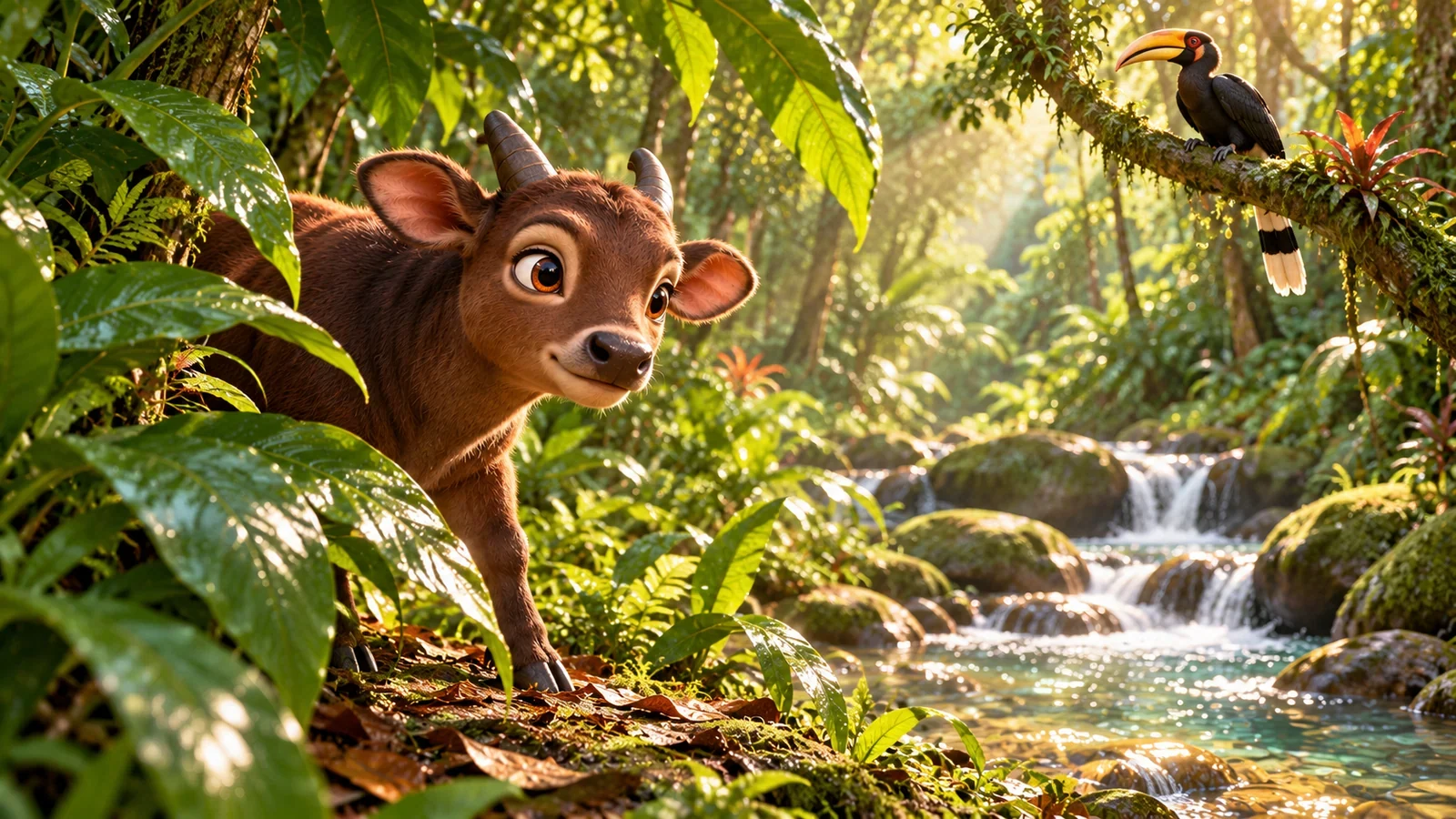
From the gaps in the leaves, Nara saw a stream of sparkling water. He stopped at a sloping, shady bank. "Found it too!" he exclaimed. A hornbill perches on a nearby branch. They watched the water from a safe distance, while the leaves dripped with rain residue: tick… tick… like little applause. Sunlight makes the surface of the water appear to twinkle.
Breakfast by the stream
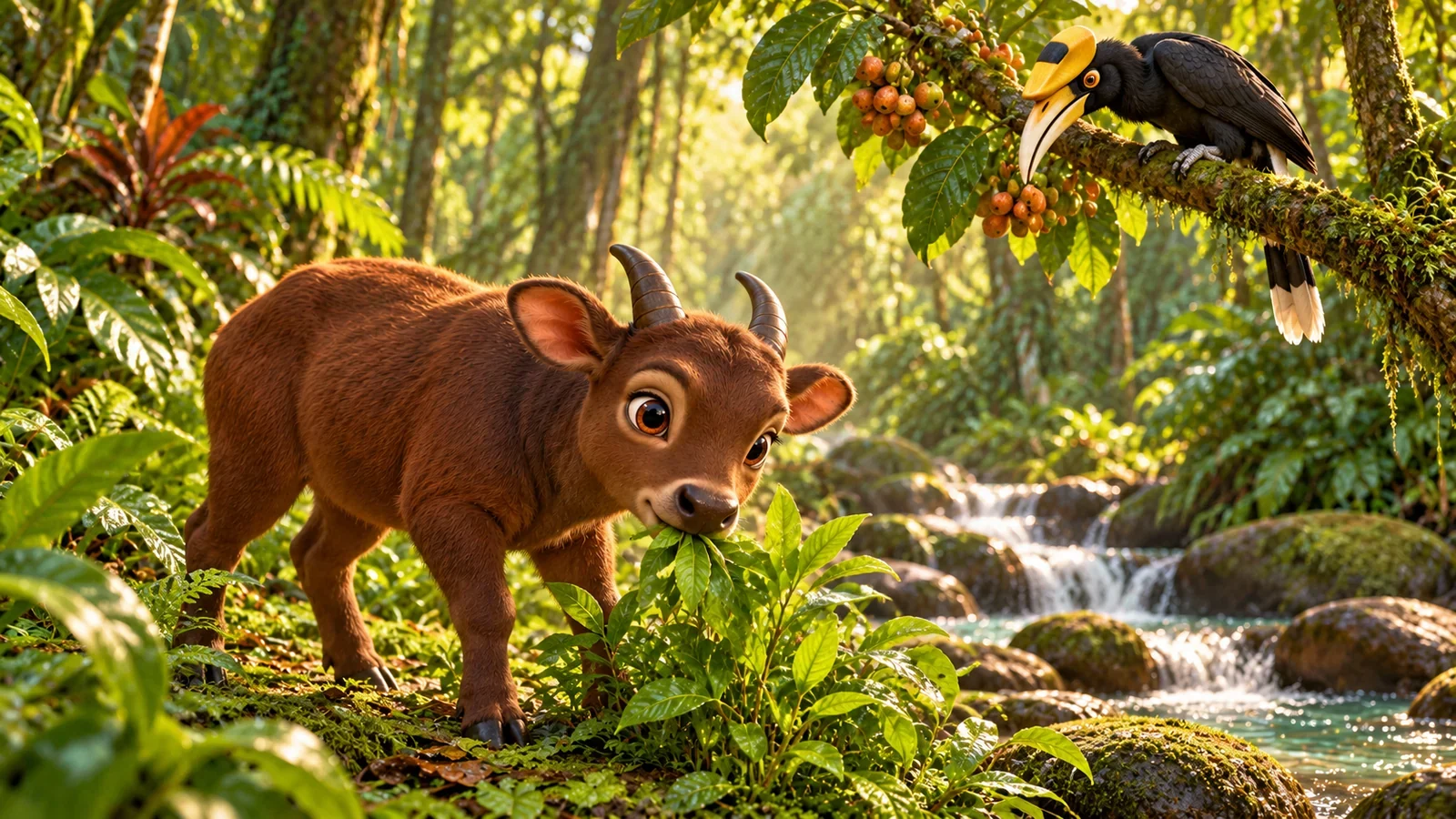
Near the stream, Nara found young shoots and fresh leaves. He ate slowly. Hornbills look for fruit on branches, according to their respective menus. Nara eats plants, including leaves, shoots and fallen fruit. "Second breakfast? Yes, as long as your stomach agrees," he said while chewing. They share the same space, but search for food in different ways.
The forest has many houses

Nara saw tall trees, ferns, bushes, and a small stream. Many creatures use different parts of the forest to find food or shelter. “This forest is like a big house with many rooms,” he said. He took care of his steps so as not to damage the small plants growing along the path. Every well-maintained section helps many residents find their needs.
Nara anoa Sulawesi
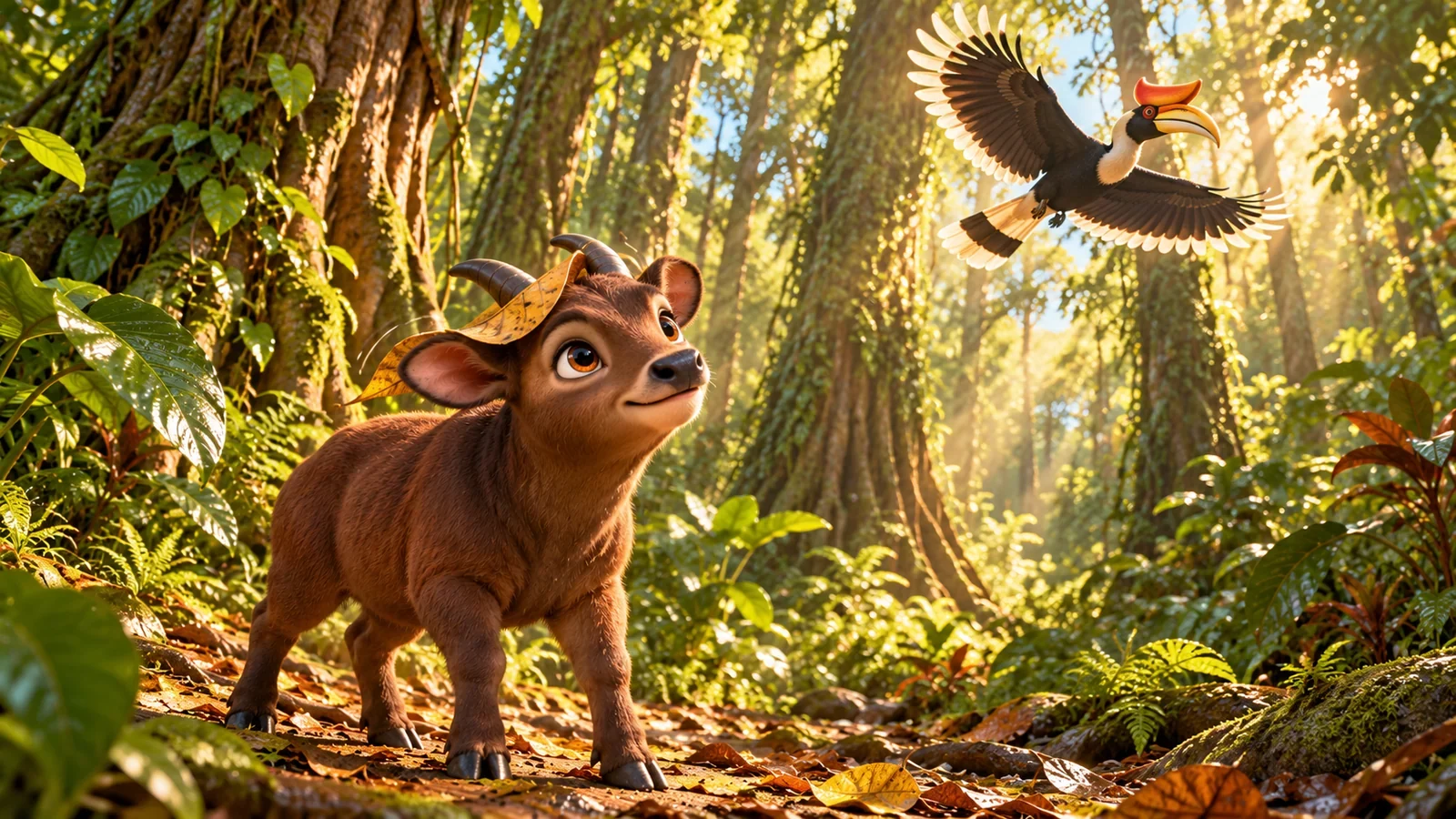
Mother once told me that anoa live naturally on Sulawesi and Buton Island. "Wow, that means my house is special!" Nara said. He looked at the tall trees around him. Then the leaves of his hat fell right onto his nose. “Special house, ordinary hat,” he muttered with a chuckle. Because they live in unique places, anoas need safe forests to live.
Walk home before evening
The sun was starting to set. Nara recognized the large roots and ferns she had passed earlier. He returned along the same route, without rushing. The hornbill flies to a higher branch. “See you, keeper of the sound of water!” he called. Nara laughed. He even managed to get home without losing his leaf hat—almost. When the wind blows, it holds the leaves tightly.
The story about Anoa's house

In a shady place, Nara met her mother. He told stories about the sound of water, dancing rocks, and hornbills that guide the way. The mother listened while sniffing the air. Anoa is an animal that needs to be protected. Safe forests help them live. Nara leaned back for a moment, relieved to be back home. Her mother touched her nose to Nara's head, a sign of warm affection.
A warning gurgle

Night fell, and the gurgling of water could be heard softly from a distance. Nara smiled. He learned to be curious, but cautious; Forests and water are part of the home of many animals. "Tomorrow I'll explore again," he whispered. Pluck! New leaves fell on his head. “Spare hat!” Nara laughed softly, then rested for the next adventure.