Nala and the Sounds of the Sumatran Forest
The adventure of a baby elephant learning to use a trunk, listening to his family, and guarding his forest home
Ages 6–10 years · 5 min · 20 scenes
Dawn in the jungle of Sumatra
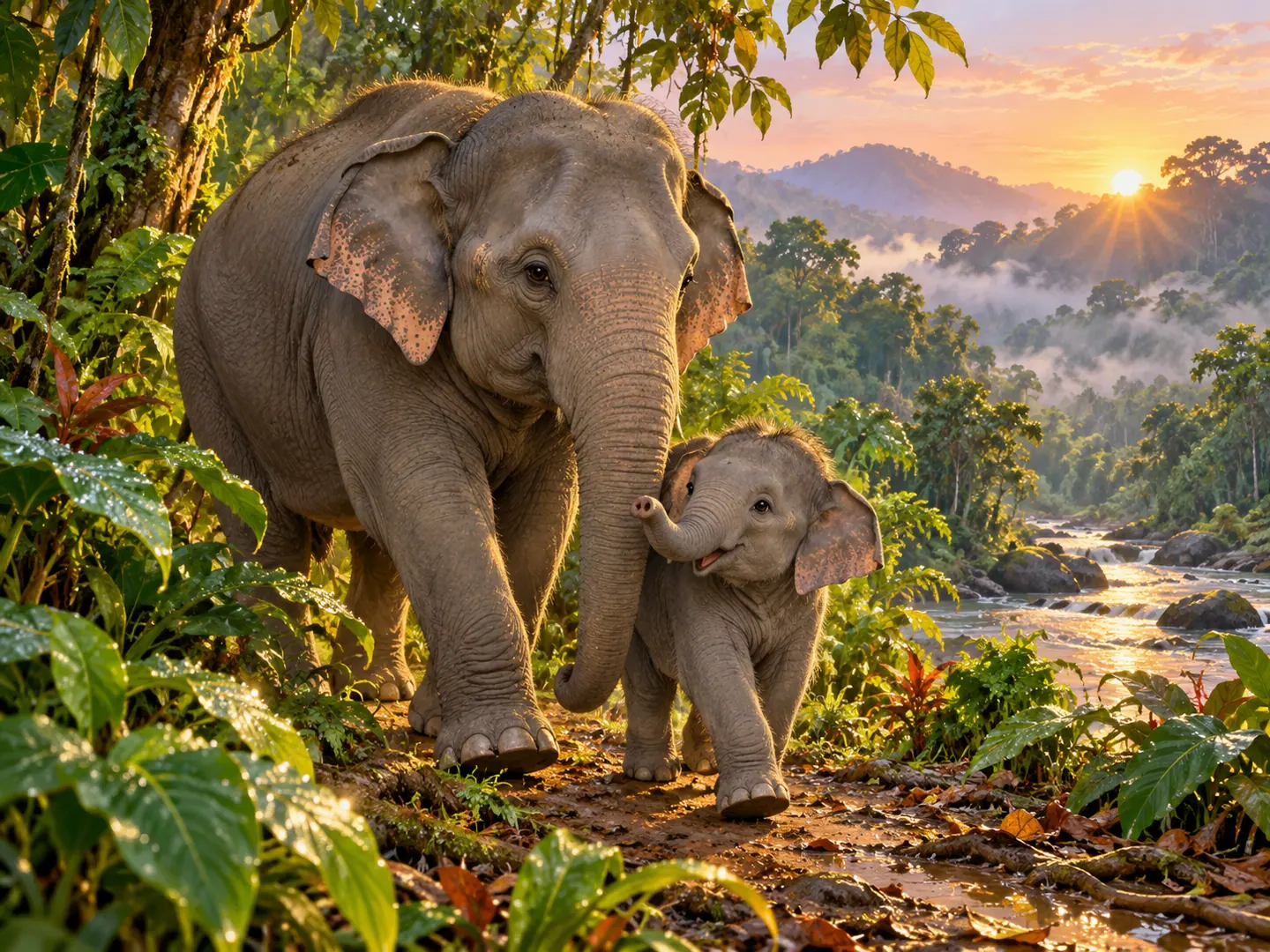
Dawn hits the forests of Sumatra. Nala, the little elephant calf, walked near Mother while treading on the wet ground.
A call from behind the trees
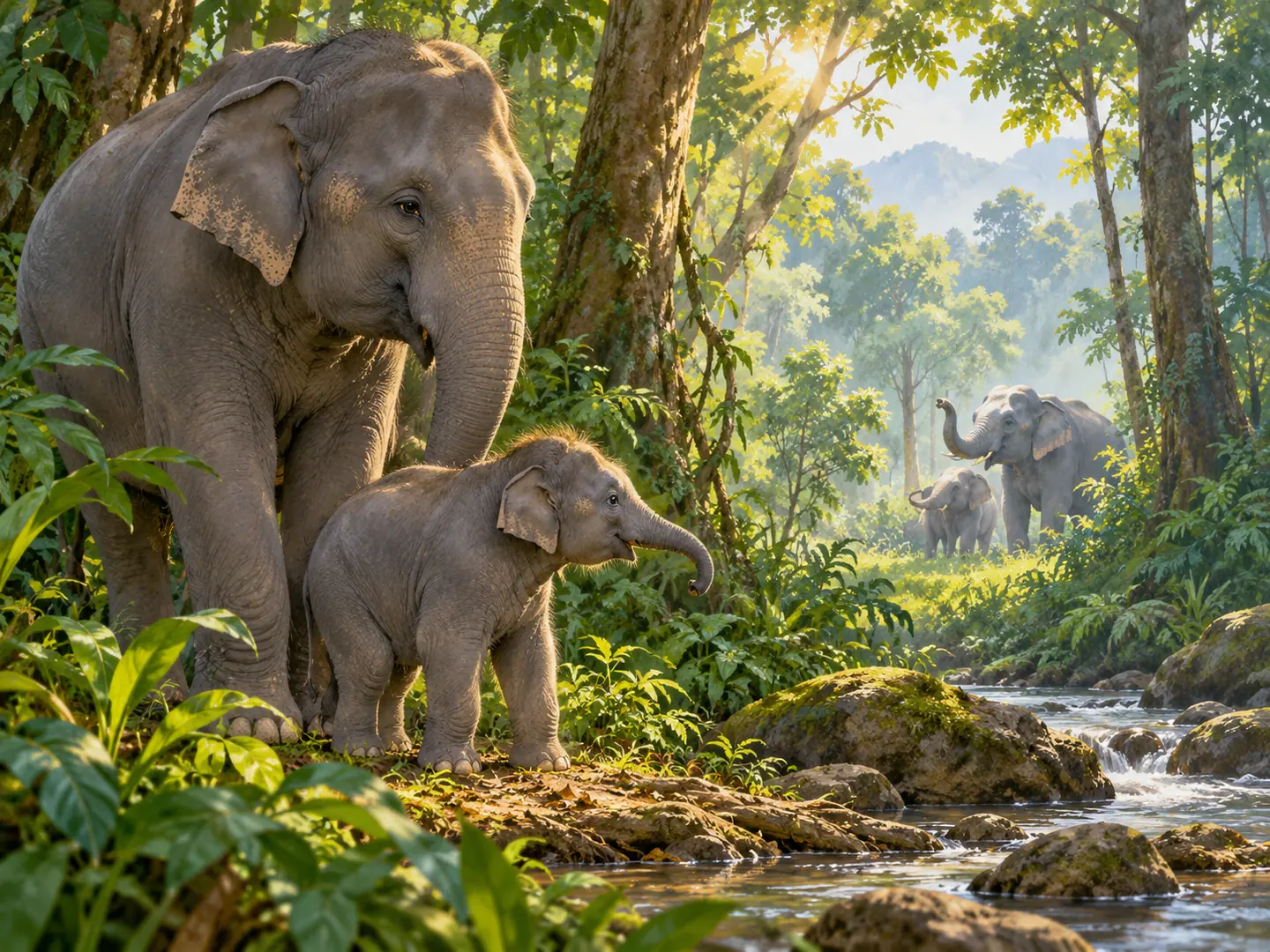
From behind the trees came a long call. Nala's family answered each other to stay close.
Smell the forest
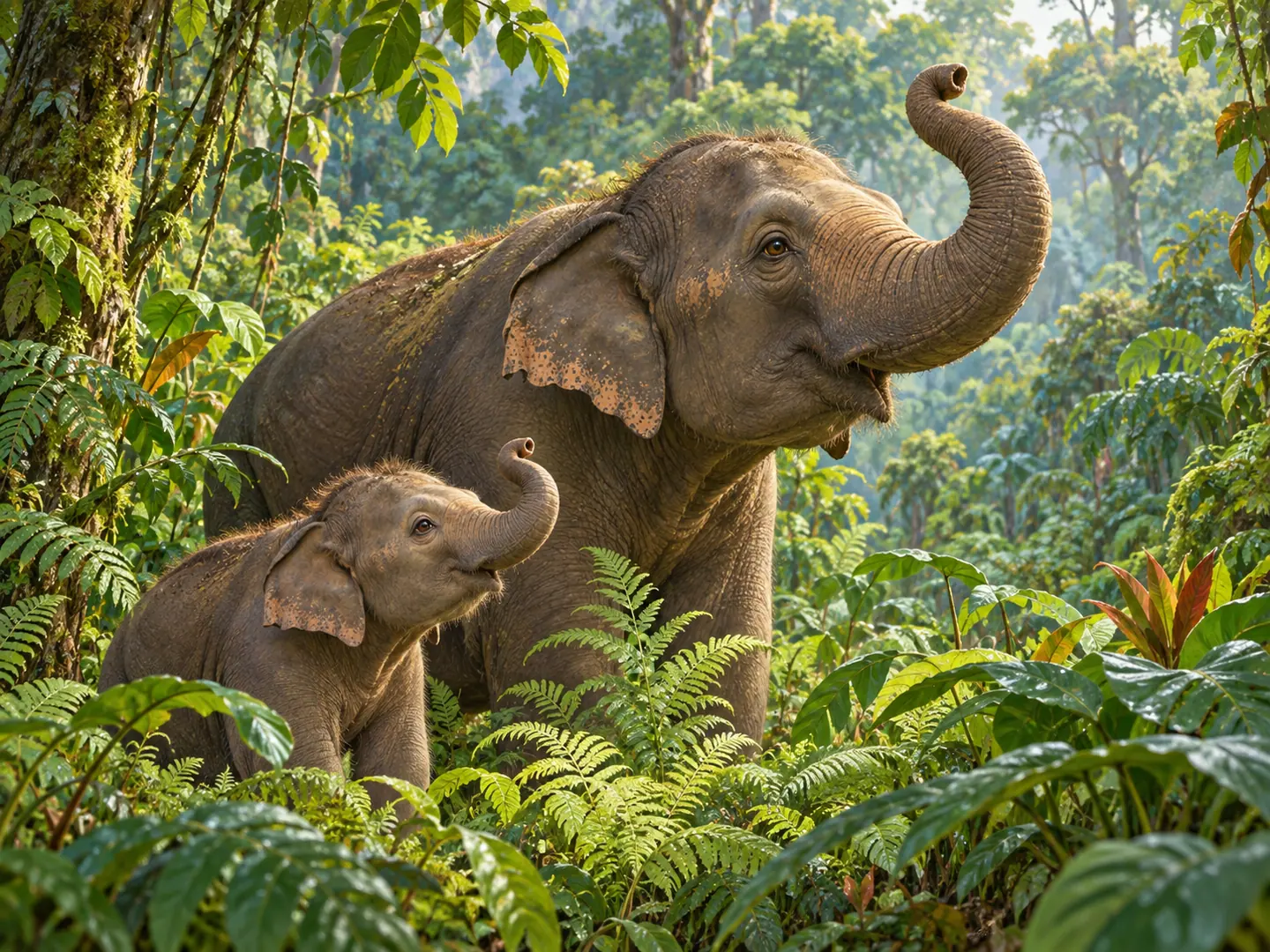
Mother's trunk moved through the air, sniffing the scent of leaves and water. Nala tried to imitate the movement.
Learn to use the trunk
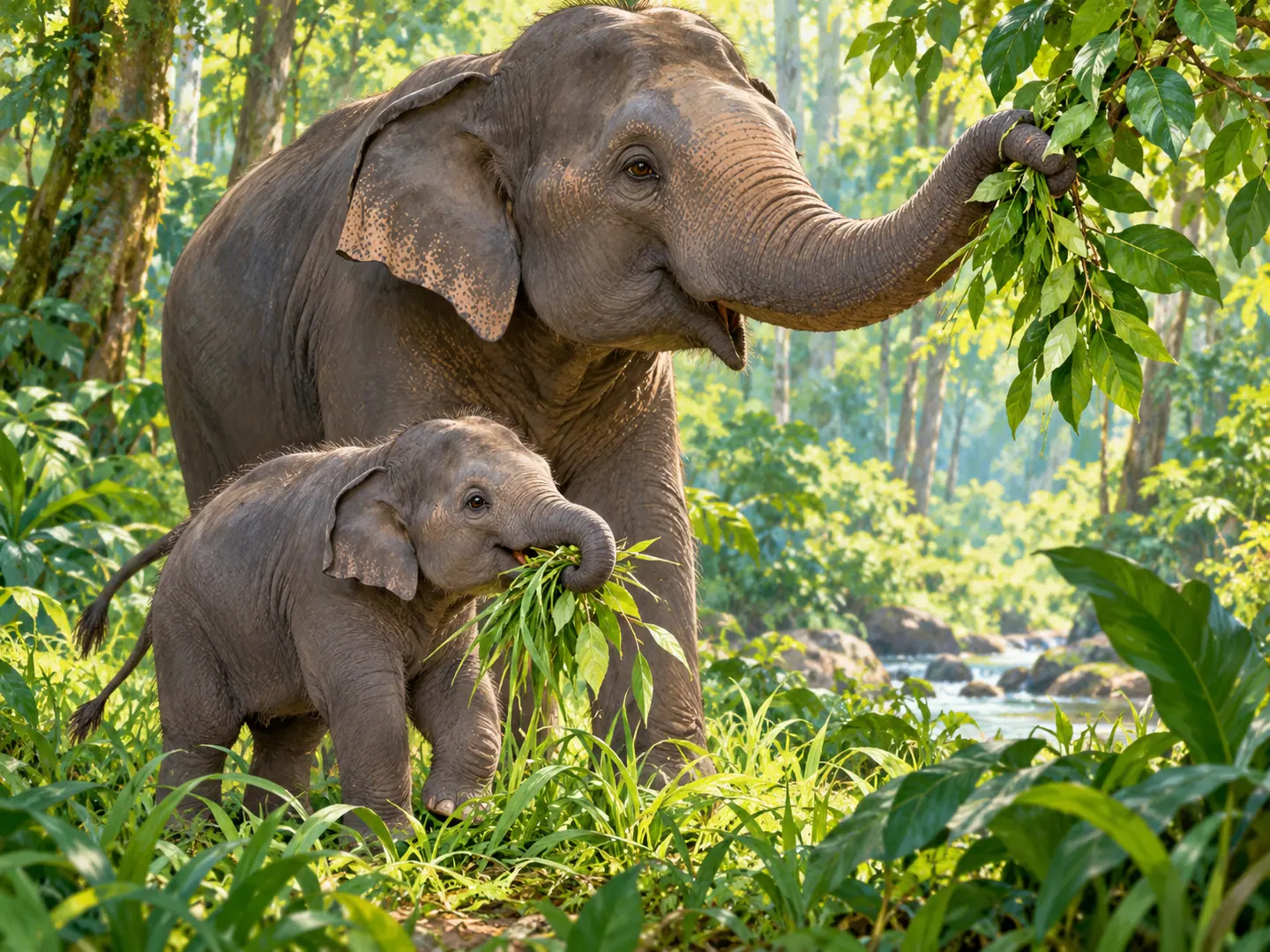
With her flexible proboscis, Mother took the young leaves. Nala learned to grasp the grass using the tip of her trunk.
Following the shady path
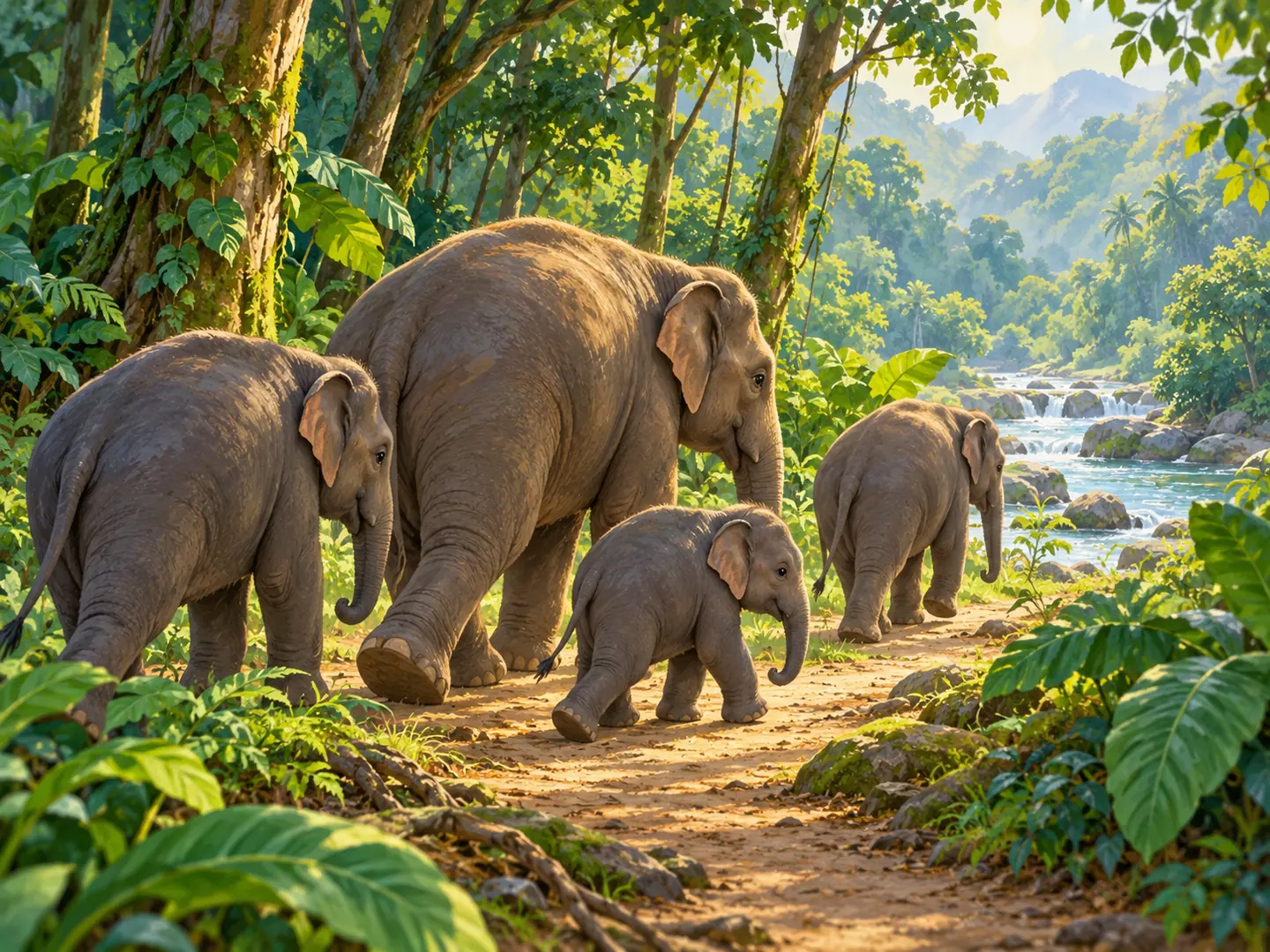
They walked along a shady path, following Mother who knew the way to a spring in the forest.
Drink from the river
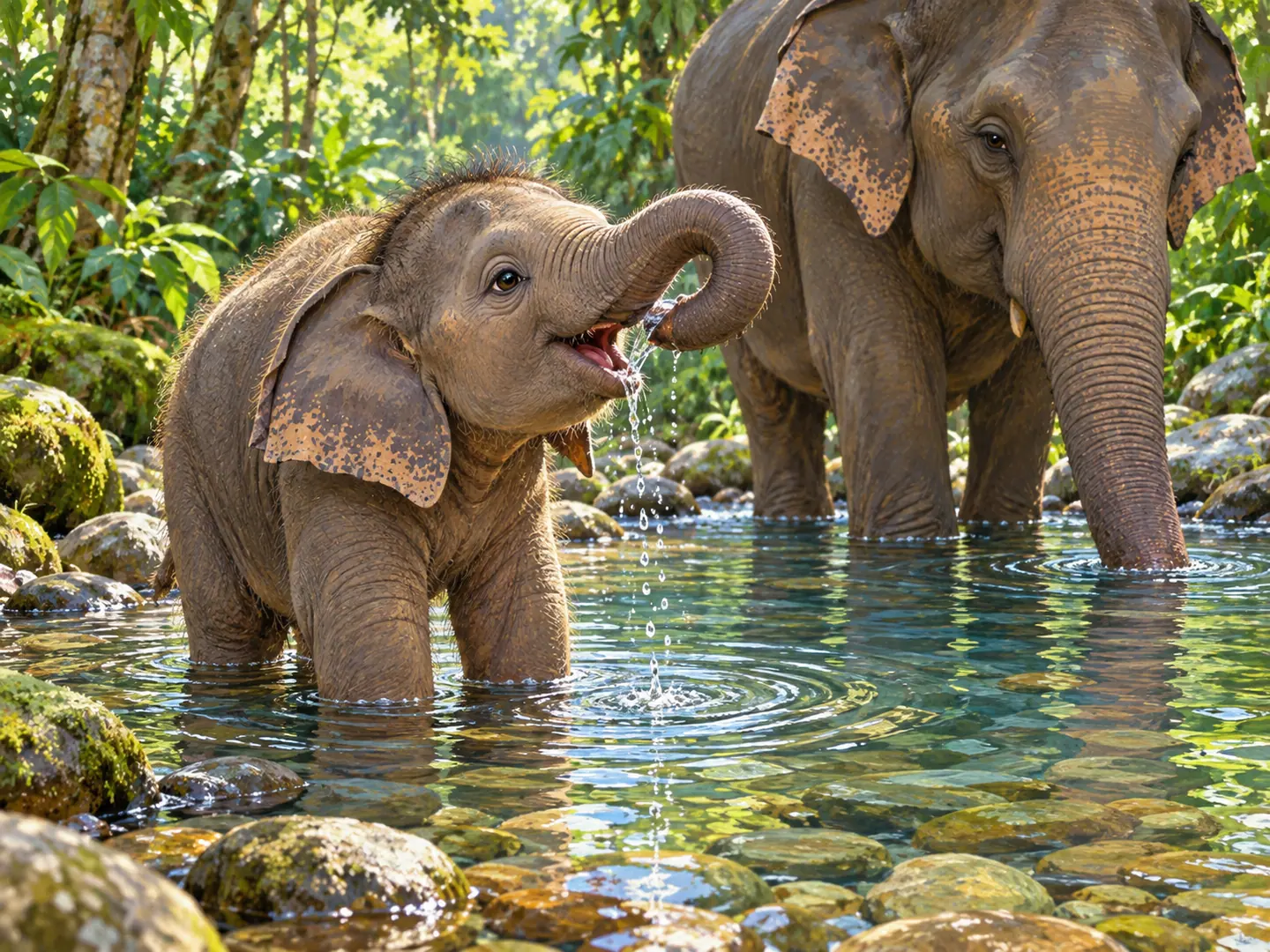
At the small river, Nala sucked up water with her trunk and then poured it slowly into her mouth.
A refreshing splash
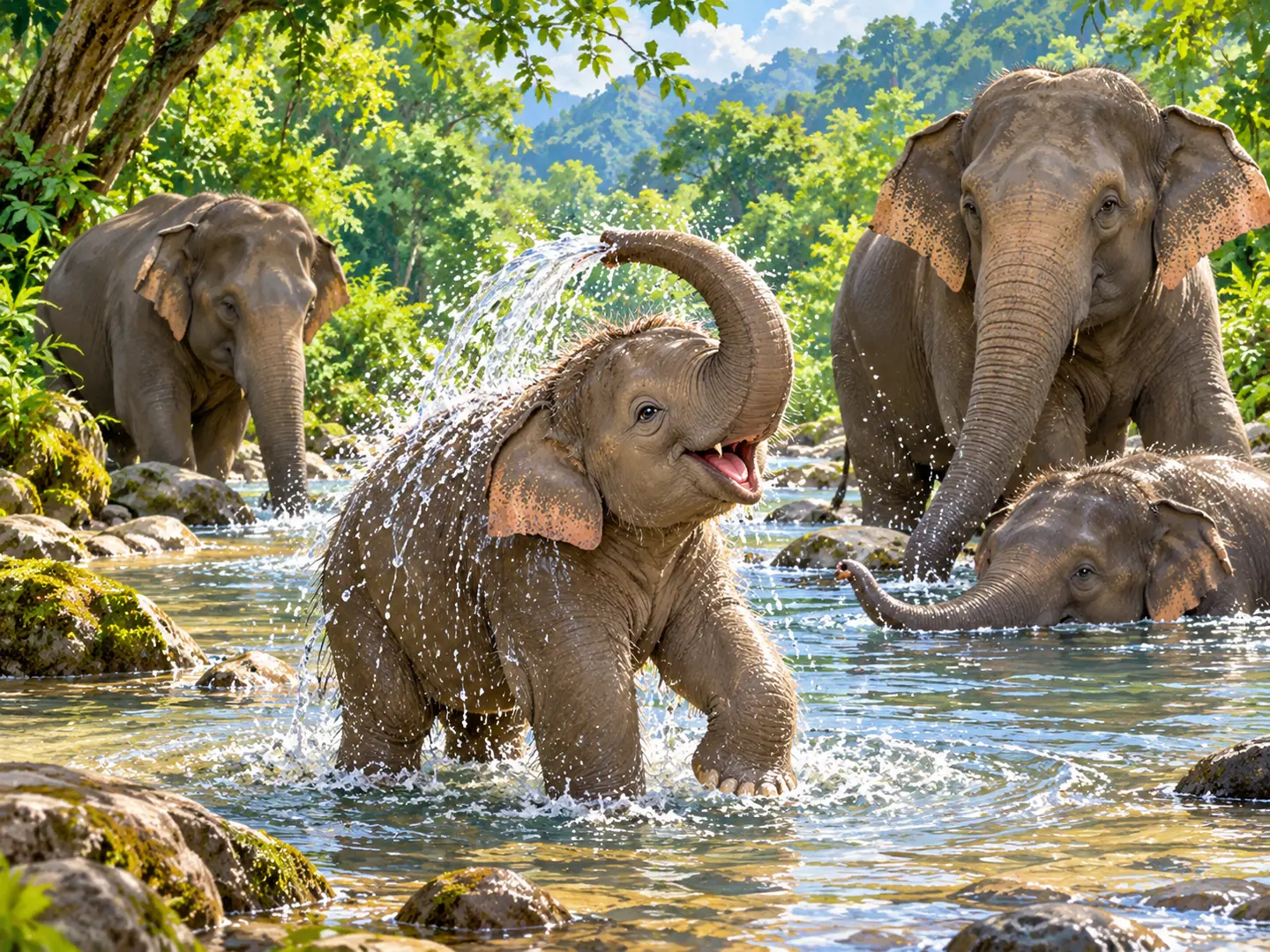
Water splashed on Nala's back. He wiggled his ears, while his family cooled off.
Mother's familiar voice
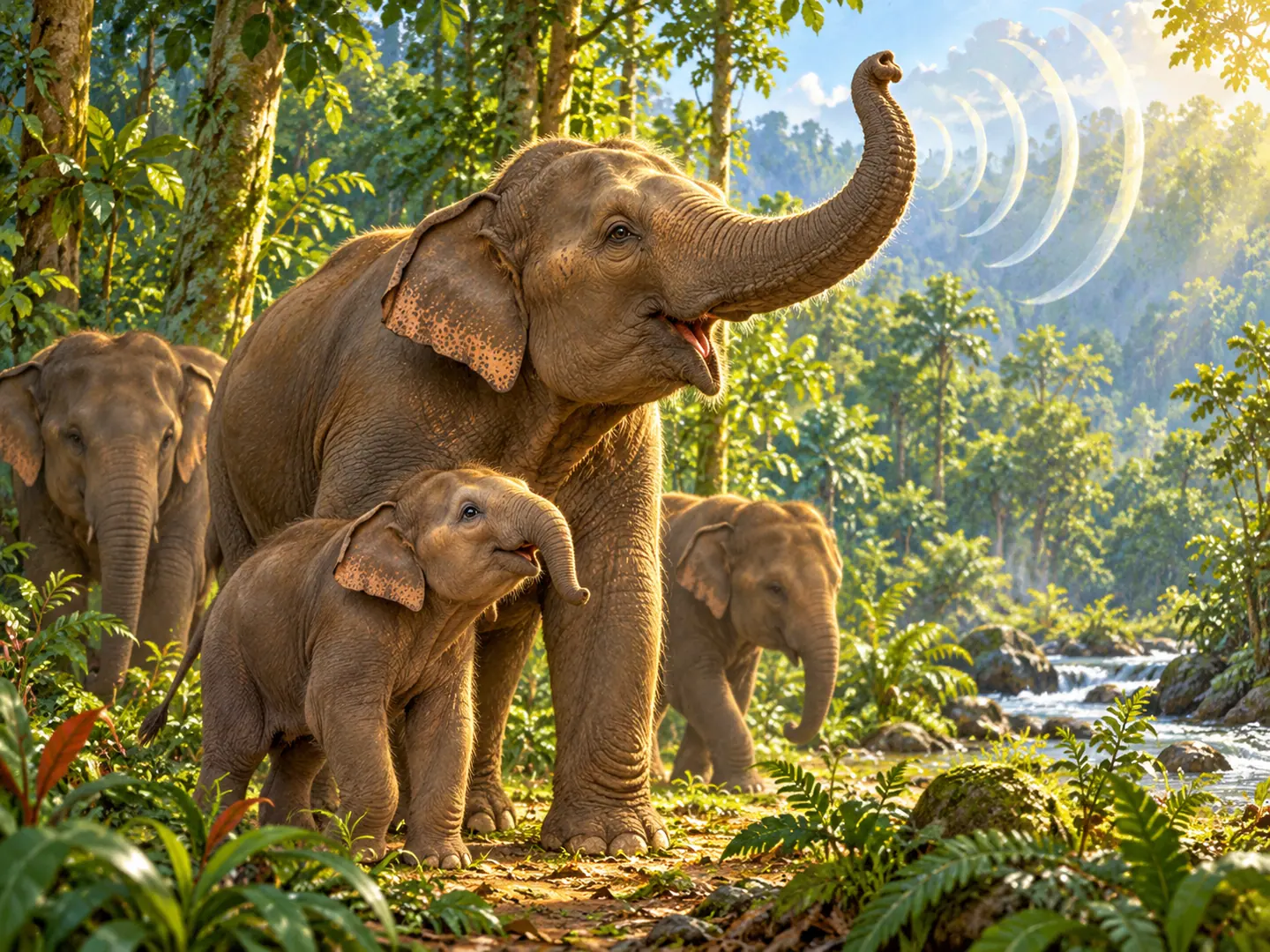
Mother raised her trunk and made a loud voice. Nala recognized the call, then snuggled up to his side.
Respond to each other
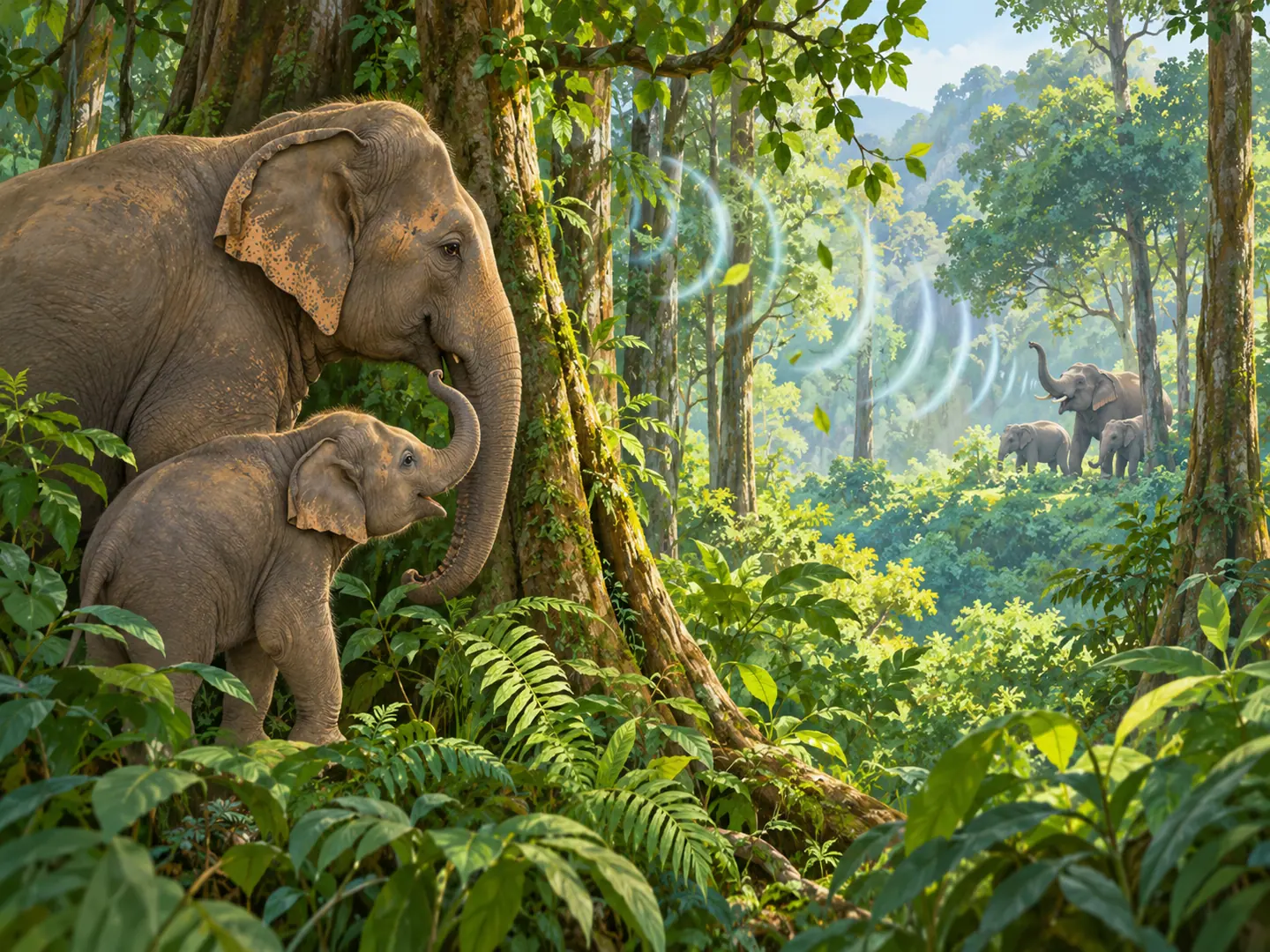
Another elephant responded from a distance. Sound and movement help families keep finding each other.
Big footprints on the ground
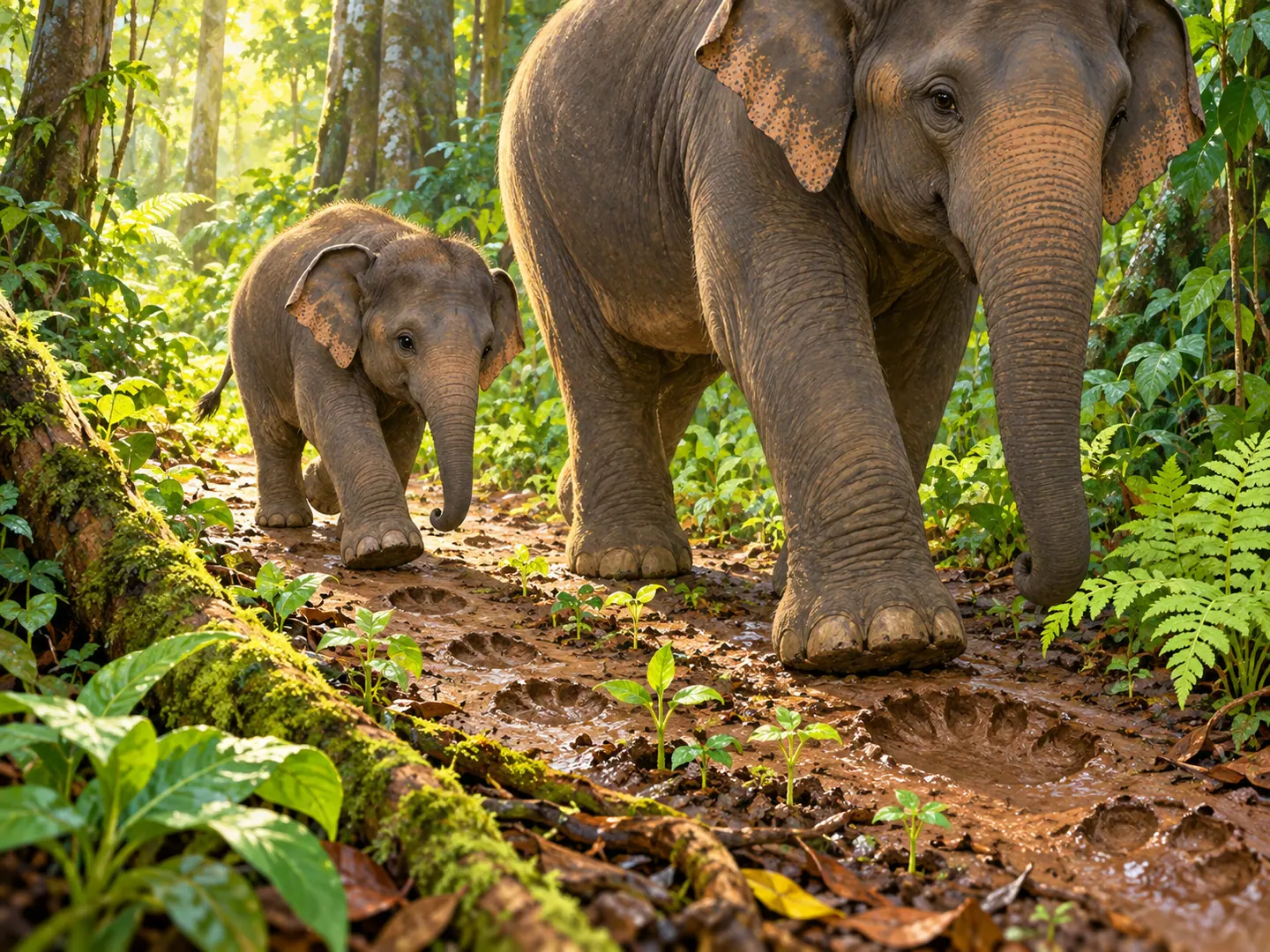
Nala's steps left a wide trail. Mother invited him to walk slowly among the young plants.
Seeds that go along
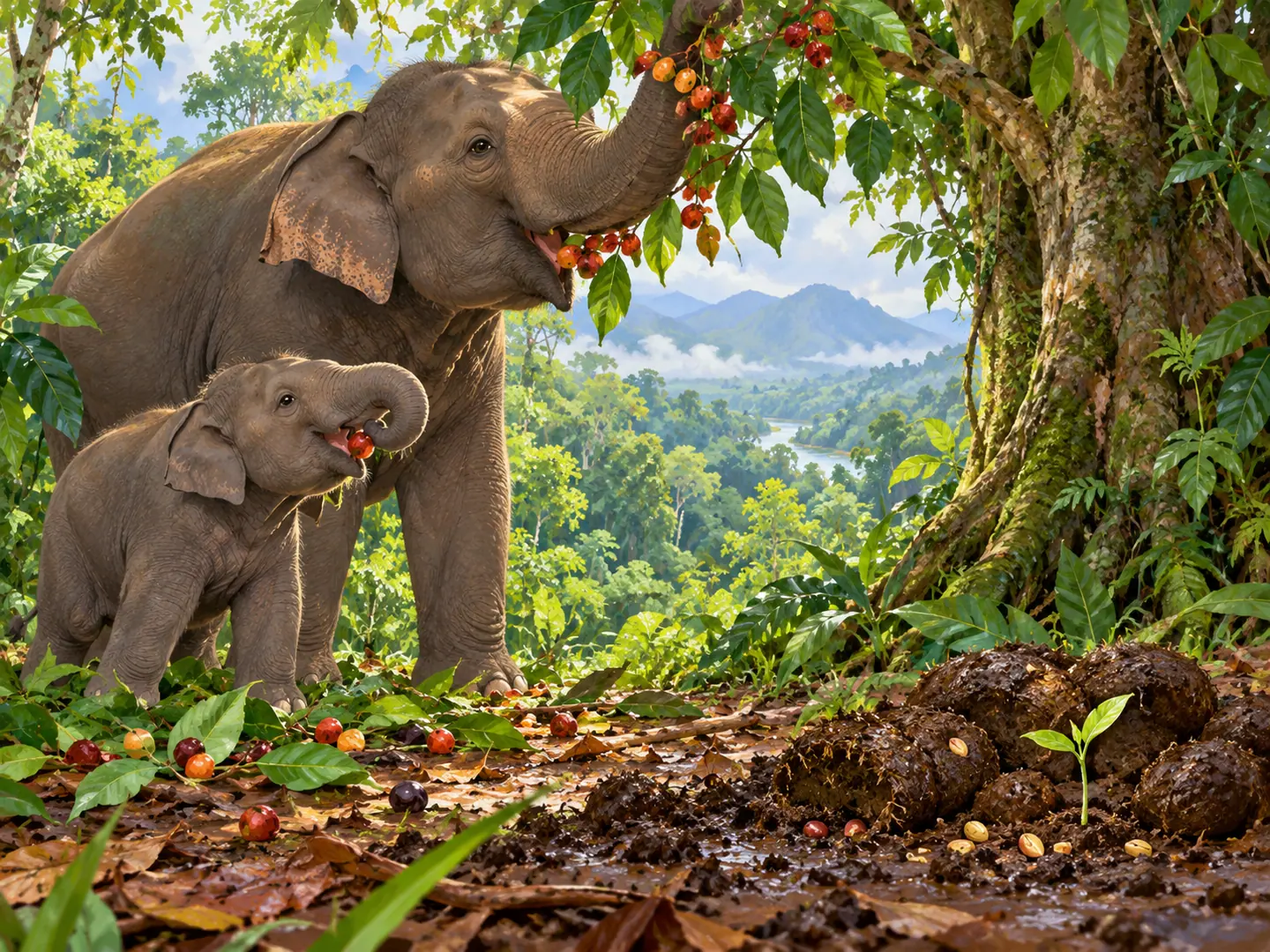
They eat forest fruit. The seeds can later be spread far away in elephant dung and grow again.
Narrowed living space
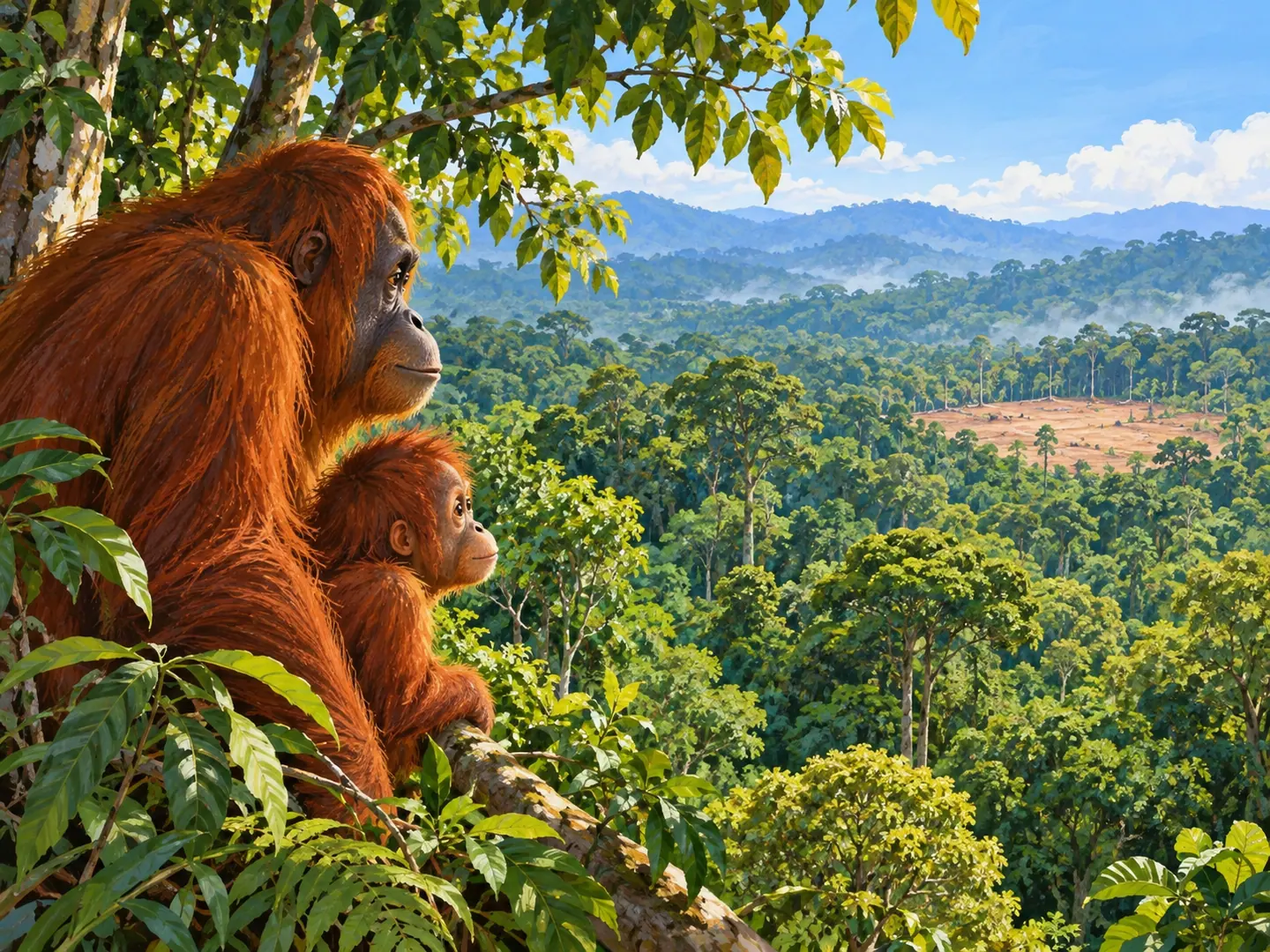
At the end of the trail, the trees started to become sparse. Disconnected living spaces make elephant journeys more difficult.
Return to safety
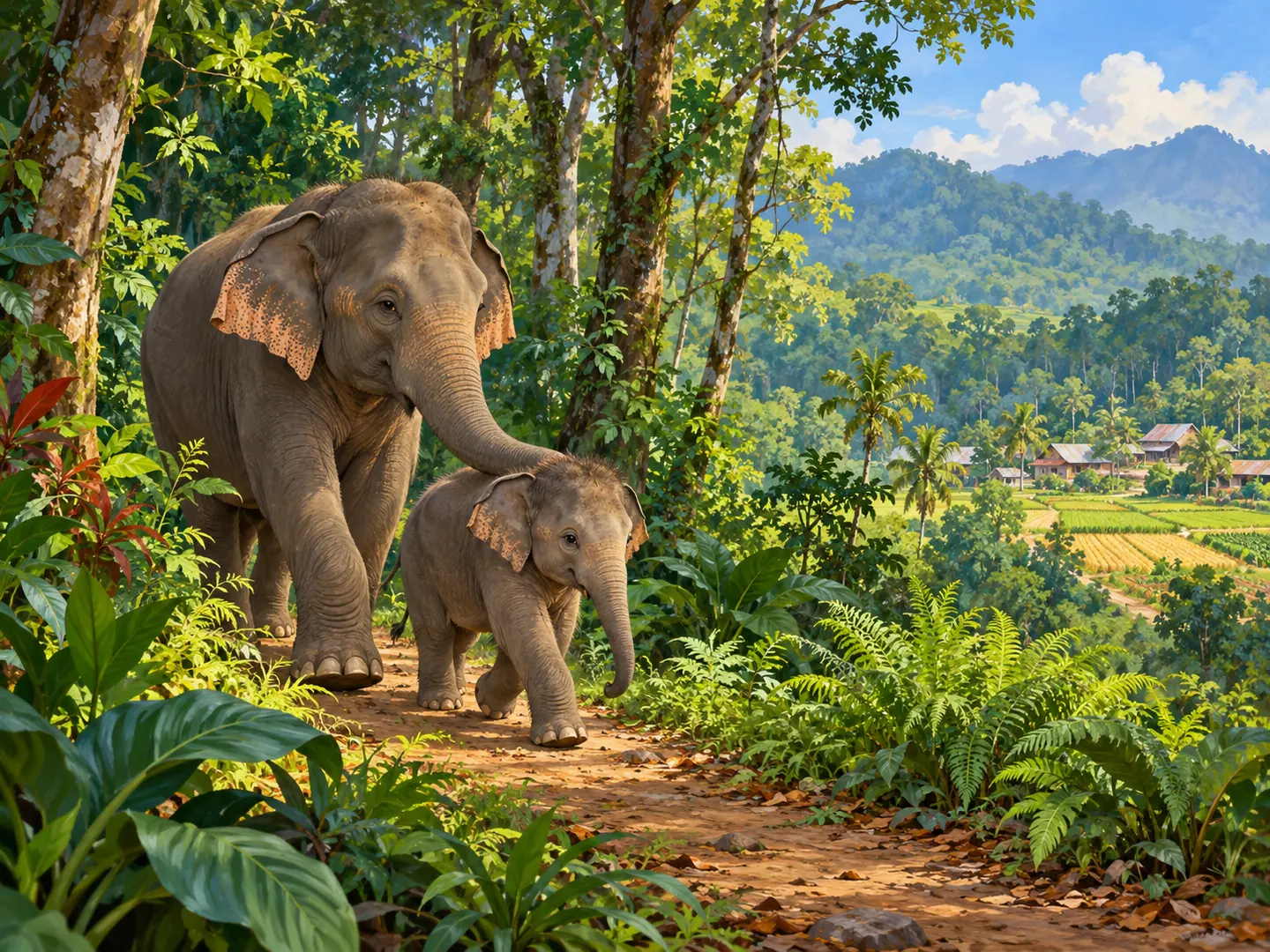
Mother directed Nala back to a safe forest path, far from gardens and residents' houses.
Forest trail guard
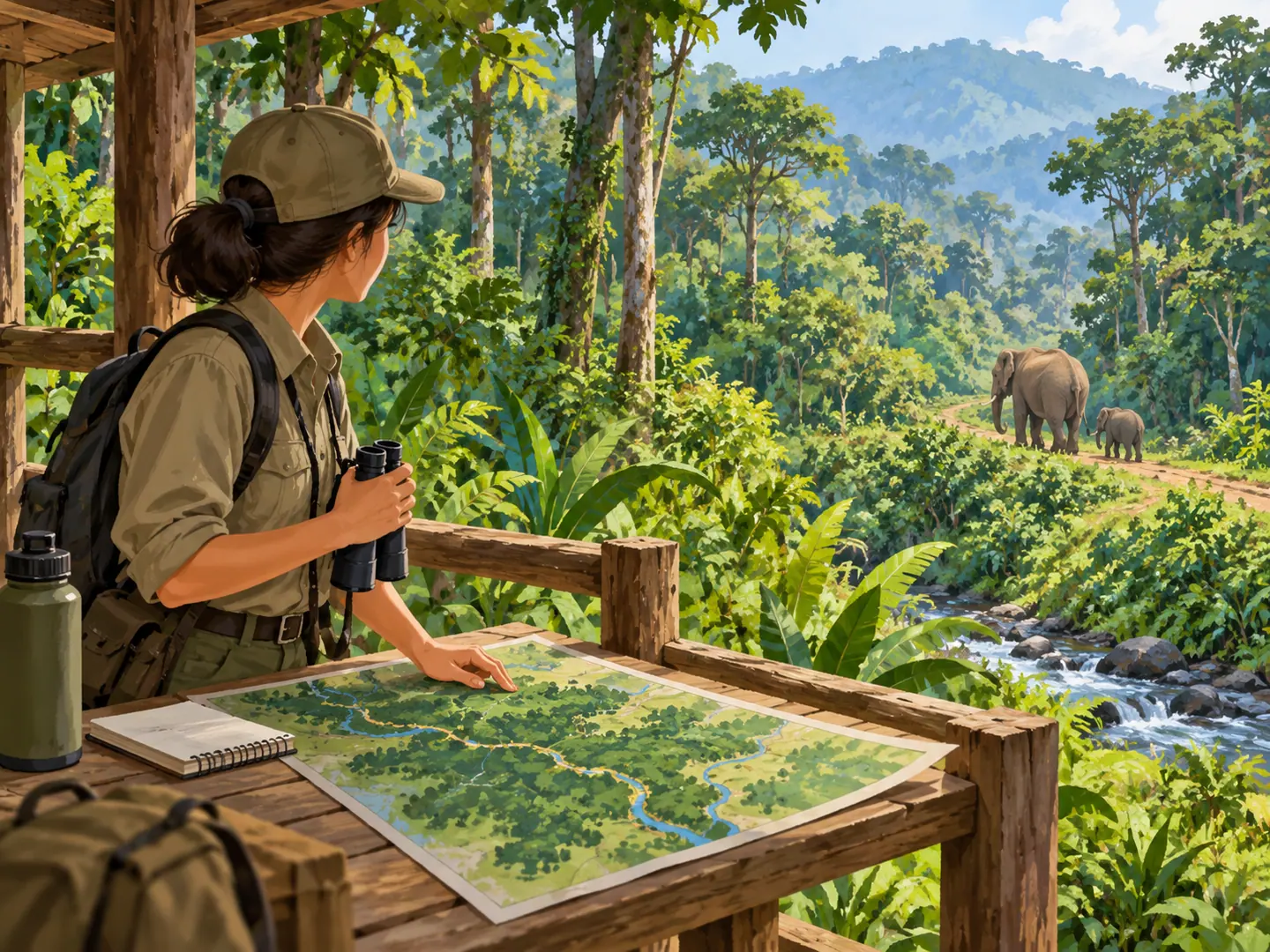
Forest guards monitor routes and help maintain the space between forests and settlements.
View from a safe place
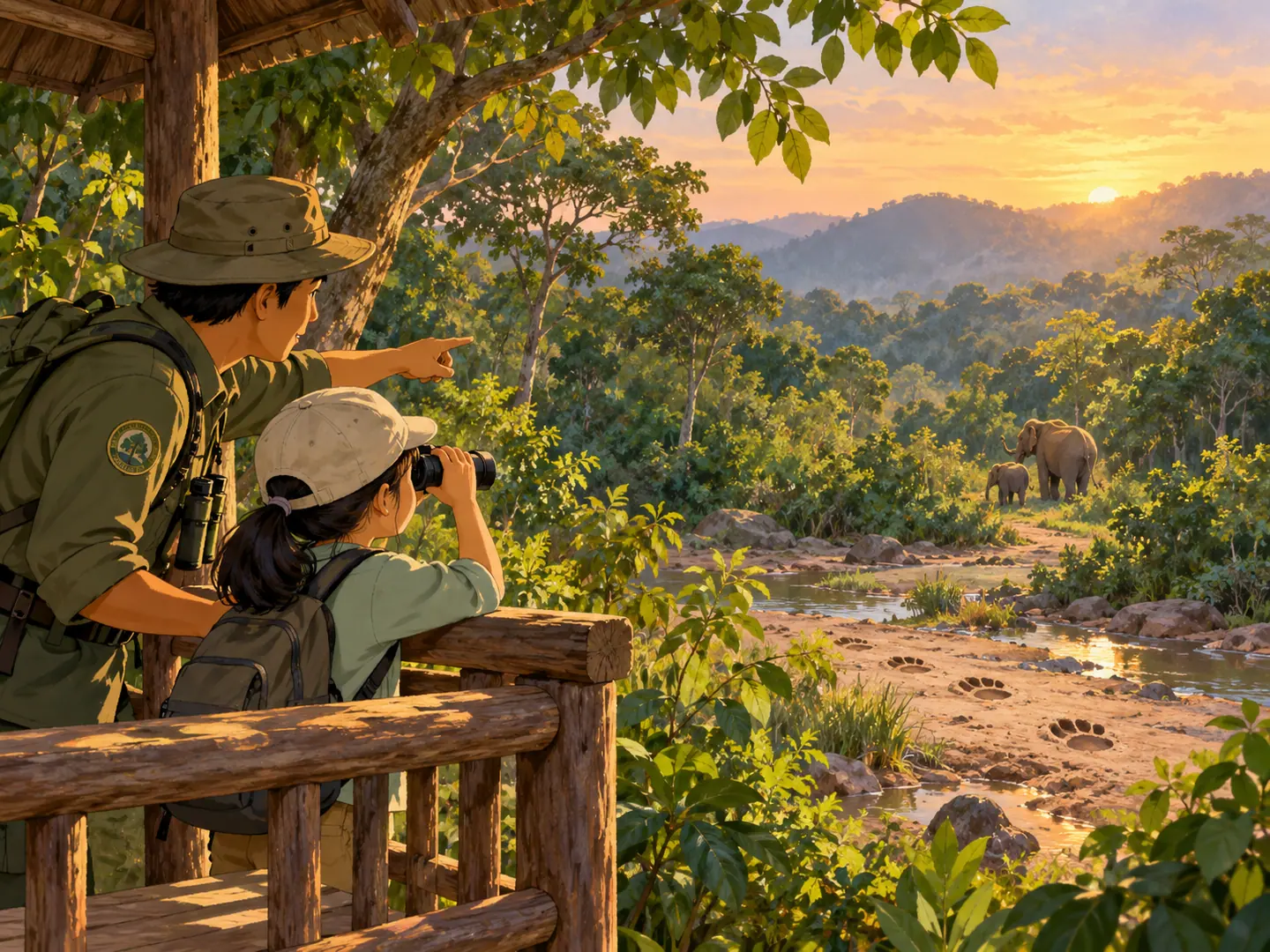
A child watches elephant tracks from a safe post with a ranger. They do not approach or feed.
Wild animals are not house animals
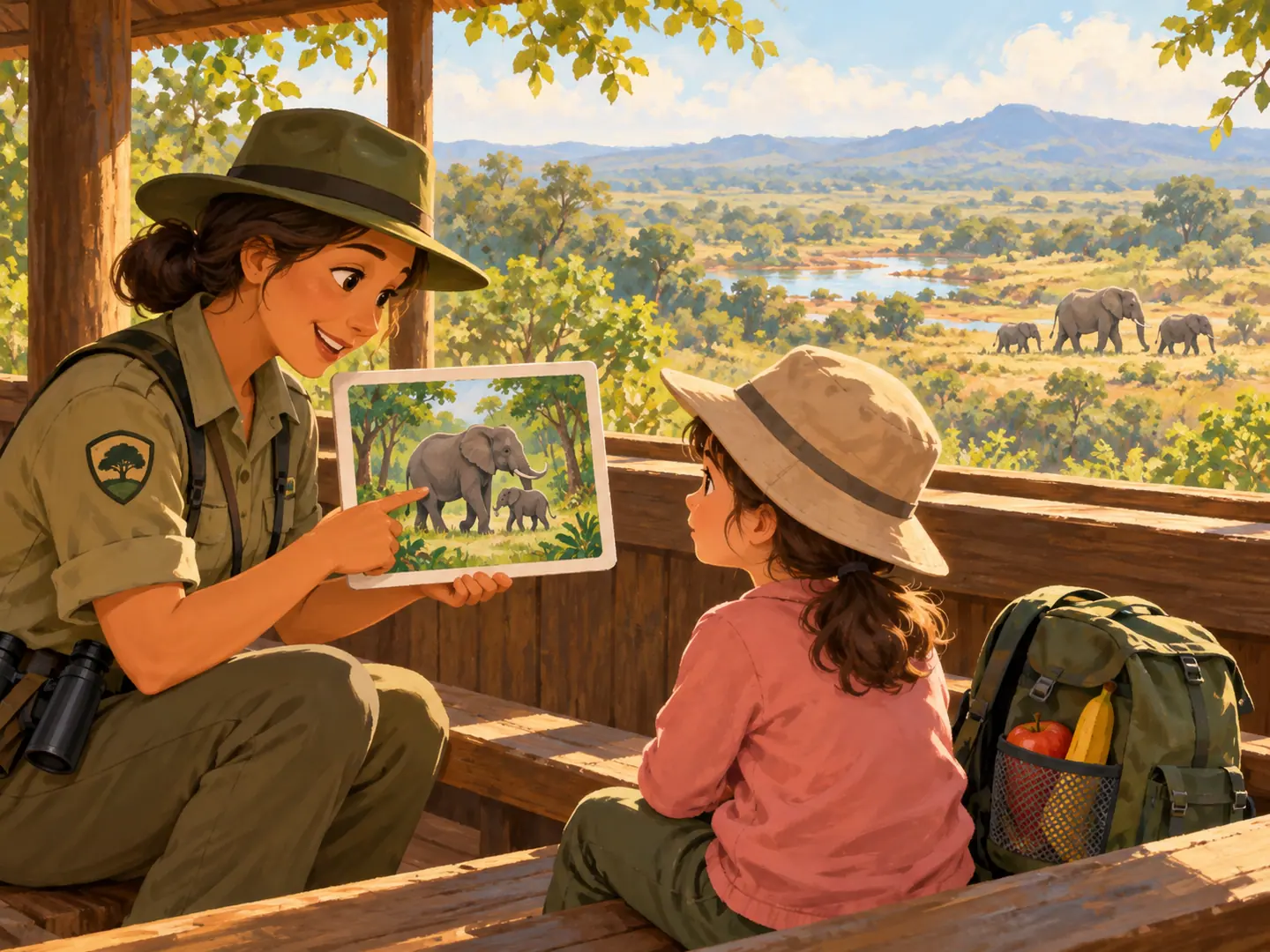
The ranger explained that wild elephants need to live freely in their habitat, not be kept as house animals.
Connected forest
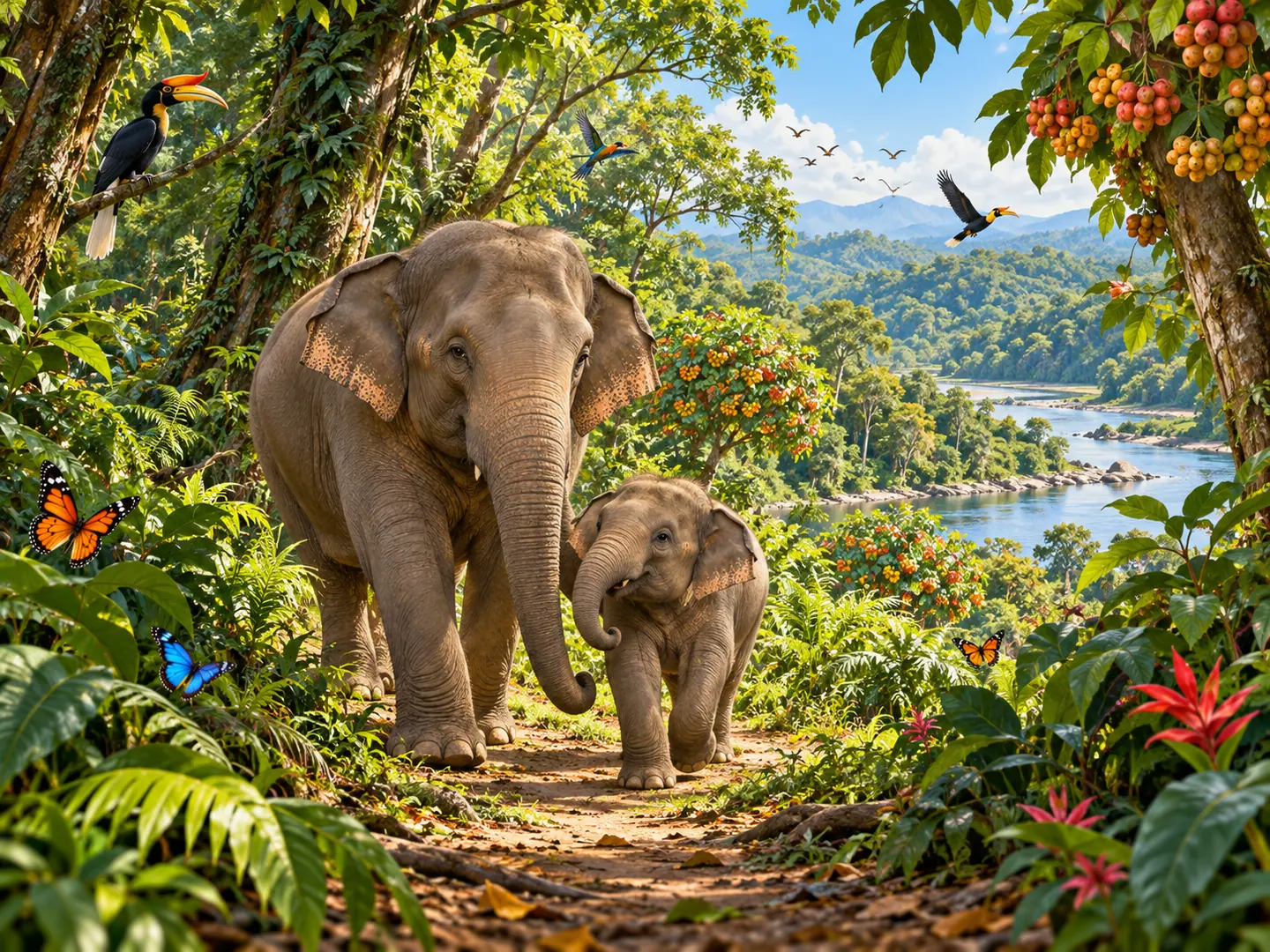
Connected forests provide pathways to water and food. Nala walked quietly by Mother's side.
Twilight call
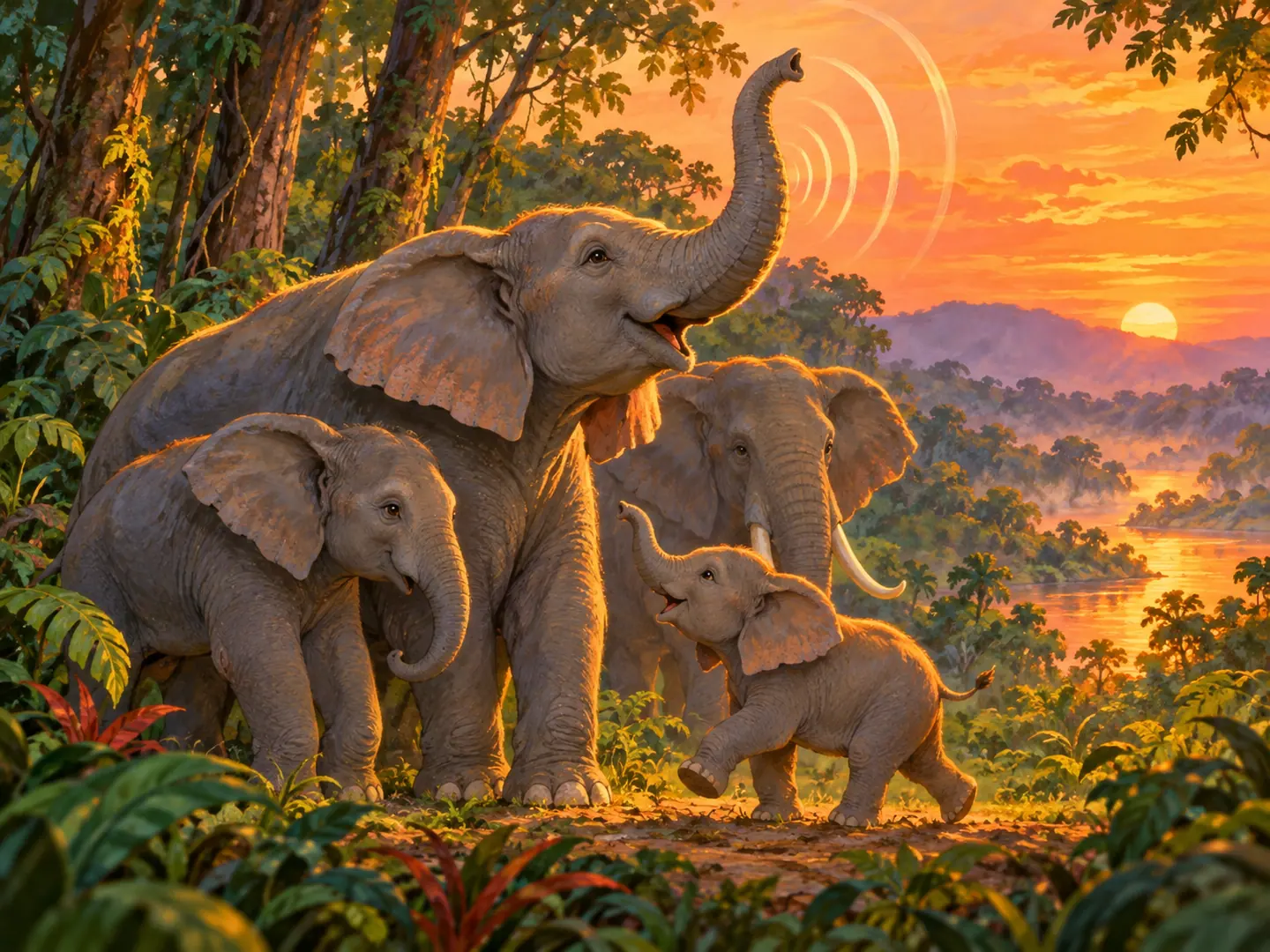
At dusk, Mother raised her trunk to call. Nala answered the voice and reunited with the family.
Rest together
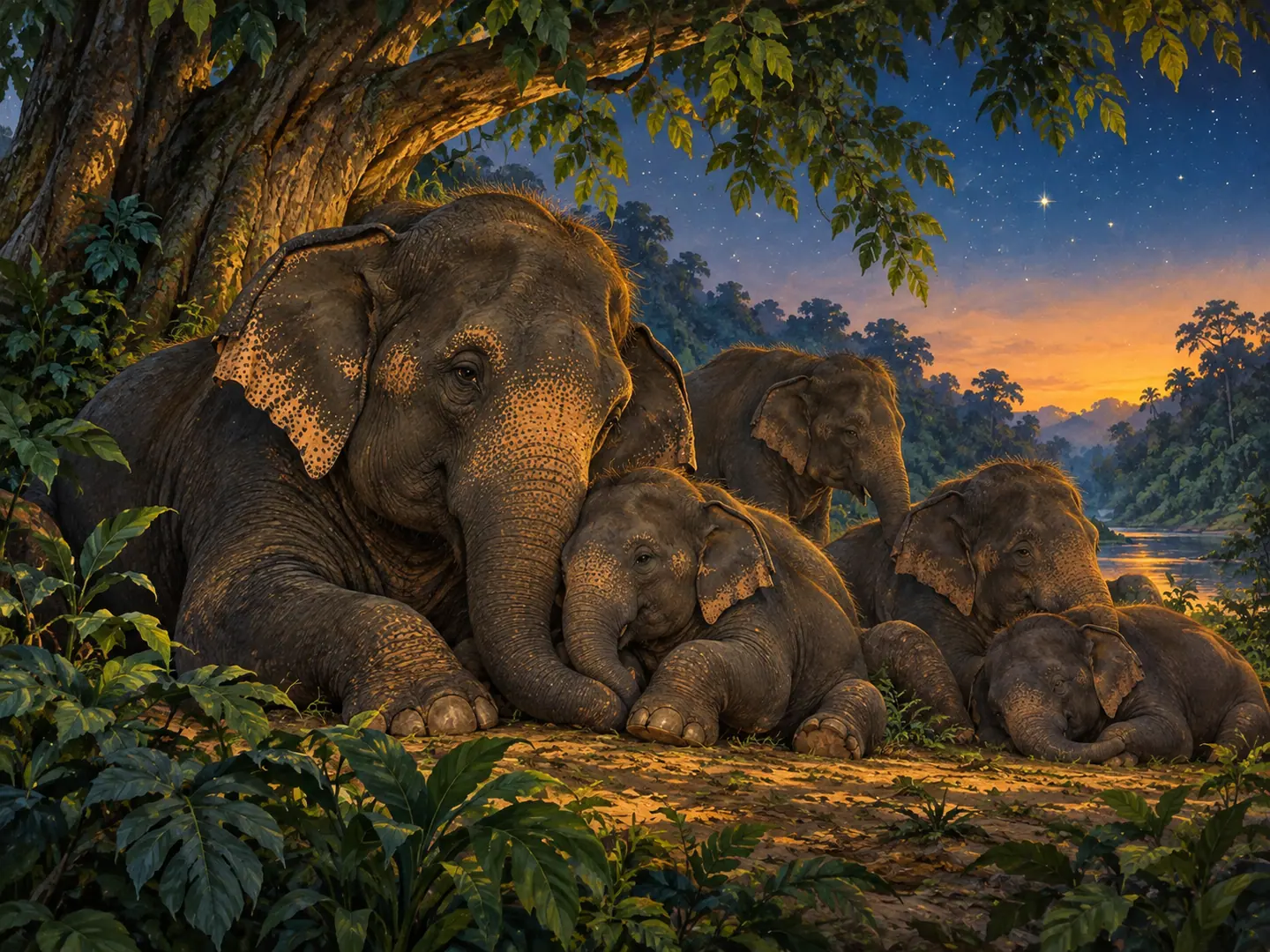
The orange sky enveloped the forest. The family rested under a shady tree, staying close to each other.
Forest for tomorrow
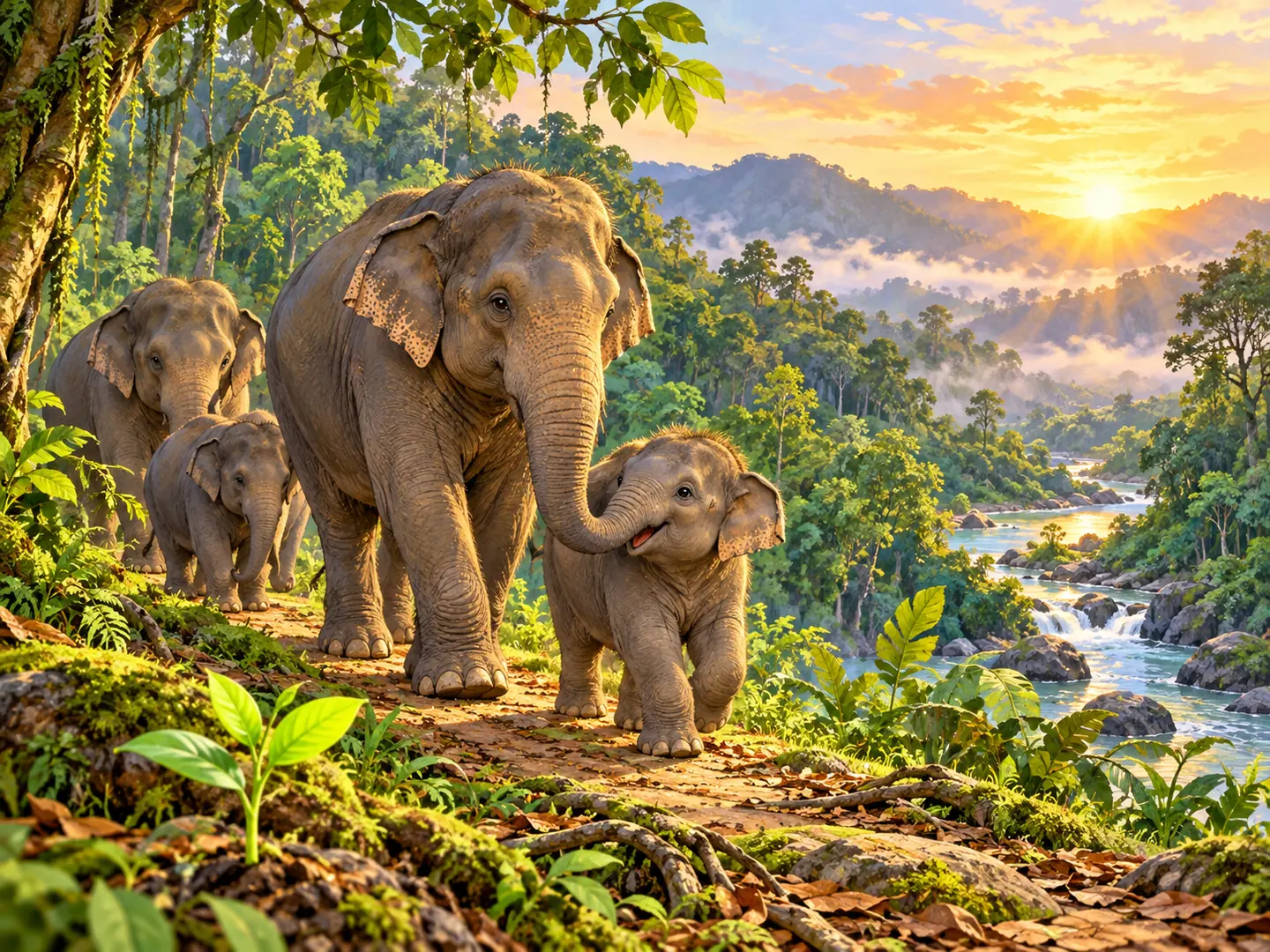
The next day they explored again. Protecting Sumatra's forests helps elephants and many other animals continue to live.