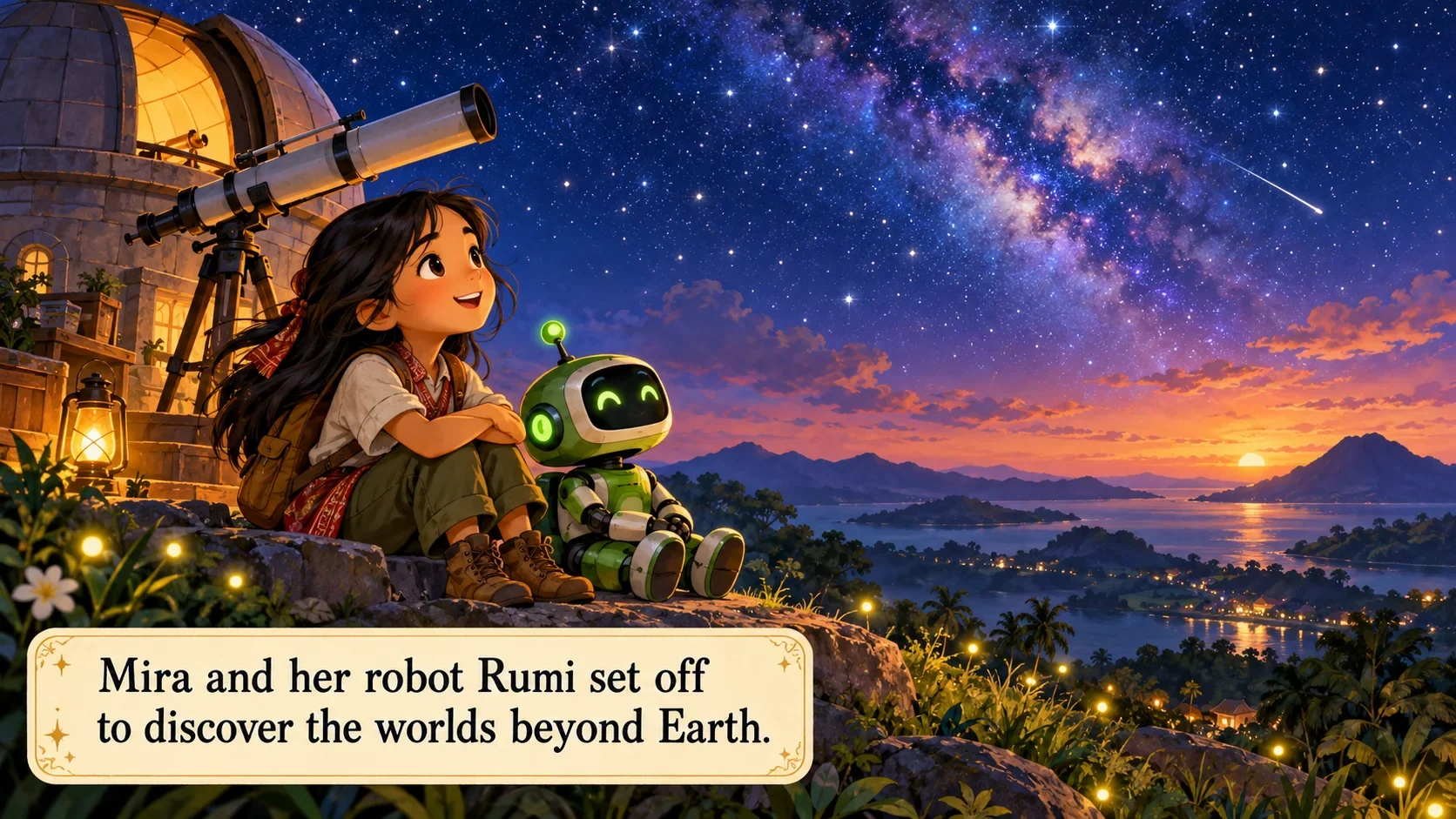
Mira and the Star Mission
Mira and robot Rumi explore the solar system, discovering its eight planets, Pluto, comets, and asteroids on one journey.
Ages 6–10 years · 4 min · 10 scenes
The First Point of Light
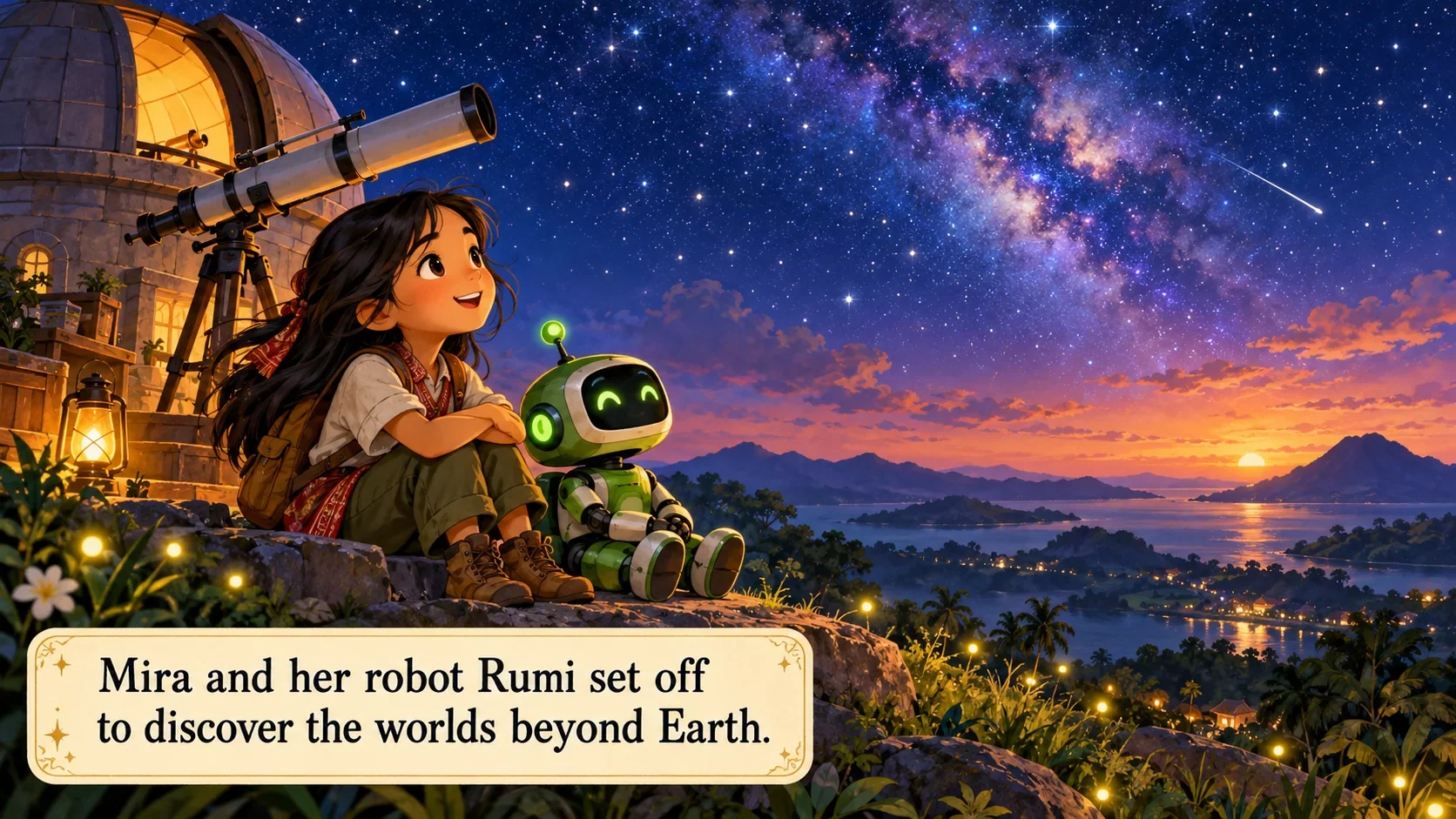
Mira and her robot Rumi leave the hilltop observatory to discover worlds beyond Earth. They bring a blank map, a little telescope, and plenty of questions. Rumi saves a mysterious point of light on the screen. “We can fill in this map together,” Mira says. Their ship glides toward the Sun, the star that lights our solar system.
Swift Mercury
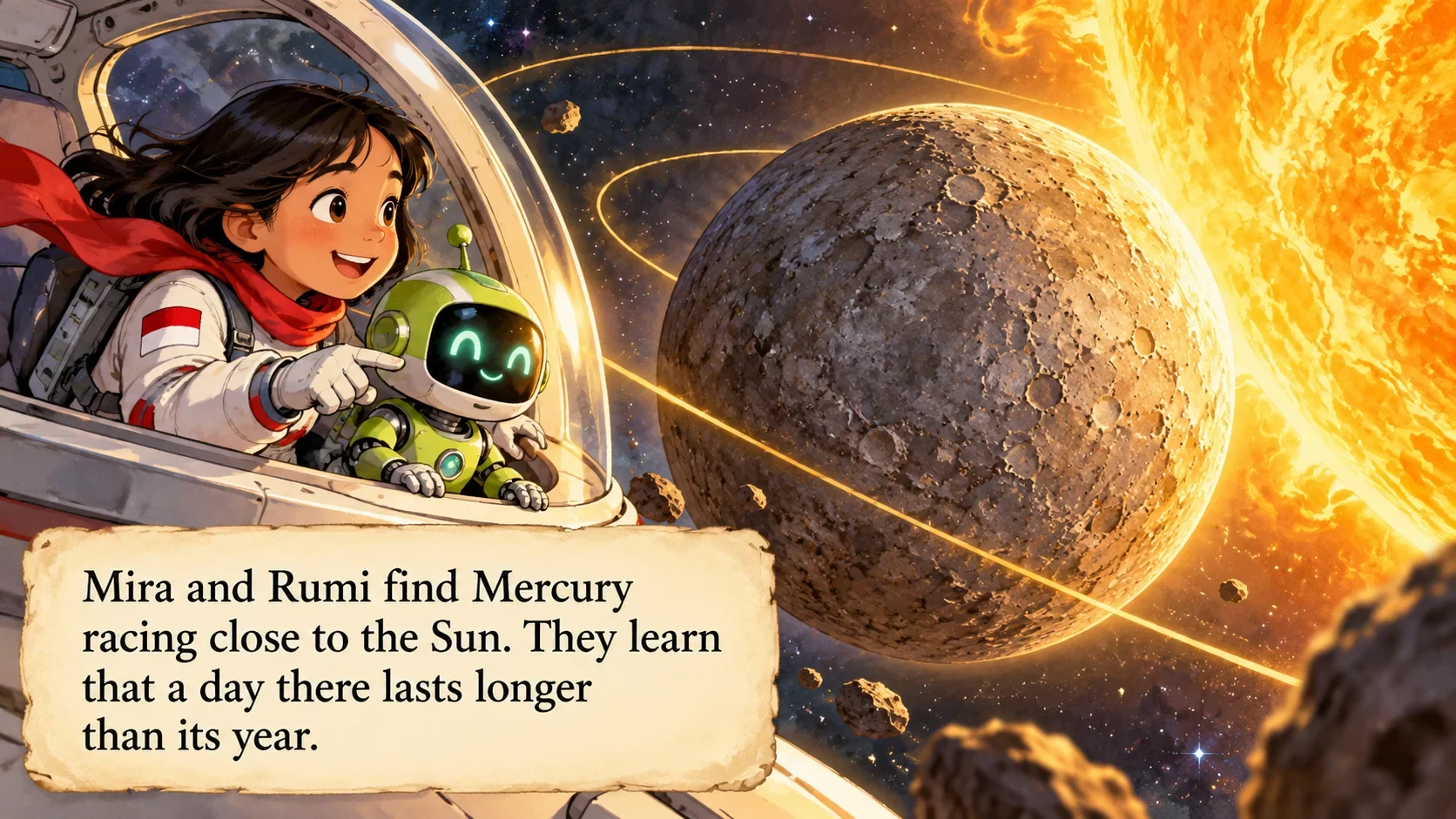
Their first stop is Mercury, the planet closest to the Sun. Its surface is covered with craters, like marks left by bouncing balls. Rumi explains that Mercury travels around the Sun quickly but turns on its axis more slowly. Mira draws both motions on her map. From the window, they watch sunlight brighten the gray rocks.
The Venus Puzzle
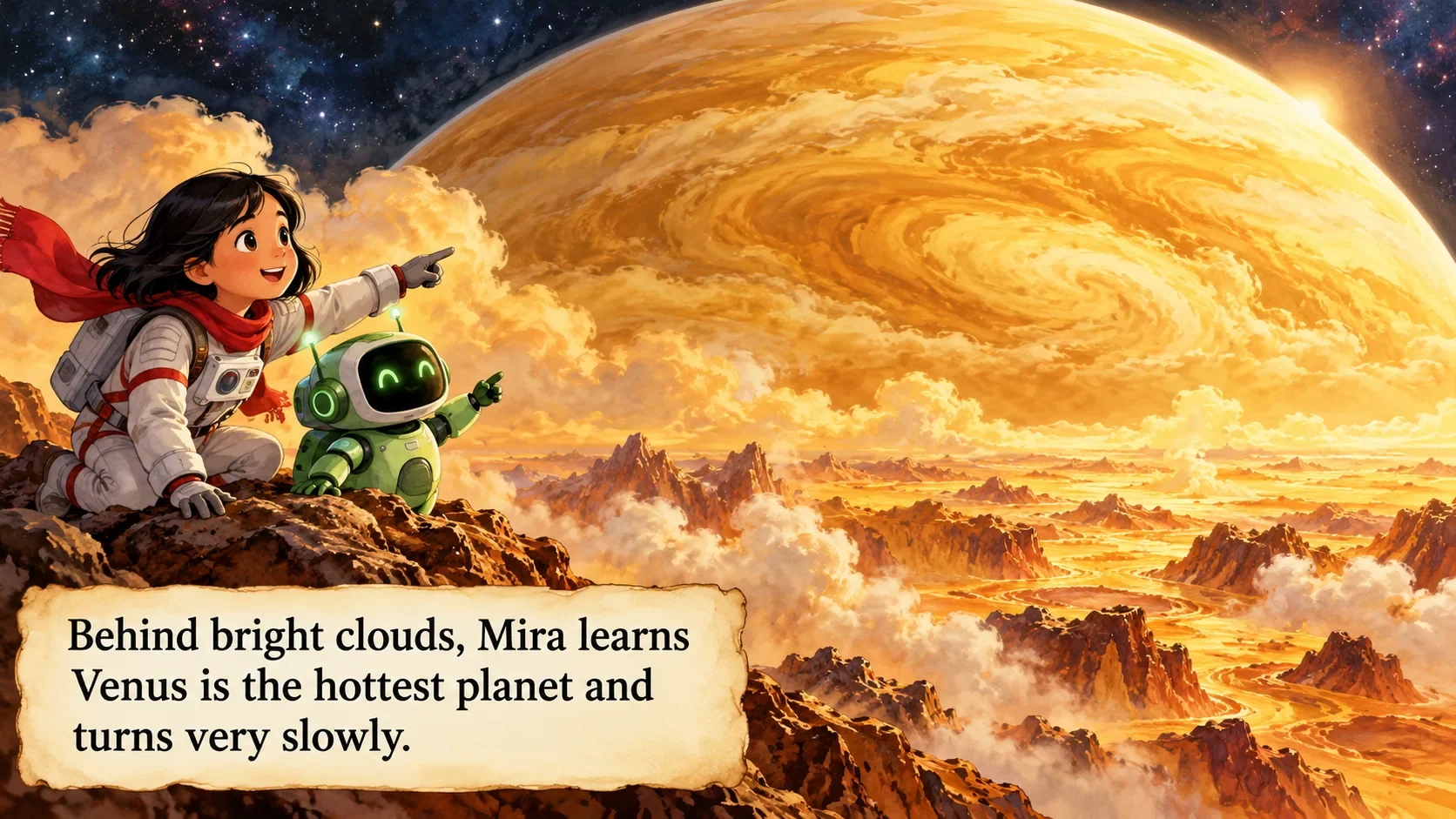
Next, Venus shines behind thick clouds. The ship stays safely away while they observe. Rumi explains that Venus has a dense atmosphere that traps heat, making it the hottest planet. Mira compares its size with Earth. “Pretty clouds do not always mean comfortable weather,” she says. They add a cloud symbol to the map and continue their trip.
Hello, Earth
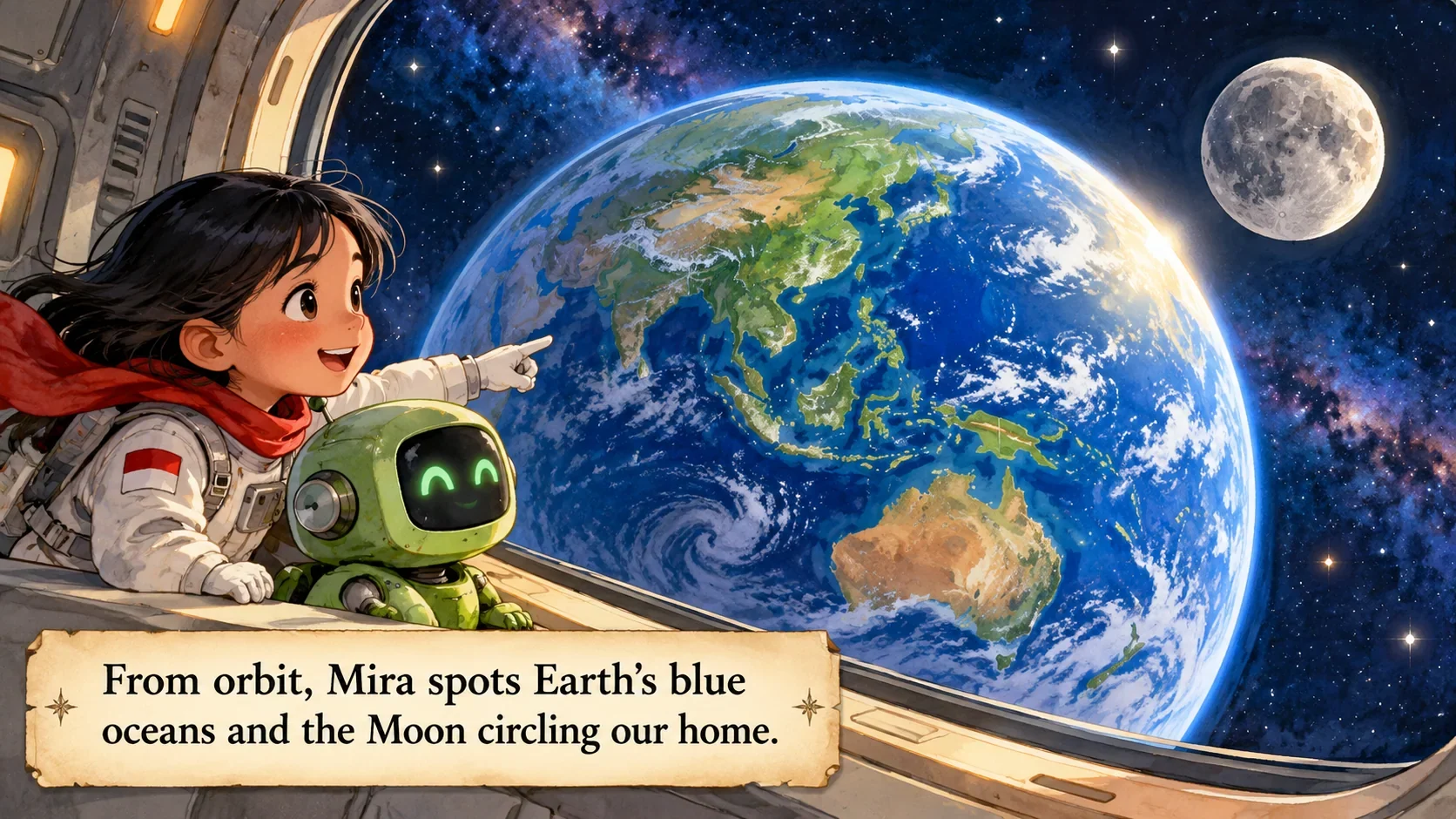
From space, Mira sees Earth in blue, white, and green. The Moon travels around Earth, while Earth travels around the Sun. Rumi points out oceans, clouds, and land. Mira smiles at home. She adds an important note: so far, Earth is the only place known to have life. Then the ship heads toward Mars.
Mars’s Red Trail
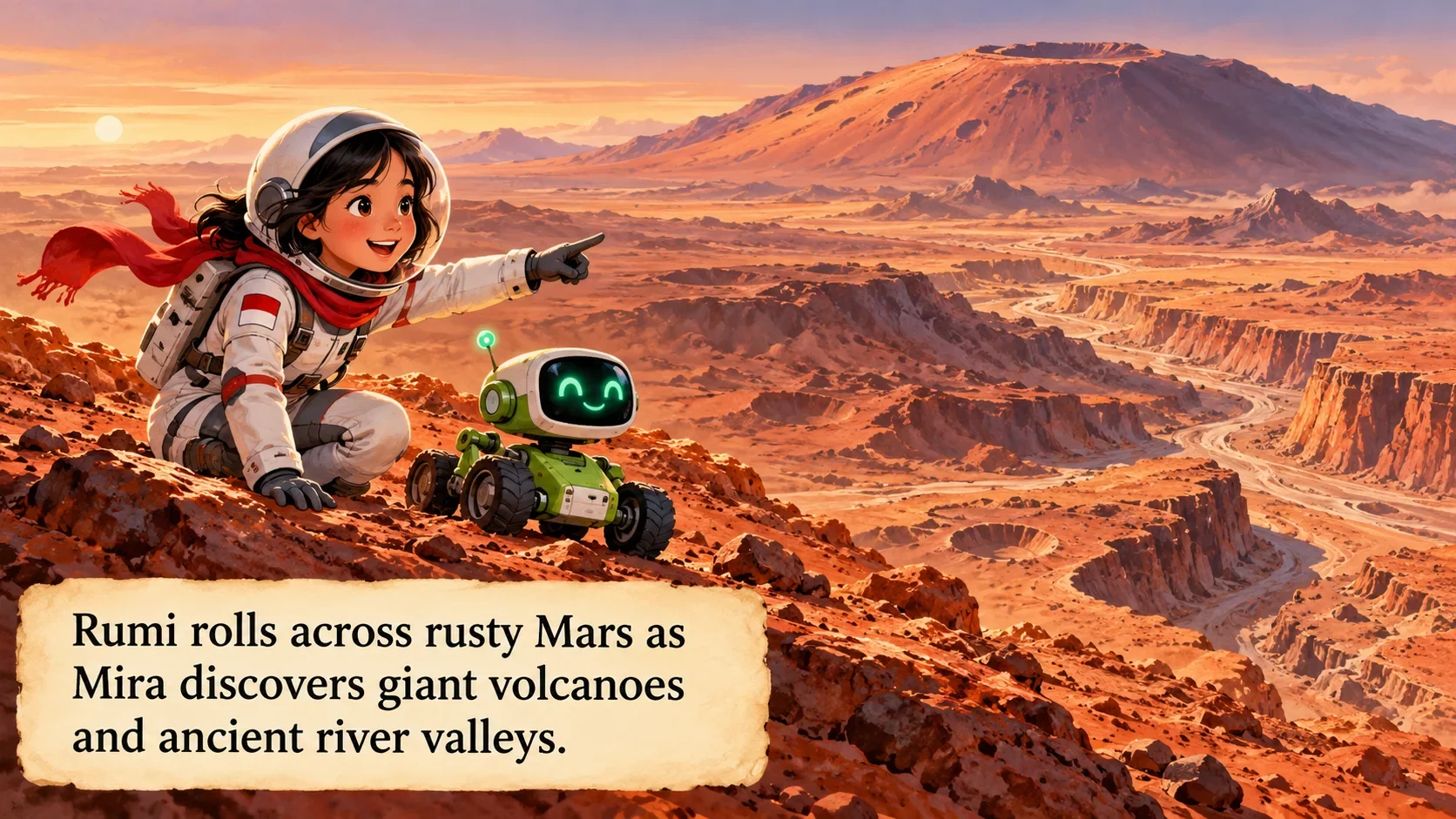
Mars looks red because of dust and rocks on its surface. Rumi aims the camera at a huge volcano and long valleys. Mira learns that Mars has giant volcanoes and signs of ancient flowing water. They do not find a flowing river today, but the valleys offer clues about the past. Mira draws a red trail on the map.
Jupiter’s Great Storm
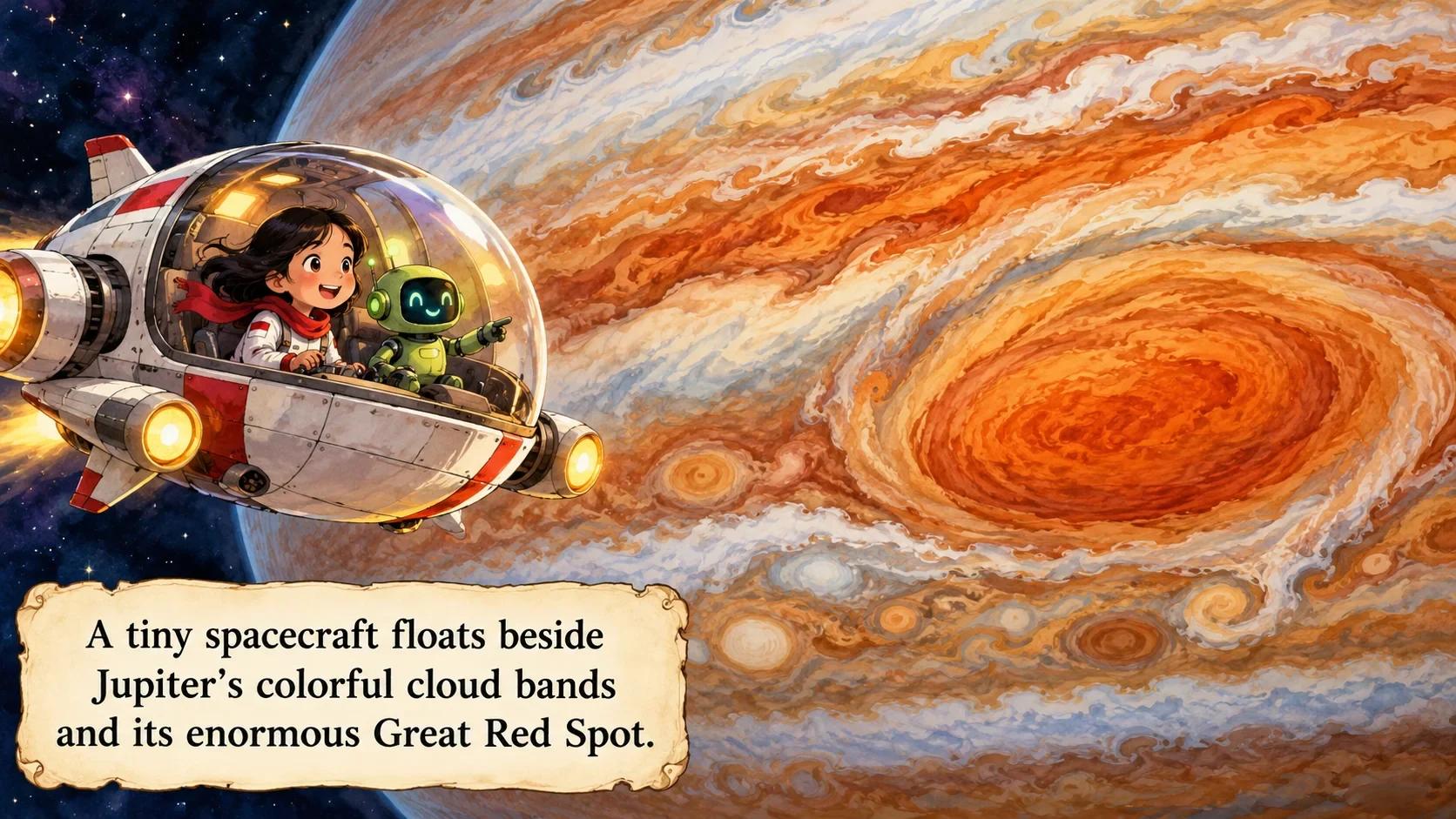
After crossing a wide asteroid region, the ship approaches Jupiter. Colorful cloud bands wrap around the giant planet. A huge storm looks like a red swirl. Rumi says it is called the Great Red Spot and has been observed for hundreds of years. Mira keeps the ship far away, watches the storm, and notes that Jupiter is the largest planet.
Saturn’s Rings
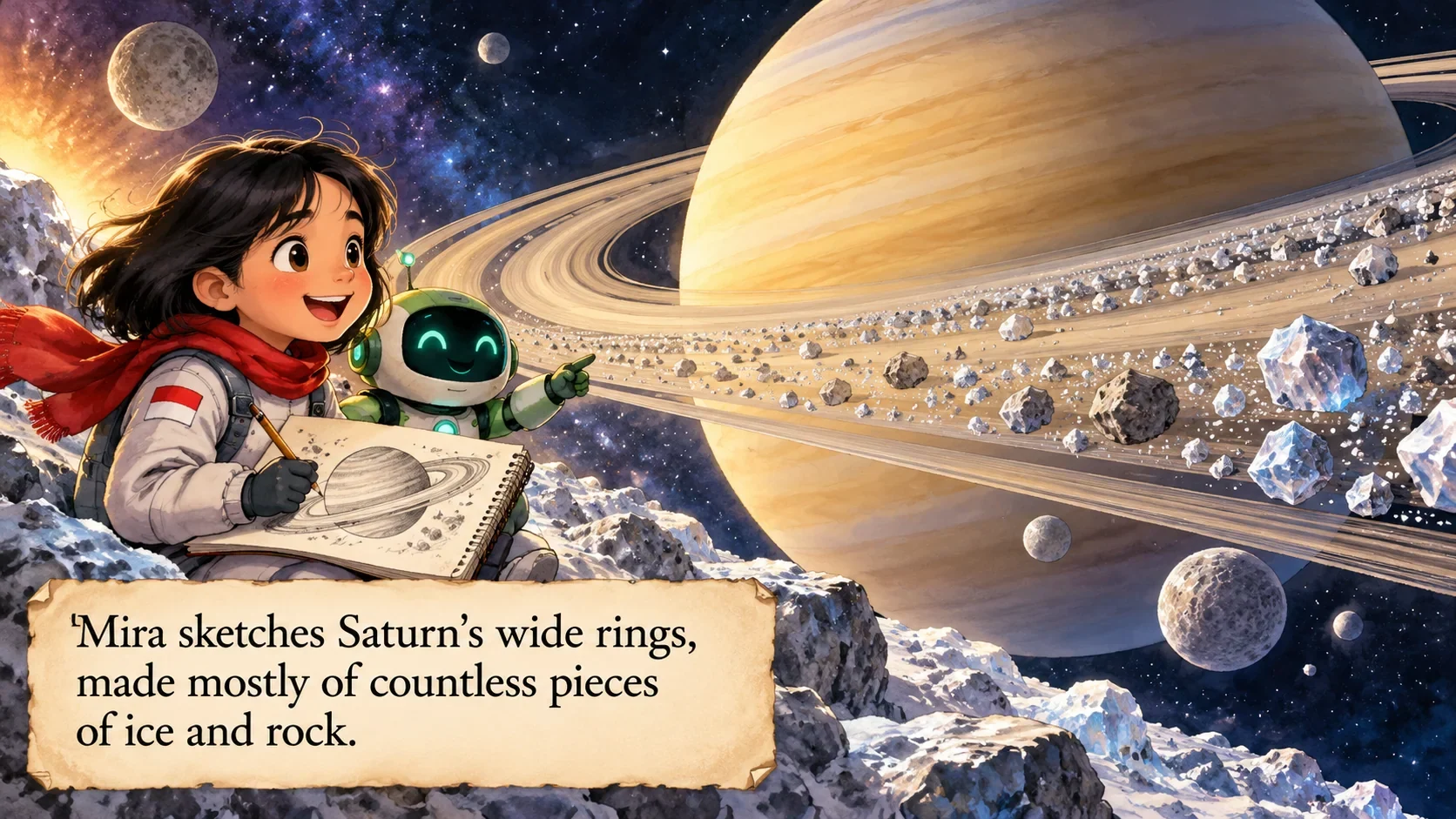
Saturn welcomes them with wide rings. The rings are not a solid disk; they are made of countless pieces of ice and rock orbiting the planet. Mira sketches while Rumi counts the visible bands. Their ship never touches the rings. “Our map is growing,” Mira says, marking Saturn with a shining circle.
Tilted Uranus
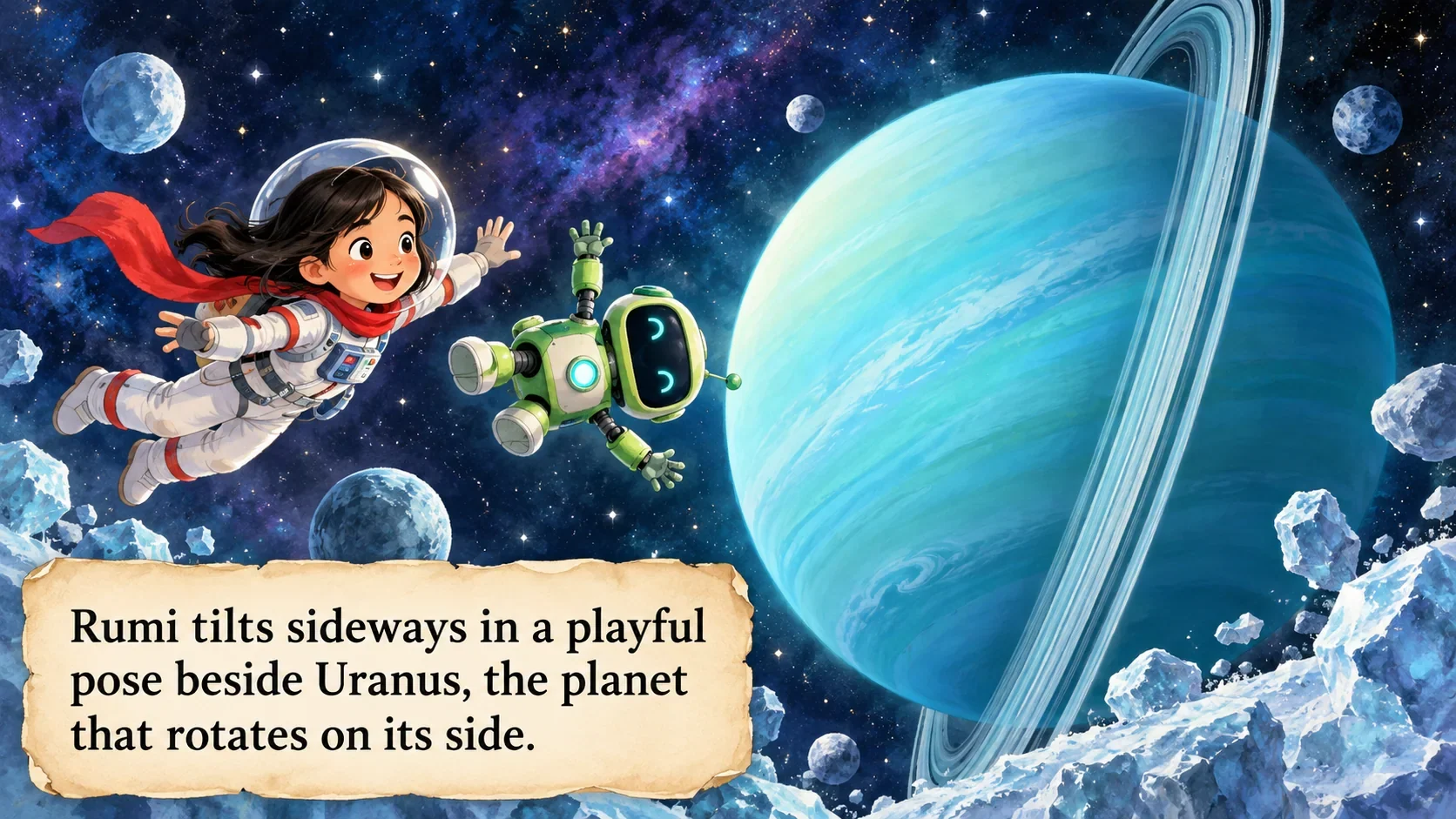
Far away, Uranus looks blue-green. Rumi spins a model and makes it roll sideways. Uranus has a very large tilt, almost as if it rolls around the Sun. Mira laughs at the robot’s dance and writes the tilt on her map. They observe small moons from a safe distance and prepare for the long trip to the next planet.
Neptune’s Wind
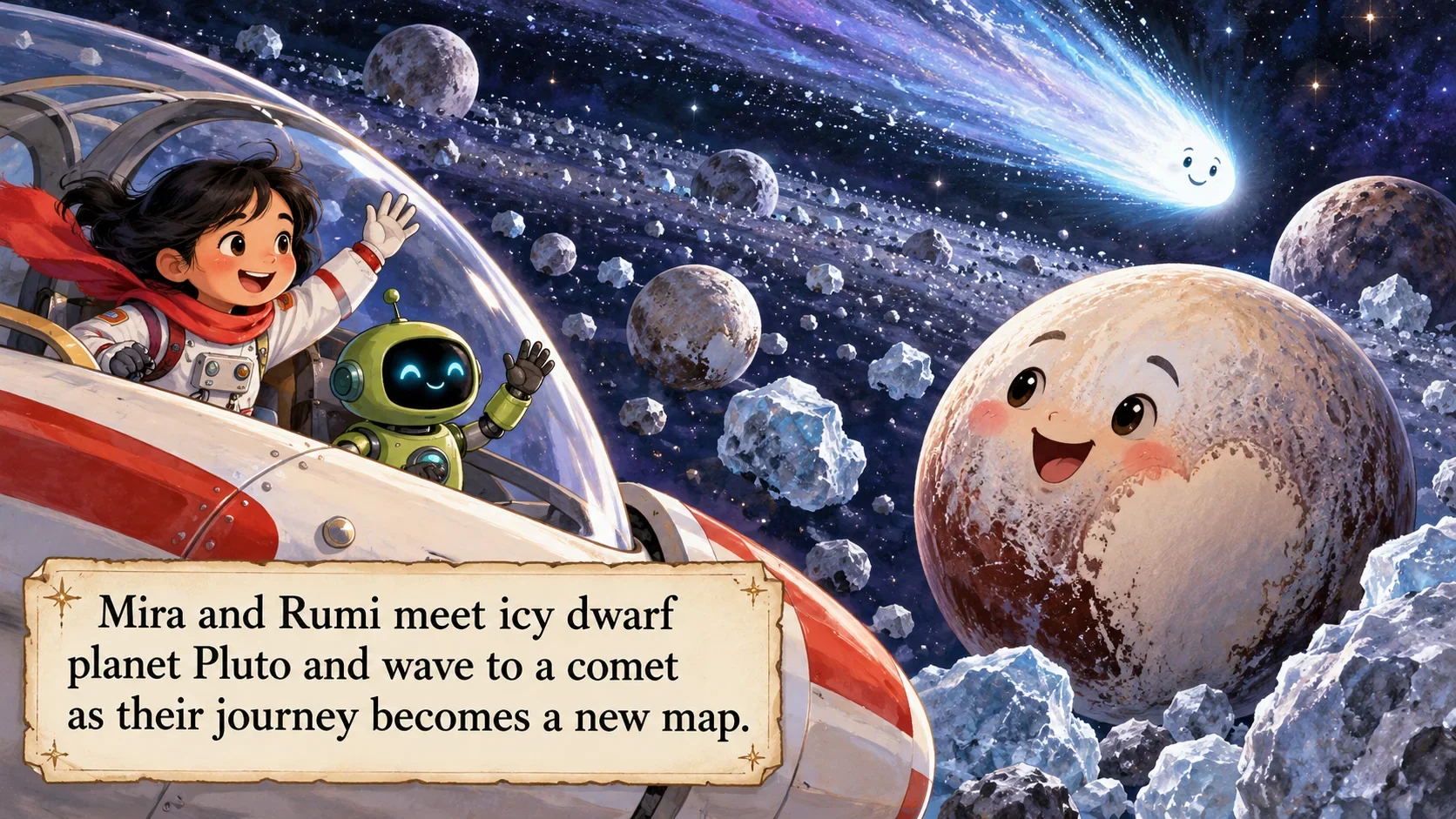
Neptune is deep blue and very far from the Sun. Rumi warns that its winds can blow extremely fast. They use a remote probe instead of landing, recording the clouds and color. Mira spots tiny dots on the screen that mark Neptune’s moons. She draws a path beyond Neptune, where more icy objects wait to be explored.
A Map Toward Home
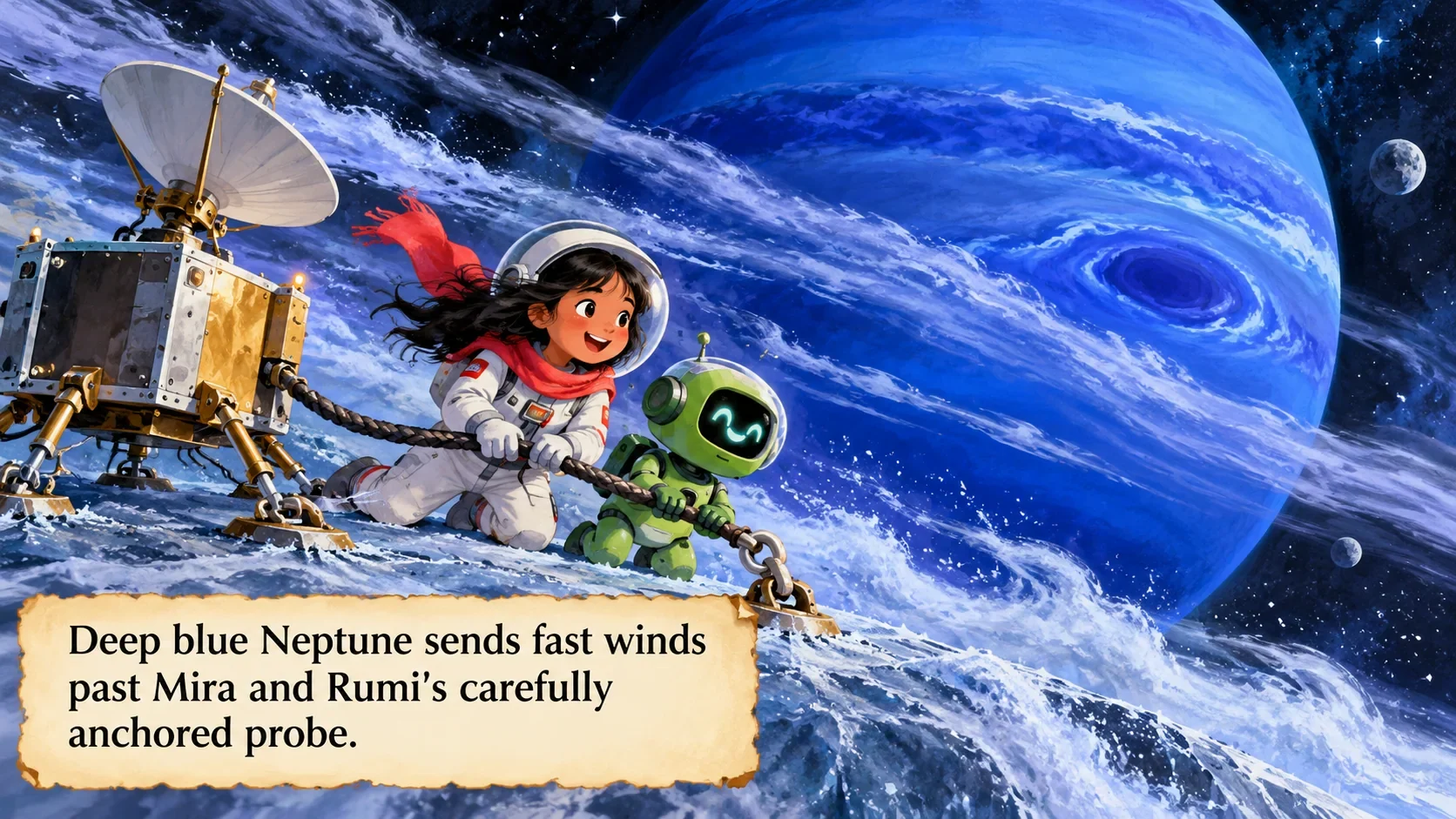
Their map leads to Pluto, a cold dwarf planet in a distant region. A comet passes by, made of ice, dust, and rock. Mira and Rumi remember that Pluto is a dwarf planet; they have already marked all eight planets. They complete the map with dwarf planets, asteroids, and comets. On the way home, Mira plans a new trip to explore moons and small worlds one by one.