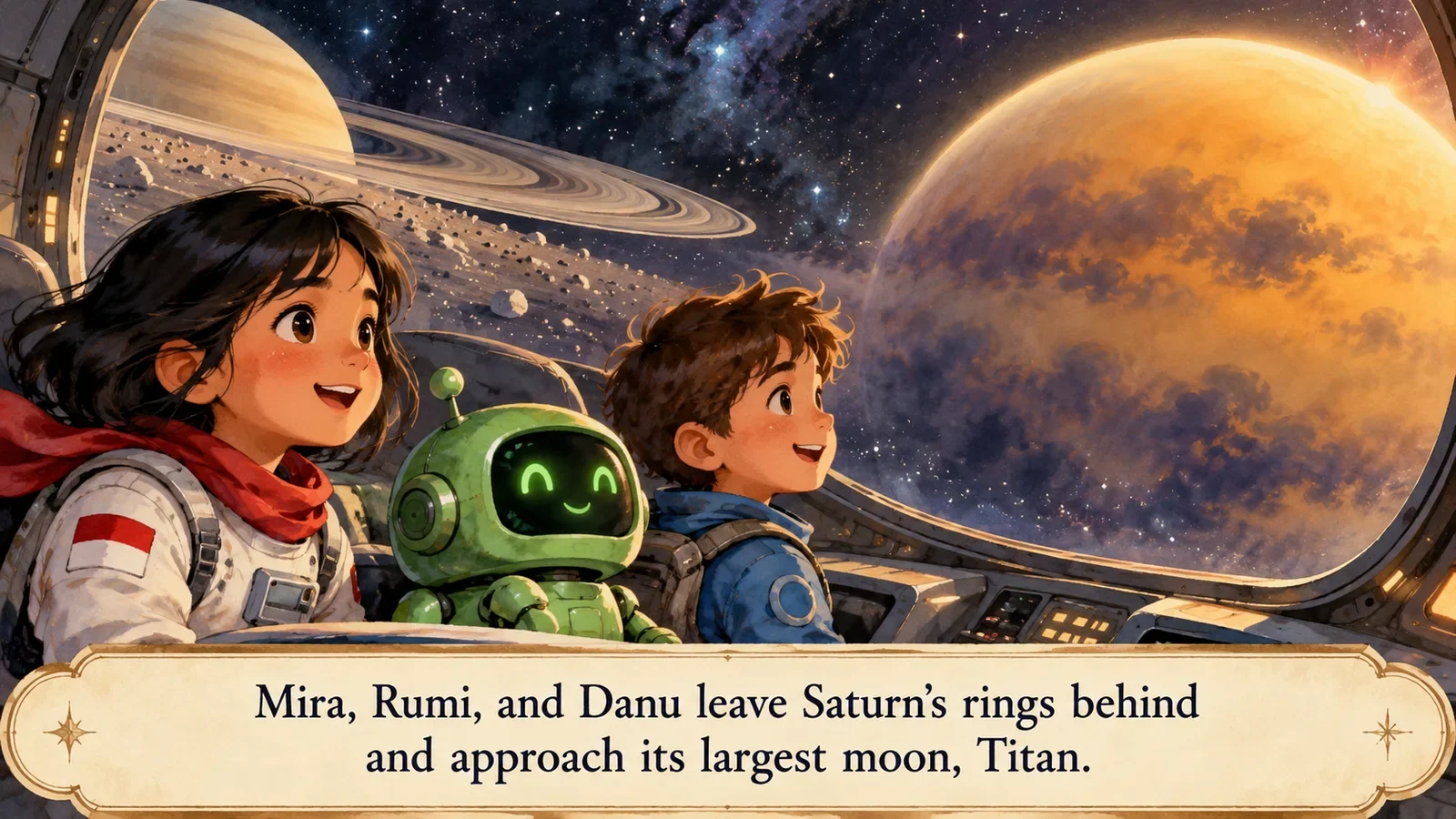
Mira and the Secrets of Titan
Mira, Rumi, Danu, and Naya explore the orange haze, methane rain, lakes, dunes, and hard ice on Saturn’s largest moon.
Ages 6–10 years · 4 min · 10 scenes
Approaching Titan
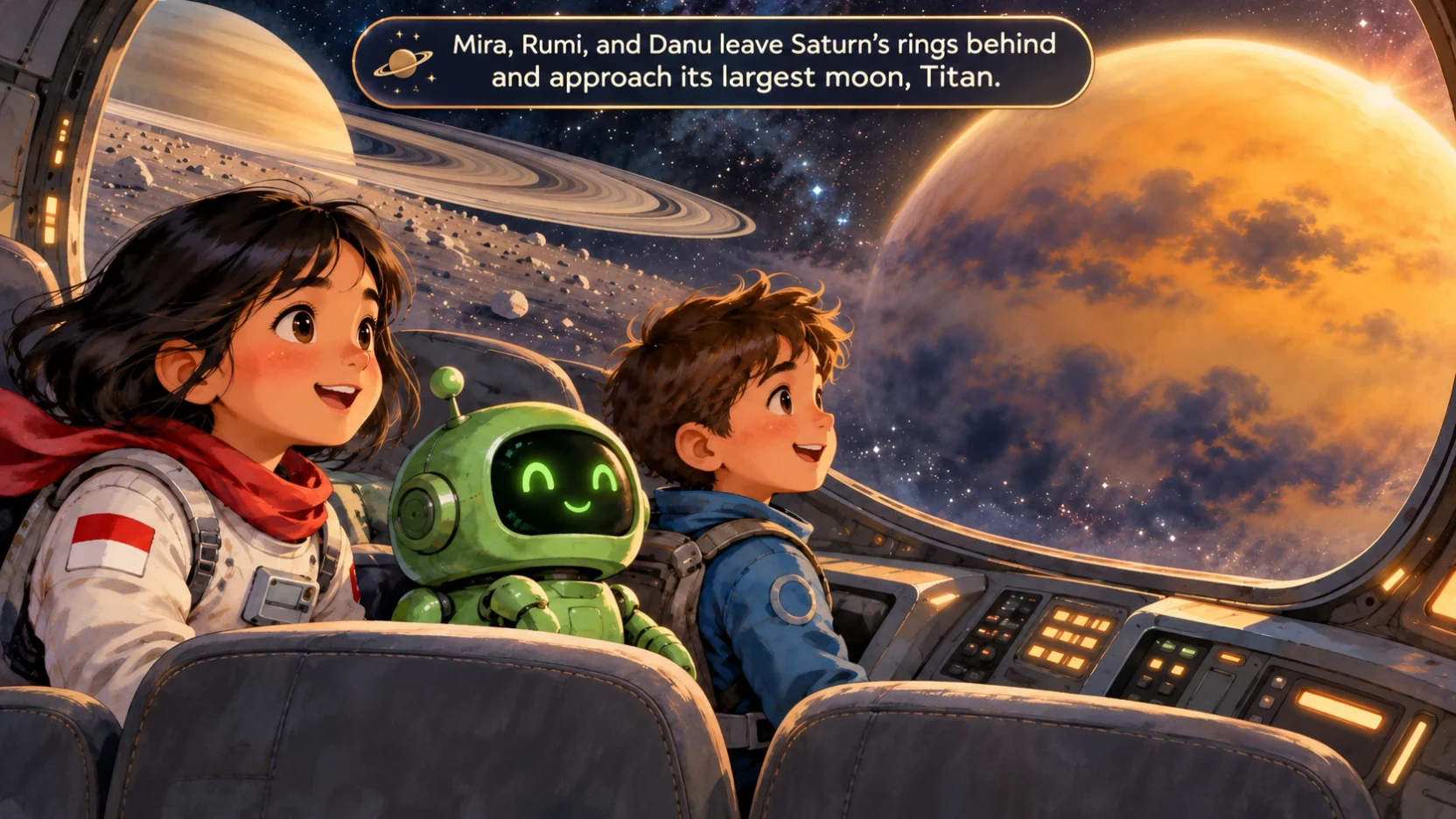
Saturn is behind us. We are approaching Titan, its largest moon. It looks golden. What will we find there? We will observe from a safe distance and map its clouds, lakes, and dunes.
A Moon Larger Than Mercury
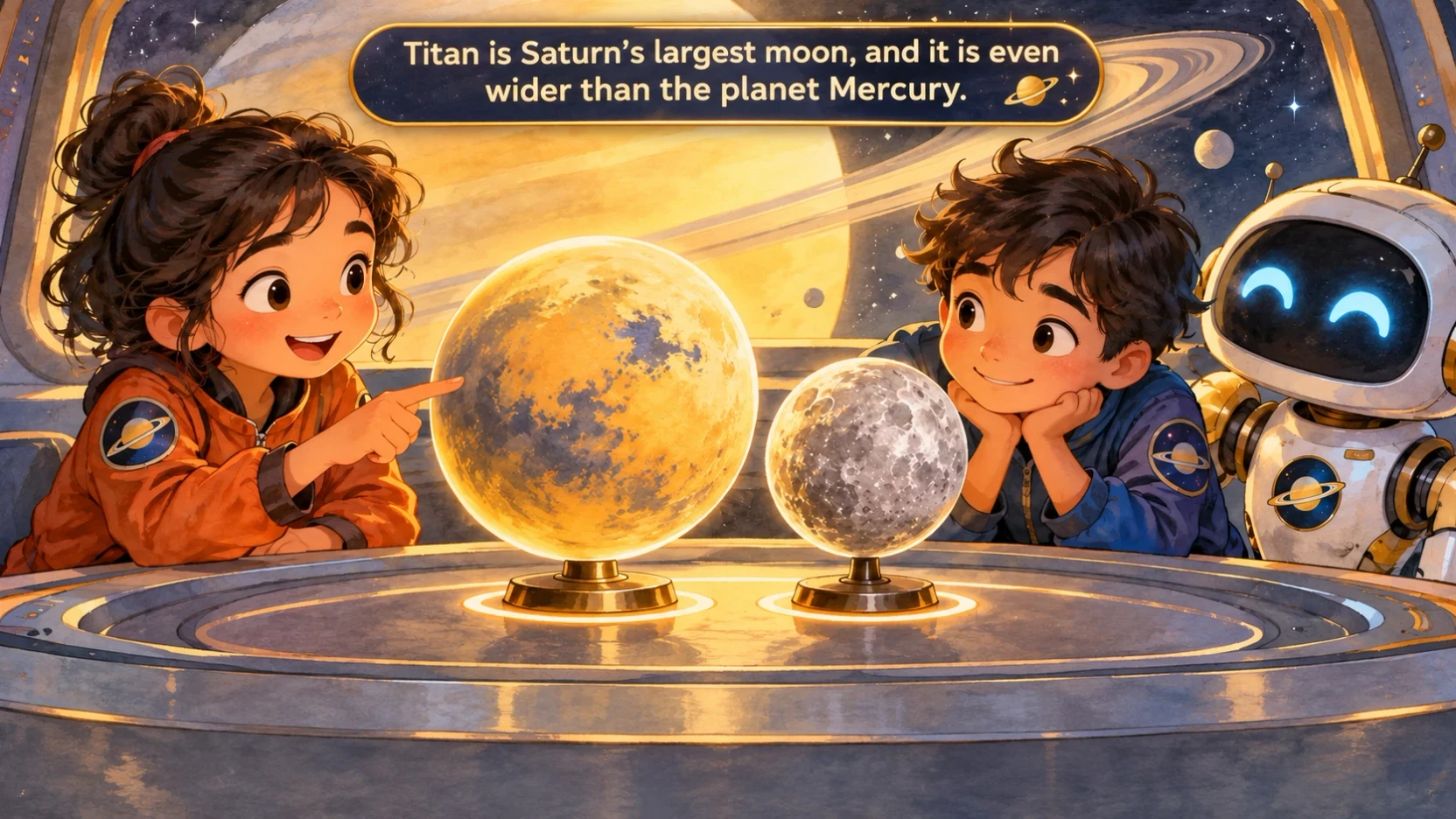
Titan is wider than Mercury. Let’s compare the two models. So size does not decide whether an object is called a moon or a planet? That’s right. Titan is a moon because it orbits Saturn.
Titan’s Thick Sky
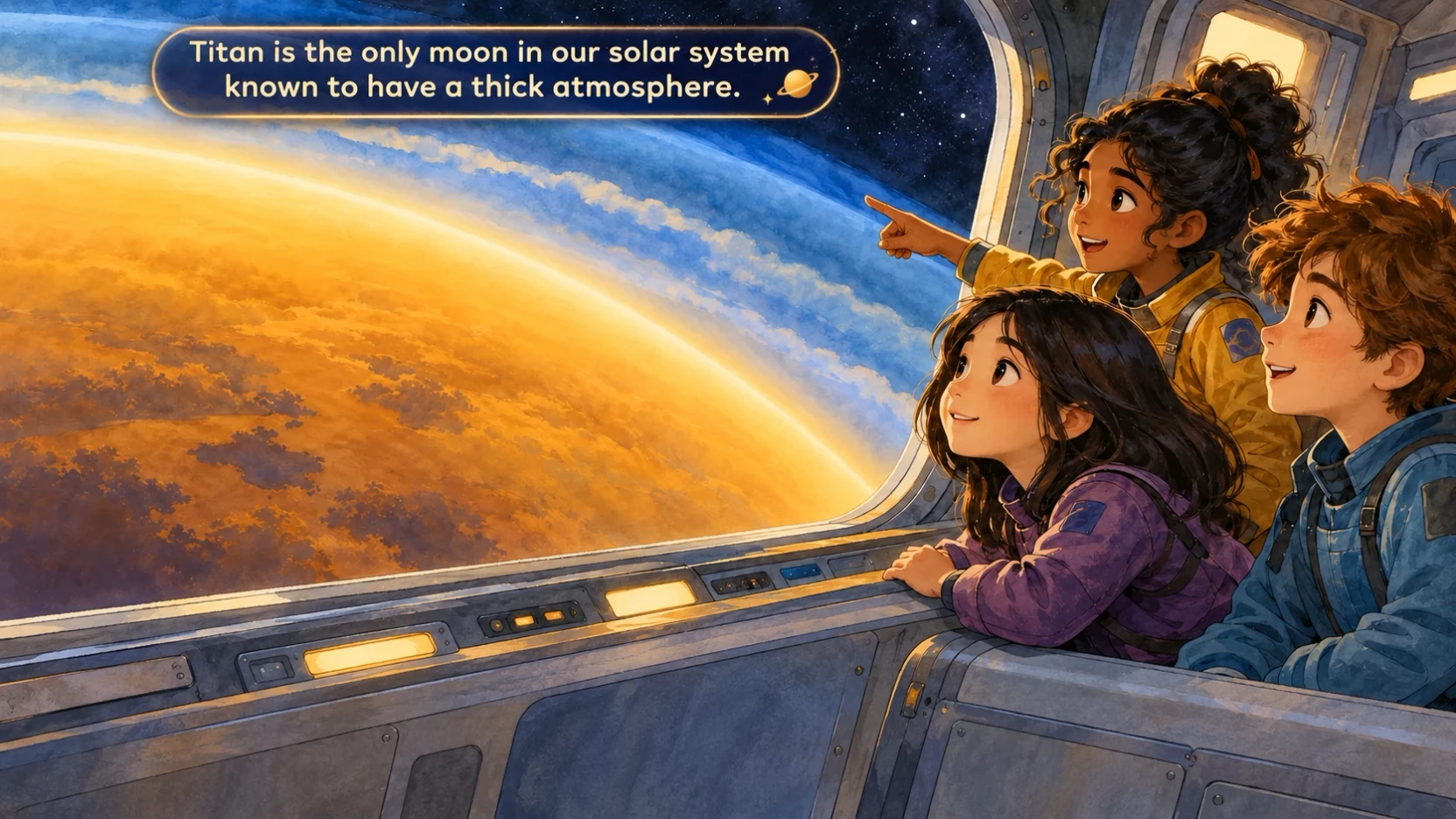
Titan is the only moon known to have a thick atmosphere. The air is mostly nitrogen, with some methane. I’ll help read the instruments. This moon has a sky of its own! The observation data is saved.
A Golden Veil
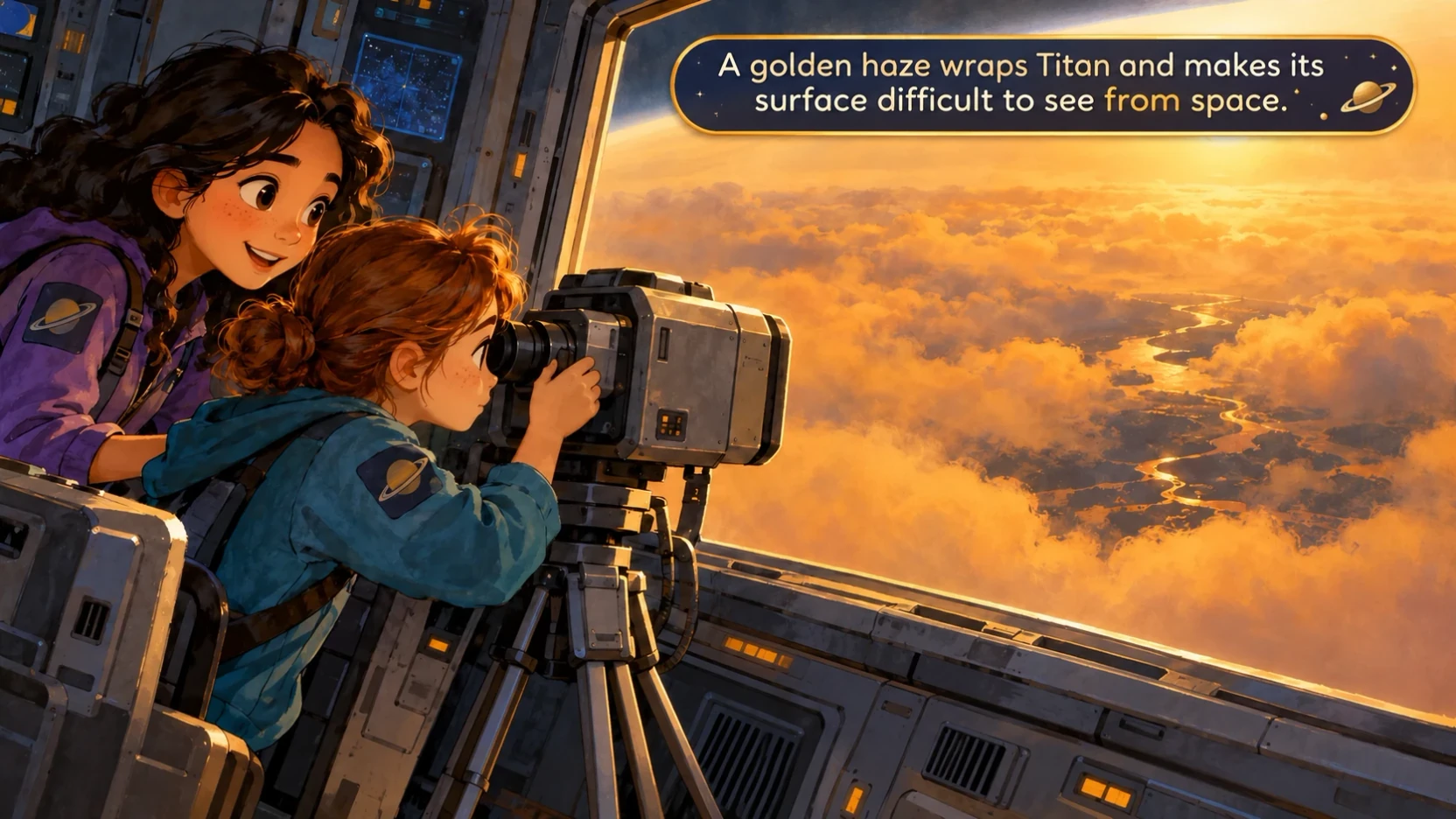
An orange haze covers Titan’s surface. I can see faint winding shapes beneath the clouds. Can our camera see more clearly? Special instruments help scientists study the hidden surface.
Methane Lakes
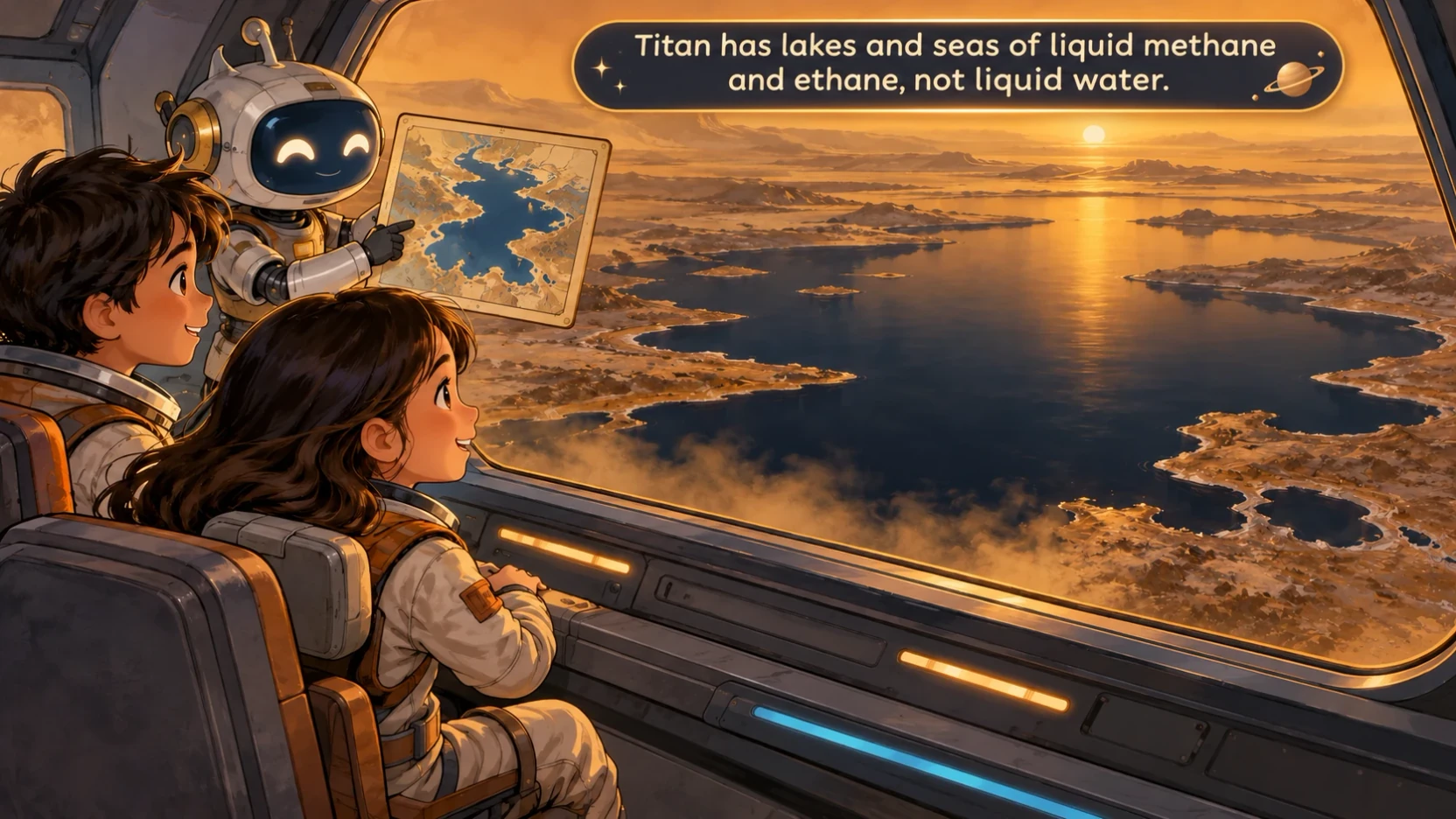
Titan’s lakes contain liquid methane and ethane, not water. The shoreline curves like a beach on Earth. But Titan is so cold that its liquids behave differently from water. I’m adding this shoreline to our map.
A Different Kind of Rain
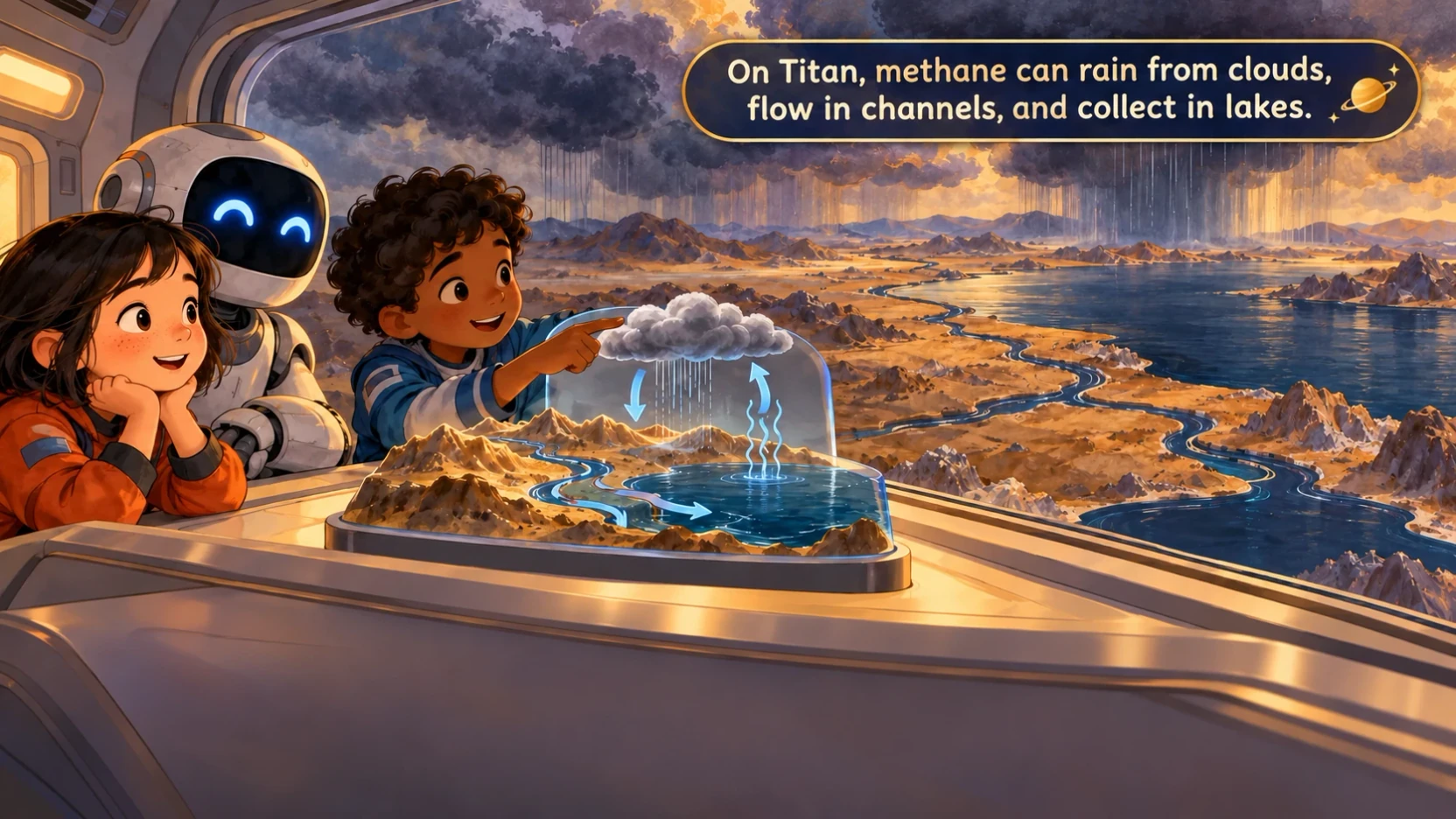
Titan’s clouds can bring methane rain. Look at it flowing toward the lake! Methane moves from clouds to the surface, then gathers in lakes, much like Earth’s water cycle.
Dark Dunes
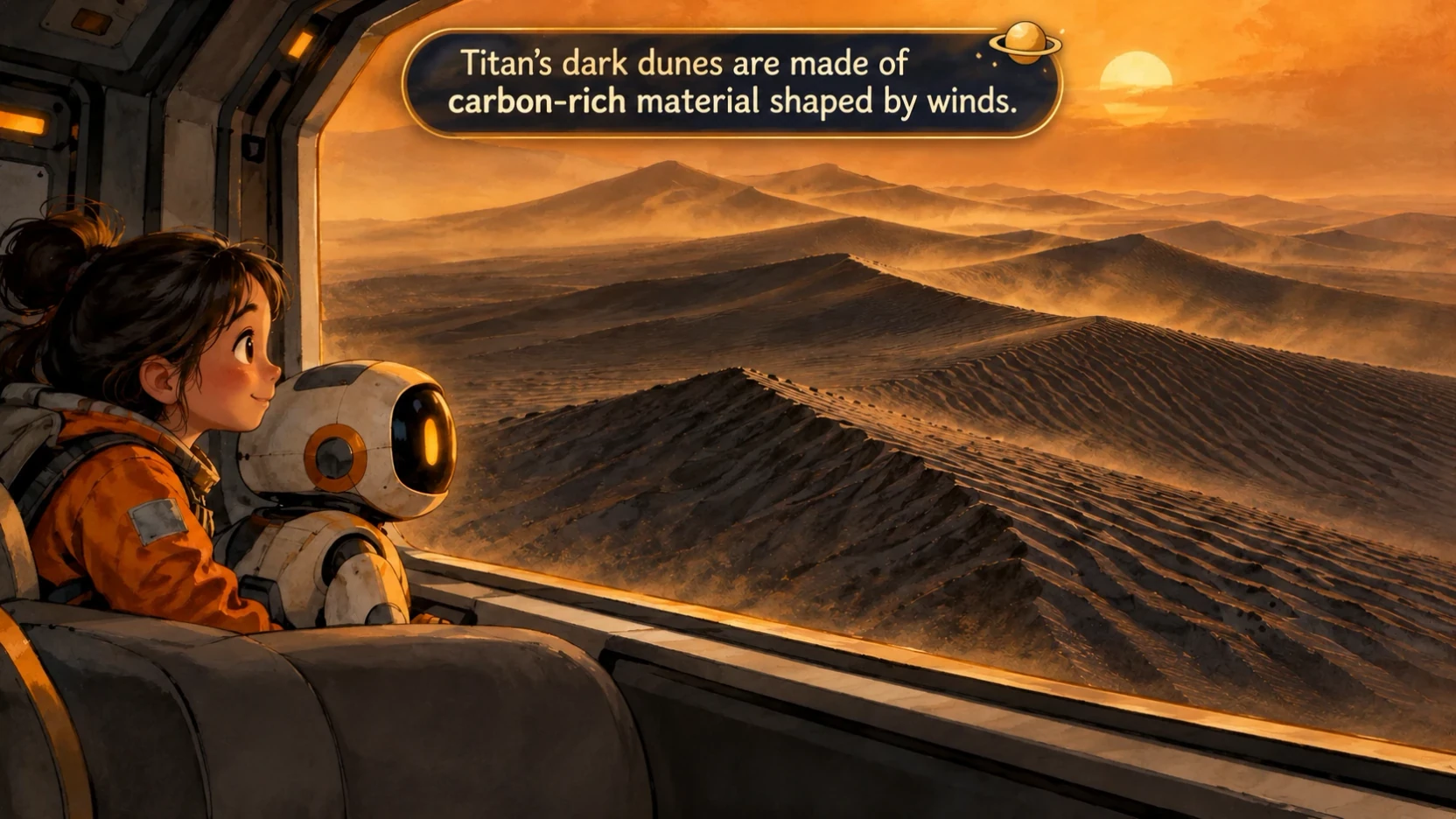
These dark dunes are not made of ordinary beach sand. Carbon-rich material settles from the air, and winds shape it into ridges.
The Huygens Probe
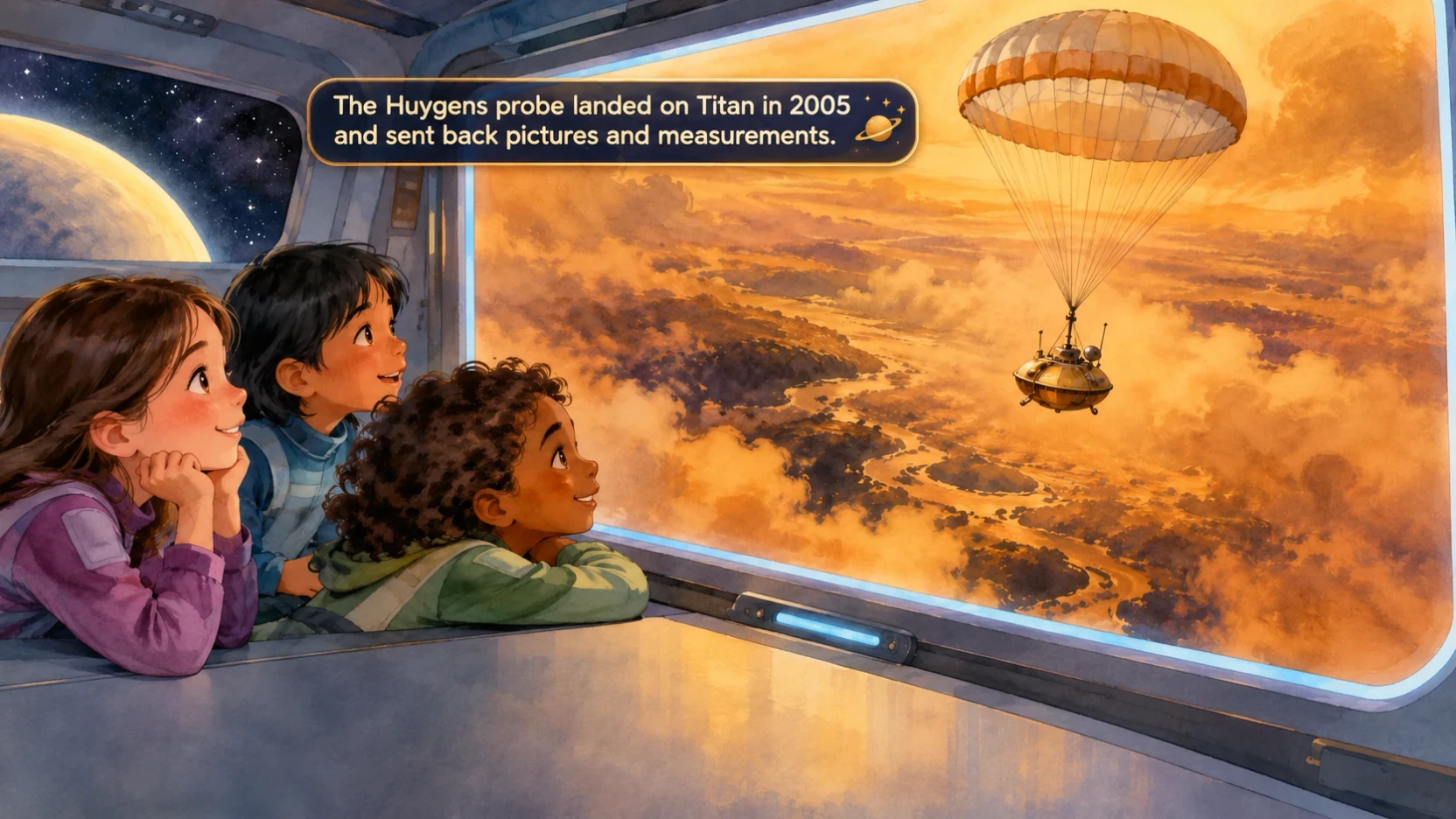
The Huygens probe parachuted down and landed on Titan in 2005. What did it manage to send back? Pictures and measurements that helped scientists learn about Titan’s air and surface. That earlier mission gives us new clues.
Ice Like Rock
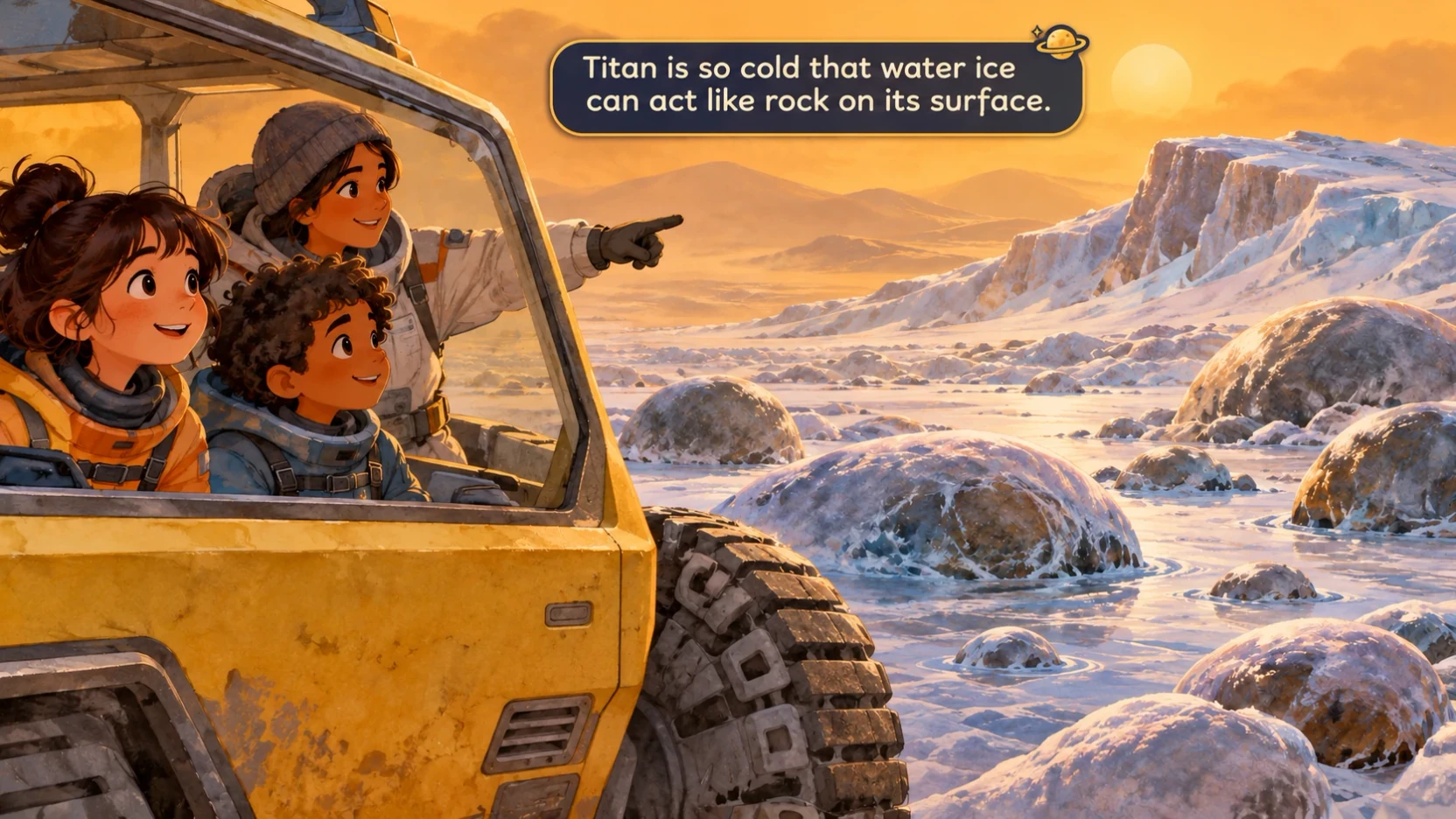
Titan is so cold that water ice can form hard ground like rock. Can methane rivers flow between icy hills? Yes. Titan’s landscape is shaped by materials different from Earth’s. I’ll add that icy ridge to the map.
Onward to Enceladus
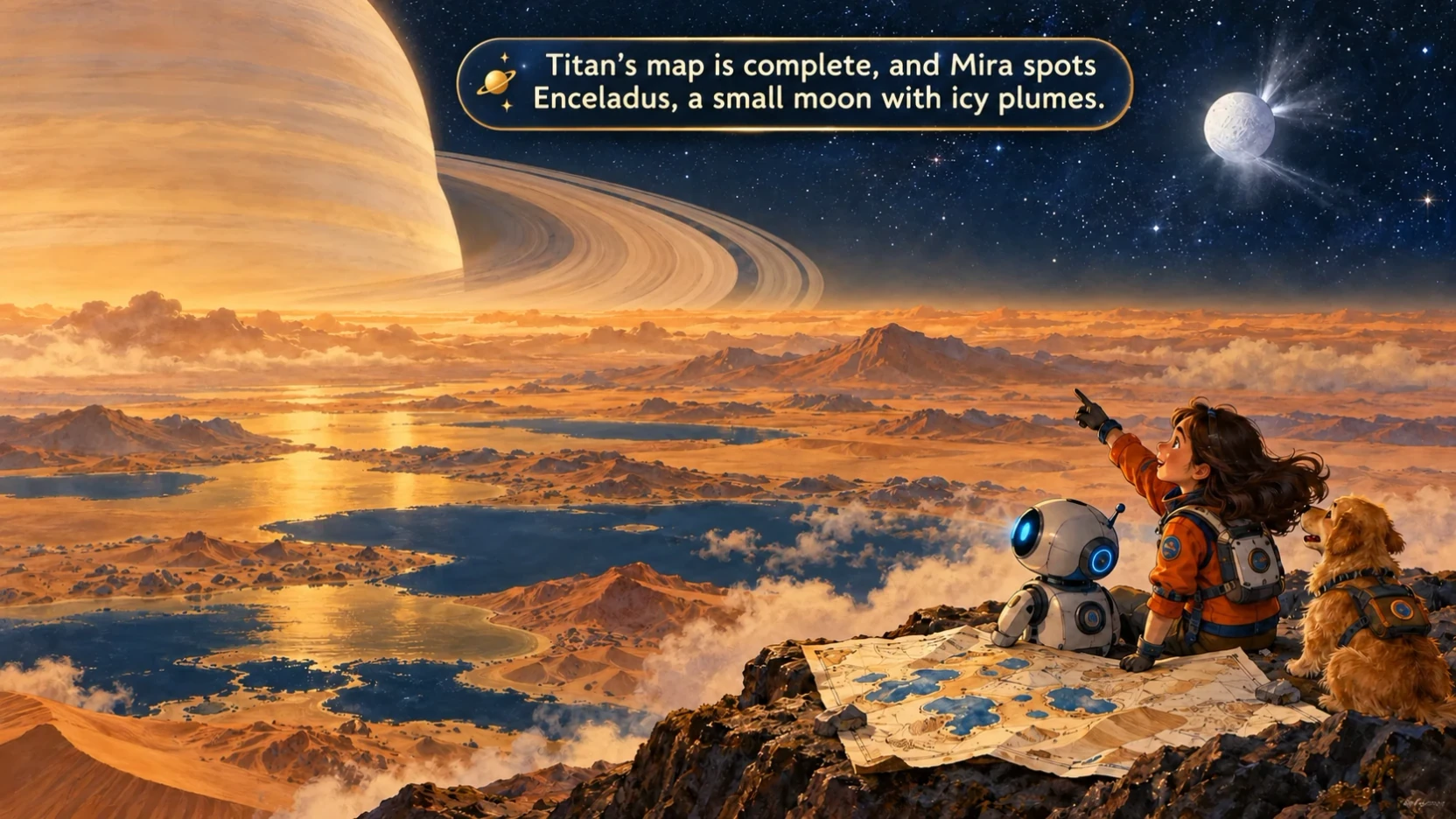
Titan’s map is complete. We recorded its lakes, dunes, clouds, and icy ground. Woof! Woof! Kiko is ready to visit Enceladus, too! That little moon appears to have icy plumes.