Mira and the Moon’s Secrets
Mira and Rumi return to the Moon to explore craters, Moon phases, rocks, and gravity.
Ages 6–10 years · 4 min · 10 scenes
Back to the Moon
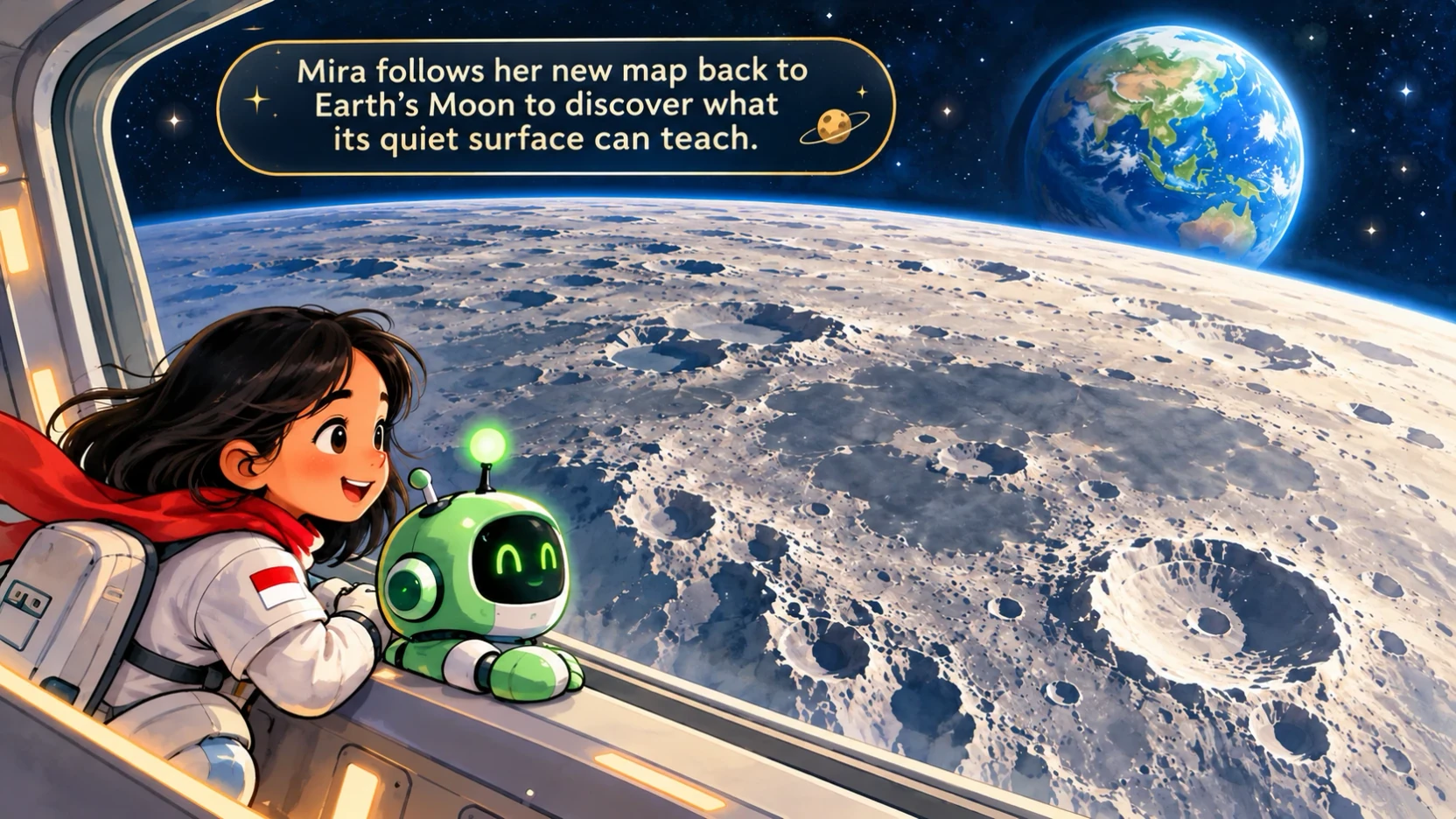
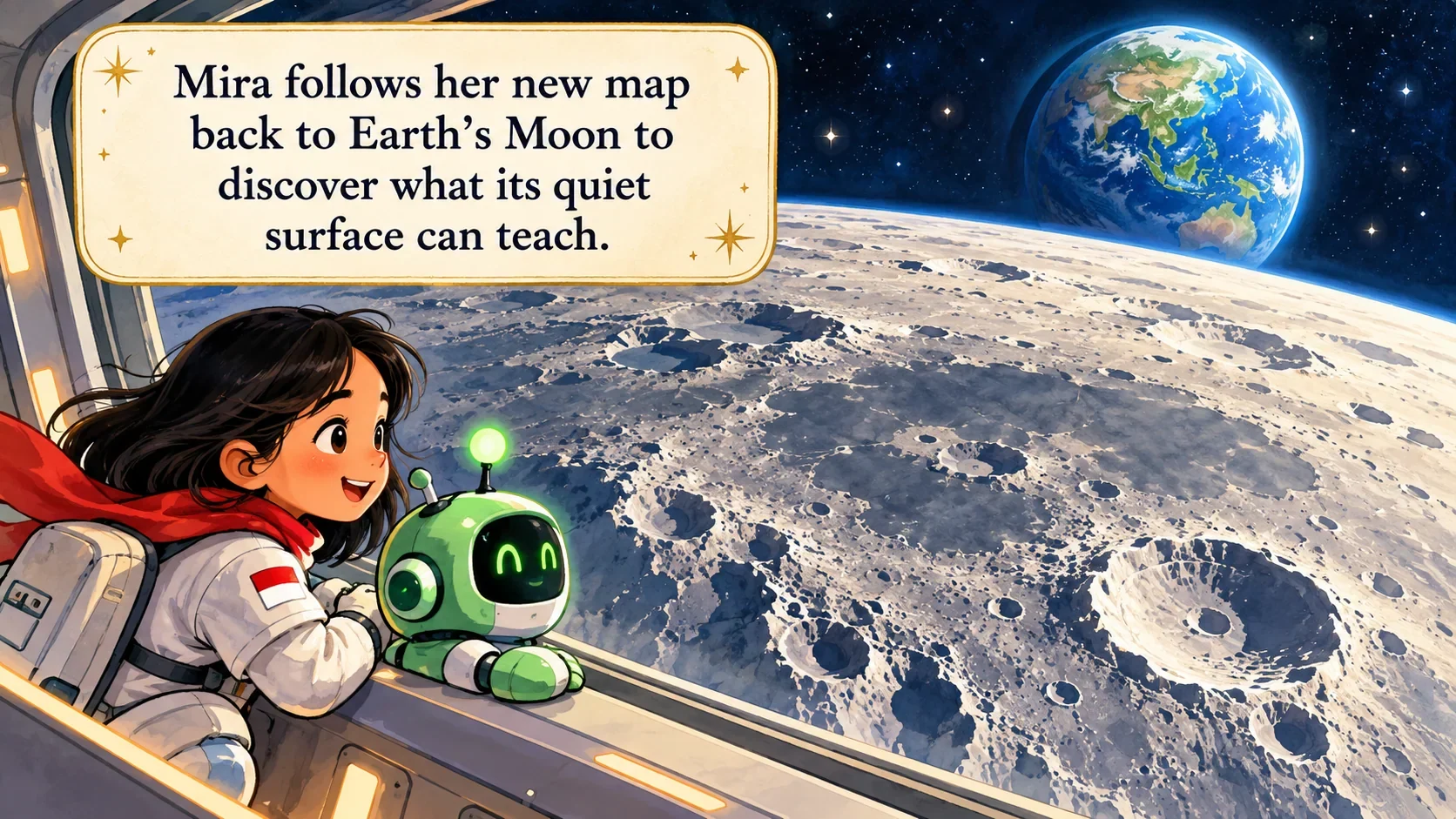
Mira and Rumi use their first map to return to the Moon. They land on a safe plain, far from steep slopes. Rumi turns on a gentle lamp so they can study the surface. Mira wants to learn why the Moon seems to change and what lies inside its craters.
Old Craters
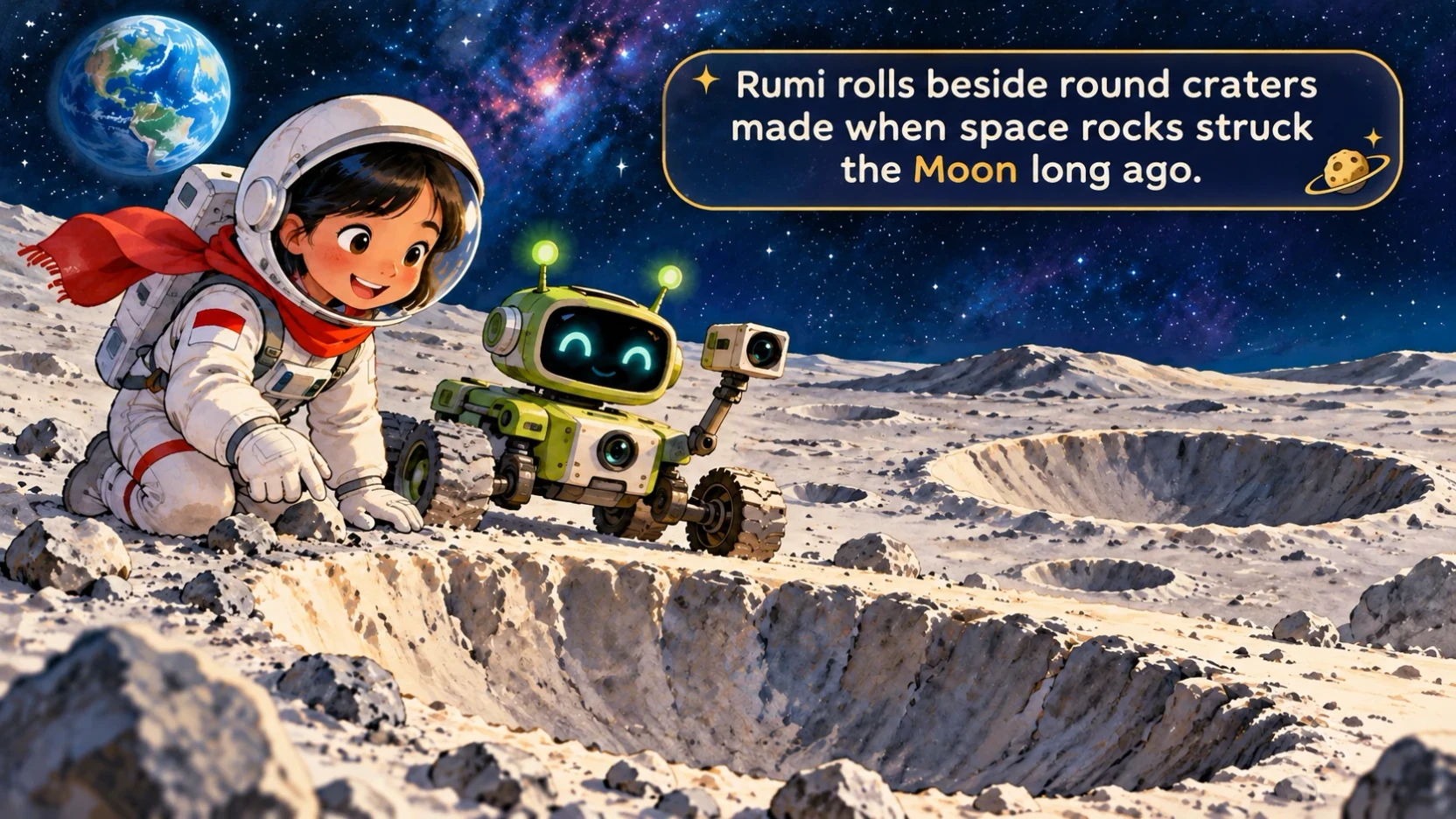
Round craters cover much of the Moon. Rumi explains that many formed when rocks from space hit the Moon long ago. Mira studies one crater from a safe distance and spots a smaller crater inside a larger one. Surface shapes help scientists learn about ancient impacts.
Seas Without Water
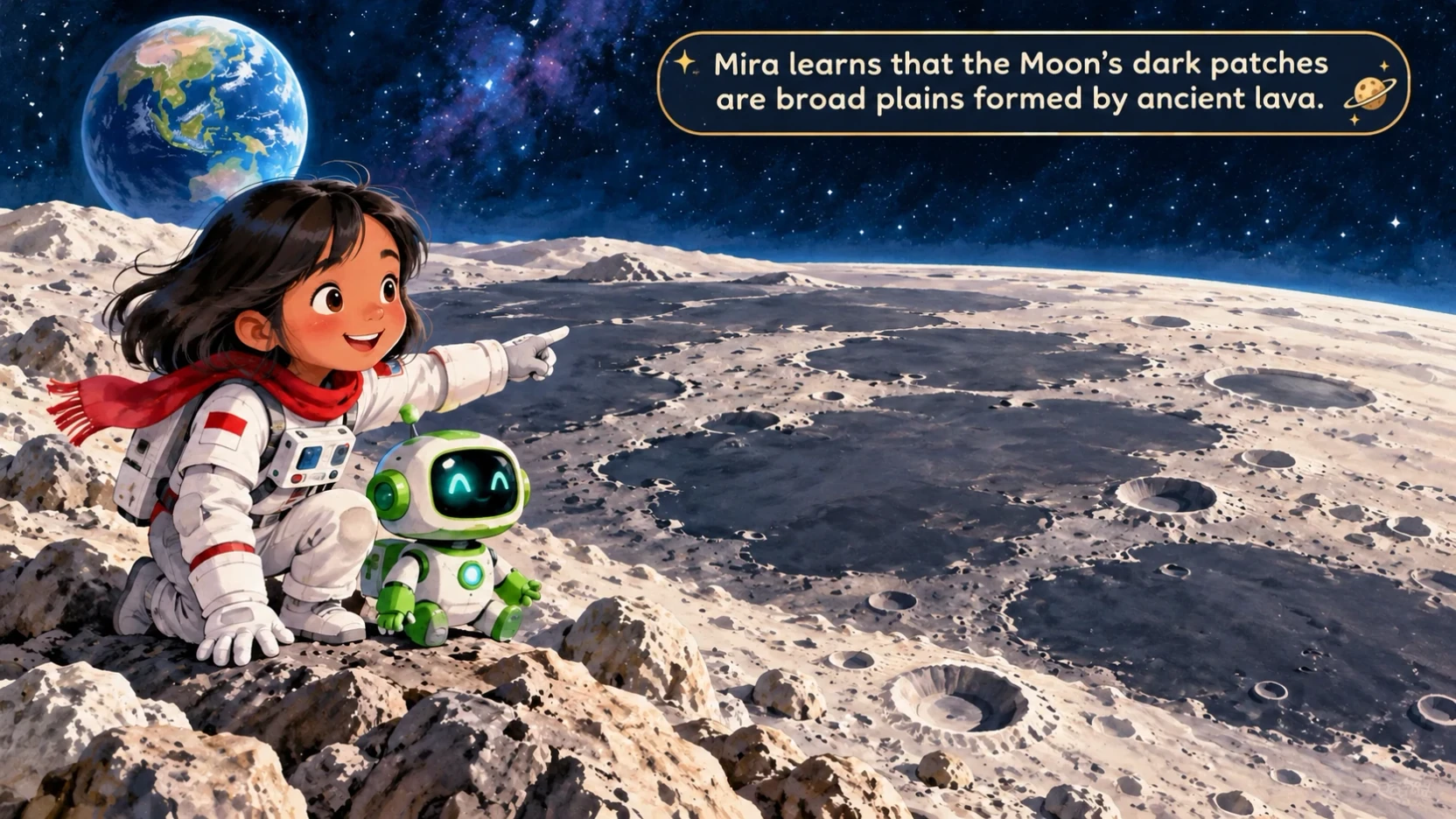
Some lunar plains look darker and were once called seas. Mira asks whether they contain water. Rumi explains that these broad plains formed when ancient lava cooled; they are not oceans like Earth’s. Mira marks the color difference on her map and reminds Rumi not to call them real seas.
A Moon That Changes Shape
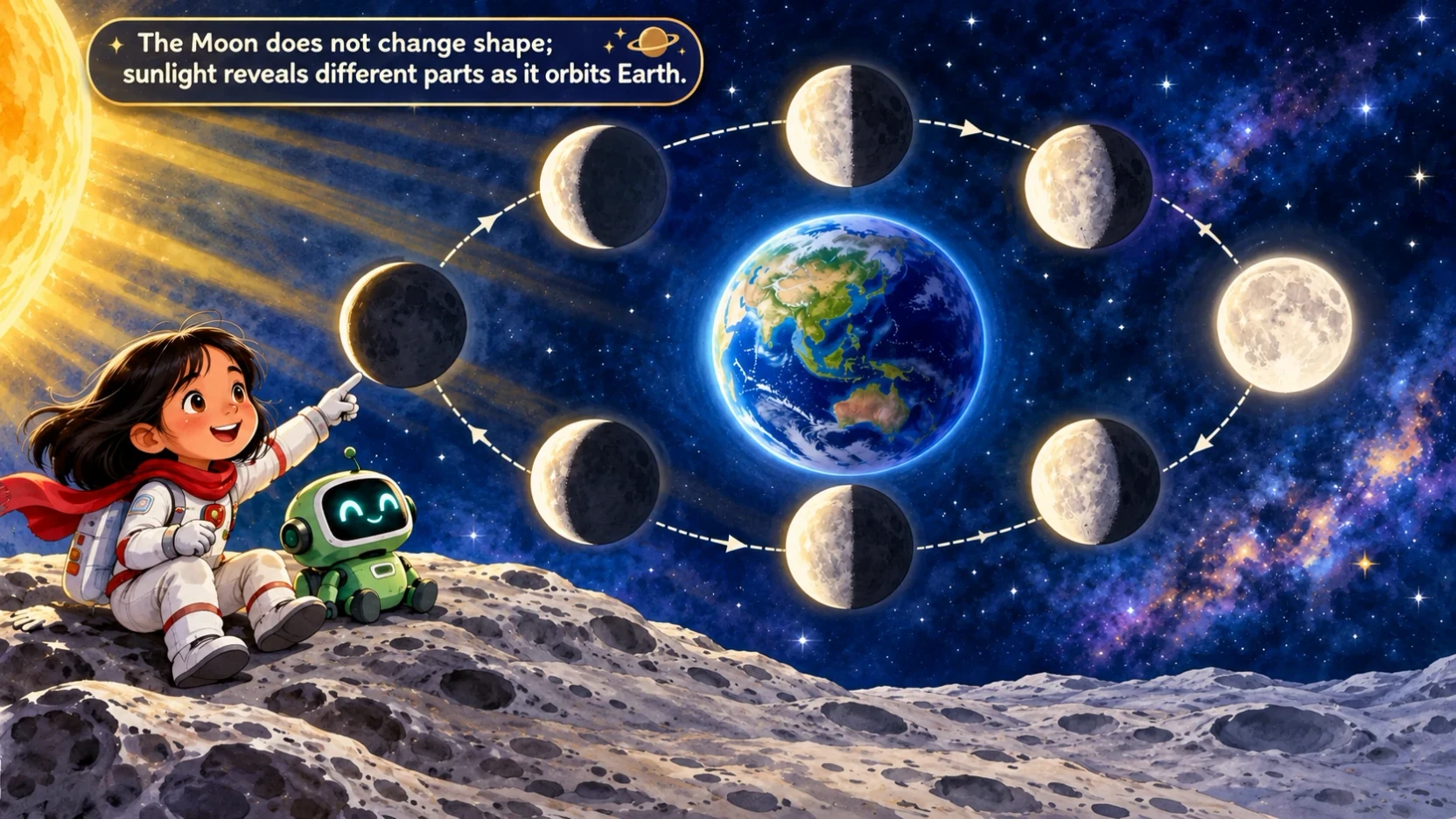
From the ship, Mira sees a crescent, a half Moon, and then a round Moon. Rumi shows that the Moon itself stays nearly round. As it orbits Earth, sunlight reveals different portions from our viewpoint. Mira slowly turns a model until the Moon’s phases appear in order.
The Far Side
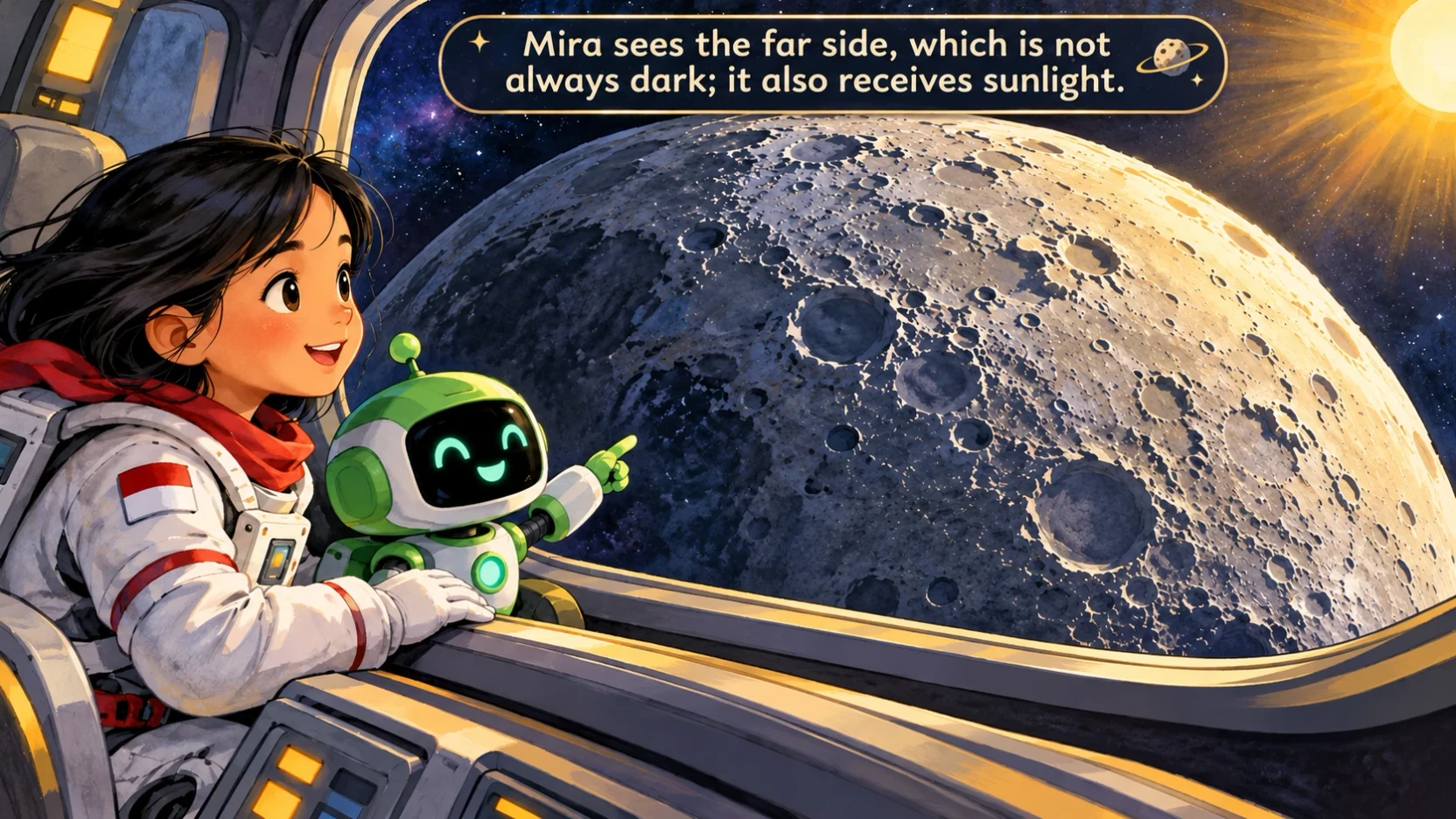
The ship circles the Moon’s far side, the part that does not always face Earth. Mira sees craters through the window. “Is it always nighttime here?” she asks. Rumi explains that sunlight reaches the far side too; we simply cannot see it directly from Earth. Mira adds it to the map.
Footprints That Last
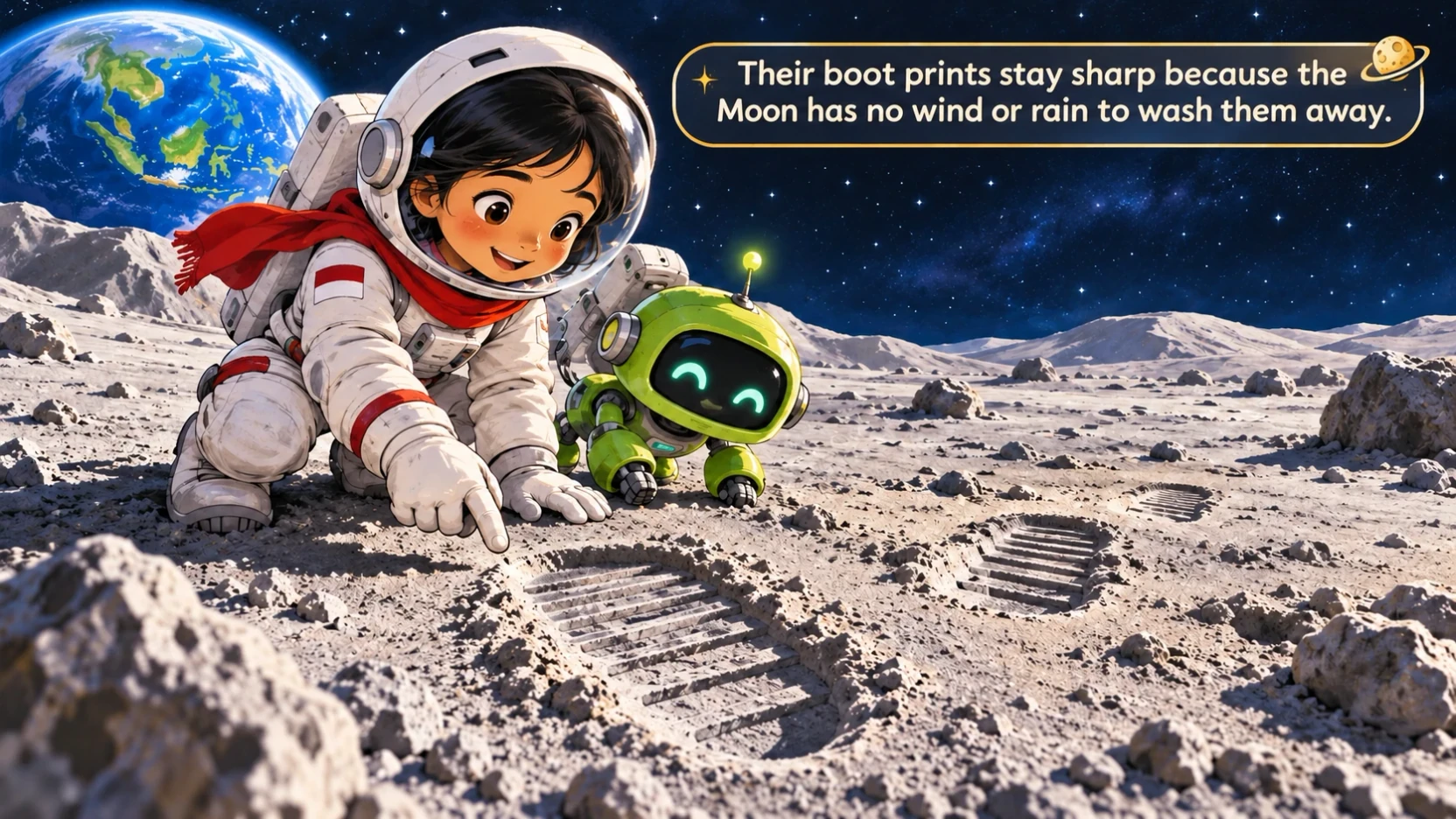
Mira and Rumi walk in their space boots. Their footprints remain clear in the fine dust. The Moon has almost no moving air like wind, and no rain to wash marks away. Mira makes a small print and photographs it. Rumi reminds her that it shows a visit, not signs of life.
Moon Rocks Tell Stories
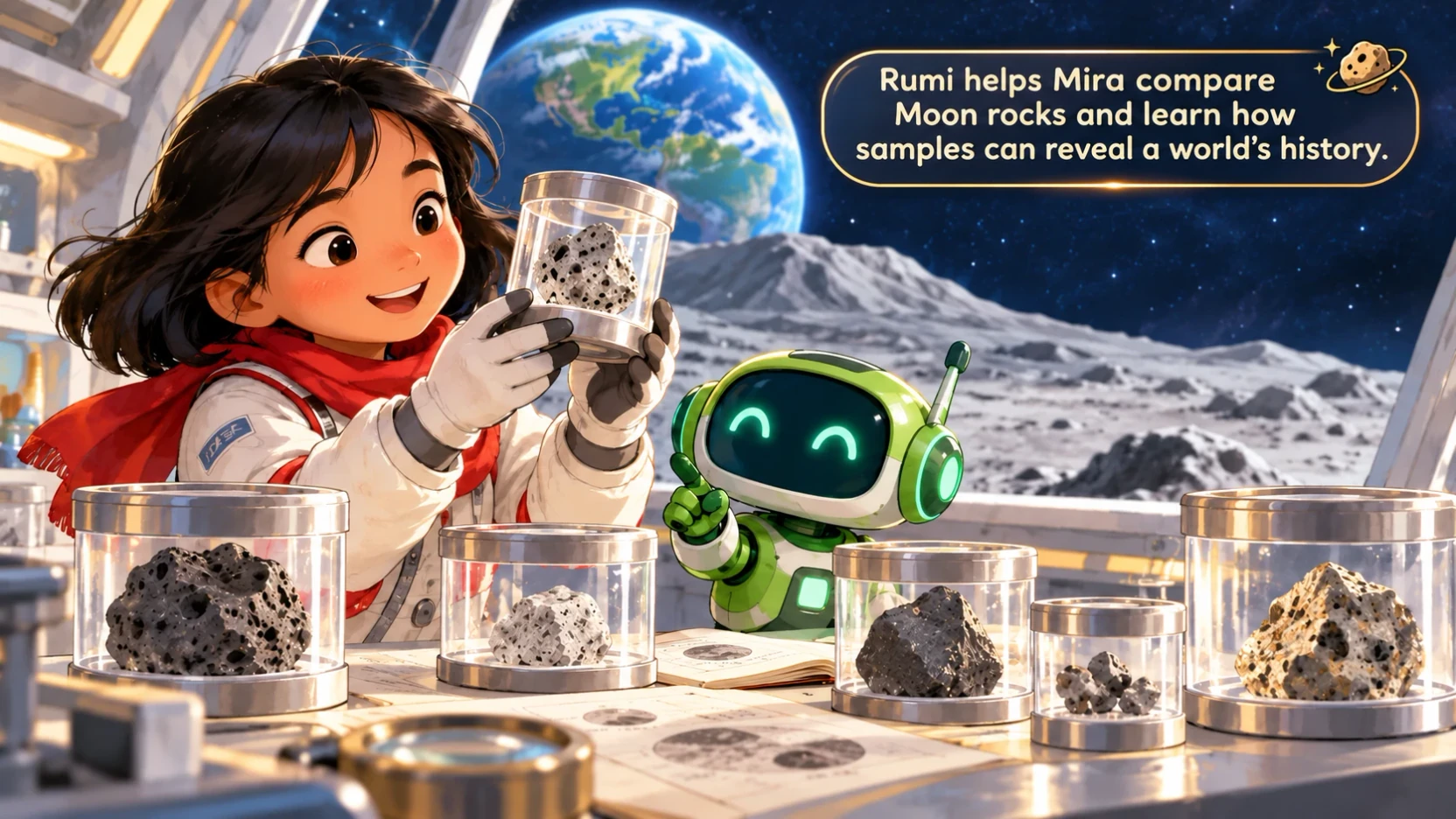
Rumi gathers rock samples in sealed containers for study. Mira compares their colors and textures through the glass without touching anything unknown. Rocks can hold clues about the Moon’s age and changing surface. They label each sample so scientists on Earth know where it came from.
Earth on the Horizon
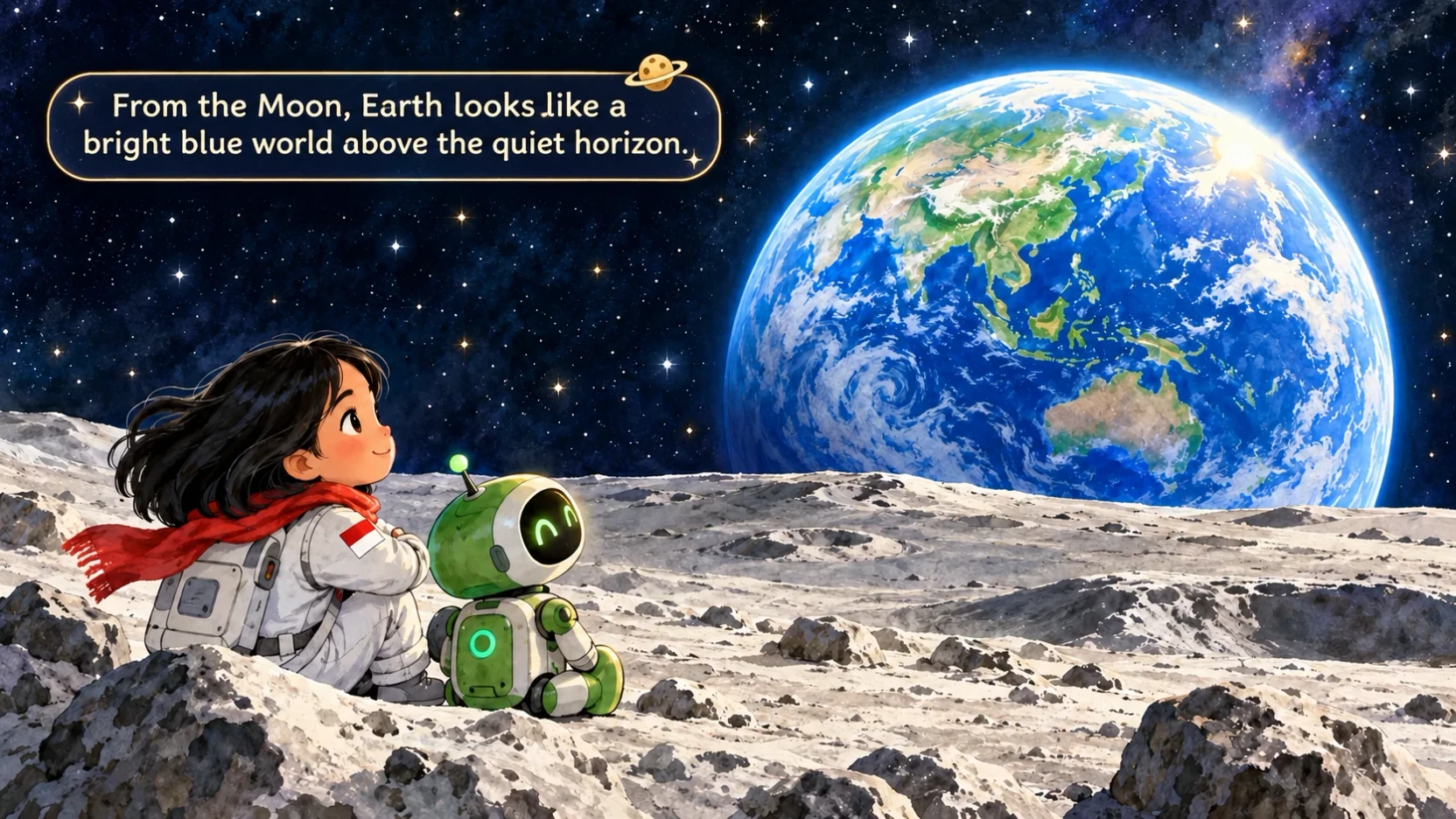
As evening reaches one side of the Moon, Earth shines blue above the horizon. Mira sees white clouds drifting over oceans. The view reminds her that Earth has air and water that support the life we know. Rumi takes a picture from a safe place. They save it as a reminder of home.
Tides and Gravity
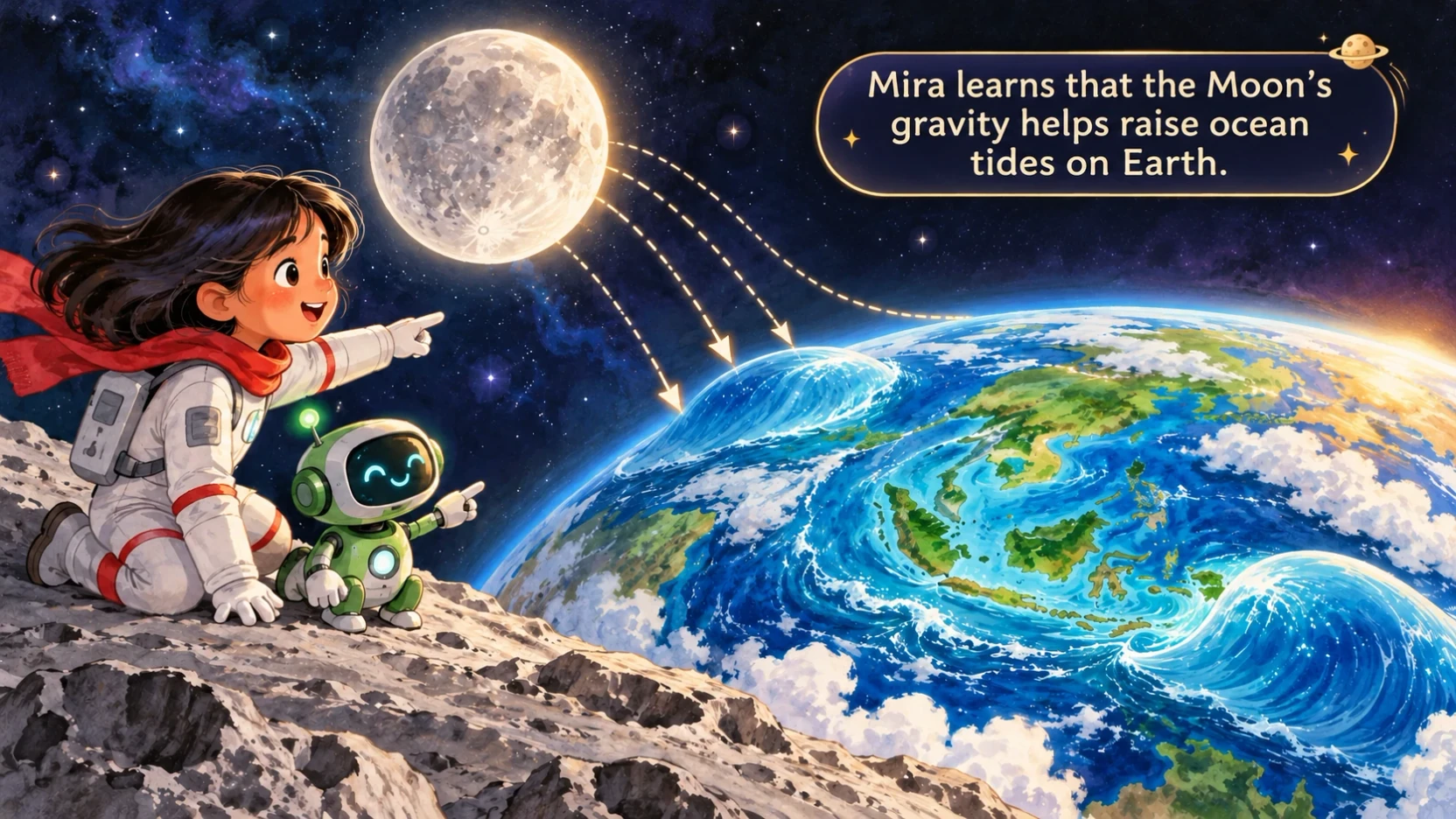
From orbit, Rumi sketches a slight bulge in Earth’s oceans. Mira learns that the Moon’s gravity helps create ocean tides. The Sun also affects them. They watch the water follow a regular pattern, not a magic wave. Mira writes a simple note so children know gravity works even when unseen.
A Map to the Asteroids
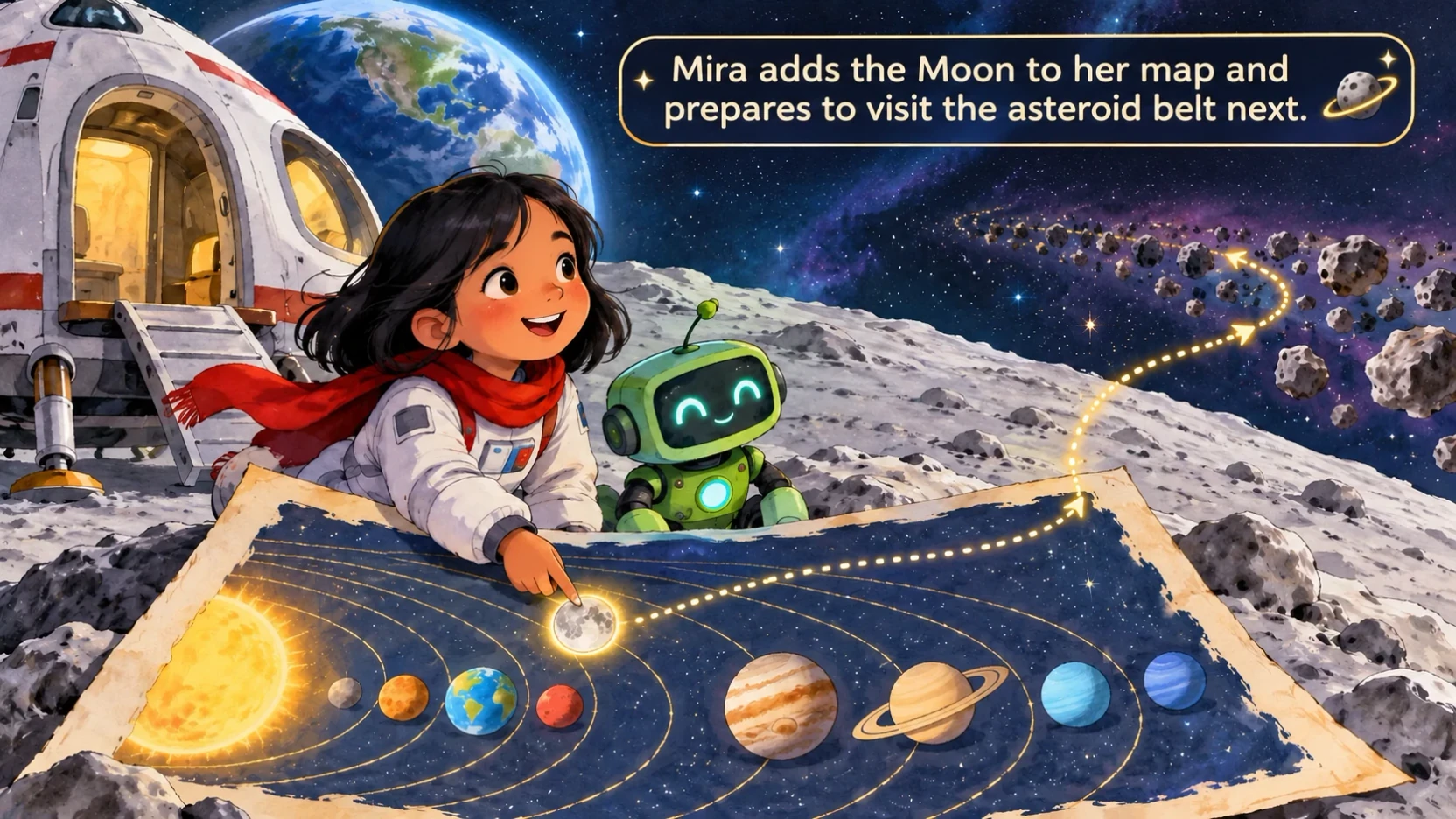
Mira completes the map with craters, lava plains, Moon phases, rocks, and an orbit path. They do not find every answer, but new questions make the trip exciting. Rumi points to the asteroid belt between Mars and Jupiter. They set off to study space rocks with their growing map.