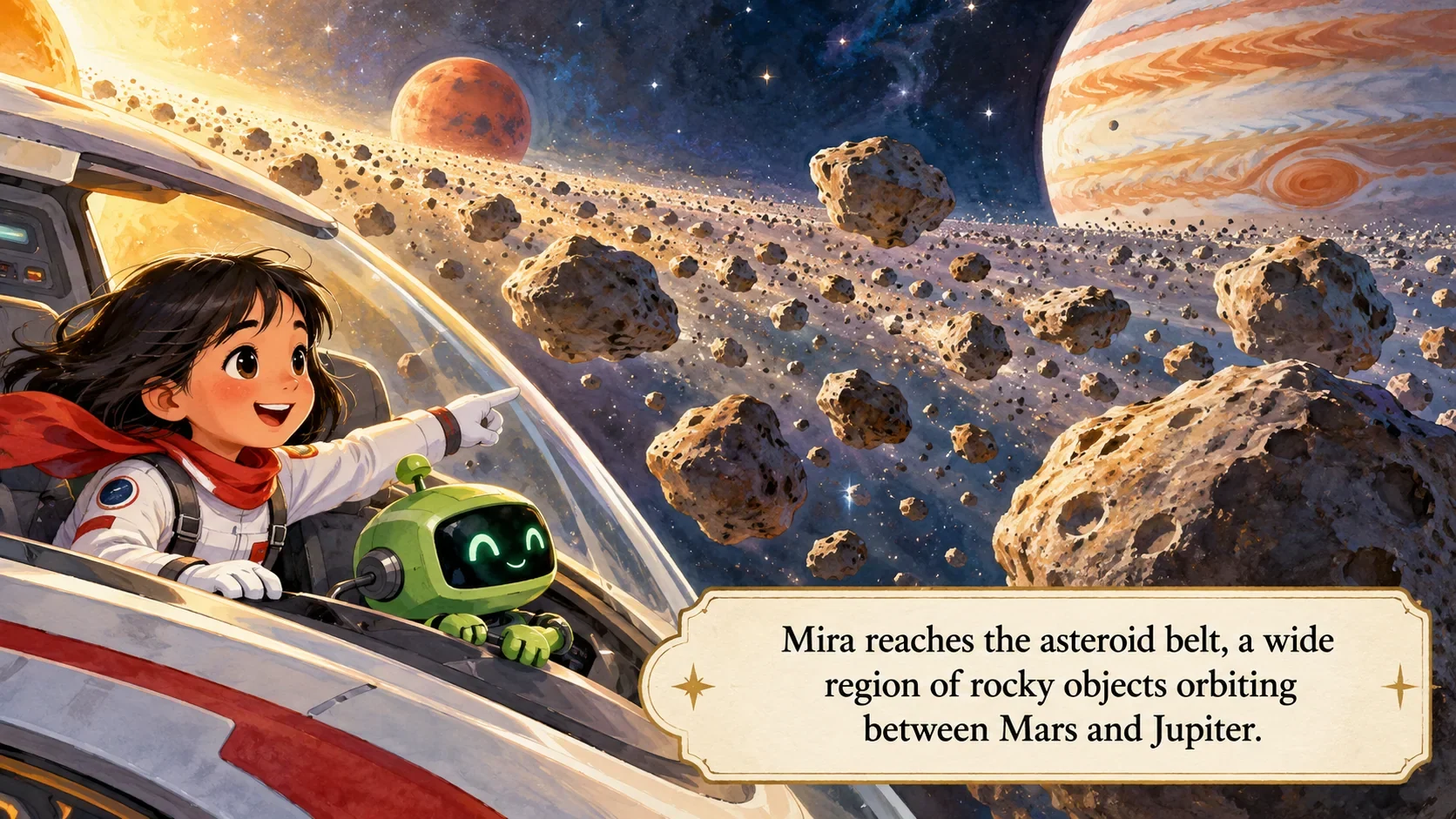
Mira and the Asteroid Belt Mystery
Mira and Rumi map asteroids, discover Ceres, and learn that space in the asteroid belt is vast.
Ages 6–10 years · 4 min · 10 scenes
Entering the Asteroid Belt
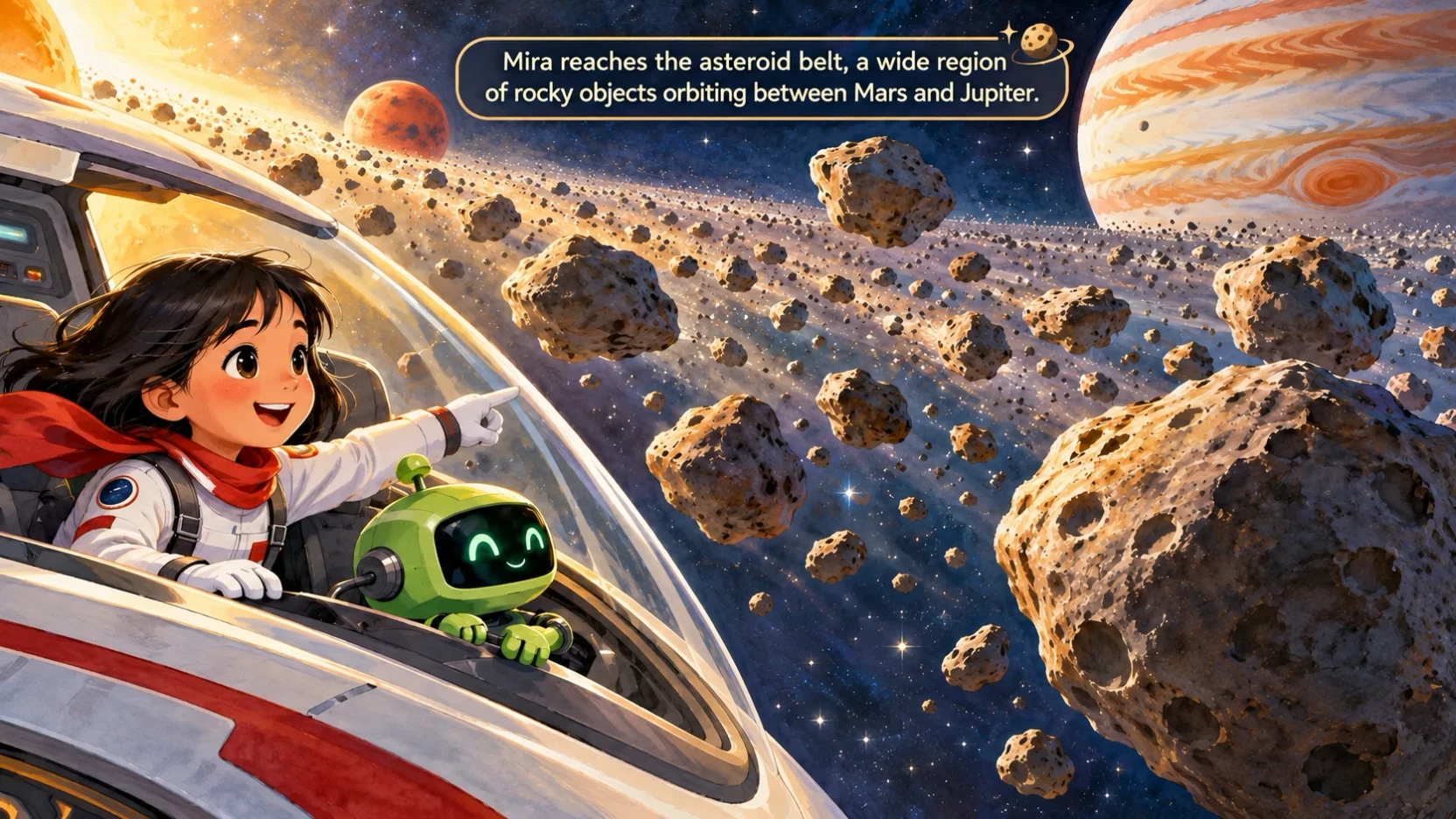
Mira and Rumi reach the asteroid belt, a broad region between Mars and Jupiter. The screen shows many dots orbiting the Sun. “Do they all move without rules?” Mira asks. Rumi shows their paths. These objects travel in orbits, though their sizes and shapes vary. Mira begins drawing a new region on their map.
Rocky Remains
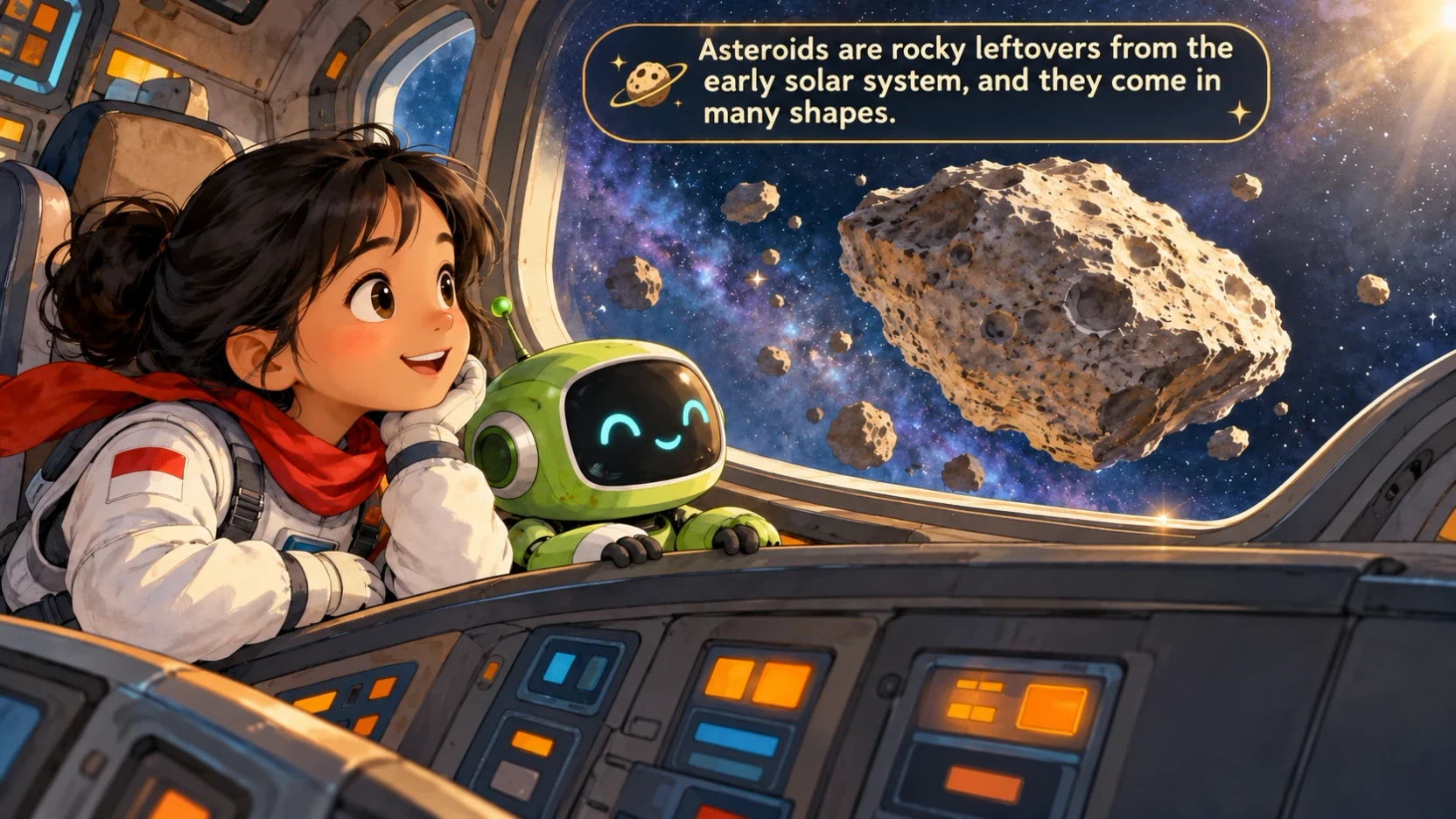
Asteroids are rocky objects left over from the early solar system. Some are small, some are large, and they are not always round. Mira spots a lumpy asteroid from the ship. Rumi explains that each rock has its own history. They observe without landing and mark the unusual shape as their first example.
Room to Travel
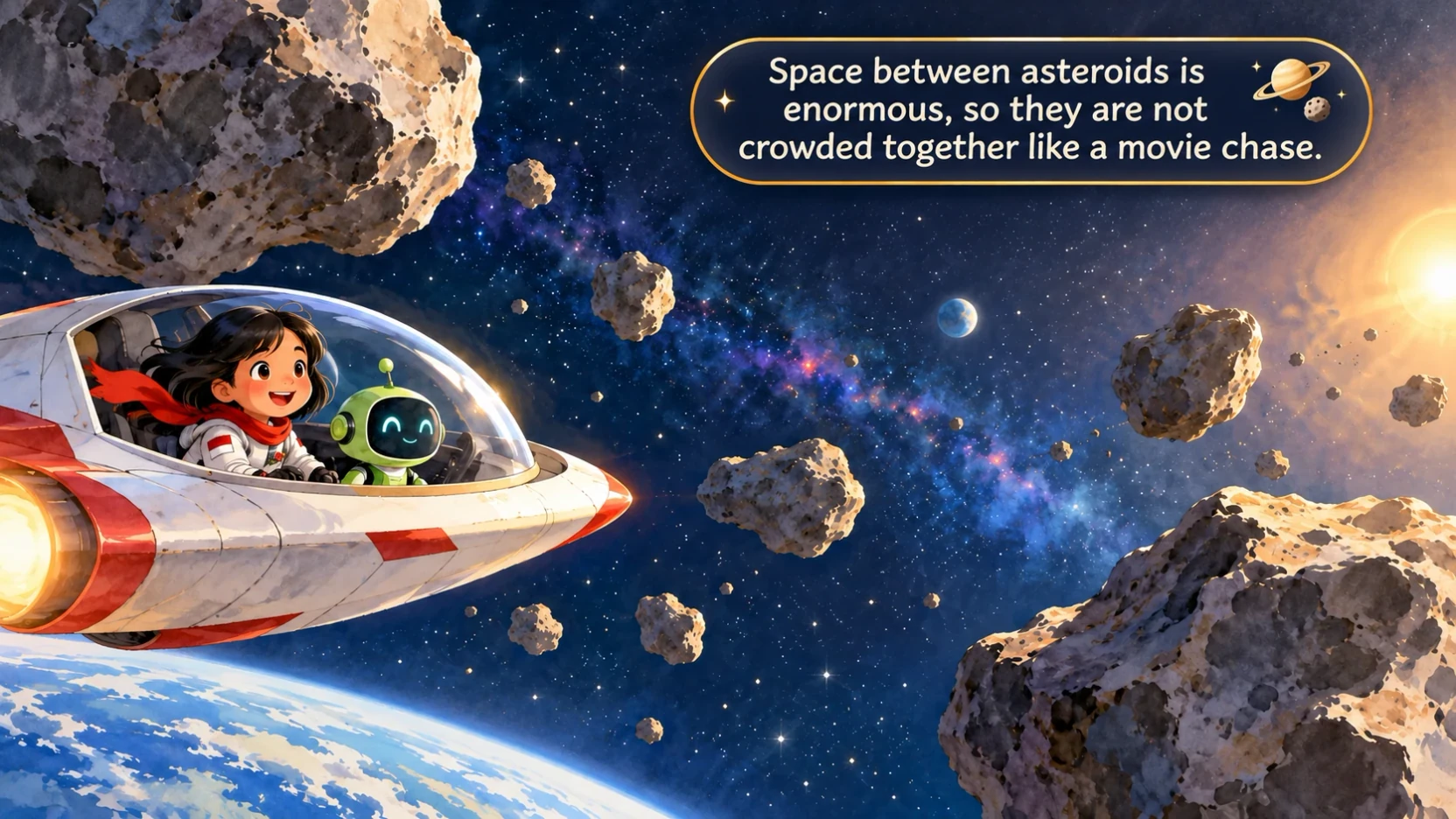
Mira imagines the asteroid belt as a very crowded road. Rumi zooms in on the map to show the real distances. Space between most asteroids is enormous. A ship can travel carefully without weaving through a movie-style chase. Mira laughs and erases the picture of crowded rocks from her little map.
Meet Ceres
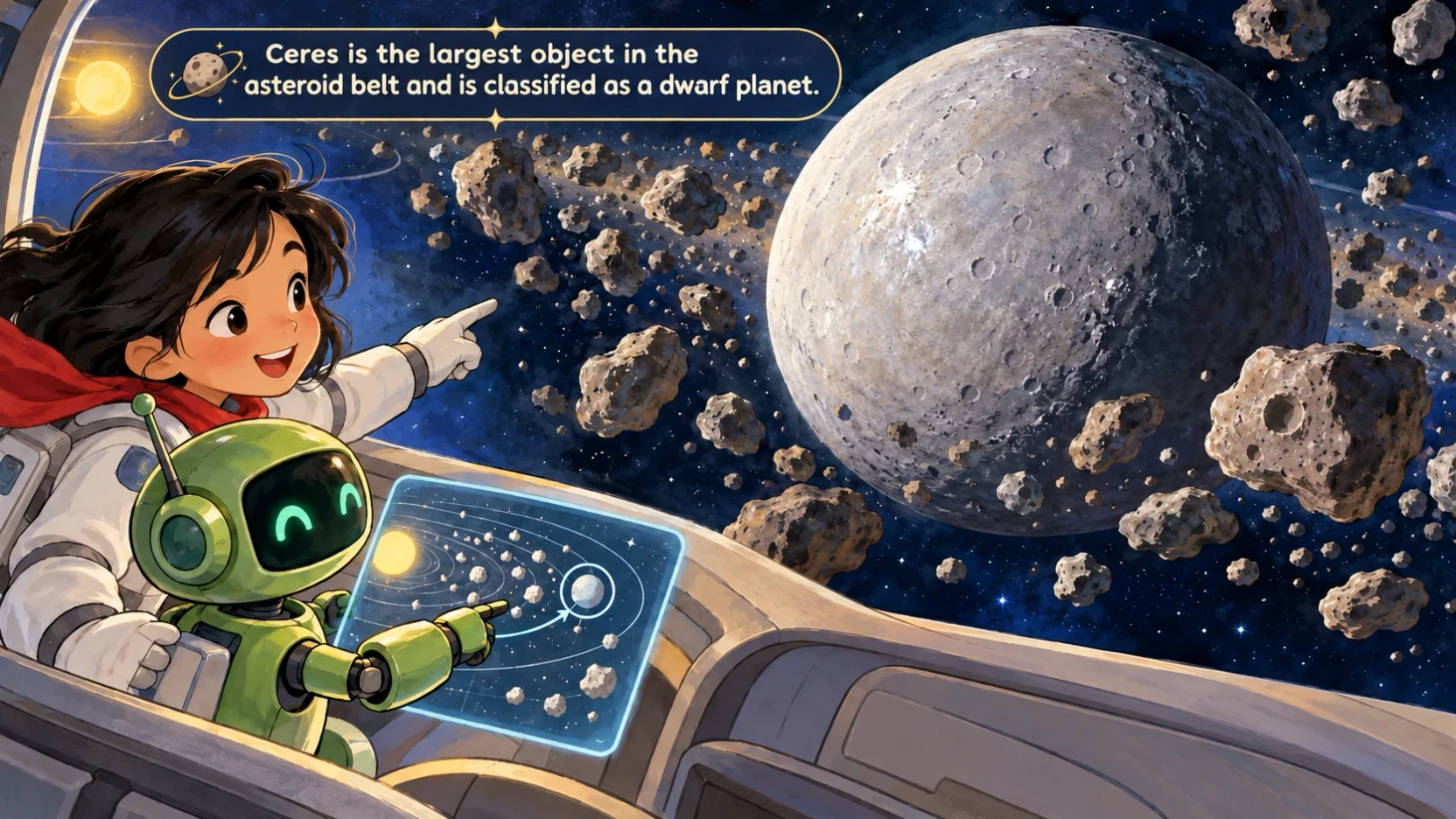
One dot looks larger than the others: Ceres. Rumi explains that Ceres is the largest object in the asteroid belt and is classified as a dwarf planet. Mira observes it from far away and adds a special symbol. Ceres is different from the large planets they visited, but it still orbits the Sun.
A Probe’s Close Look
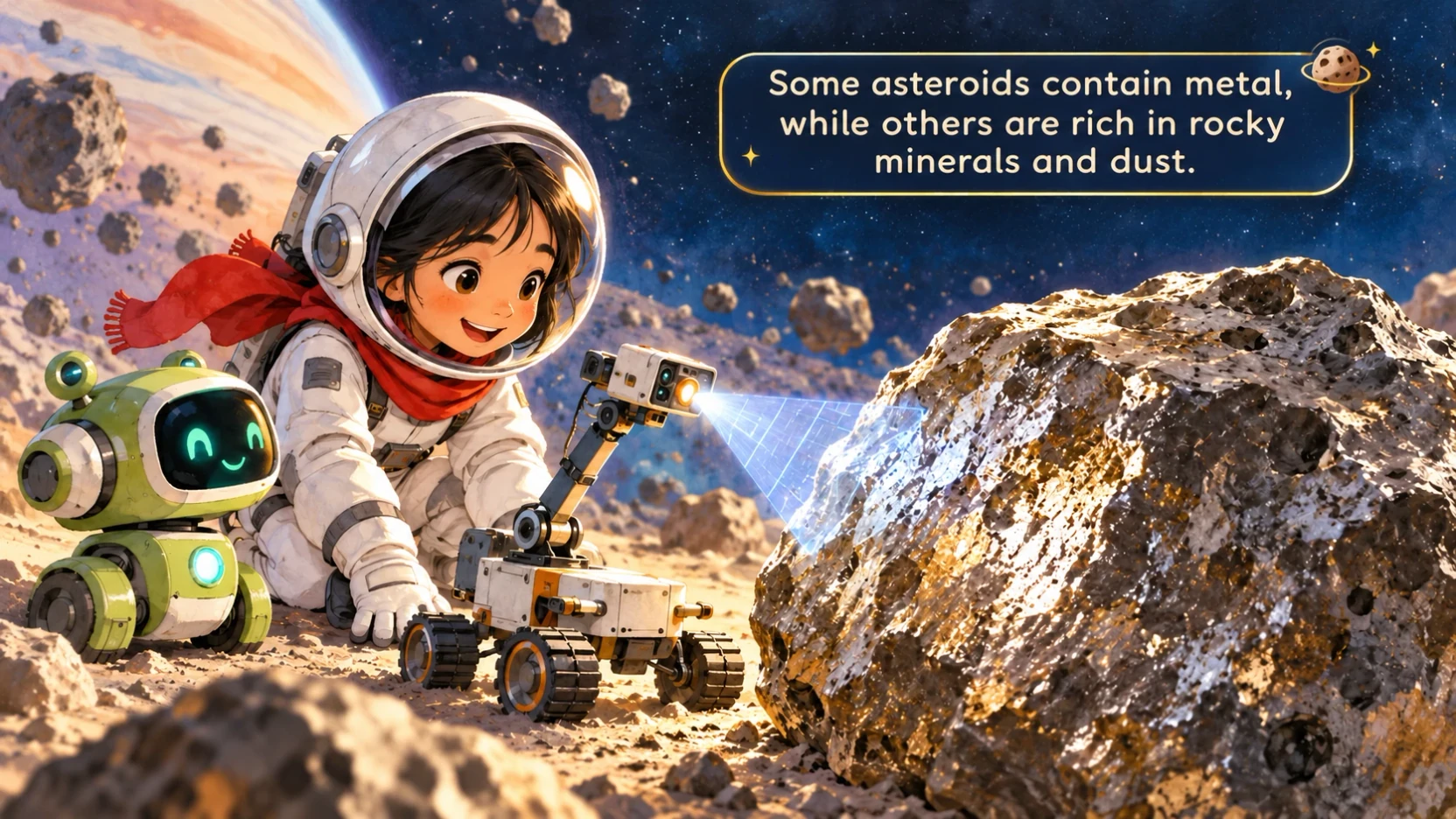
Mira sends a small probe to photograph an asteroid. It does not land; it flies by while measuring light and shape. Some asteroids contain metal, while others have rocky minerals and dust. Rumi helps compare the data. Mira learns that remote observations can reveal a great deal.
Orbits on the Map
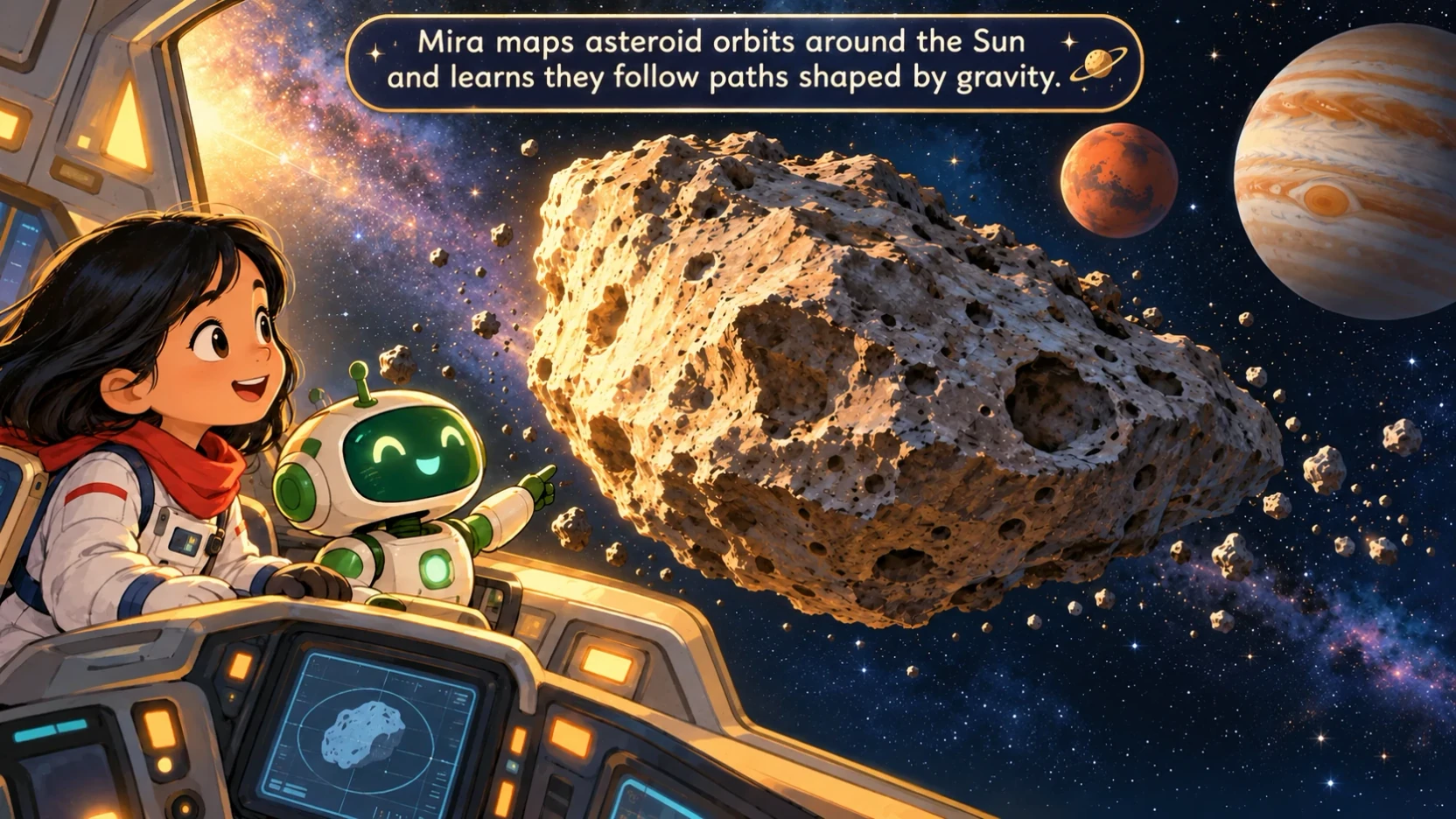
On the screen, each asteroid follows an orbit around the Sun. Gravity helps shape that motion. Mira draws curved lines with the Sun in the middle. Rumi points out that a simple map cannot show every distance to scale. Mira adds a note so her friends know the drawing is only a guide.
A Safe Flyby
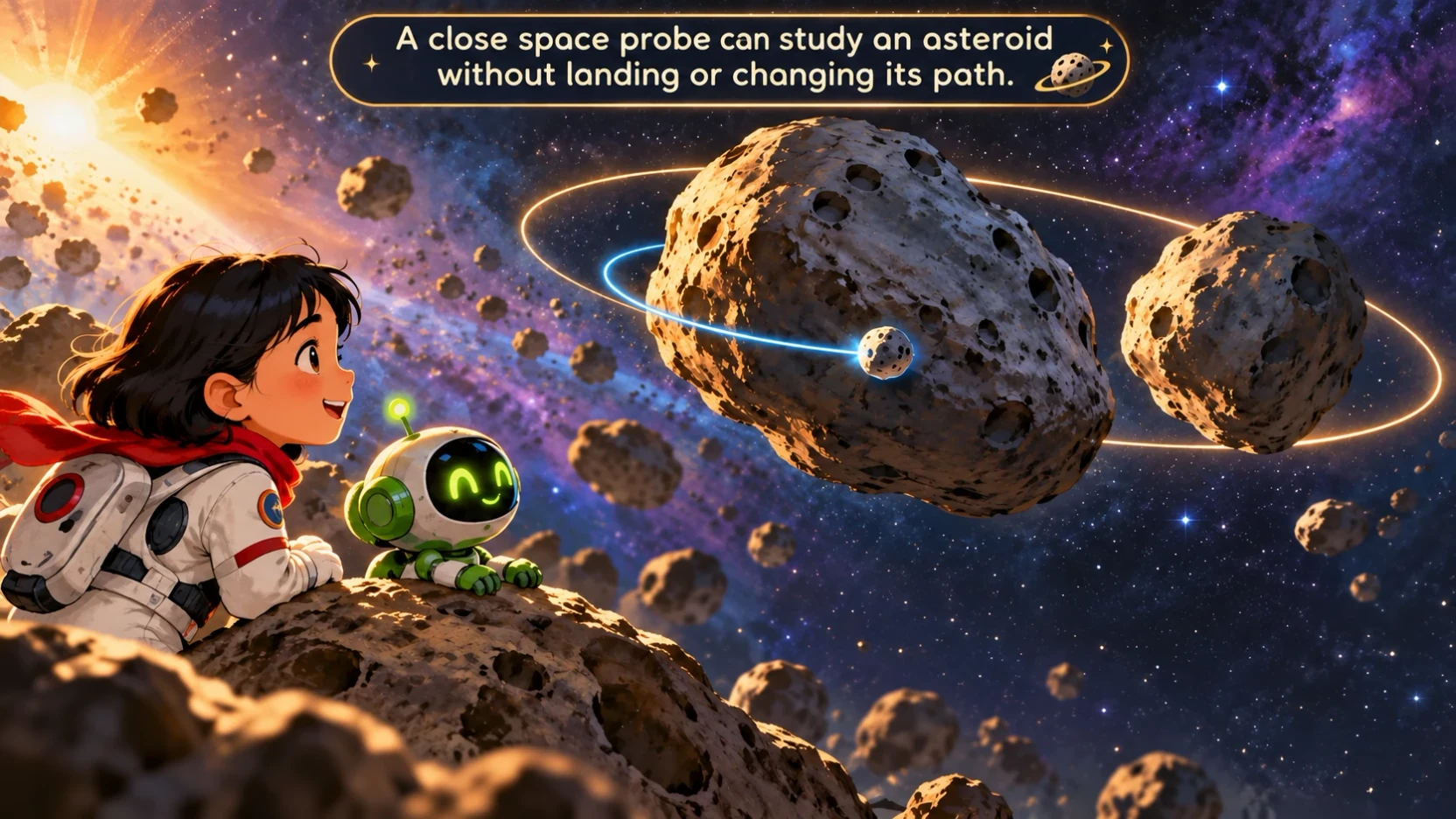
The probe approaches an asteroid, takes pictures, and continues along its path. Mira holds her breath until it safely passes the large rock. They do not push it or land there. Rumi explains that spacecraft can study an object with cameras and measuring tools. Mira adds a camera symbol to the map.
Asteroid Companions
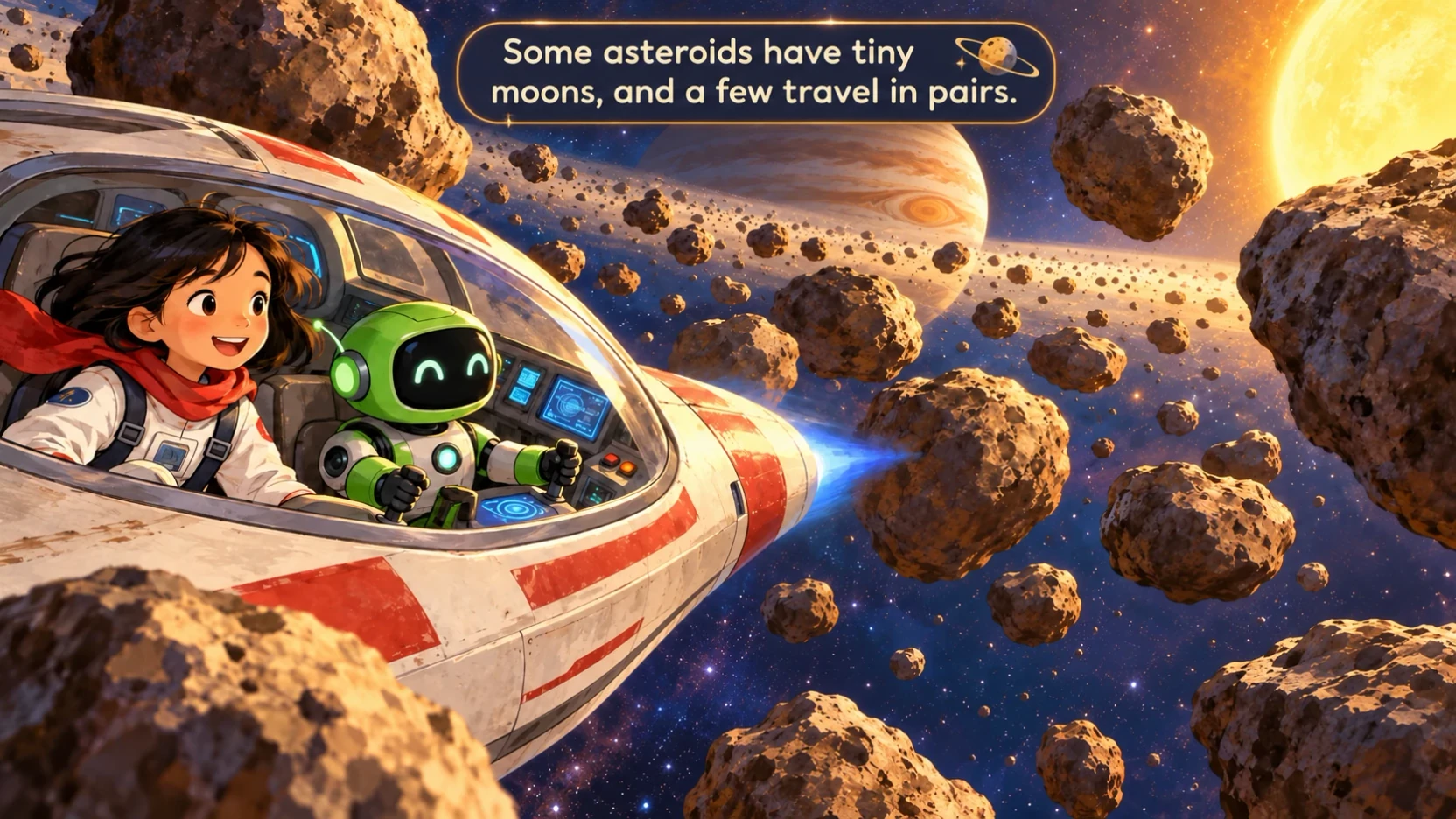
Two asteroids travel as a pair. A small object circles the larger one like a tiny moon. Rumi explains that some asteroids have natural satellites. Mira watches from far away and draws two dots on one orbital path. Not every asteroid is alone; some have companions moving with them.
Not a Rock Pile
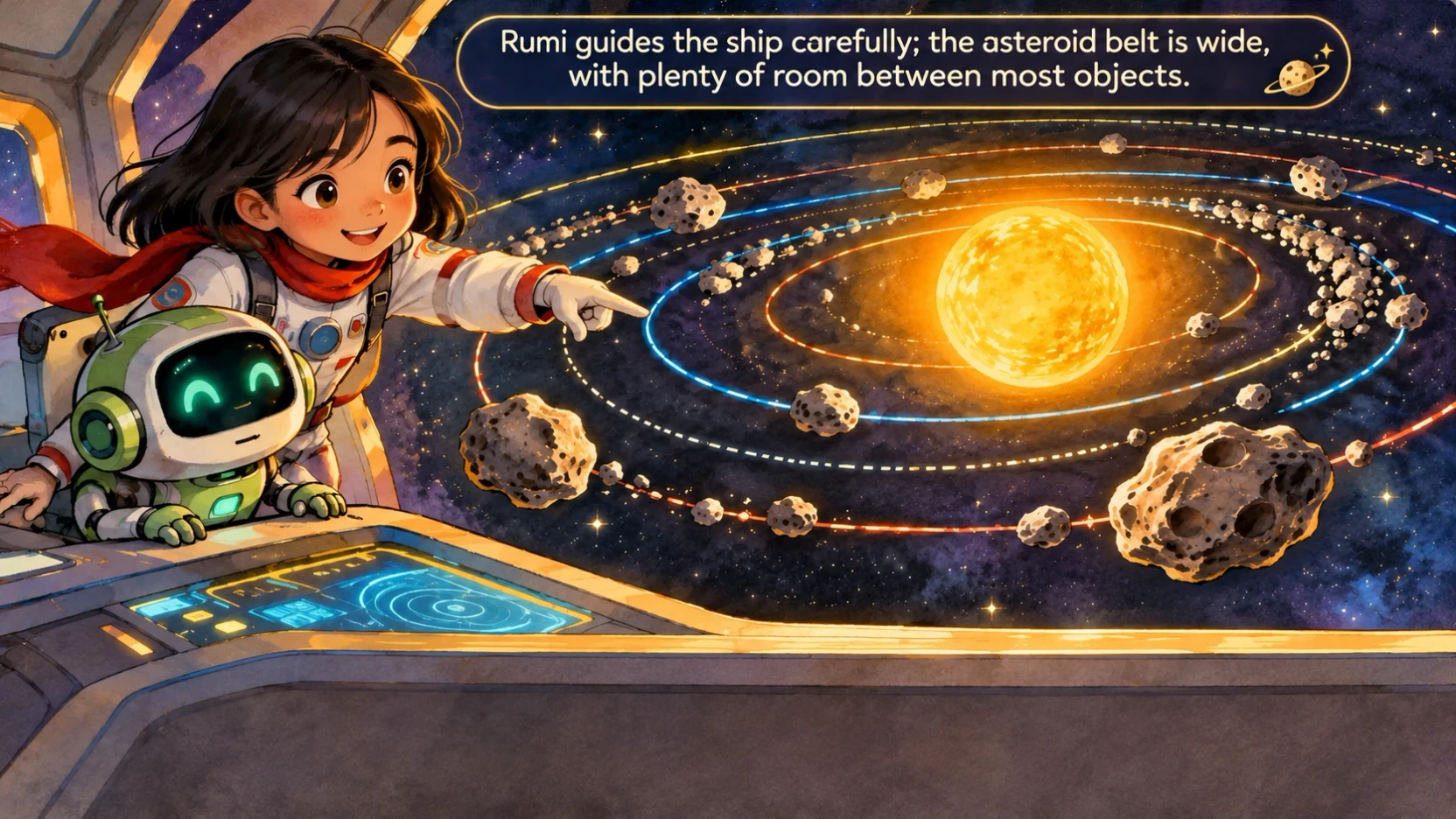
As the ship travels, asteroids appear scattered far apart. Rumi keeps their route steady and safe. Mira realizes the belt is not a wall of rock, but a broad region with lots of empty space. They follow the planned route and compare the map with what they see. The trip feels like learning, not dodging danger.
Jupiter Ahead
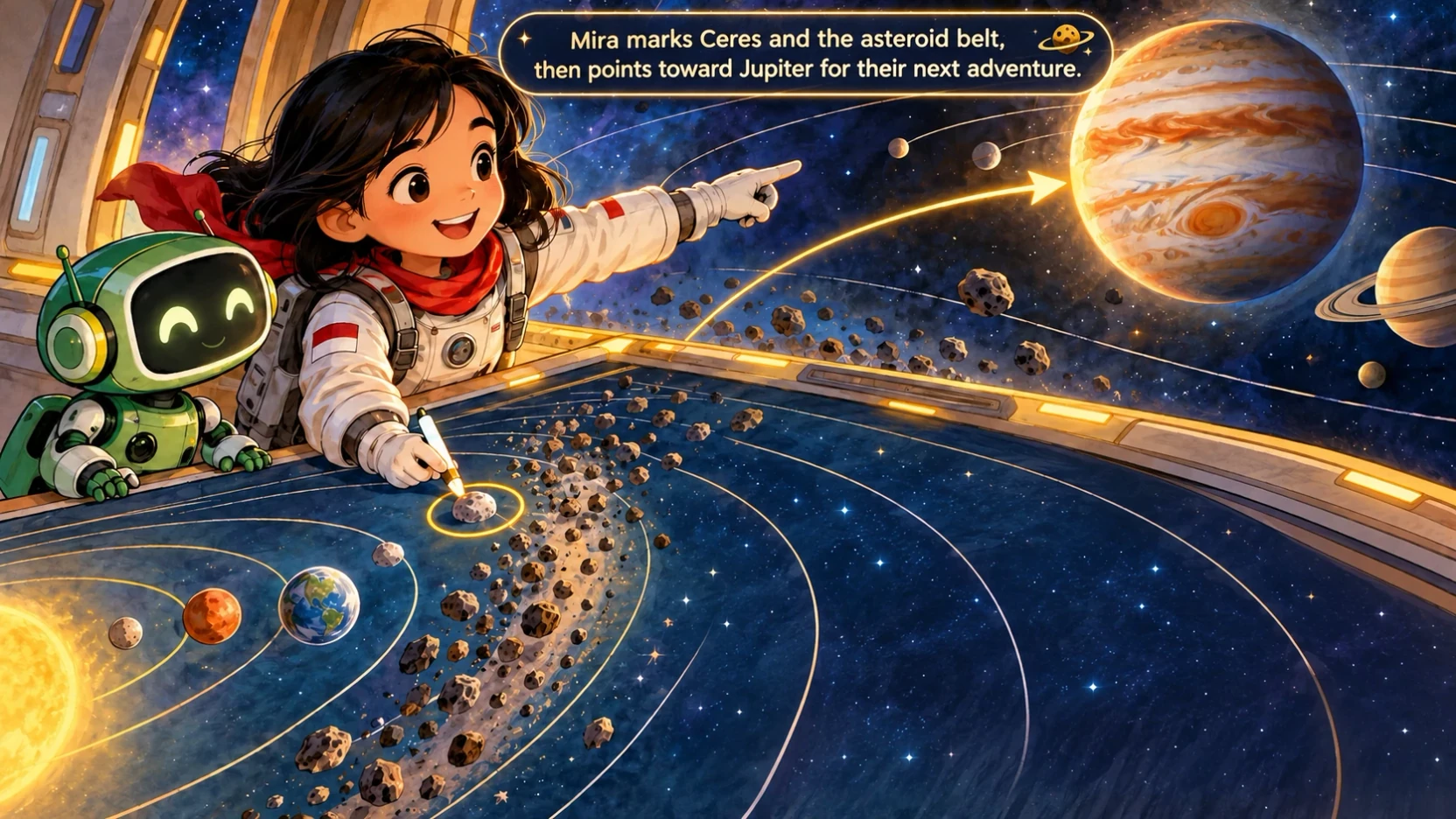
Mira marks Ceres and the asteroid belt, then looks toward Jupiter. They save the data and send notes to Earth’s observatory. The map now shows planets, the Moon, and smaller rocks. Rumi points to Jupiter’s huge clouds. Mira prepares for their next trip to learn about storms and giant planet moons.