Mira and Saturn’s Rings
Mira, Rumi, and their friend Danu map Saturn’s rings and discover how ice, rock, gravity, and sunlight shape their sparkling view.
Ages 6–10 years · 4 min · 10 scenes
Shining Saturn
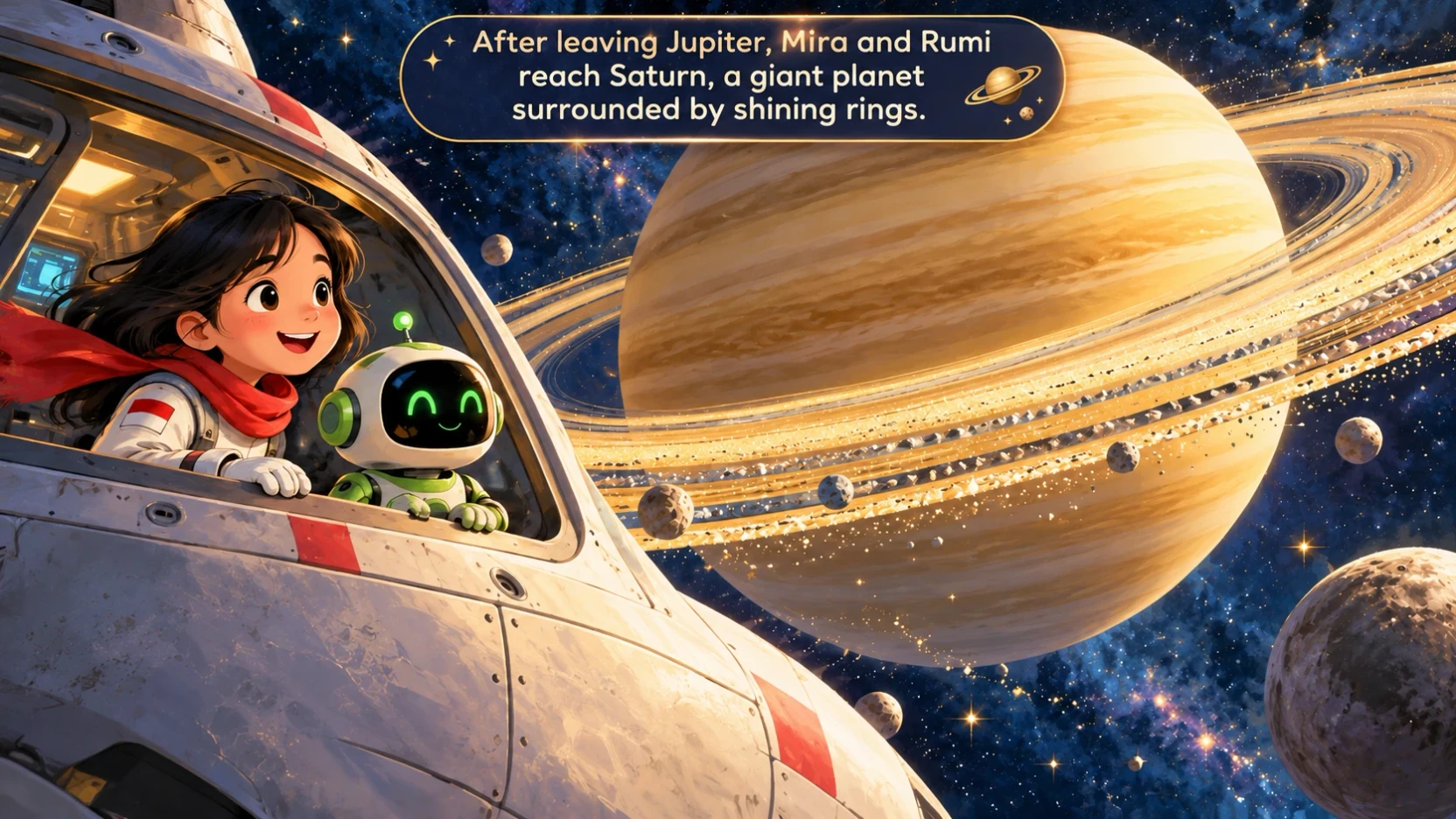
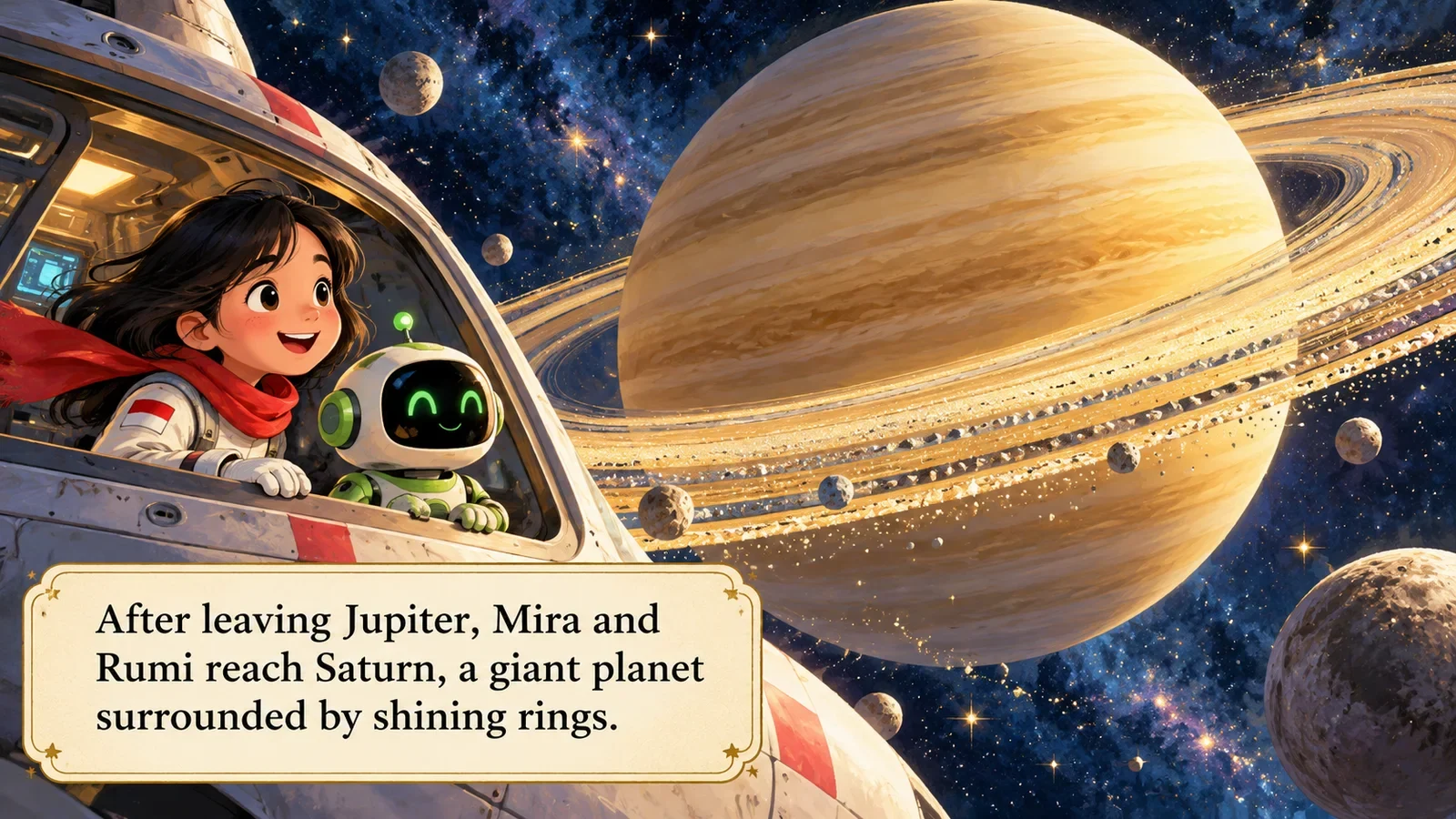
After leaving Jupiter, Mira and Rumi reach Saturn, a giant planet surrounded by shining rings. Their friend Danu watches from the next seat, amazed by the golden bands. Rumi explains that Saturn is a gas giant made mostly of hydrogen and helium. The explorers stay far above its clouds as they begin a careful map of the ringed world.
Not a Solid Ring
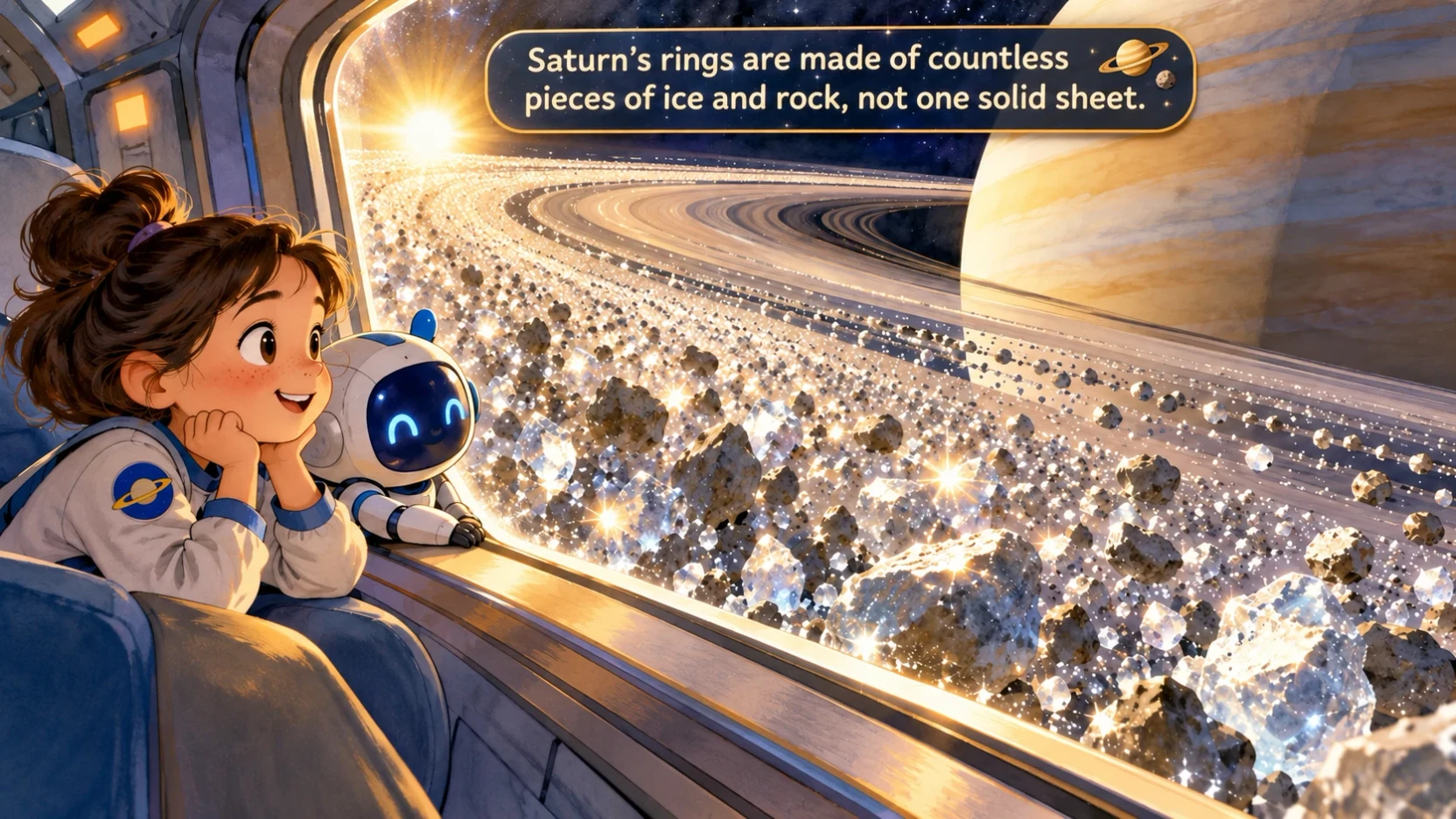
At first, the rings look like one smooth ribbon. A closer view reveals countless pieces, from tiny grains to much larger chunks, moving around Saturn. The pieces are mostly ice mixed with rocky material and dust. “It is more like a bright crowd of little worlds than one solid ring,” says Mira. Danu looks through the telescope and sketches the glittering fragments.
A Tiny Moon Shapes a Gap
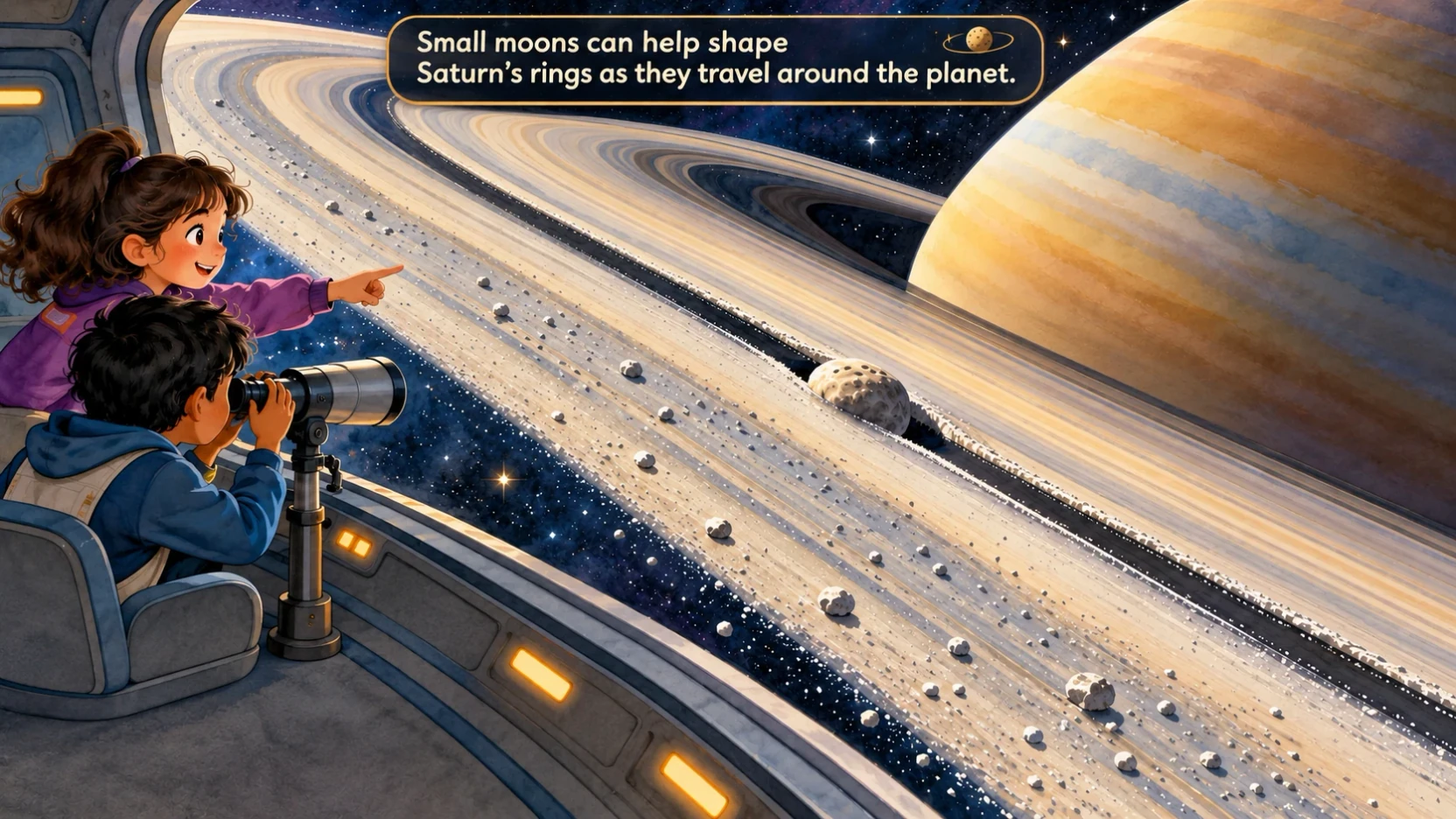
Danu, look at that tiny moon traveling near a ring gap. Can its gravity affect the ring particles? Yes. A small moon can shape a narrow gap and change nearby particle paths. Let’s mark its route. There may be other small moons we have not seen yet.
The Cassini Division
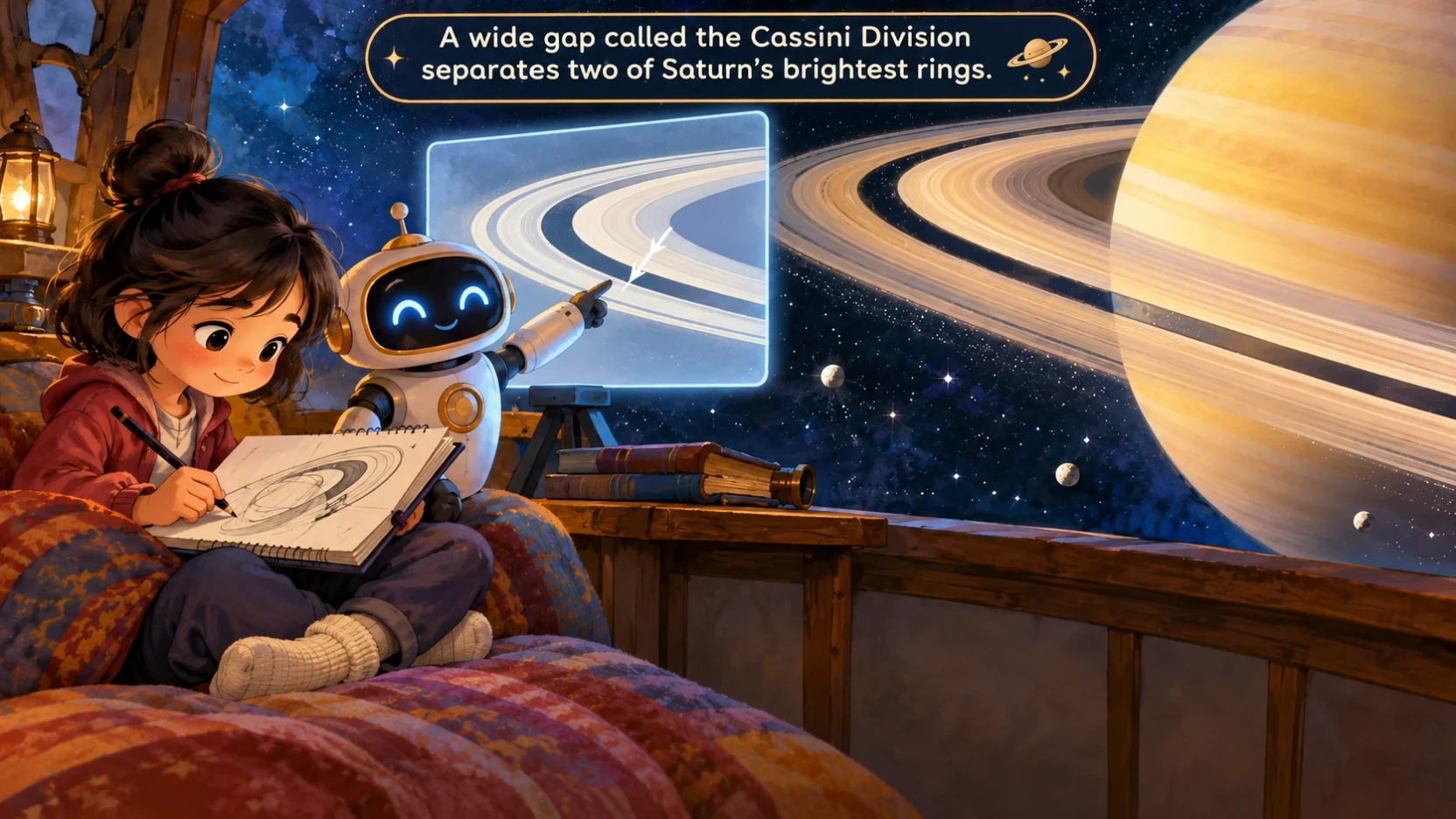
A broad dark space separates two of Saturn’s brightest rings. Scientists call it the Cassini Division. From their safe viewing path, Mira can see that it is a gap in the ring system, not a shadow painted across the planet. Rumi helps label the nearby bands. Mira draws a clear line on the map so that young readers can spot the division, too.
Bands and Gaps
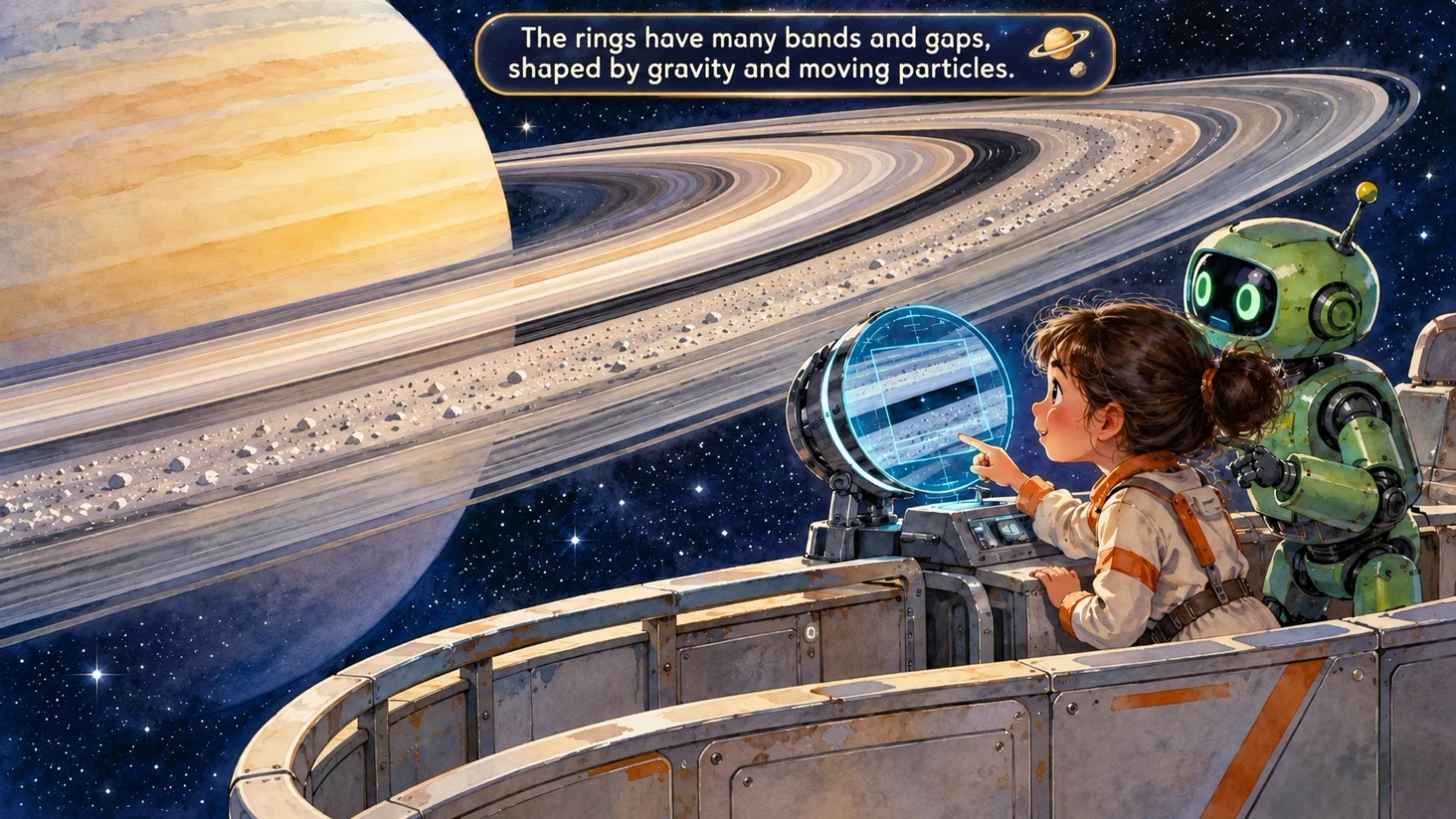
Saturn’s rings have many bands and gaps. Why do some parts look brighter than others? Particles, shadows, and the direction of sunlight can change how the rings look. The rings are not a smooth ribbon. There are many patterns to observe.
Shadows on the Clouds
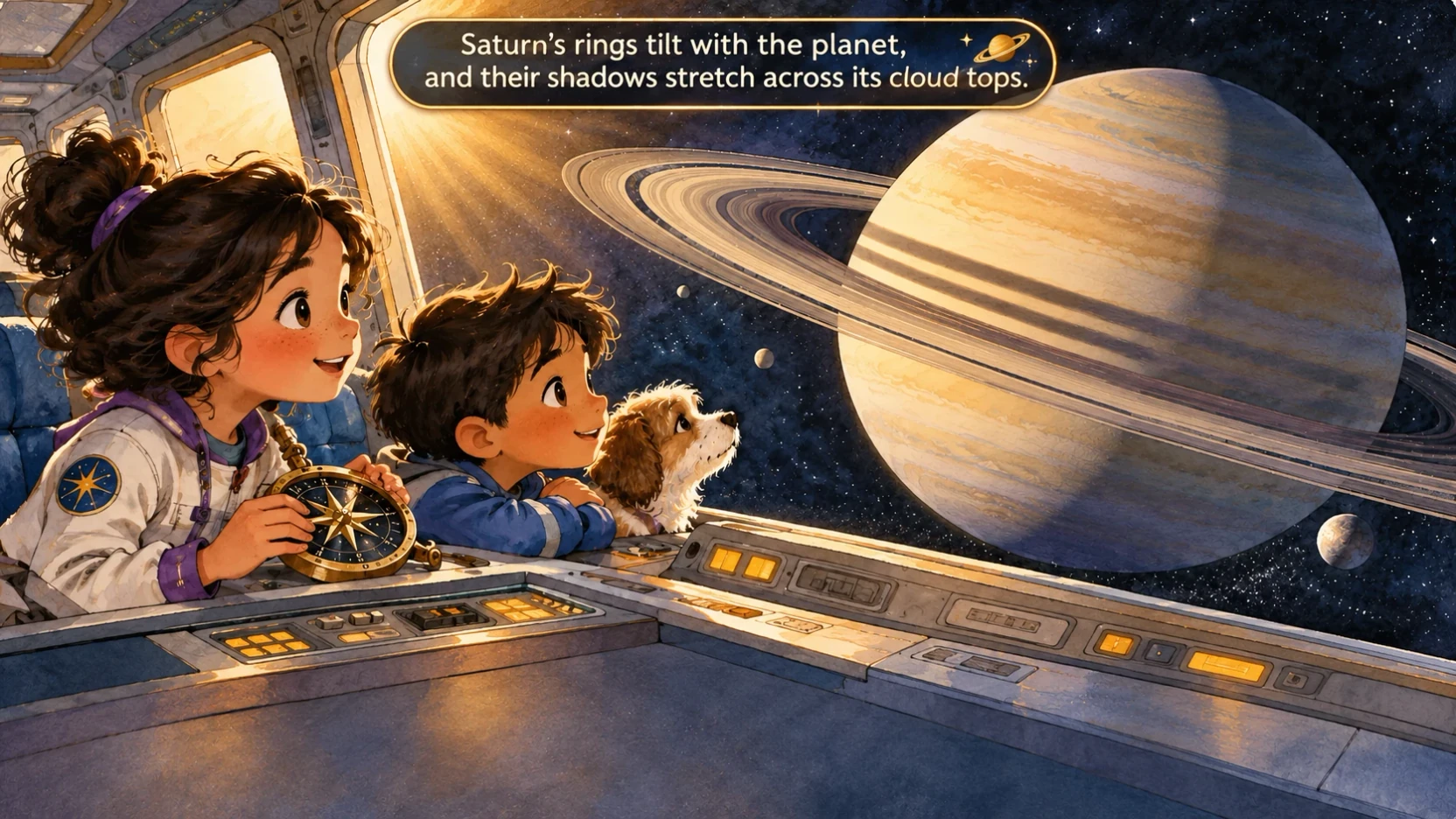
Look at the long ring shadows stretching across Saturn’s clouds. The rings form a broad, flat plane, and the planet’s axis is tilted. The shadows change as our ship moves. I’ll draw them on the map.
A Ring Seen Edge-On
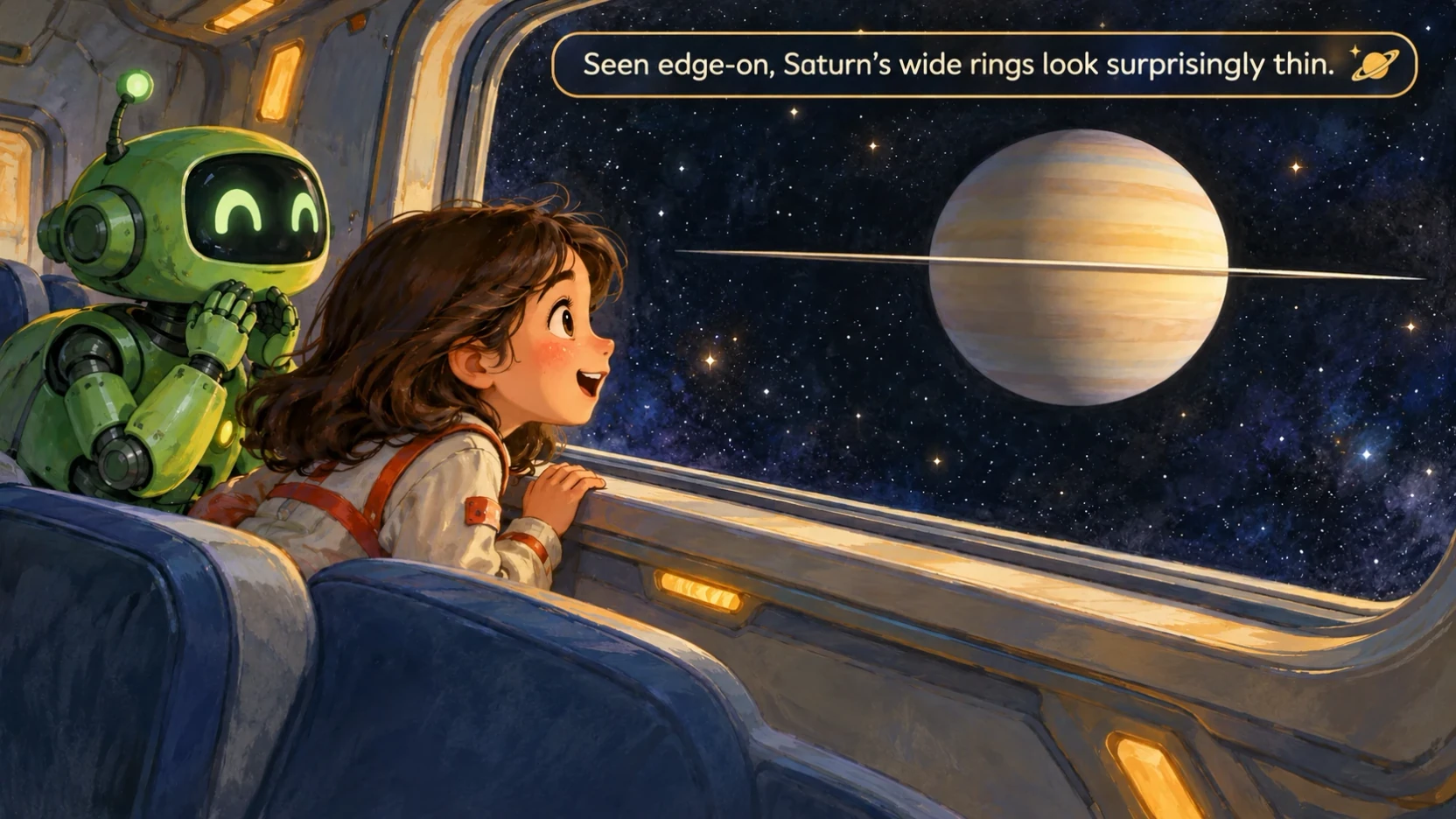
The ship moves until the rings appear almost edge-on. From this angle, the enormous ring system looks like a very thin line. Danu blinks and checks the telescope, surprised that something so wide can look so narrow. Mira explains that the rings are broad across the sky but thin from top to bottom. Their view depends on where the observer is.
Wide but Thin
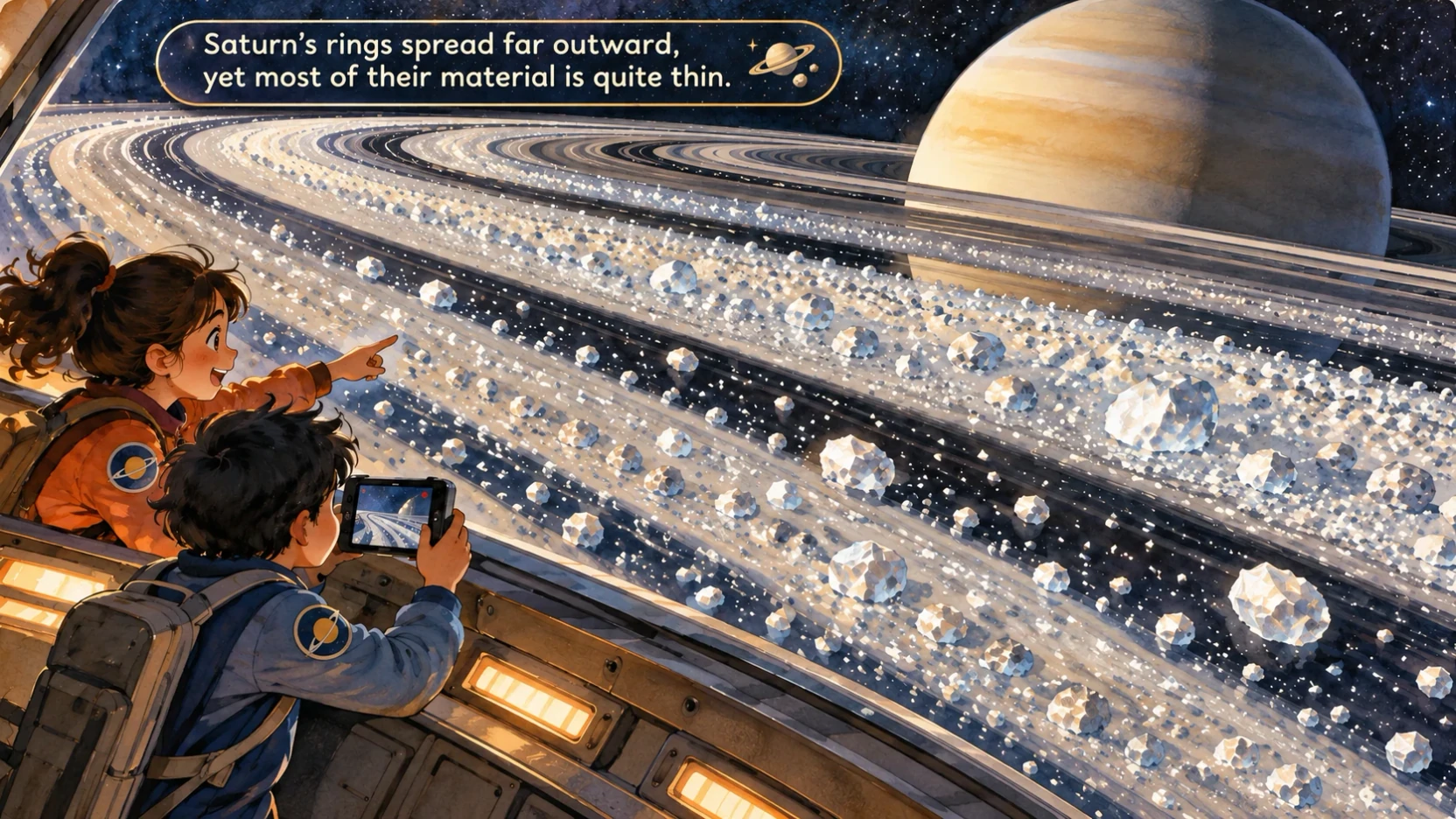
The rings stretch so far. Are they thick, too? No. They are very wide, but thin from top to bottom. Width and thickness are two different measurements. I’ll add a scale so readers can compare them.
Icy Sparkle
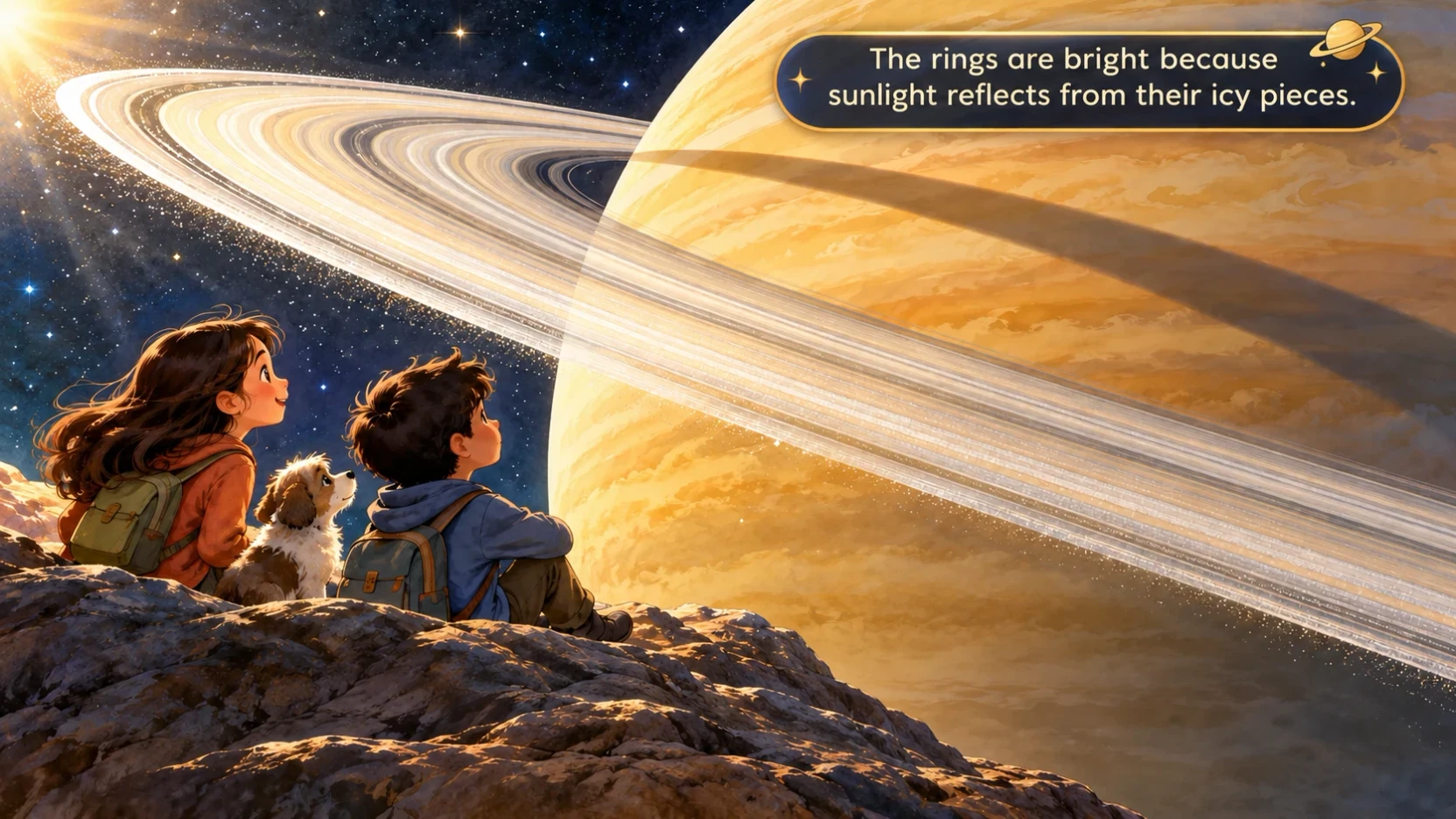
Do Saturn’s rings make their own light? No. The icy pieces reflect sunlight, just like the Moon. Let’s dim the cabin lights so the reflection is easier to see. The ice looks like a trail of tiny stars.
Titan Up Ahead
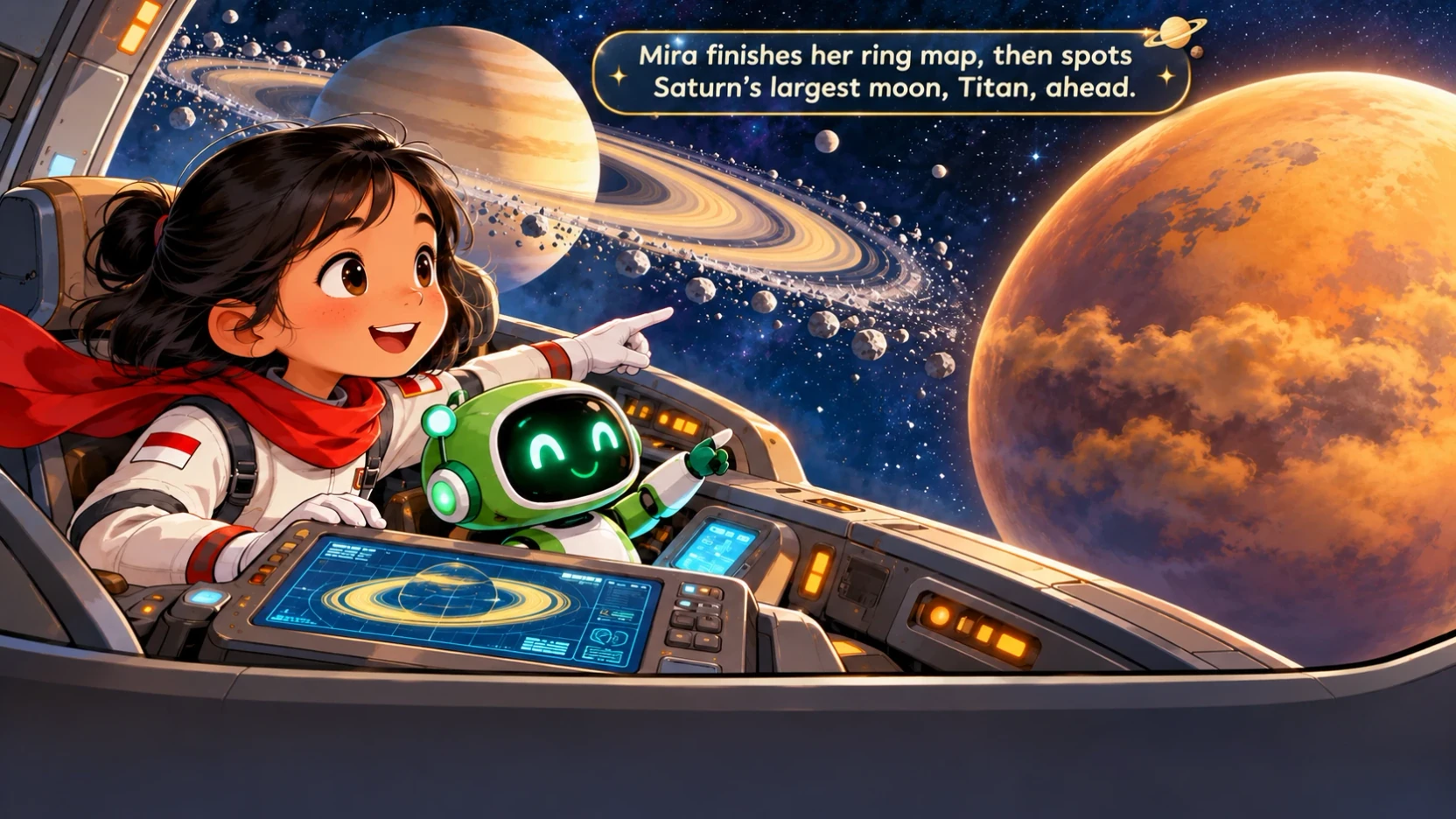
Mira finishes the ring map and saves the notes about icy particles, gravity, shadows, and gaps. Then she spots Titan, Saturn’s largest moon, ahead of the ship. Rumi points out its hazy orange atmosphere. Danu asks what could hide beneath those clouds. Mira smiles: their next story will take them closer to Titan, where a new world of lakes and landscapes awaits.