Lulu and the Growing Forest
The story of the Bornean orangutan about home, fruit and interconnected life
Ages 6–10 years · 6 min · 10 scenes
Morning above the trees
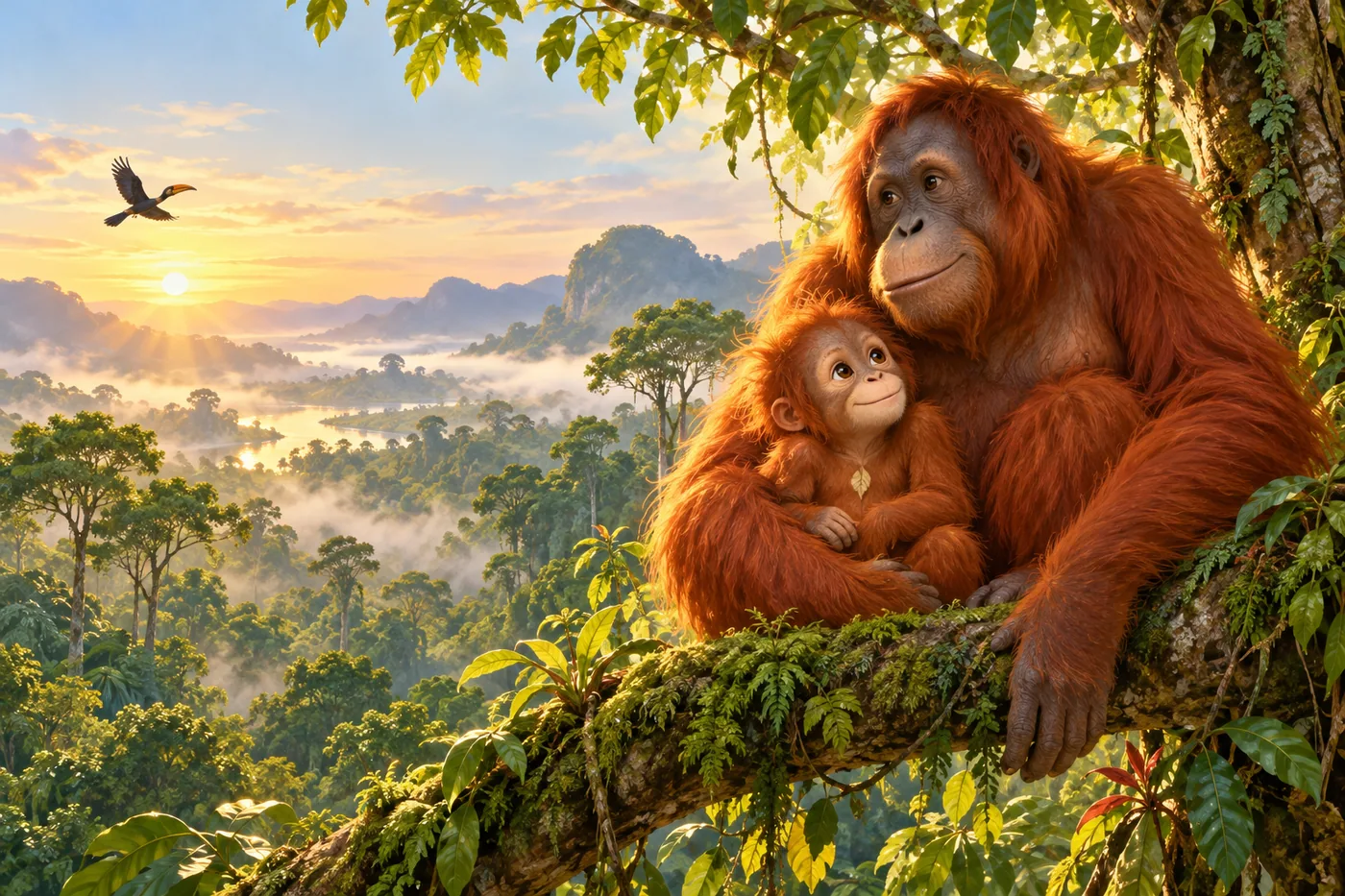
Morning comes slowly in the forests of Kalimantan. A thin mist drifted between the tall trees. Lulu, an orange-furred baby orangutan, hugs her mother's arm while peering at a hornbill flying away. “This forest is home to many creatures,” said Mother. Lulu looked at the sparkling leaves and wanted to know more about her house.
Study in the forest canopy
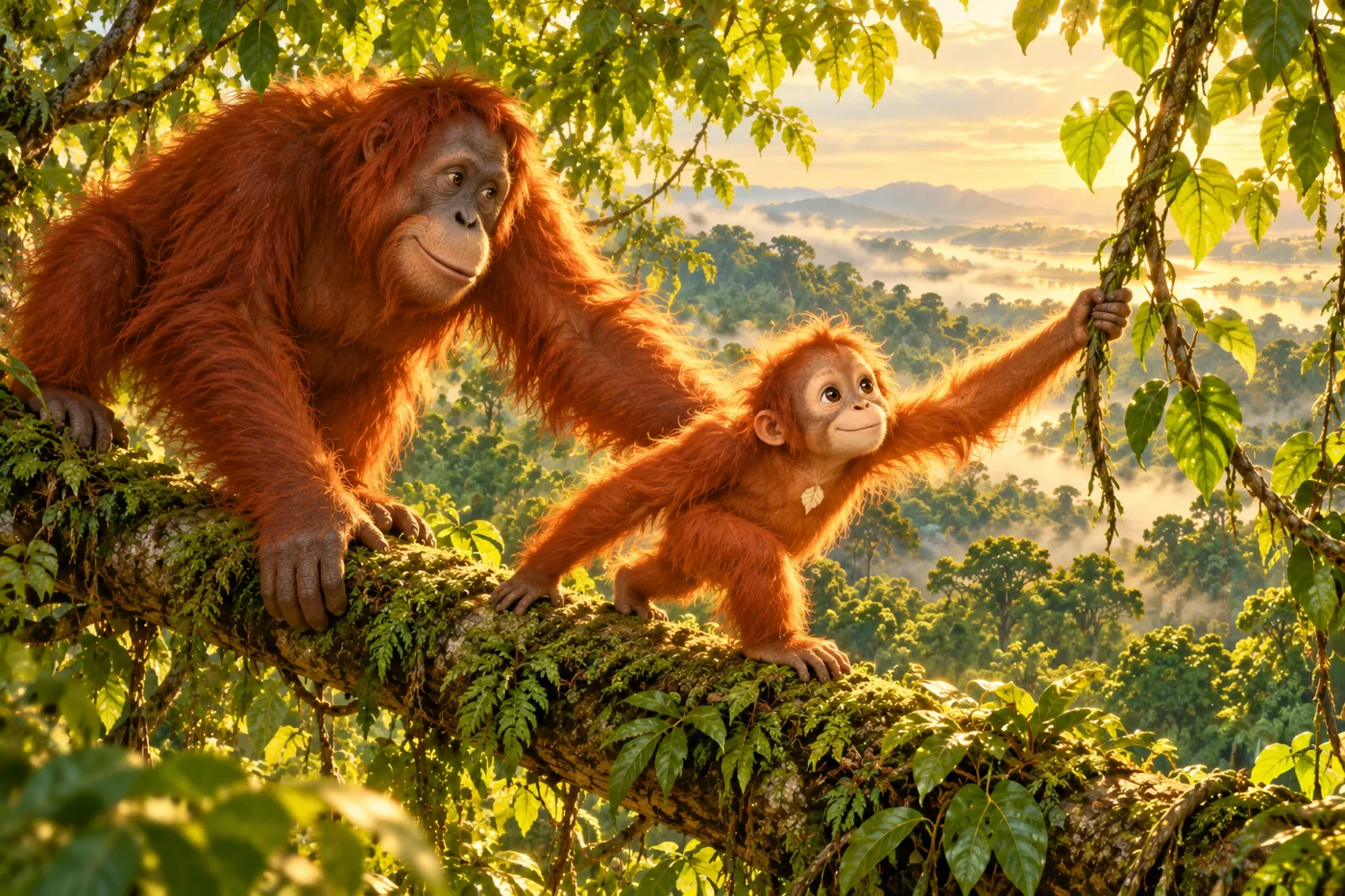
"Hold a strong branch and look first before taking a step," said Mother. With her long arms, Lulu swung slowly from one branch to another. From above, he saw the forest like an undulating green ocean. Many orangutans live and find food in trees, so the branches are both their paths and their homes.
New nest before night
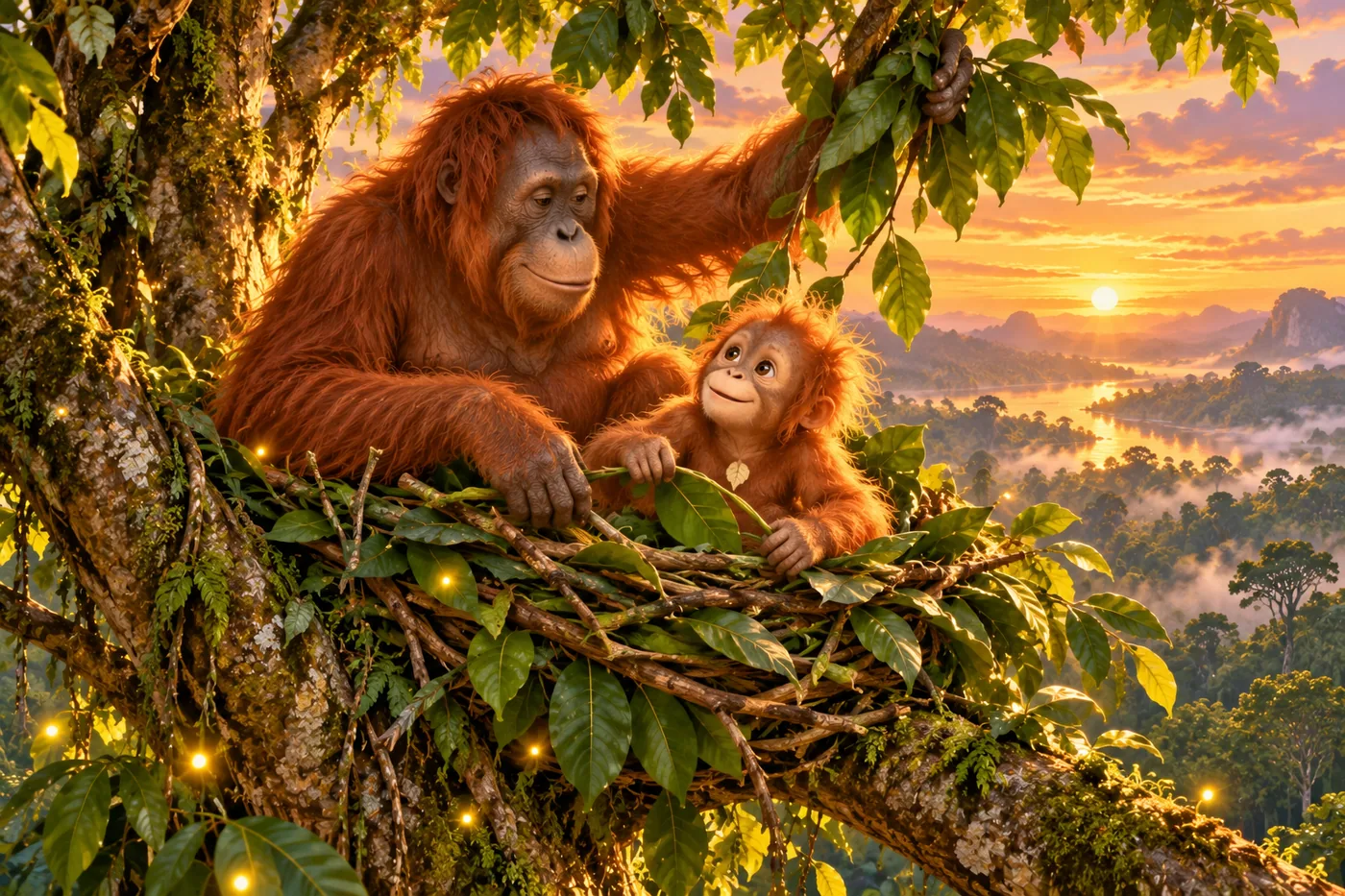
When the sky turned orange, Mother began to assemble the twigs and leaves on the tree branches. Lulu helps select wide leaves. They make a cozy nest for the night. Orangutans usually build new nests to sleep in, rather than staying in a permanent home.
Busy fruit trees
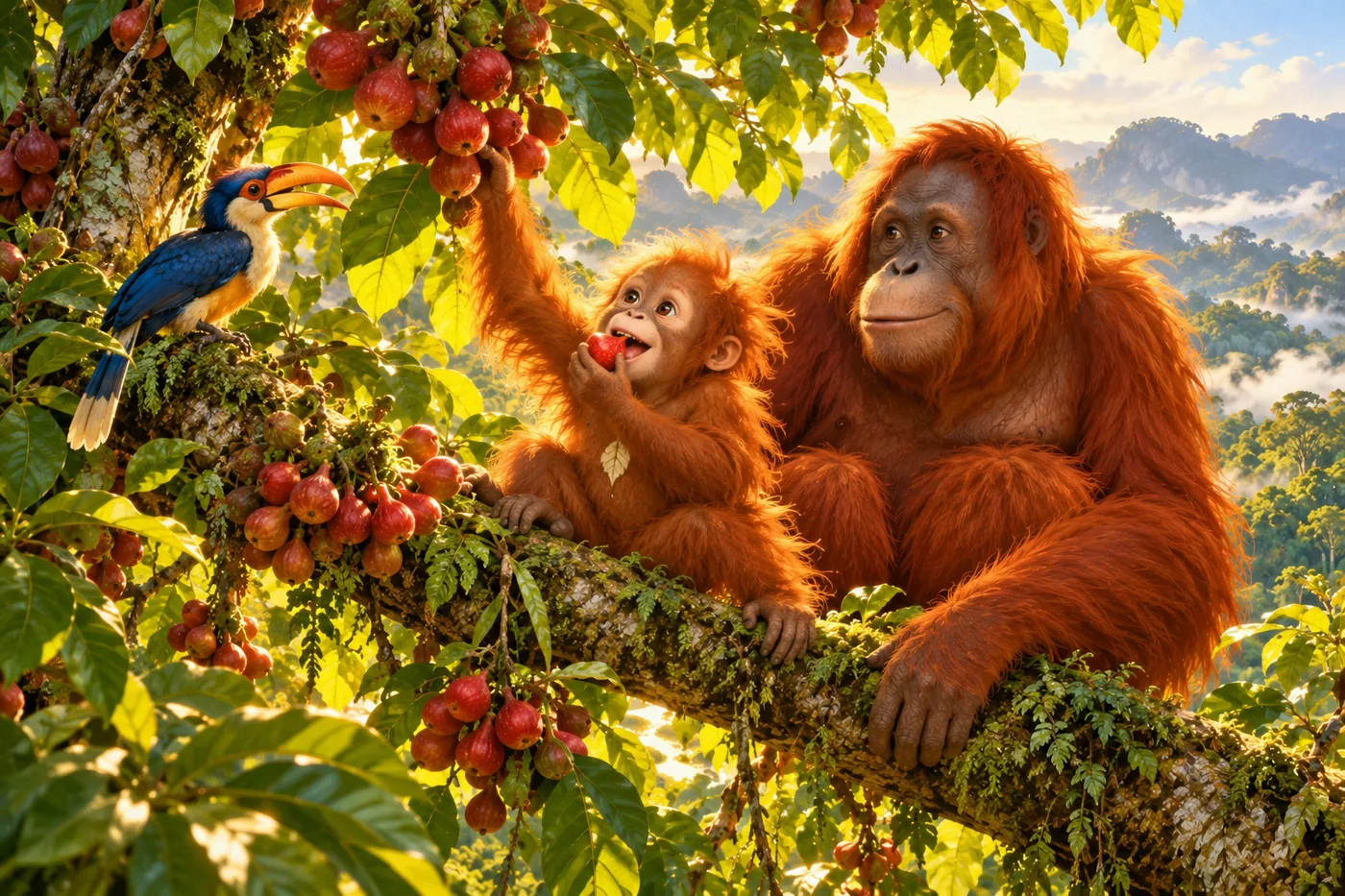
The next day, a sweet scent leads Lulu to a fig tree. Ripe fruits hang among the leaves. Mother reminded us that fruit is an important food for orangutans, although they also eat leaves, flowers and other plant parts. A hornbill bird also stopped on the next branch.
Small gifts of fruit
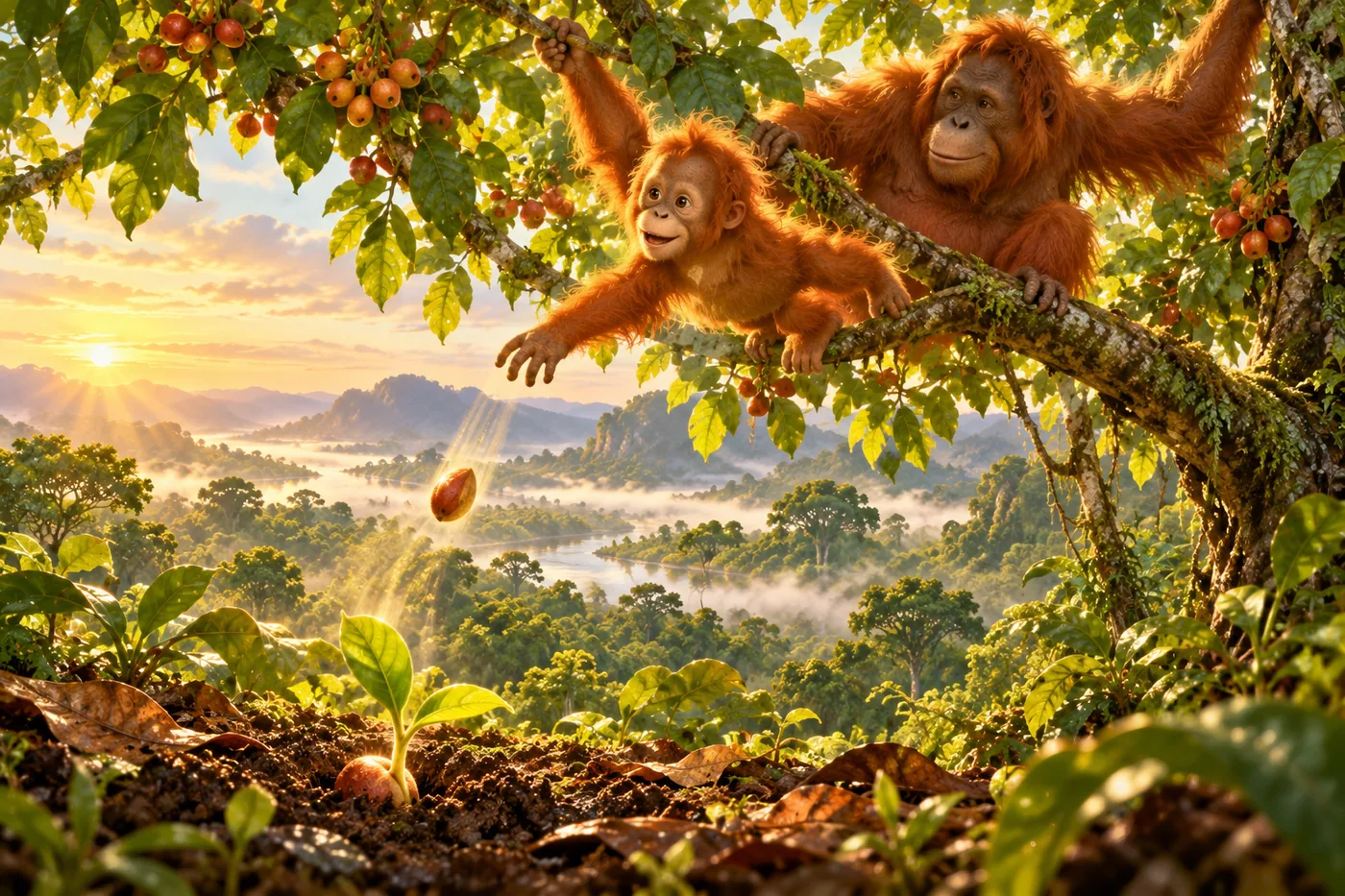
Lulu enjoys the soft figs. Small seeds in the fruit are also swallowed. Far from the parent tree, the seeds can come out with feces and fall to the ground. "Some seeds can grow into new trees," said Mother. Lulu smiles: it turns out the foraging trip also helps the forest grow.
Neighbors among the leaves
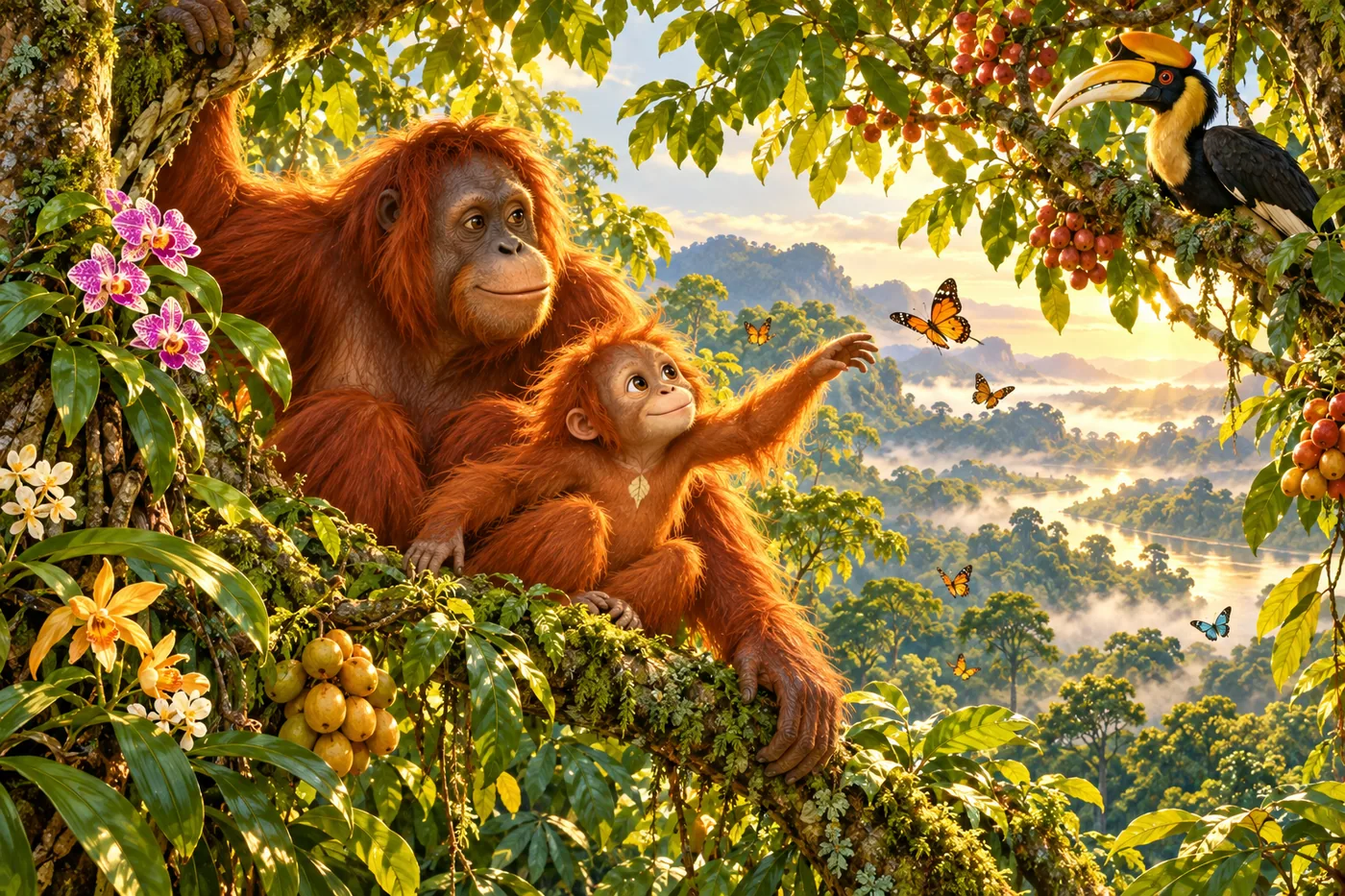
Lulu then saw butterflies dancing around the flowers and birds moving between the trees. There are many neighbors in the forest, each has their own way of life. Trees provide food and shelter, while animals help keep forest life going.
Forests that need to be protected
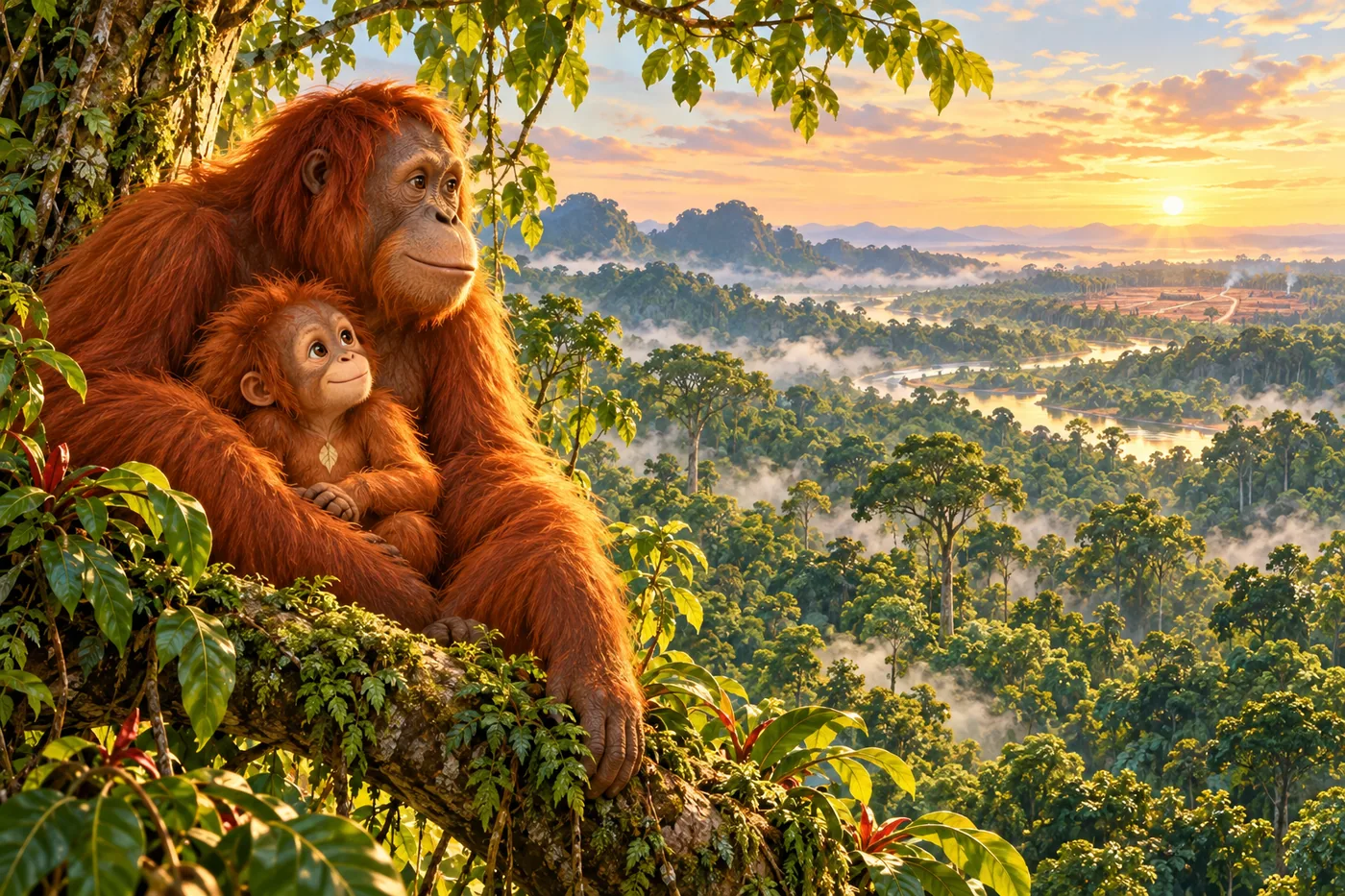
From a high branch, Lulu saw an open patch of forest far in the distance. Mother invited him to stay in a lush area. If the forest is divided into distant parts, it is more difficult for animals to find food and shelter. Lulu hopes the trees stay connected.
Planting for the future
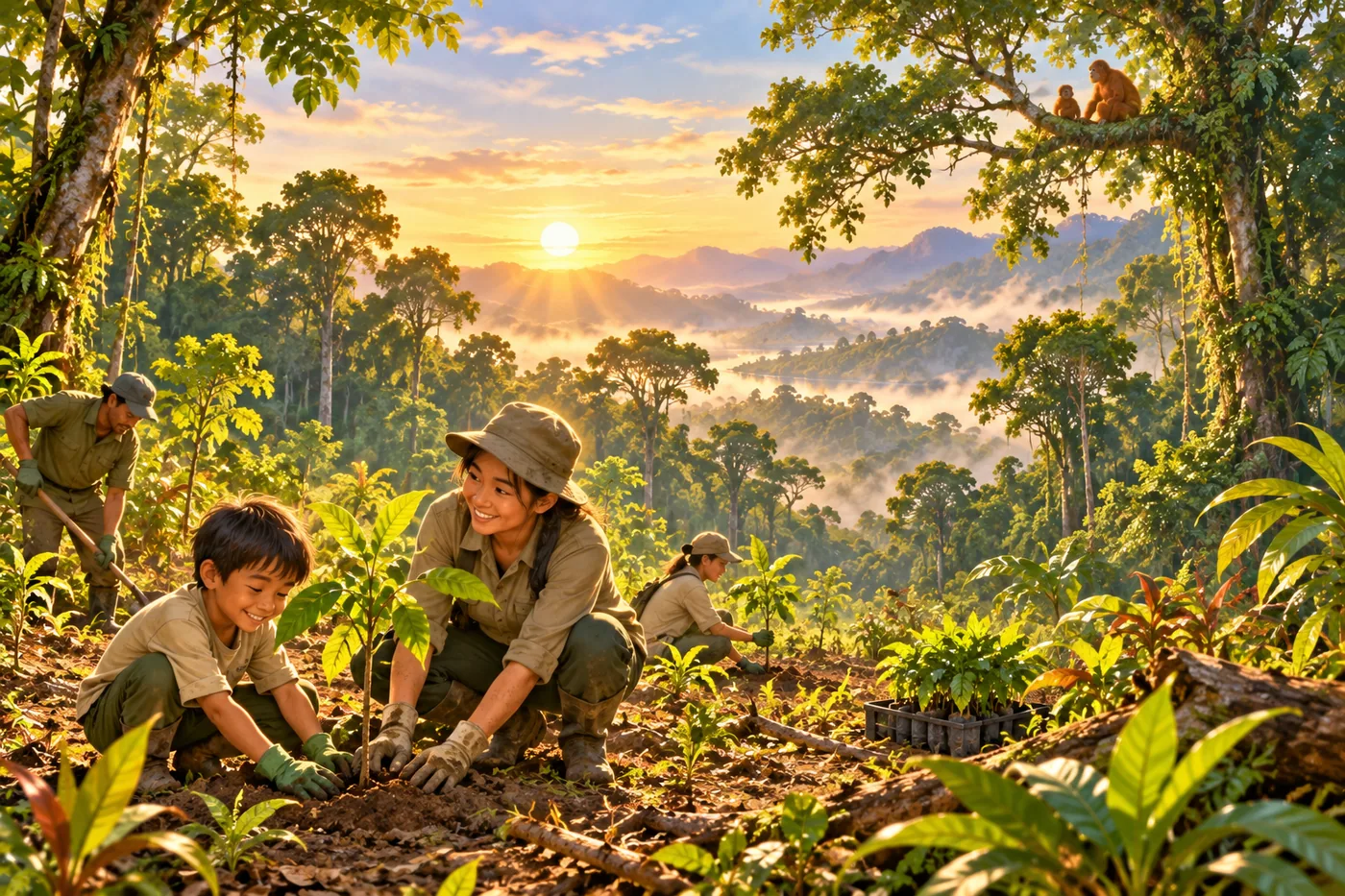
In other places, residents plant local tree seedlings in open fields. They work quietly and observe the animals from afar. A child named Sari learns that orangutans are wild animals: we don't need to approach them or feed them. Protecting forests and giving them space is a better way to help.
The green belt grows again
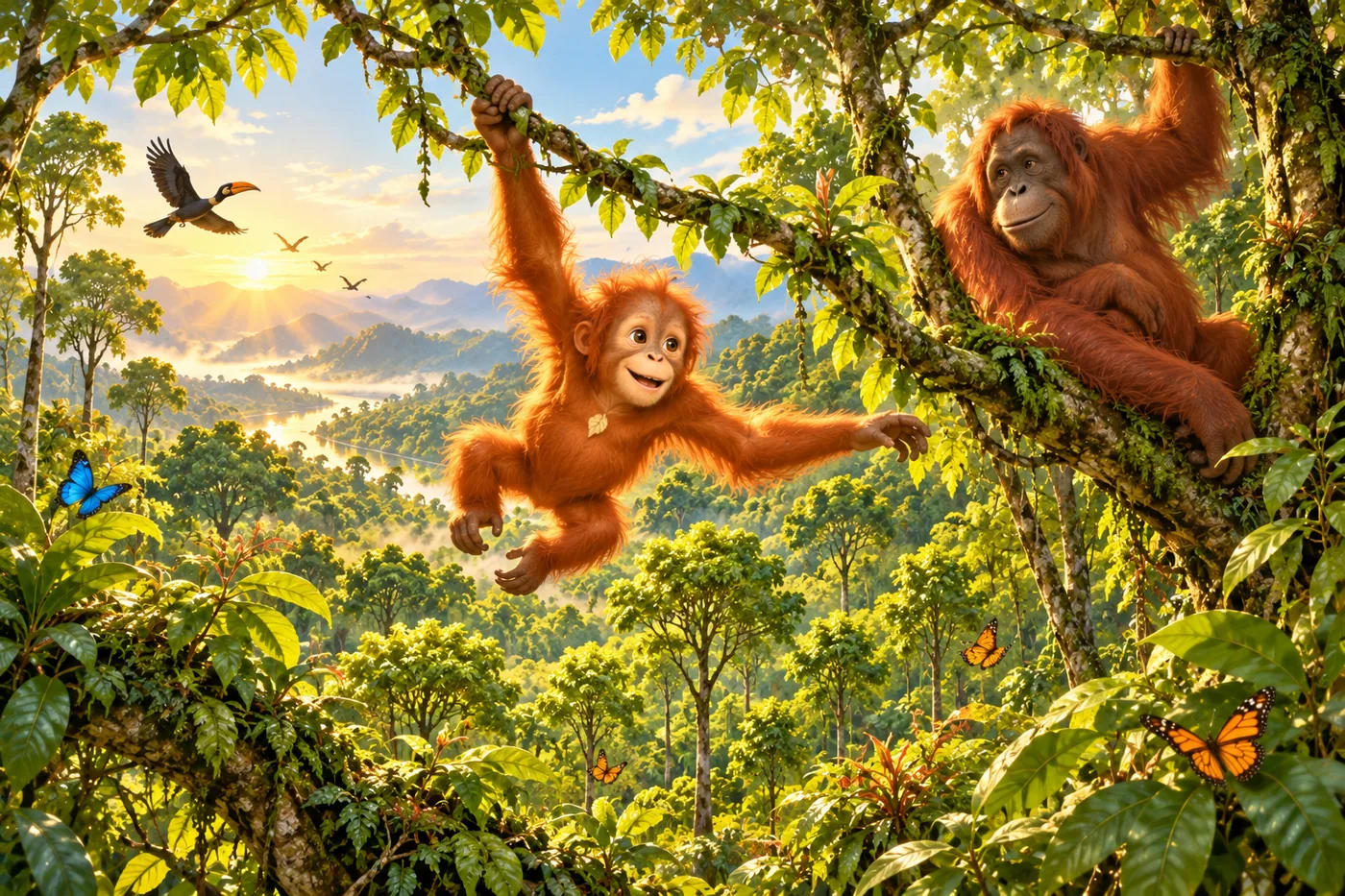
Seasons change. The seedlings grow into young trees and slowly connect with the neighboring forest. Lulu as it gets bigger can move through the green canopy. Birds and butterflies can again be seen among the leaves. Healthy forests provide space for life to continue to thrive.
A story that keeps growing
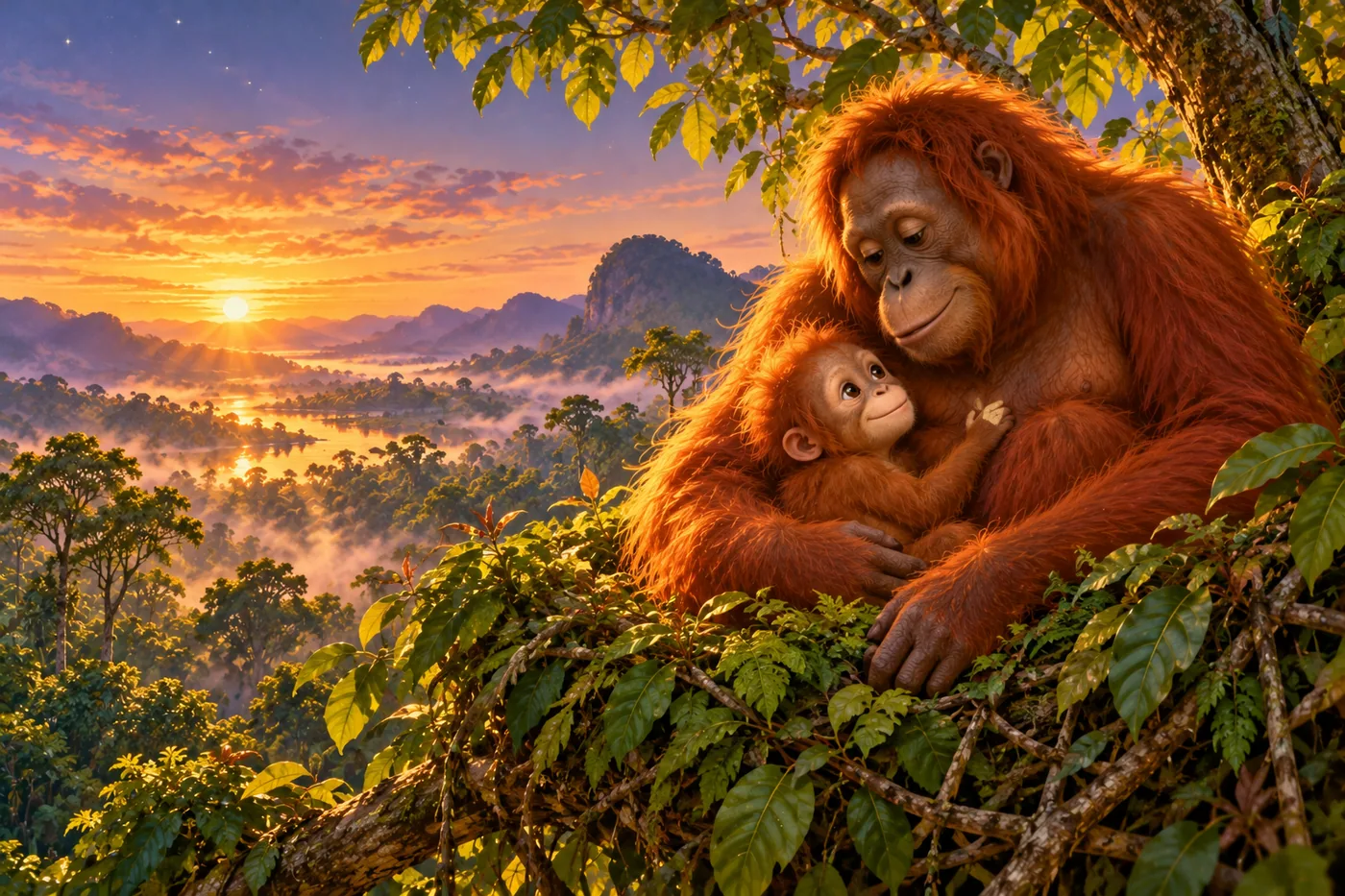
When dusk falls, Lulu strings together twigs to make her own night nest. He already knew many of the trees, fruit, and sounds of the forest neighbors. Under the Kalimantan sky, the forest tells a long story: trees provide food, animals spread seeds, and humans can help maintain this shared home.