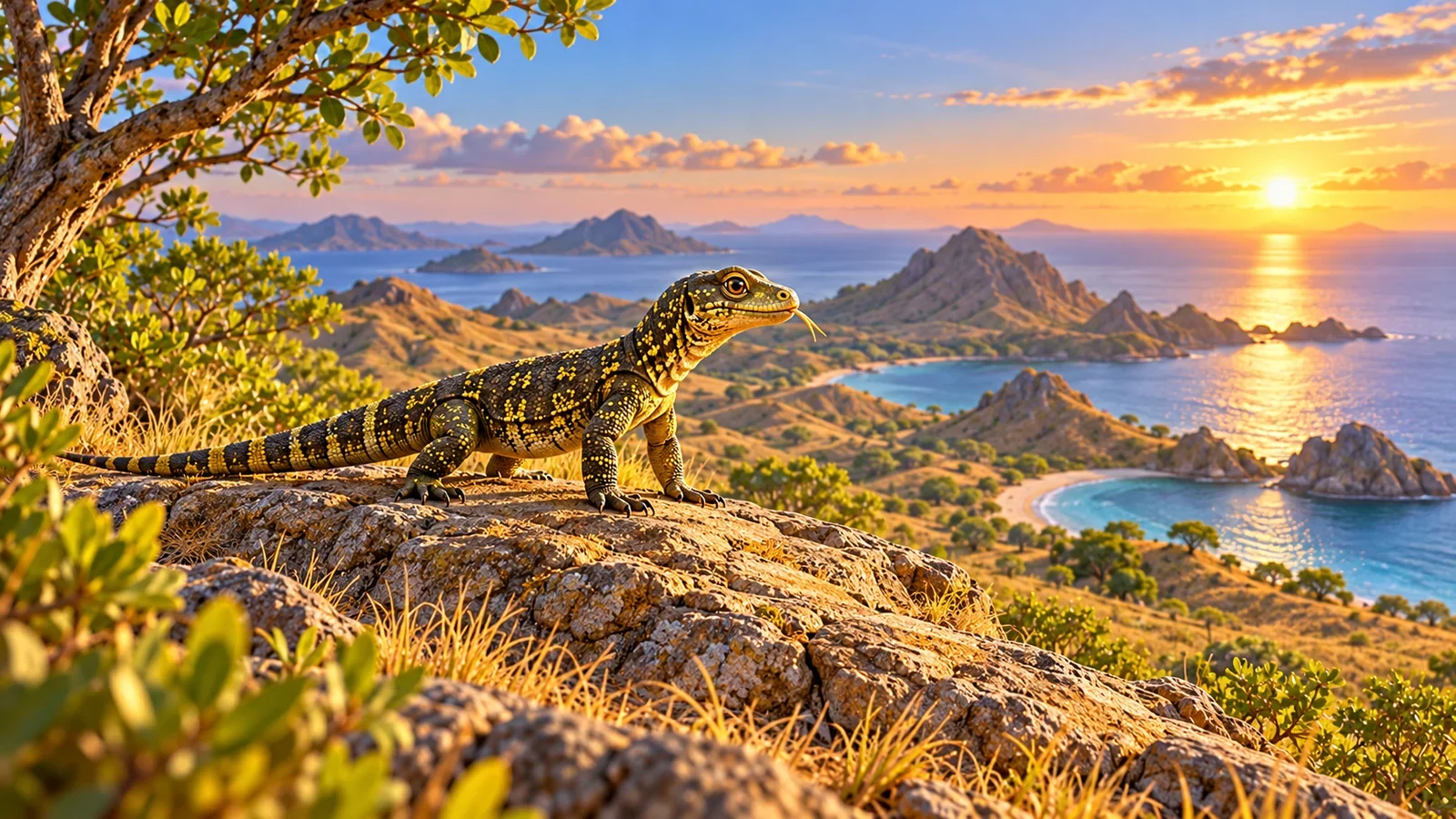
Kimo, the Little Komodo Island Explorer
The hilarious adventures of a young Komodo monitor lizard who learns to recognize its home and keep a safe distance.
Ages 6–10 years · 8 min · 20 scenes
Morning on Komodo Island
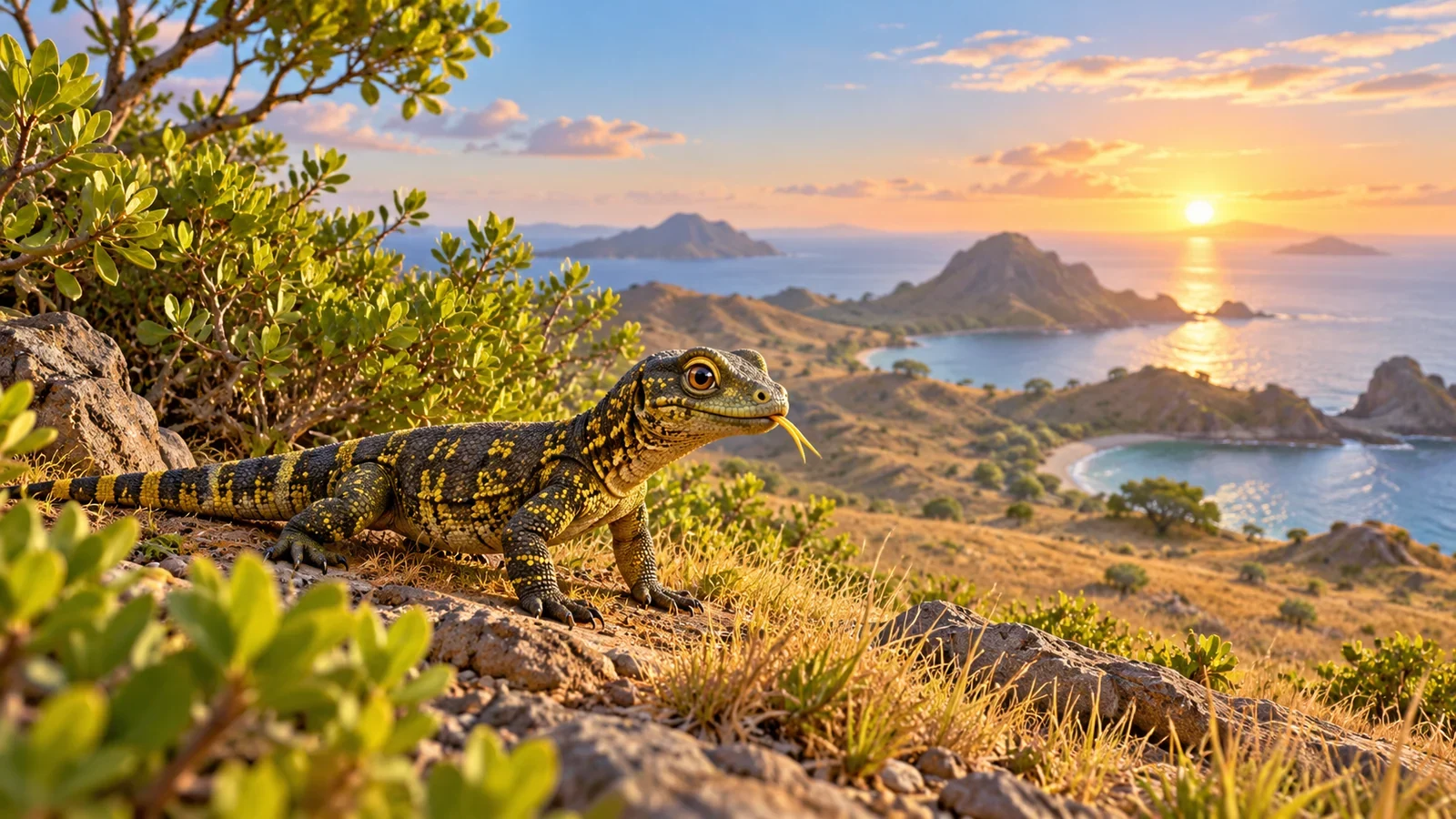
Morning touches Komodo Island. Kimo peeked from behind a bush, then yawned widely. His stomach growled softly. “Have breakfast first, then explore!” he said. On this island, dry hills, trees, beaches and sea are home to many animals. From the hill, he wanted to see his house from a higher place.
House from a mound
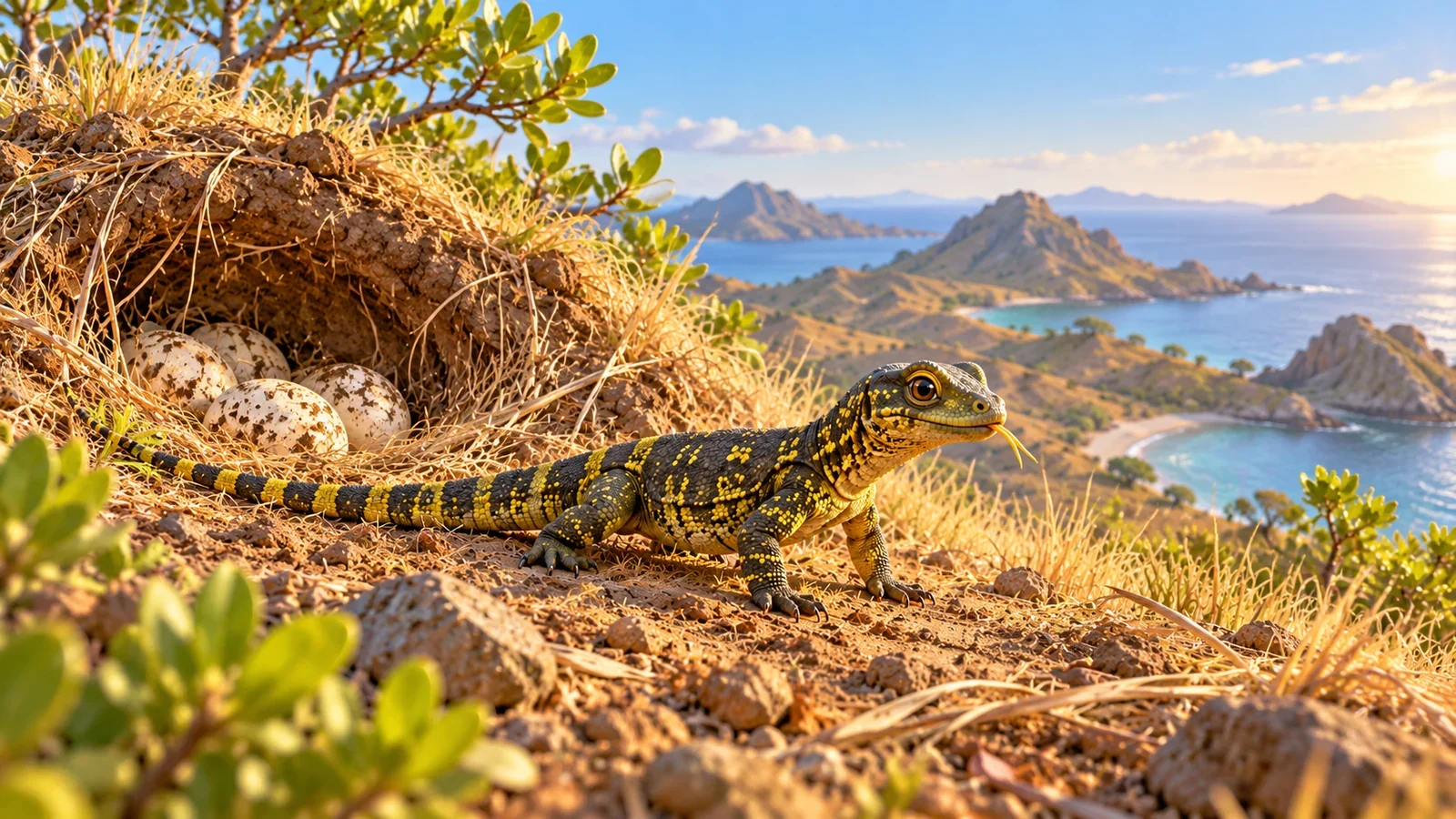
Kimo just emerged from the egg hidden in the ground nest. He blinked and saw the grass swaying. Komodo cubs are not cared for by their mothers after they hatch, so Kimo starts looking for a safe place on his own. The wind touched his nose. "Hello, wind!" he greeted. The egg nest is on the ground, protected by mounds and grass.
Trees are a safe place
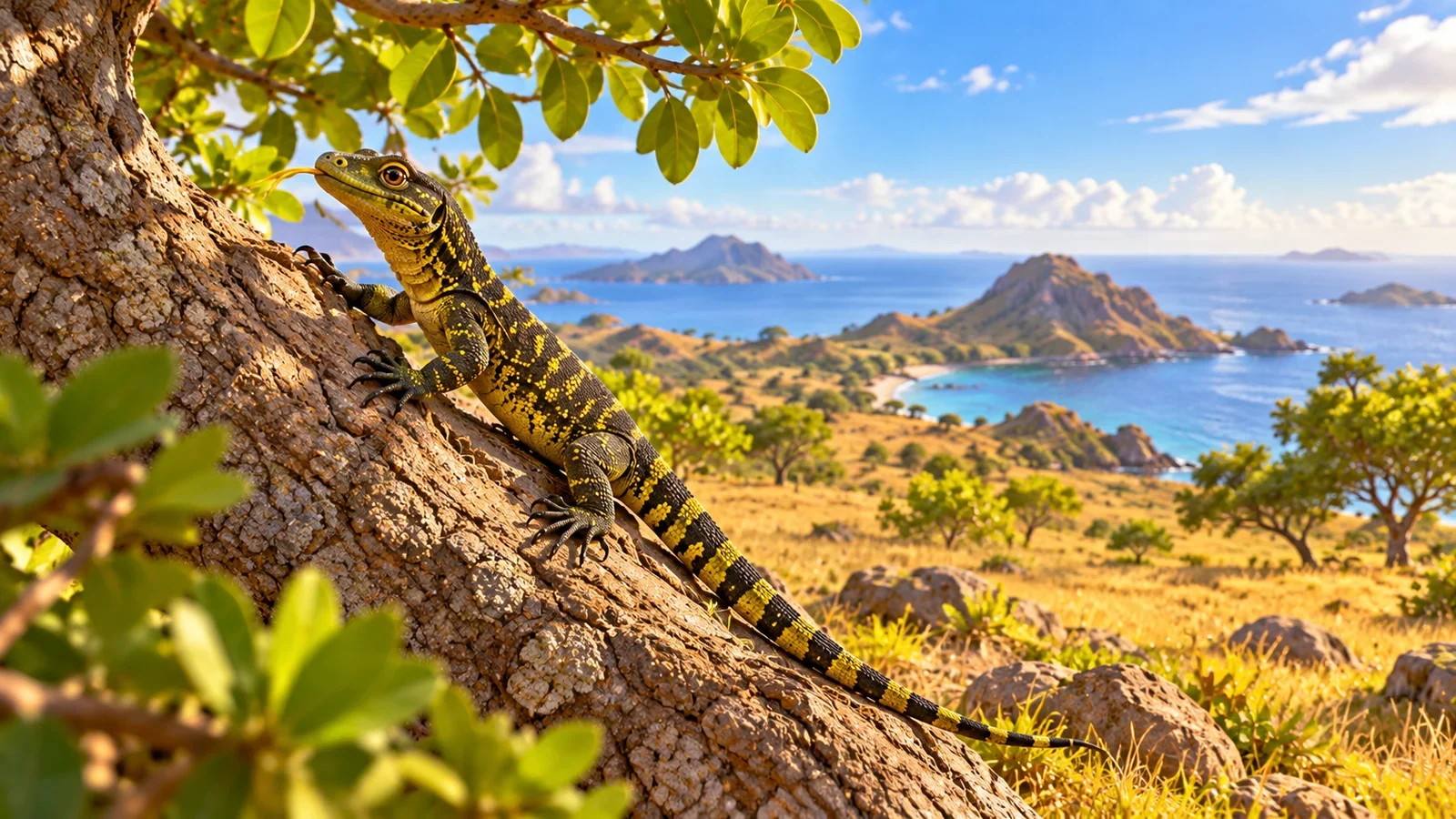
Kimo climbs a low tree with his small paws. Young Komodo dragons often live in trees when they are young, partly to avoid larger dragons. Kimo stopped on a branch. “Wow, from here the bush looks like broccoli!” Up there, he rested while observing his surroundings.
A clue-seeking tongue
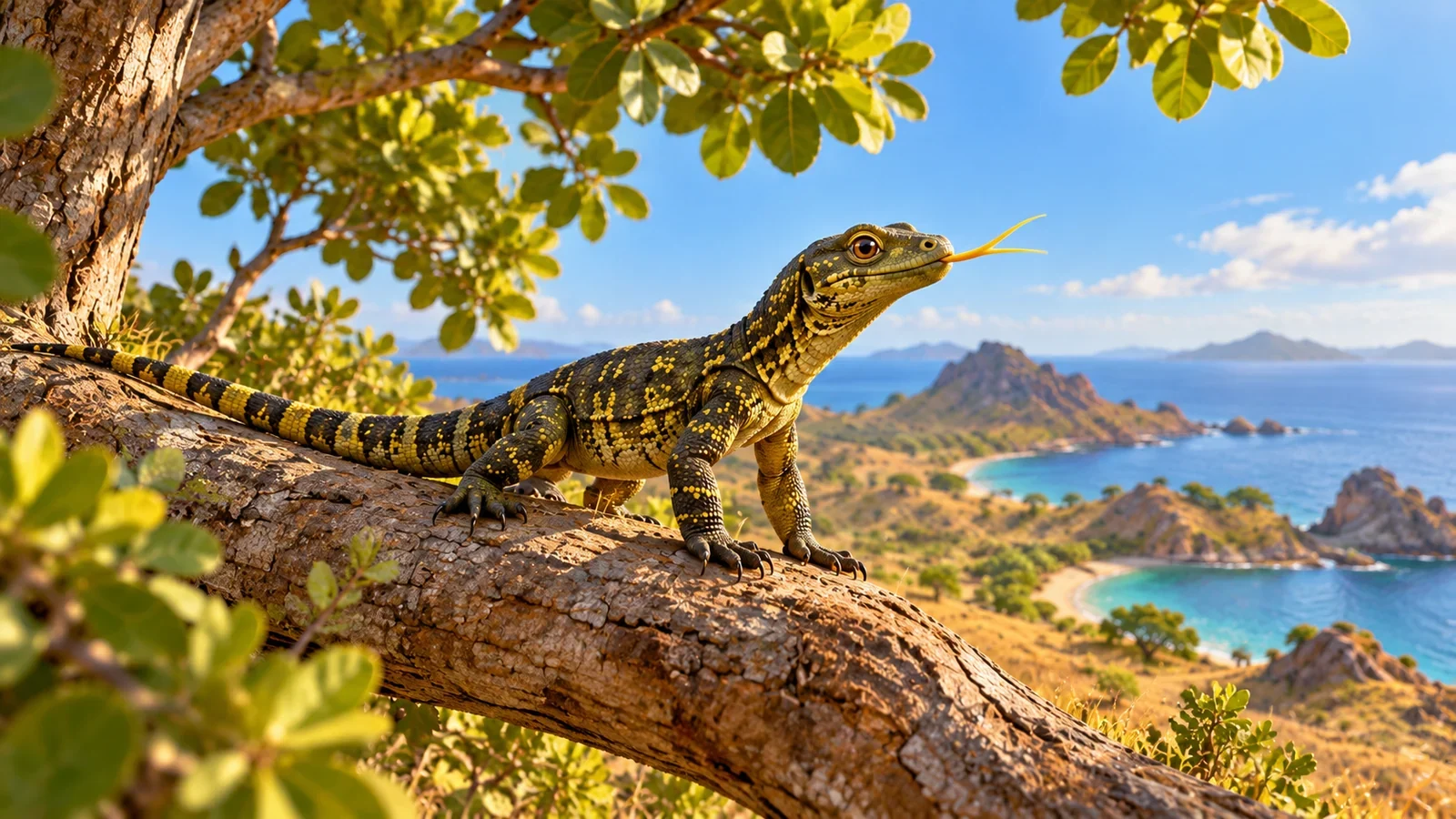
Kimo stuck out his forked tongue. The tongue helps pick up scent cues from the air; special parts in its mouth help it recognize the smell. Kimo headed towards a shady tree trunk. He hadn't smelled breakfast yet, but his search continued like a little detective. The smell of food can help a Komodo dragon find its way, but Kimo still sees his way.
Tilu under the bush
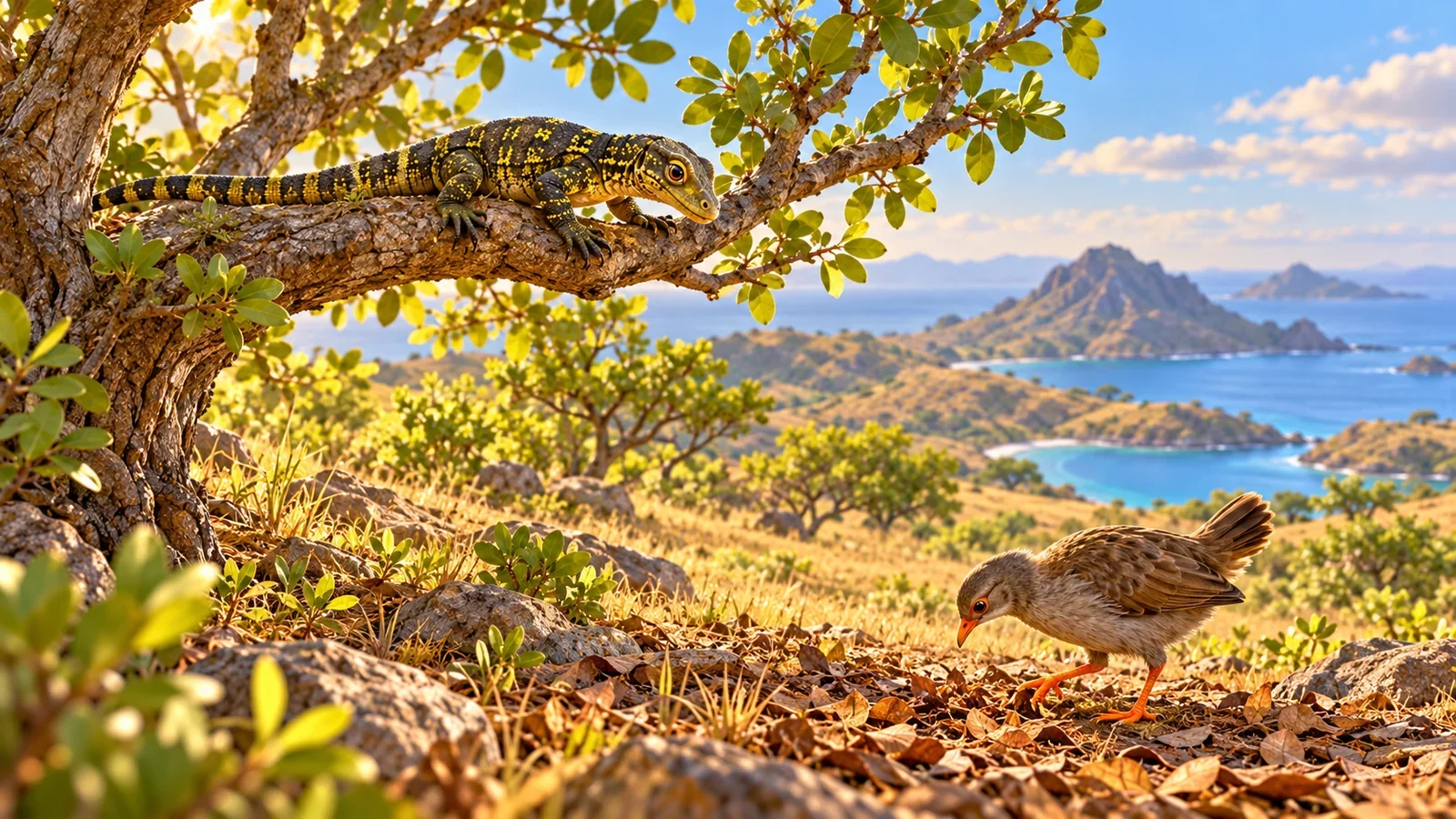
Beneath the tree, Tilu the orange-footed stork bird pawed at the ground. Kimo watched him from the branch. Tilu looked for food on the ground, while Kimo remained on high ground. They are neighbors on the same island, but each has their own way of spending the day. This bird is a resident of Komodo National Park.
The adventure begins
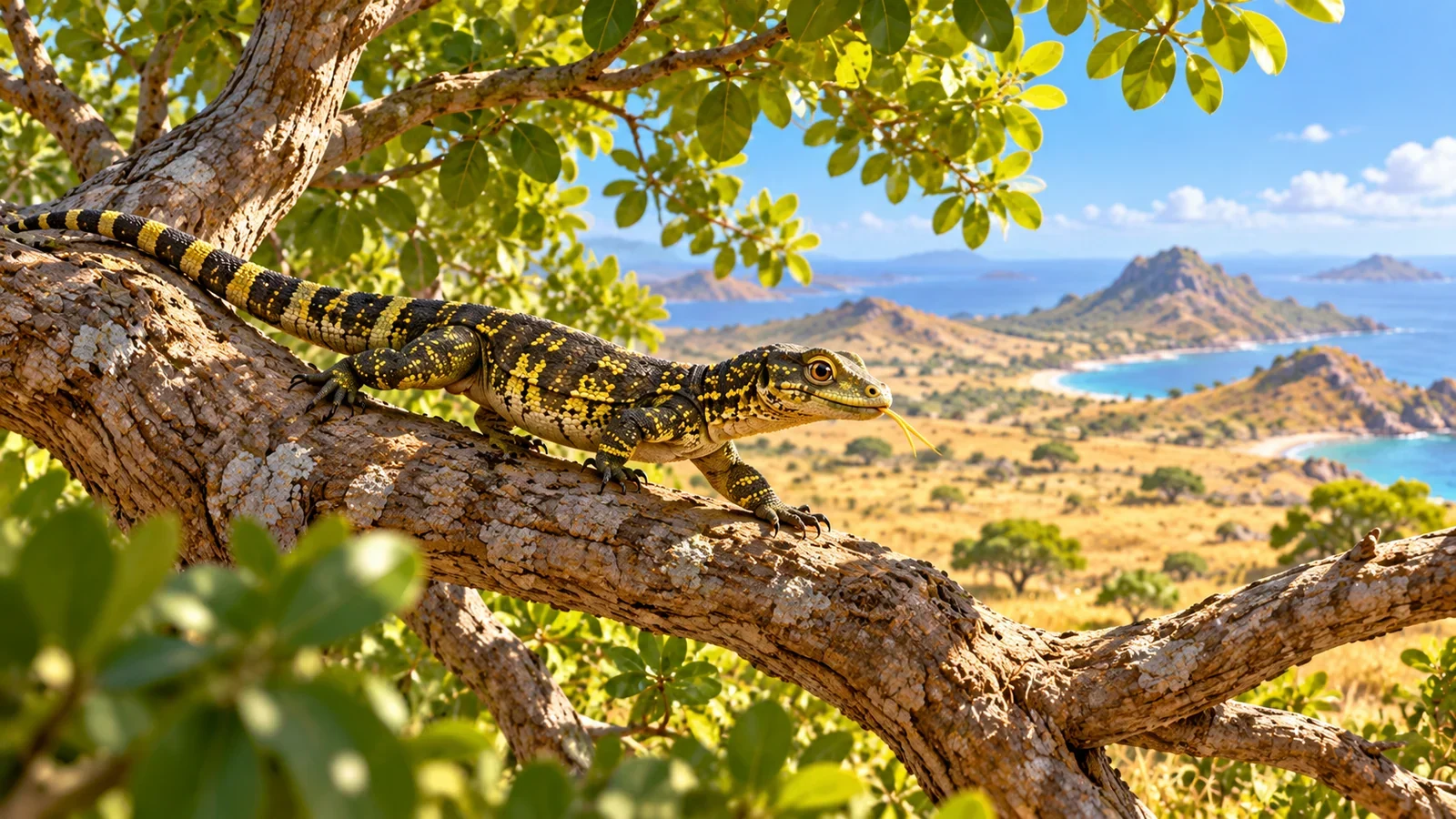
Kimo wants to move to a shadier tree. He checked the low branch that connected to the next trunk. His tail wagged as he walked. “Just walk slowly,” he said. The savanna opens up behind him, while the leaves provide some shade. He chose a path that had a handle, not a long jump.
Great footprint
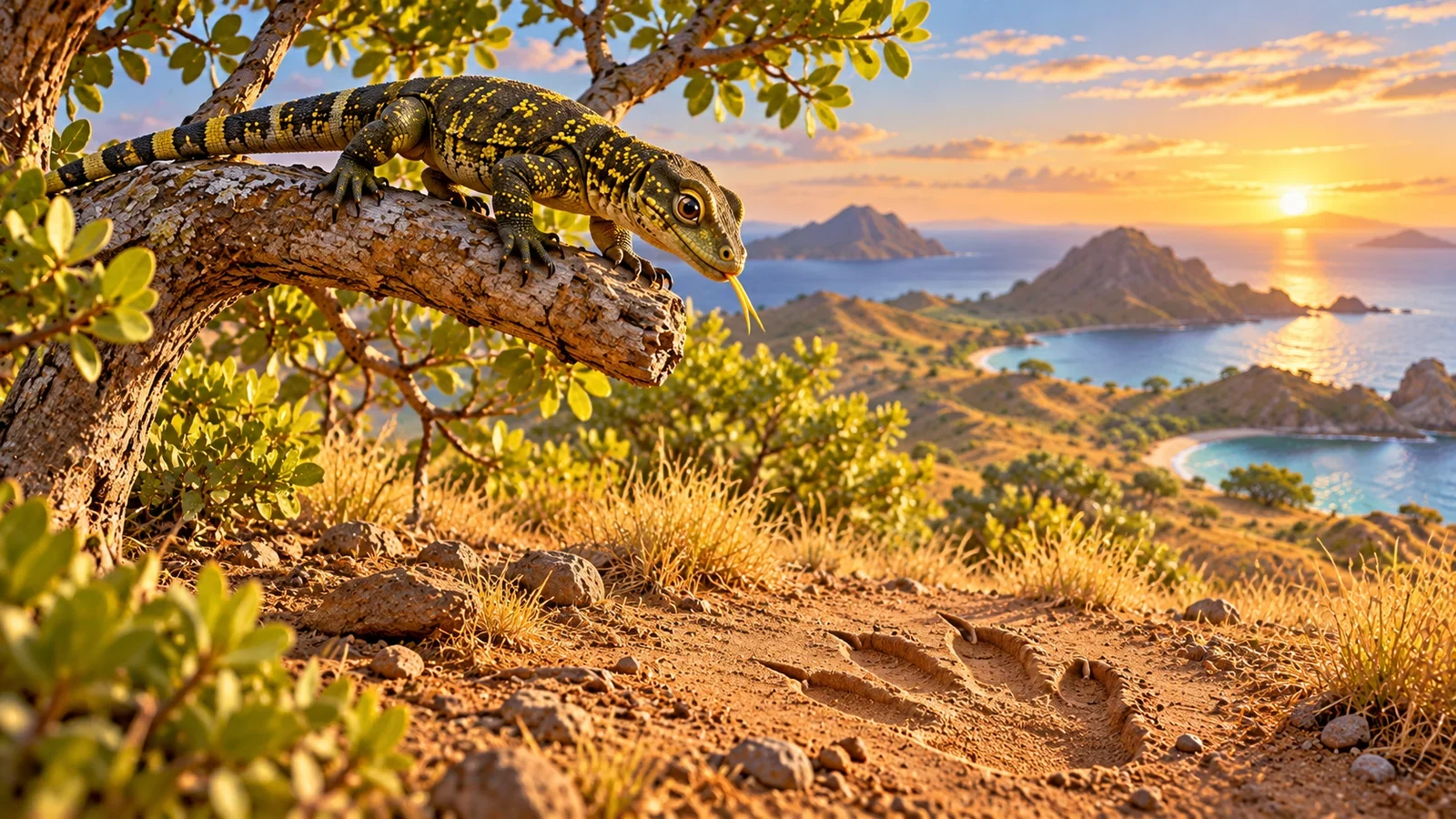
From the top of the tree, Kimo saw a wide trail on the ground. It sticks out its tongue to catch scent clues. An adult Komodo dragon may be passing by. Kimo didn't come down to check. He chose to wait quietly. Little adventurers also need to know when to rest. Large footprints are not an invitation to approach.
Shadows in the grass
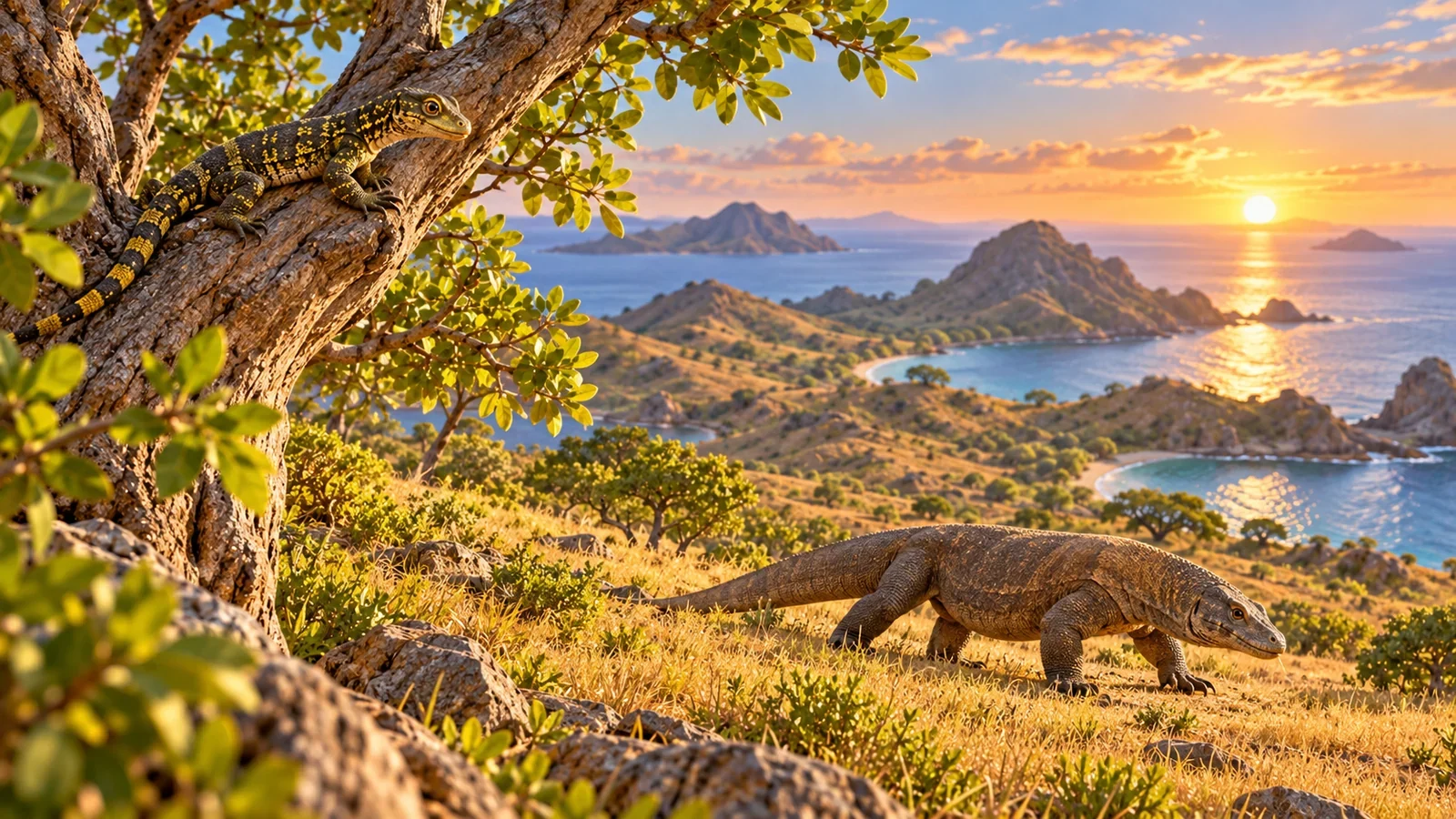
The grass moved, and then an adult Komodo dragon passed far below. Kimo is attached to the trunk and remains on a sturdy branch. "Today I'm just a spectator," he whispered. Keeping his distance helped Kimo avoid being disturbed, while the adult dragons continued their journey. From there, Kimo can wait until the path is clear.
Hissed from a distance
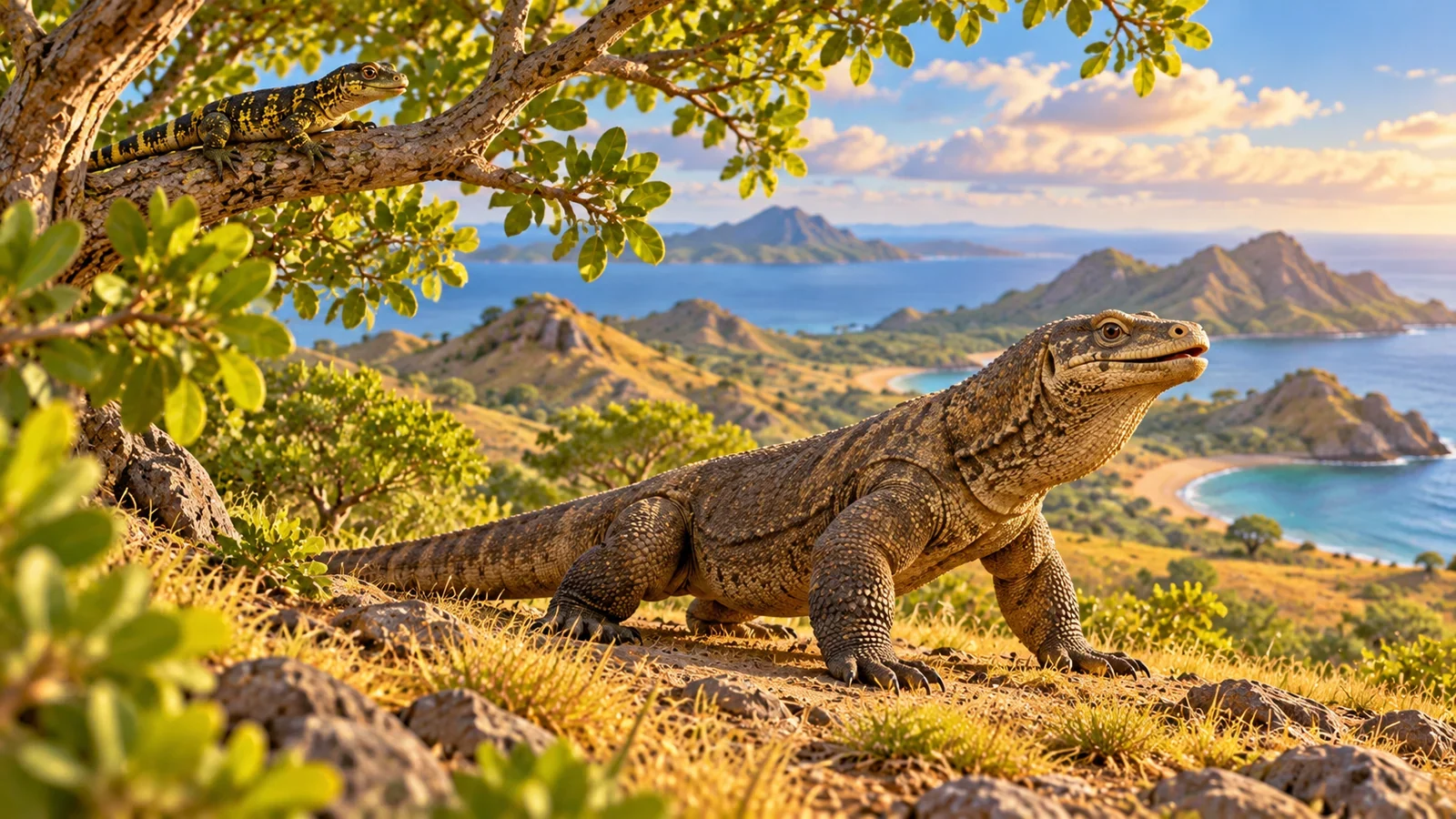
Adult Komodo dragons emit short hisses on the savanna. Kimo stayed in the tree and peeked out from behind the leaves. He didn't come any closer. In nature, Komodo dragons are wild animals, not friends to be touched or played with. Kimo let his neighbor pass. It keeps space, just like we keep our distance when we see wildlife.
The swaying branches
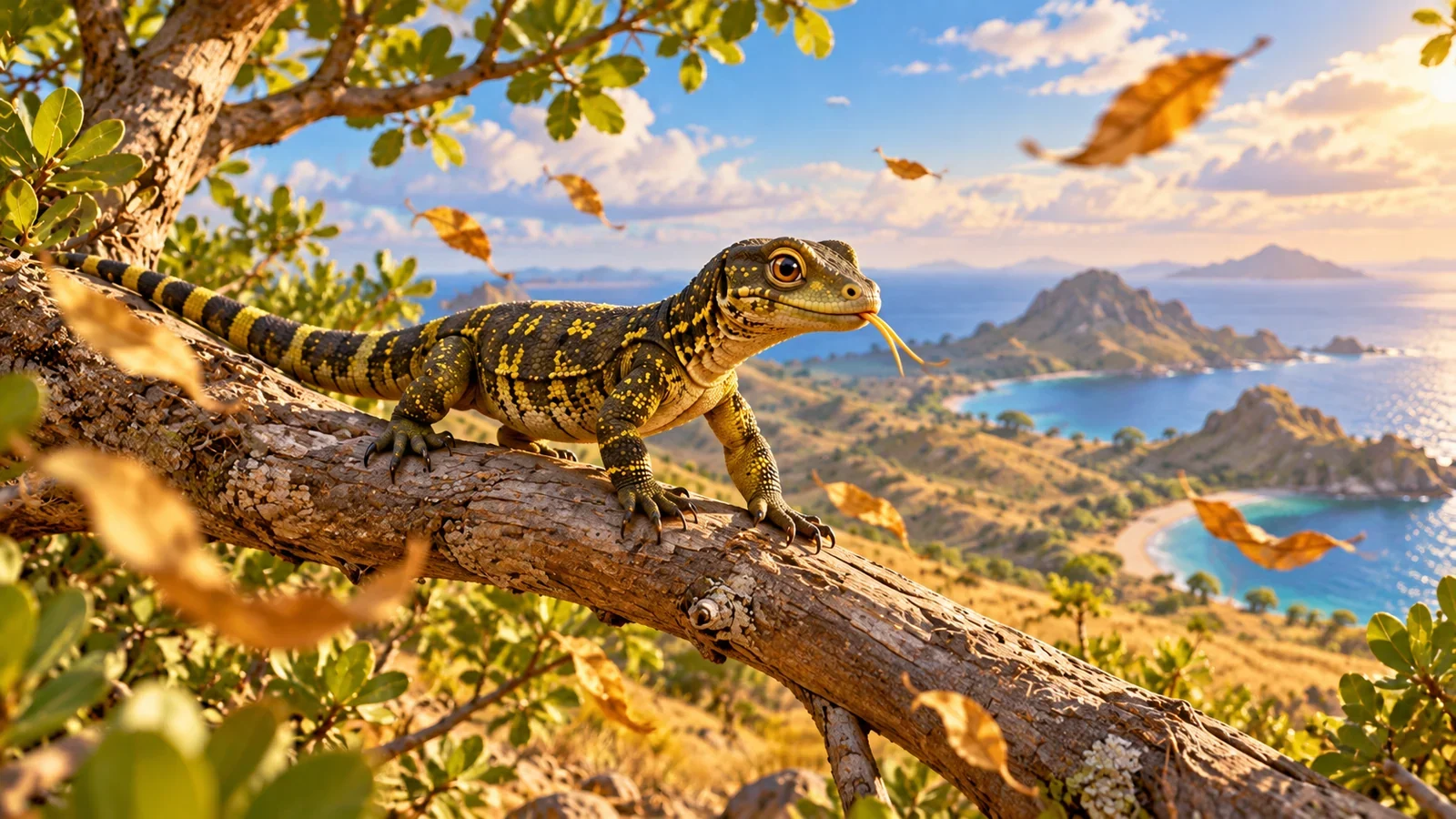
The wind blew and Kimo's branches swayed. The leaves rotate like small propellers. Kimo gripped the trunk with his claws. "The leaves can dance. I'm still holding on!" After the wind weakened, he returned to observing the path between the trees. Kimo waited until the leaves and twigs moved more slowly.
Looking for a solid path
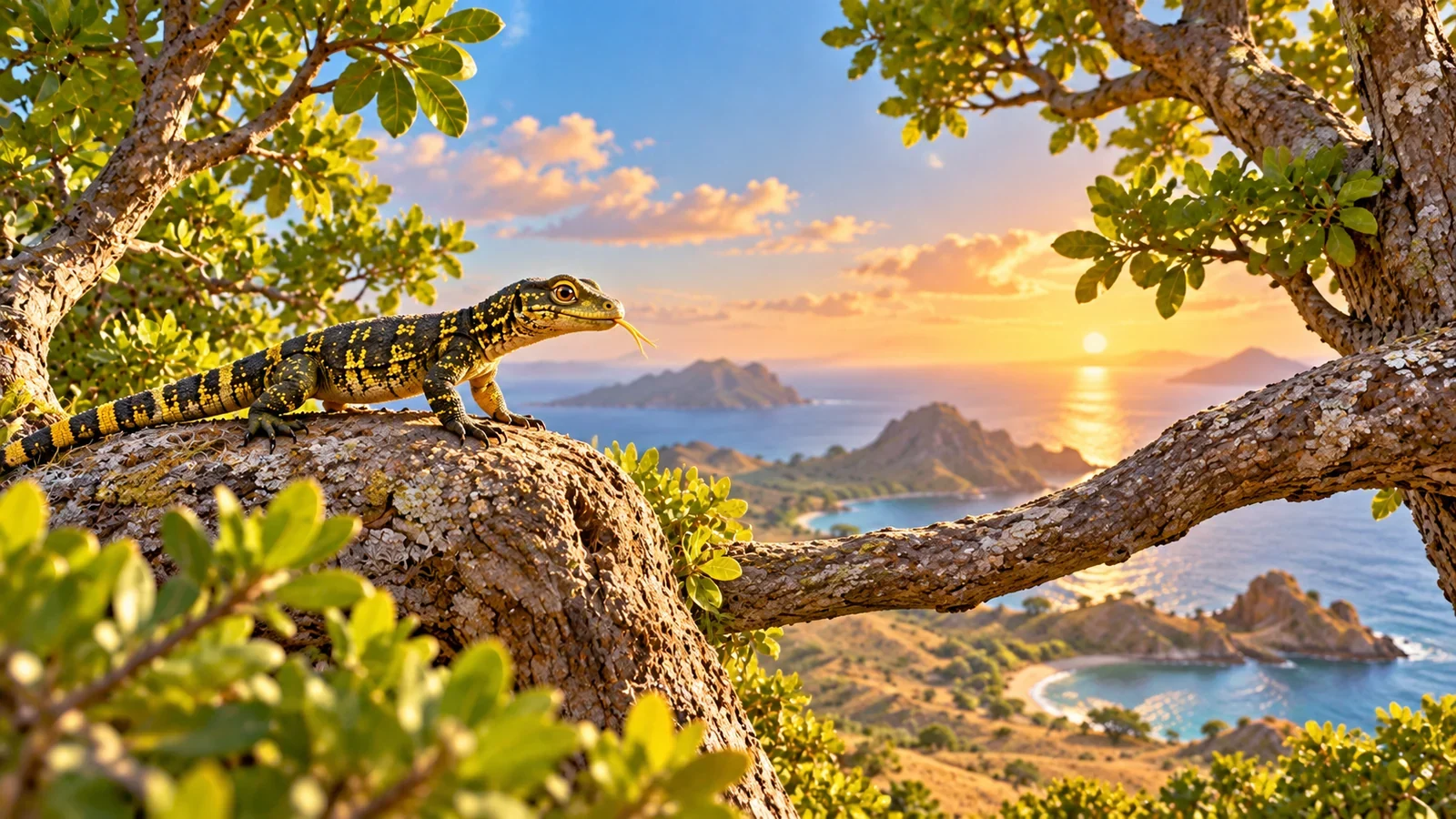
In front of him was a thick branch that led to another trunk. Kimo checked before moving. His tongue collects scent clues, while his eyes scan the available paths. He chose a branch that looked sturdy. Slowly, the little explorer prepared to move. He put his front foot first, then shifted his body.
Kreeek, stop for now
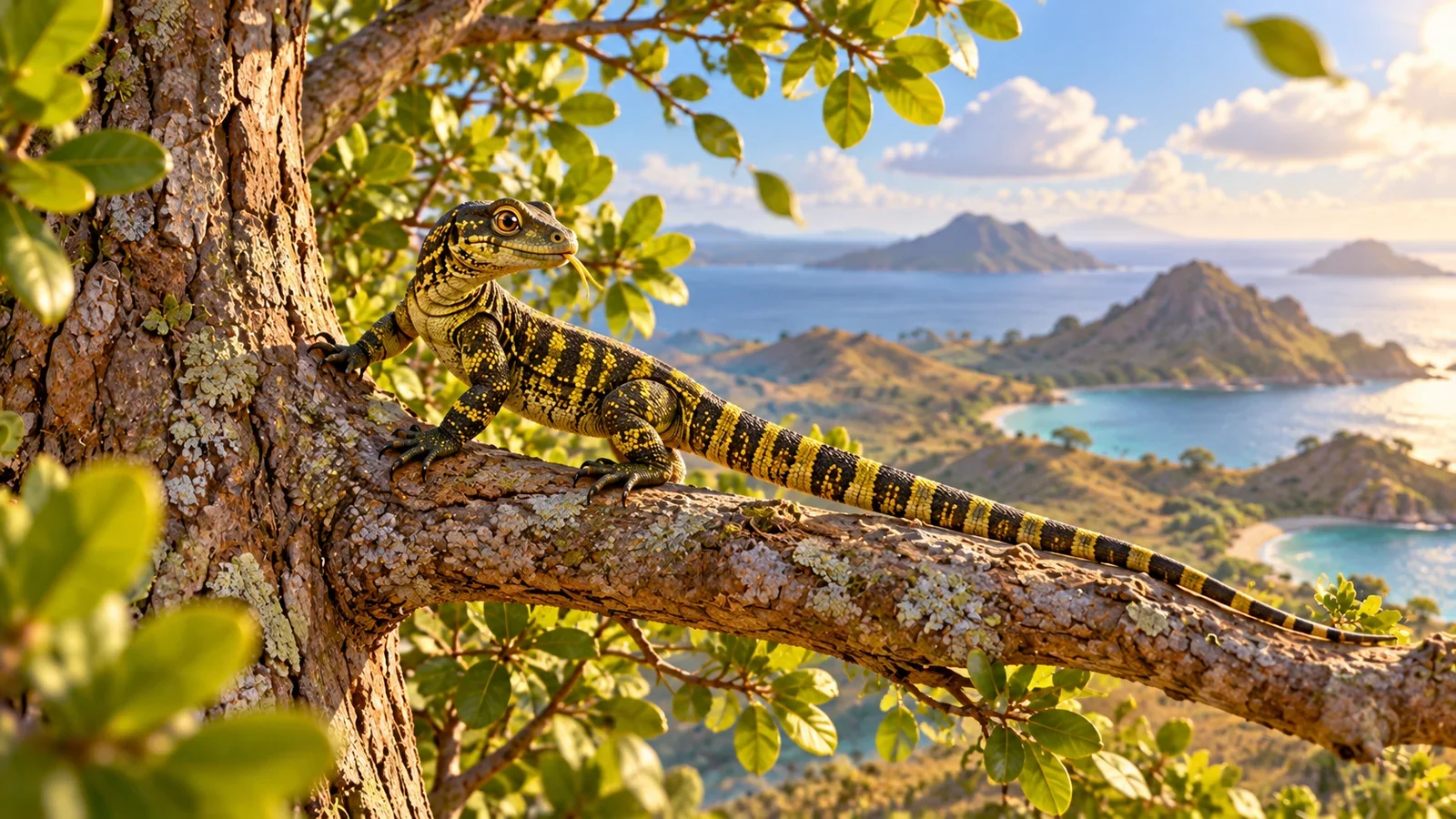
Kreek! The small branches made a sound when blown by the wind. Kimo immediately stopped. He turned slowly and leaned closer to the stronger trunk. No need to rush. “Thanks for telling me,” he muttered to the branch. Then he waited until everything calmed down. Pausing gave him time to find a safe path.
Helpful claws
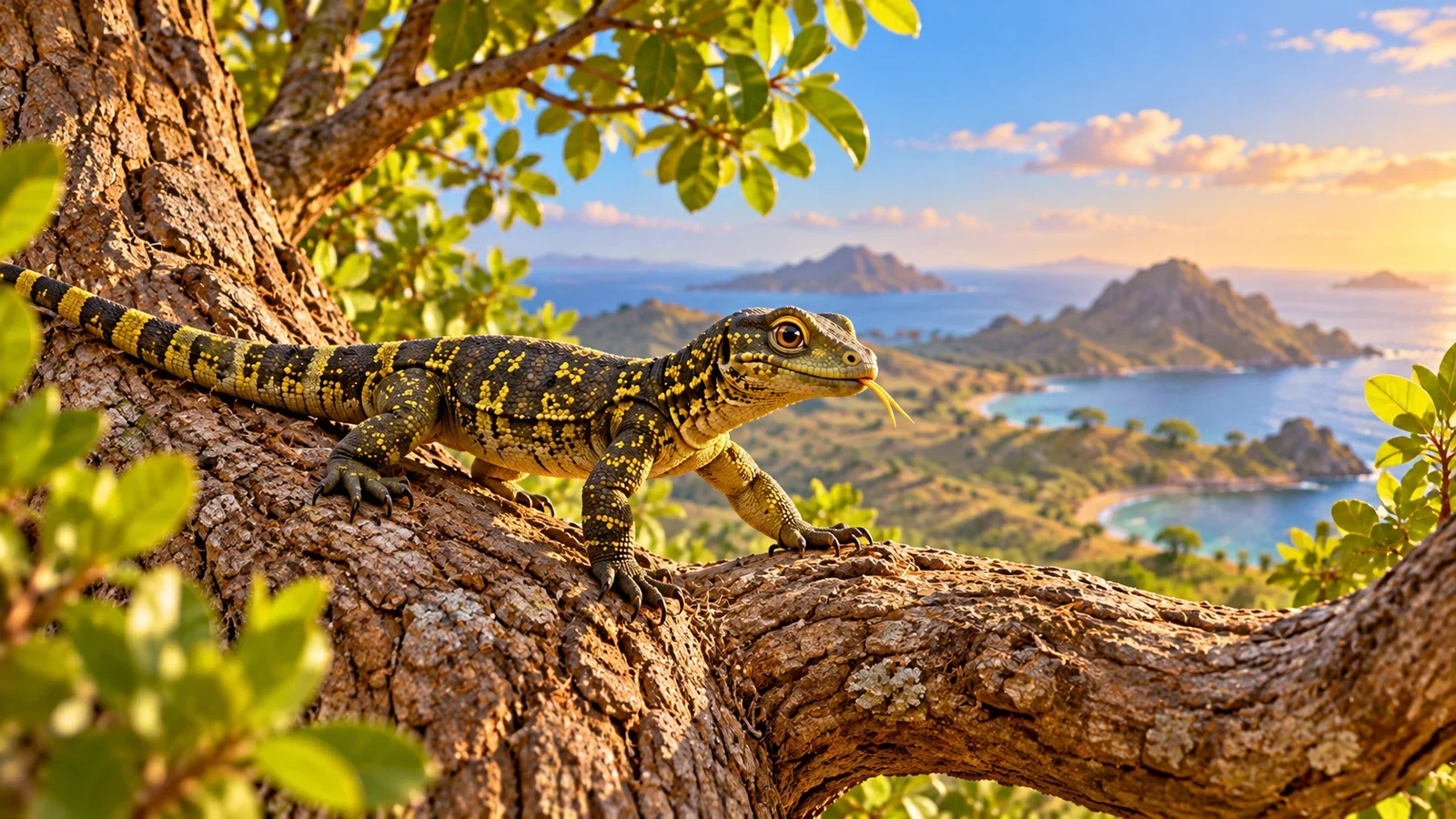
Kimo's claws gripped the bark. It moves little by little towards stronger branches. When the branch sways, it stops first. “One step, then look again,” he said. This slow way keeps him balanced and doesn't jump into places he hasn't checked. Strong claws help dragons grip surfaces.
Kimo's little hissed
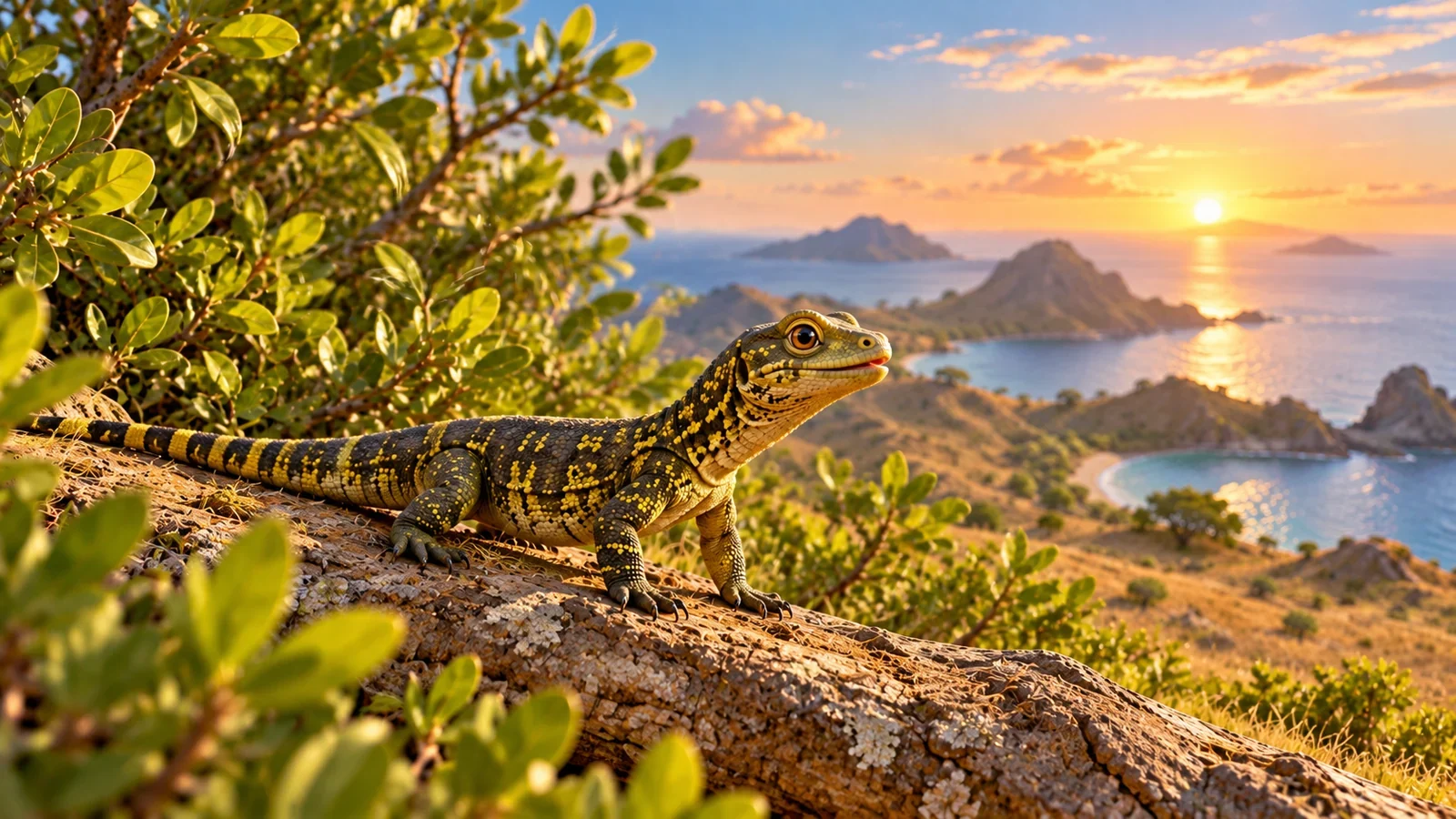
There was movement behind the bushes. Kimo hid at the side of the trunk and let out a short hiss. He remained in a safe place while waiting. We don't need to get close to wildlife to guess the meaning of its sounds; just give them space. There is nothing to chase; waiting is also part of the adventure.
Move to the big tree
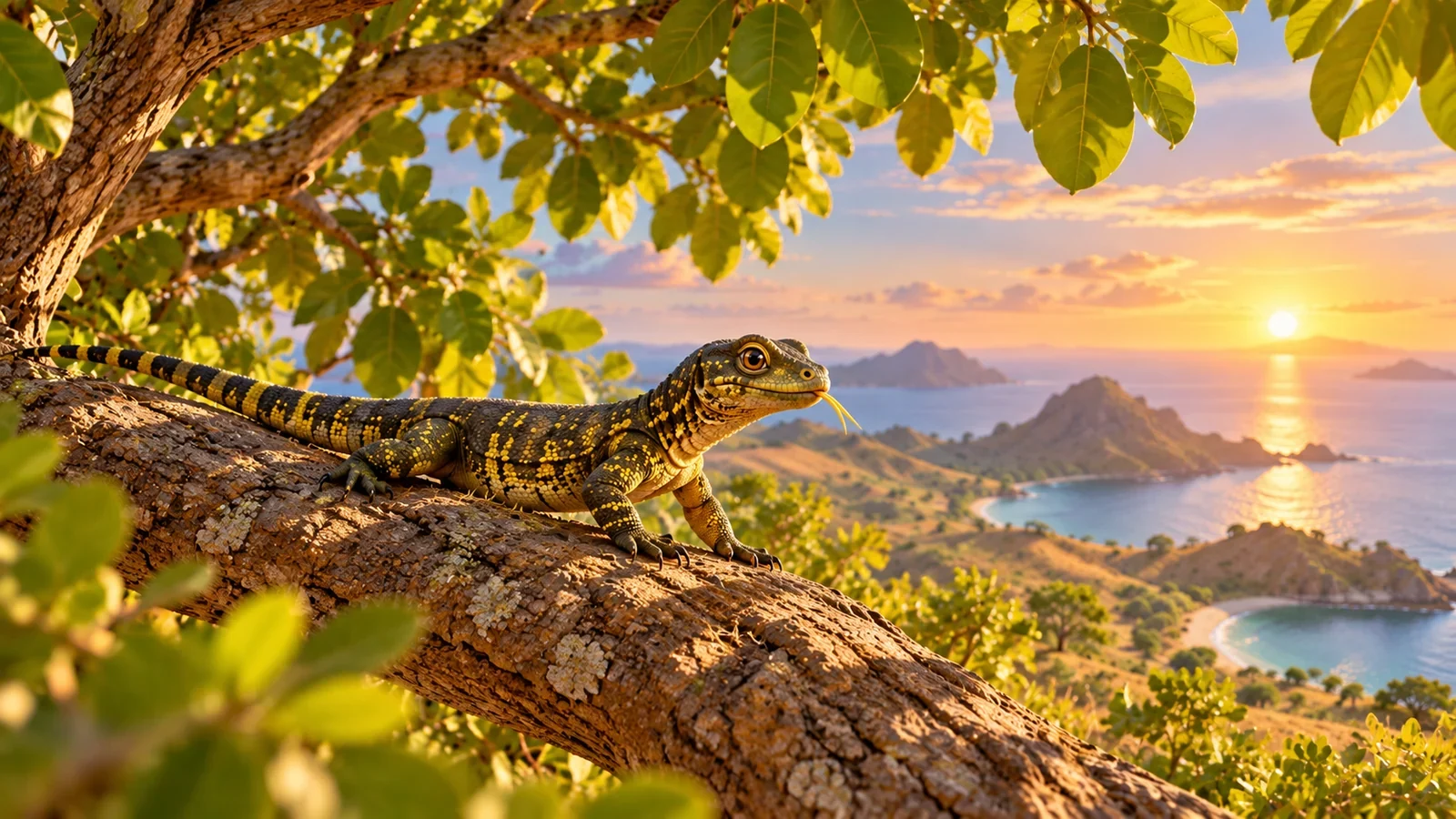
The adult Komodo dragons finally moved away behind the hill. Kimo crept up to a large shady tree via a sturdy branch. Young Komodo dragons often use trees to get away from threats on the ground, including larger Komodo dragons. The leaves shade Kimo like a green umbrella. The habit of living in trees helps young dragons avoid larger dragons.
The little adventure was successful
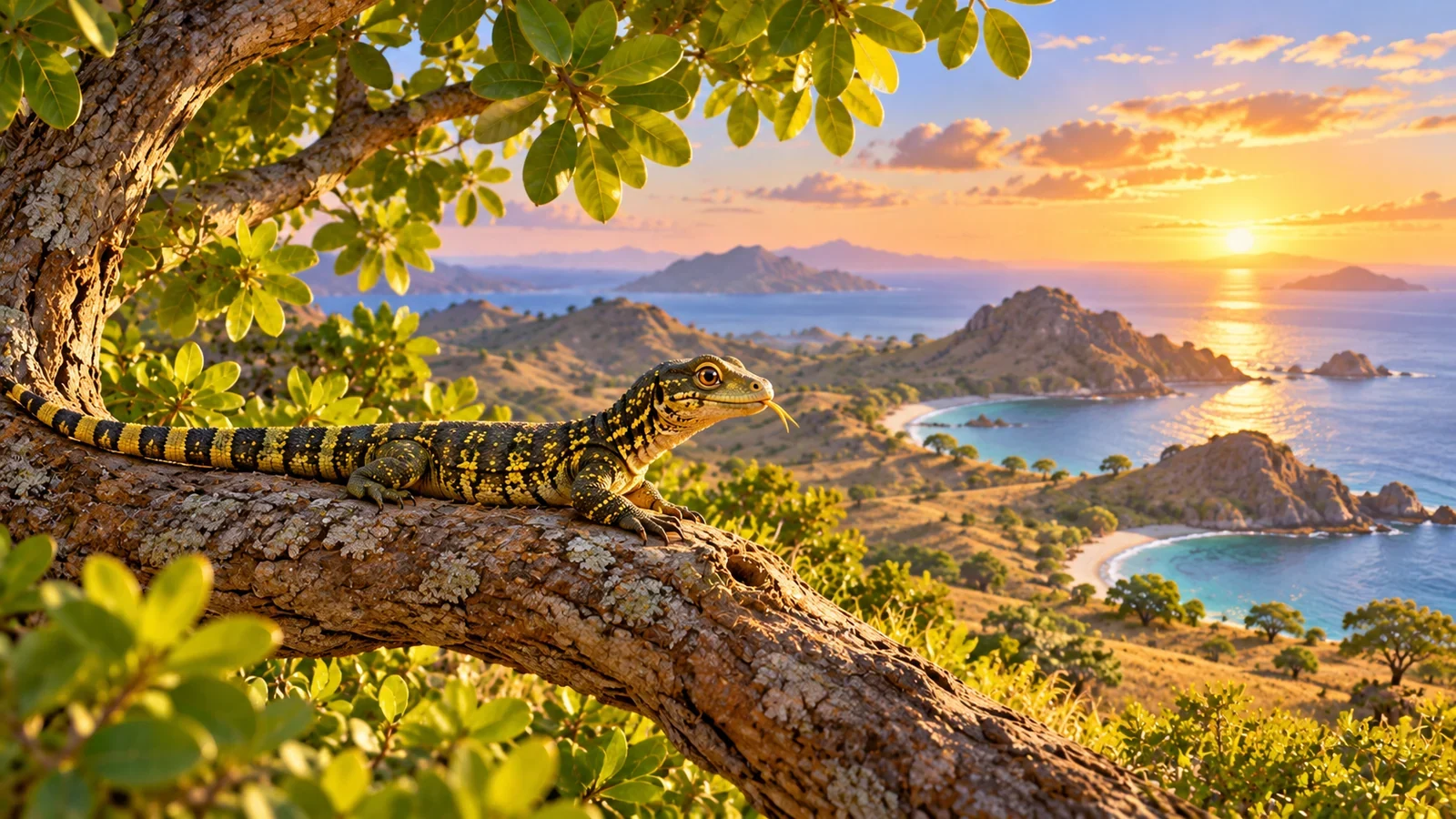
From the thick branches, Kimo saw the savanna and beach. He managed to find a shady place to rest. His stomach growled again. "Okay, after resting, let's find something to eat," he said. The afternoon breeze moved the leaves, but the branch on which they sat remained firm. Kimo felt calmer after finding a place away from busy roads.
Komodo dragons are not dragons
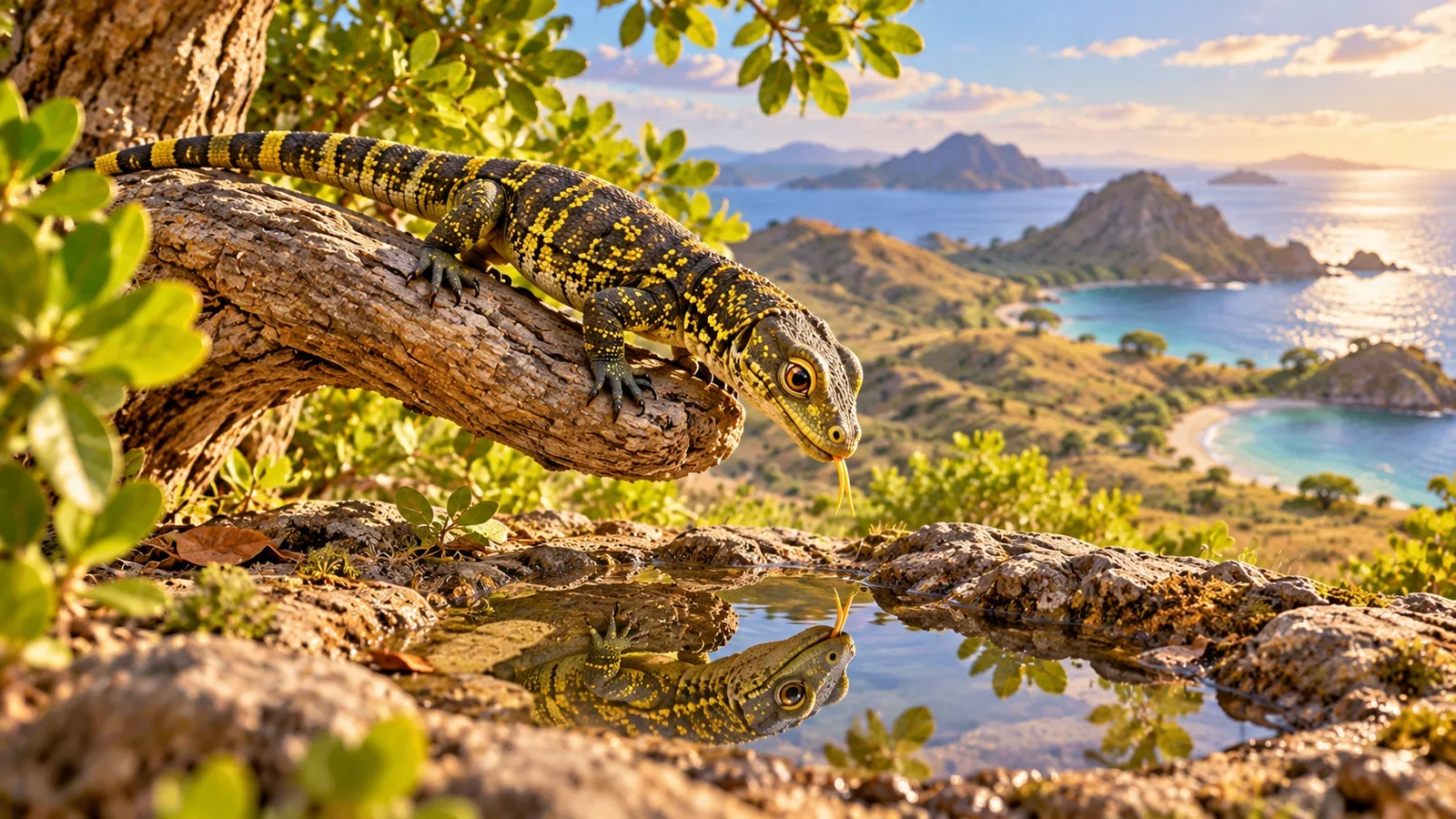
Kimo saw his reflection in the puddle. "I'm not as big as an adult Komodo dragon!" Adult Komodo dragons can grow to around two to three meters. Komodo dragons are real large lizards, not dragons from fairy tales. Kimo raised his head, then giggled to see his reflection moving too. The small image made him smile before he went back to resting.
Morning and a small snack
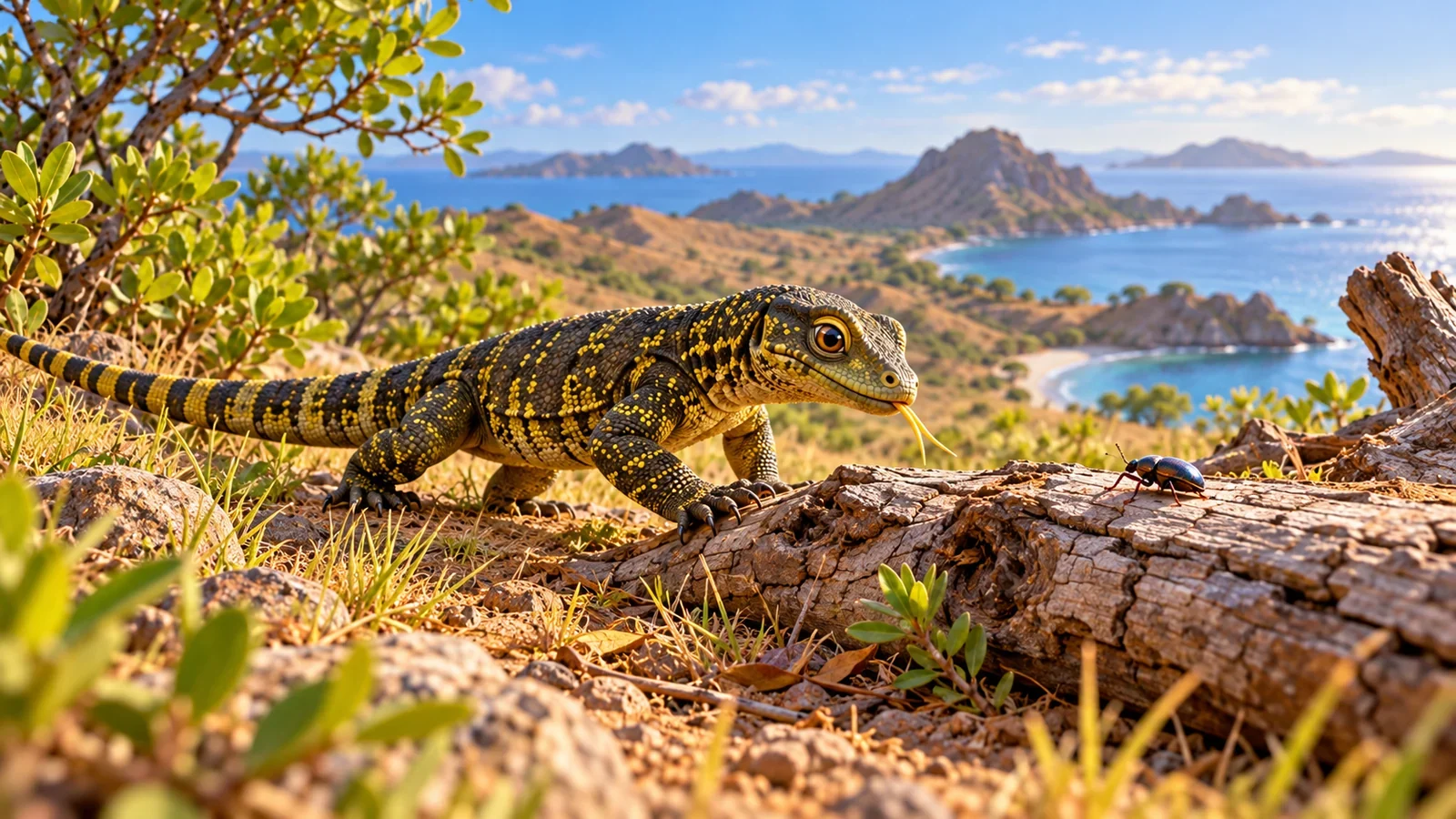
The next morning, Kimo climbed down a low trunk. A small insect passes near a fallen log. Young Komodo dragons can eat insects and small lizards. Kimo studied him for a moment, then checked the surroundings with his forked tongue before continuing. The young Komodo dragon eats small animals, so it searches carefully.
The house has many residents
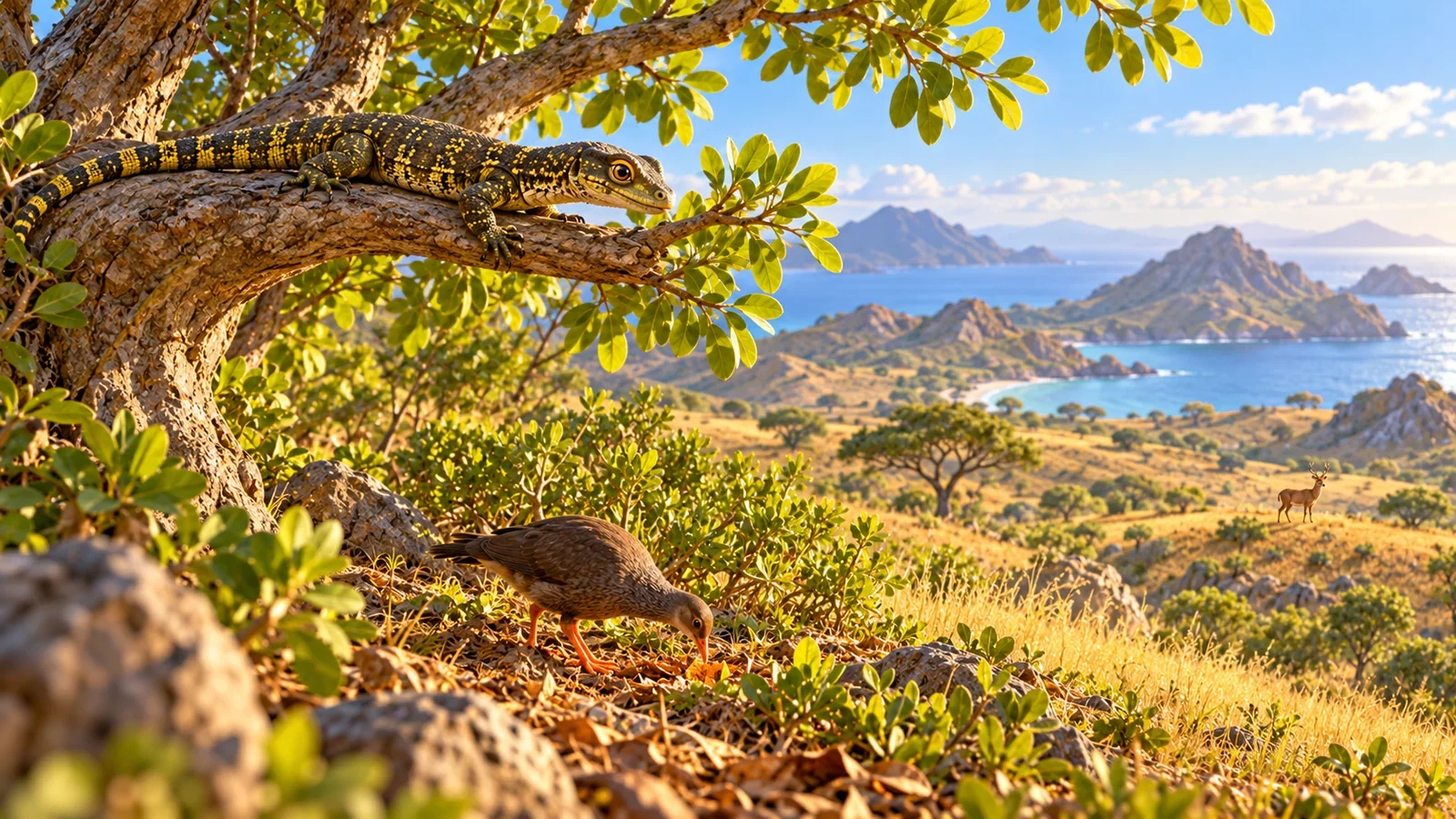
Tilu returned to scavenging the ground. Far away in the field, a Timor deer walks slowly. Kimo watched them from the tree without disturbing them. Komodo National Park is home to many animals. Each resident needs space and food that suits their needs. When the habitat is maintained, various animals have space to live.
Cautious explorer
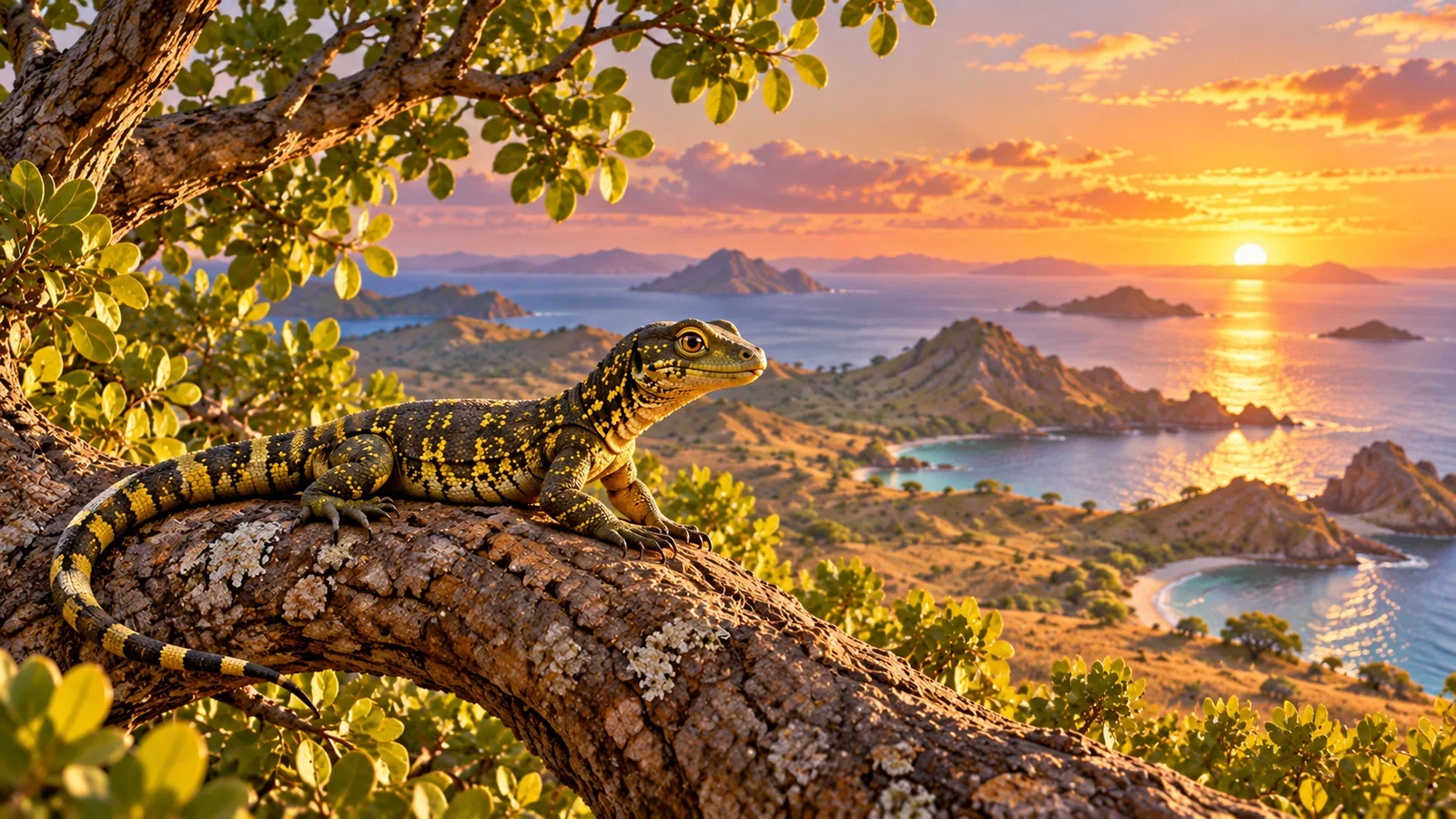
Kimo sat quietly on a branch and stuck out his tongue to read the scent clues. He still had a lot to learn. We can help wildlife by protecting their habitat and viewing them from a safe distance. “See you, Komodo Island!” Kimo said goodbye. Guides help visitors see the Komodo dragons from a safe and unobtrusive distance.