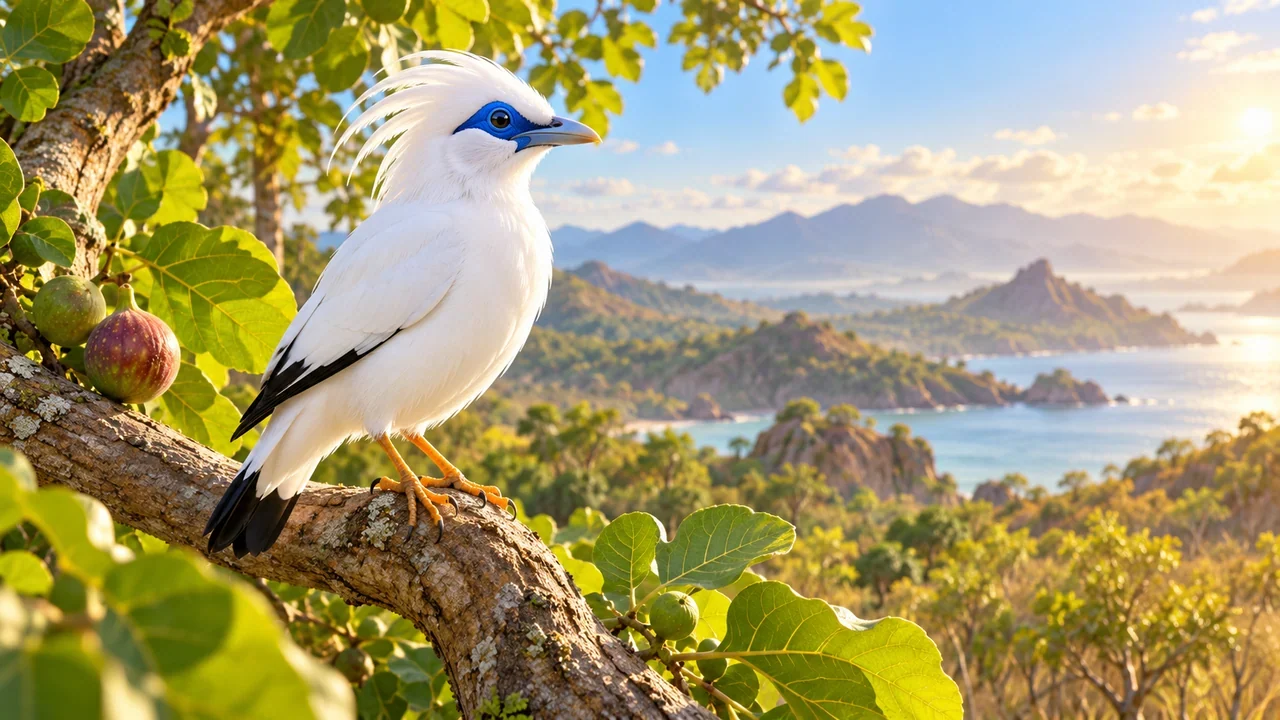
Jali the Balinese Starling and his Forest Home
Follow Jali as he explores the forests of West Bali, looking for fruit and insects, then discovering how humans keep wildlife home.
Ages 6–10 years · 8 min · 20 scenes
Morning in West Bali

Morning warms the forests of West Bali. Jali opened his eyes on a shady branch, shook his white crest, then peered down. "Good morning, leaves! Who's awake but me?" a small beetle strolled leisurely on a tree trunk. The new day started slowly.
White fur and blue eyes
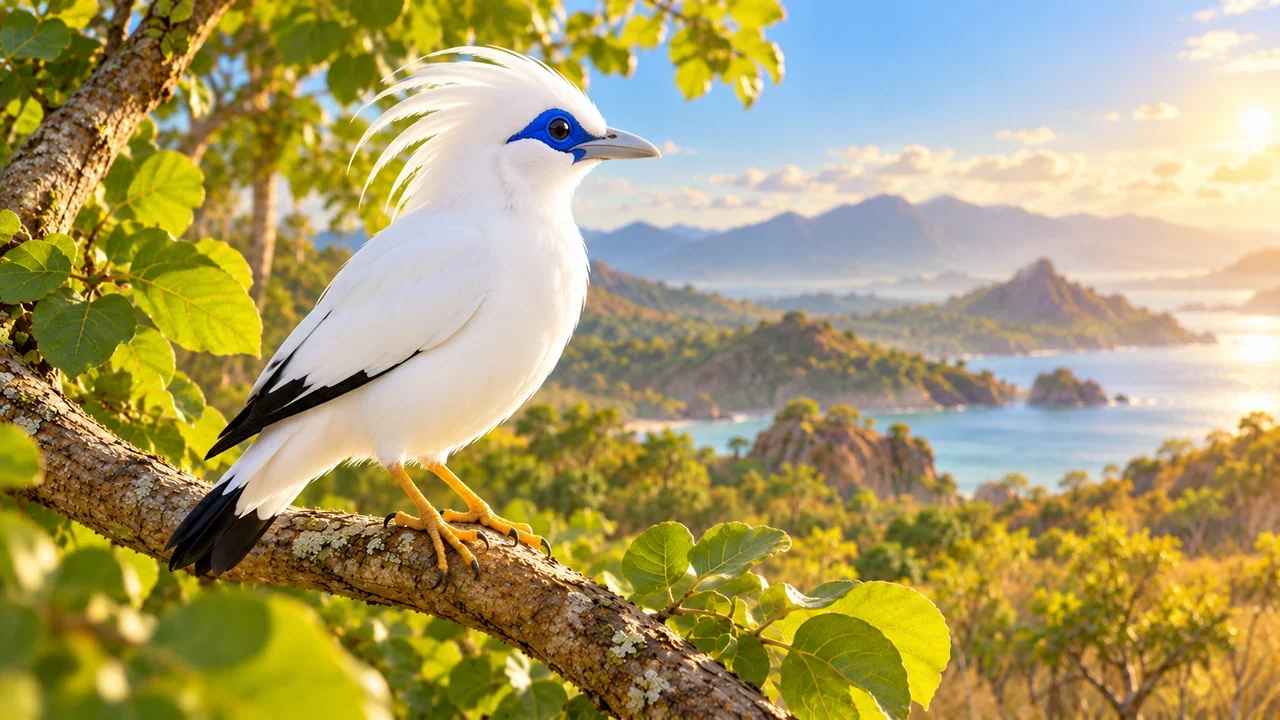
When Jali turned his head, the morning light touched his white fur. The tips of its wings and tail are black, while the skin around its eyes appears blue. He tilted his head. “Wow, it's like I'm wearing sky-colored glasses!” The crest is upright like a brush.
House in a tree cavity
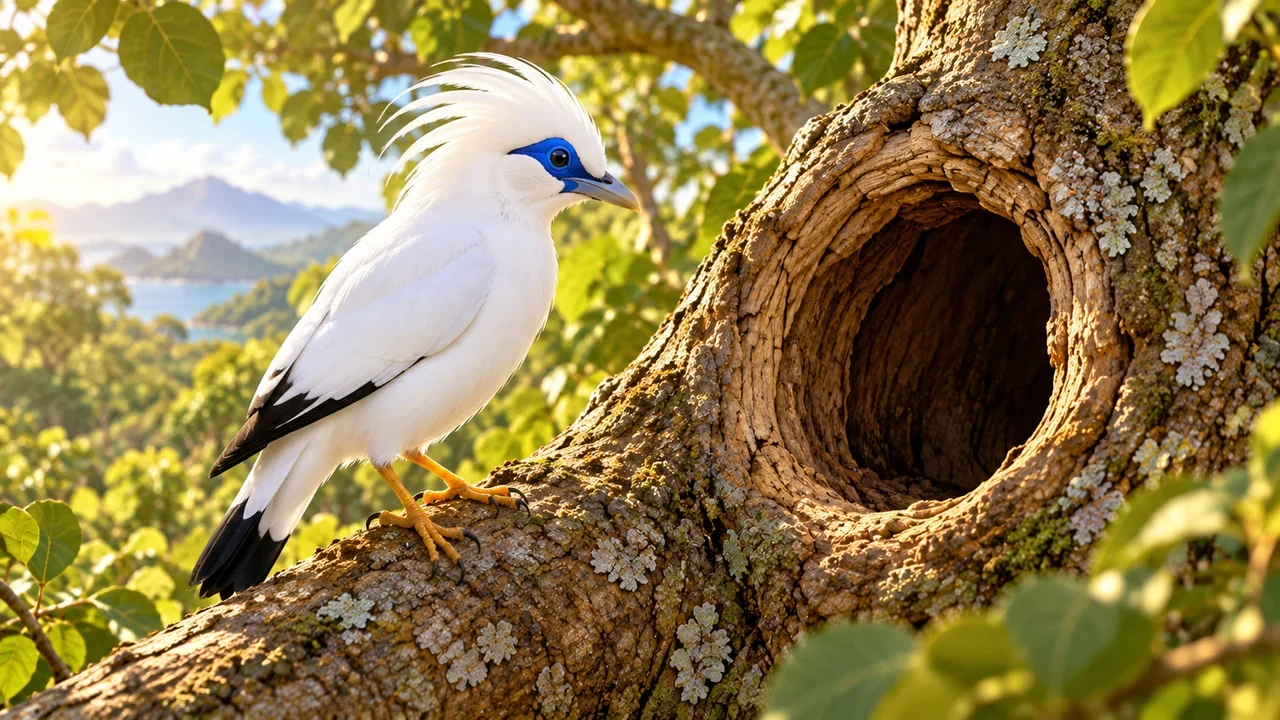
Jali lives in the forest, not in a cage. In the trunks of old trees there are natural cavities that Bali starlings can use for nesting. Jali peeked for a moment, then flew away. "I'll check the yard first!" The hole was not an ordinary door.
Fruit breakfast
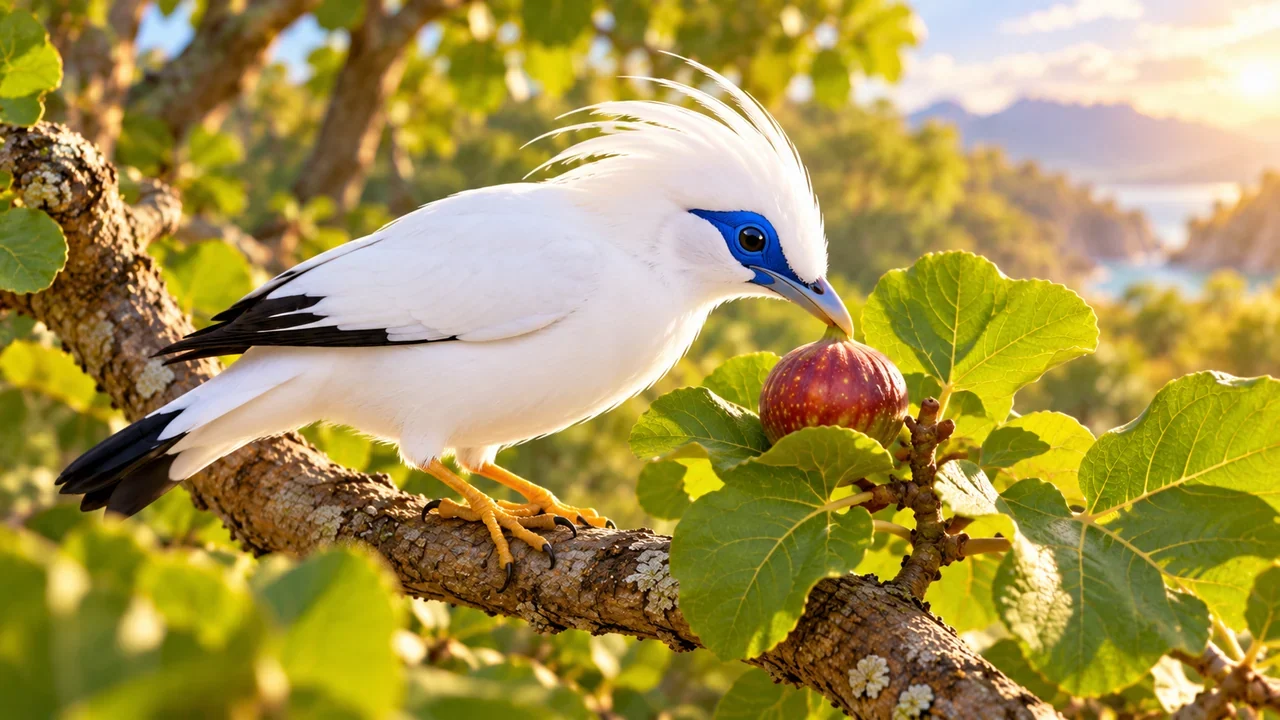
Jali's stomach growled softly. He found ripe fruit among the leaves, then pecked at it bit by bit. “Jungle breakfast tastes fresh!” Once full, Jali cleaned his beak on a branch and looked for another place. He ate without rushing.
The surprise behind the leaves
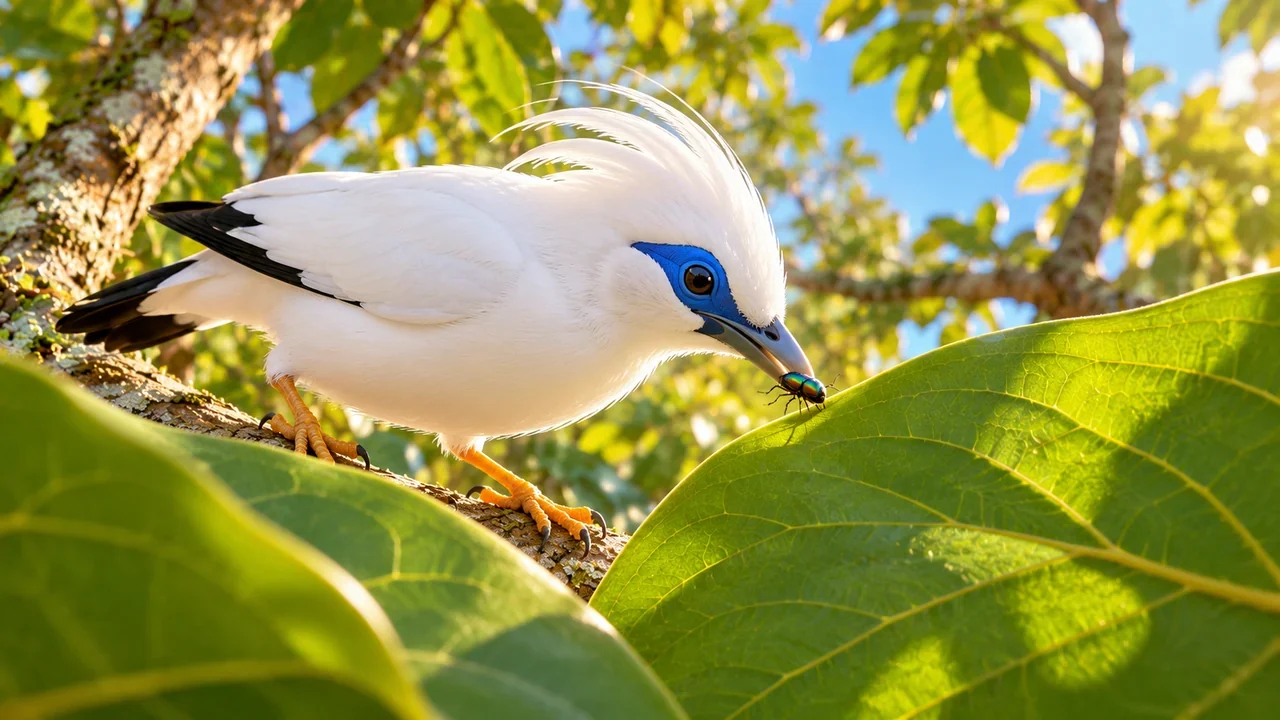
Behind the leaves, a small insect crawled. Jali studied it, then grabbed it with a quick movement. “Tiny snack, big power!” Bali starlings can also eat insects, apart from fruit and seeds. Leaves remain intact.
Fly to another branch
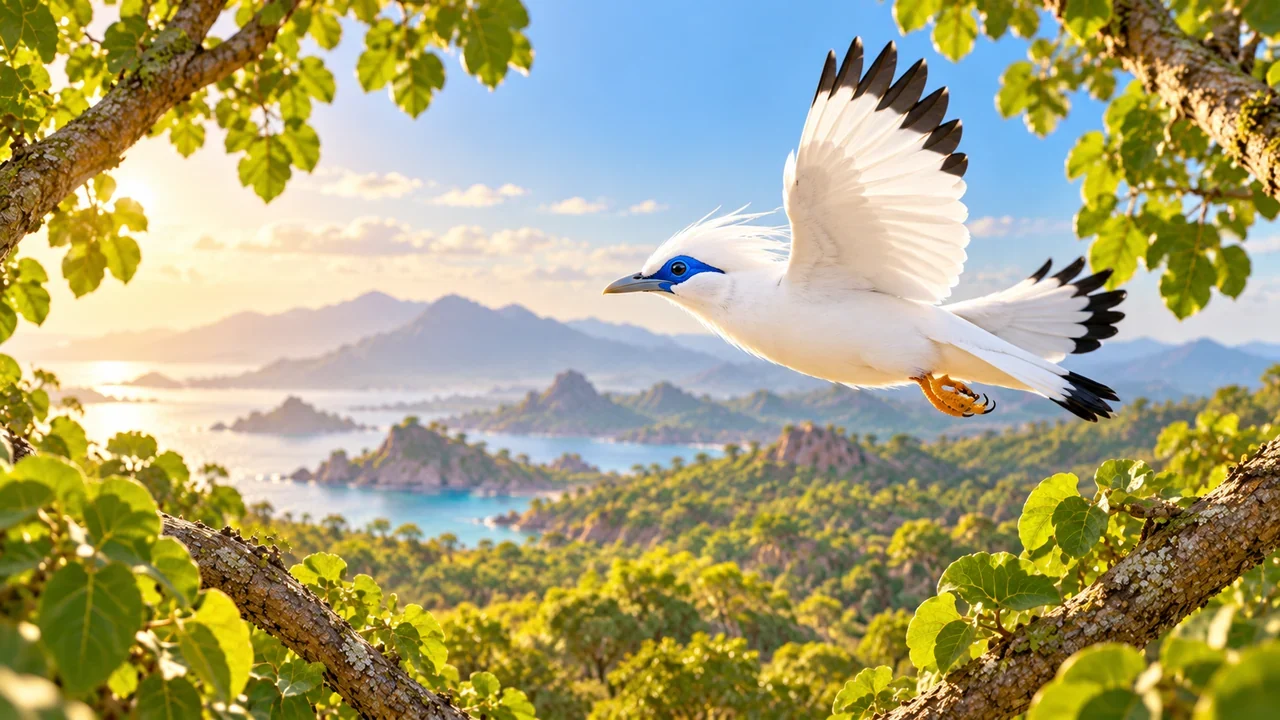
Jali fluttered to the next tree. It doesn't fly far, just moves through gaps in the canopy. From there, he could see the bushes, trunks, and ground of the forest. “The views are expansive, but I stay close to home!” Its wings open and then fold.
Lonely fruit branch
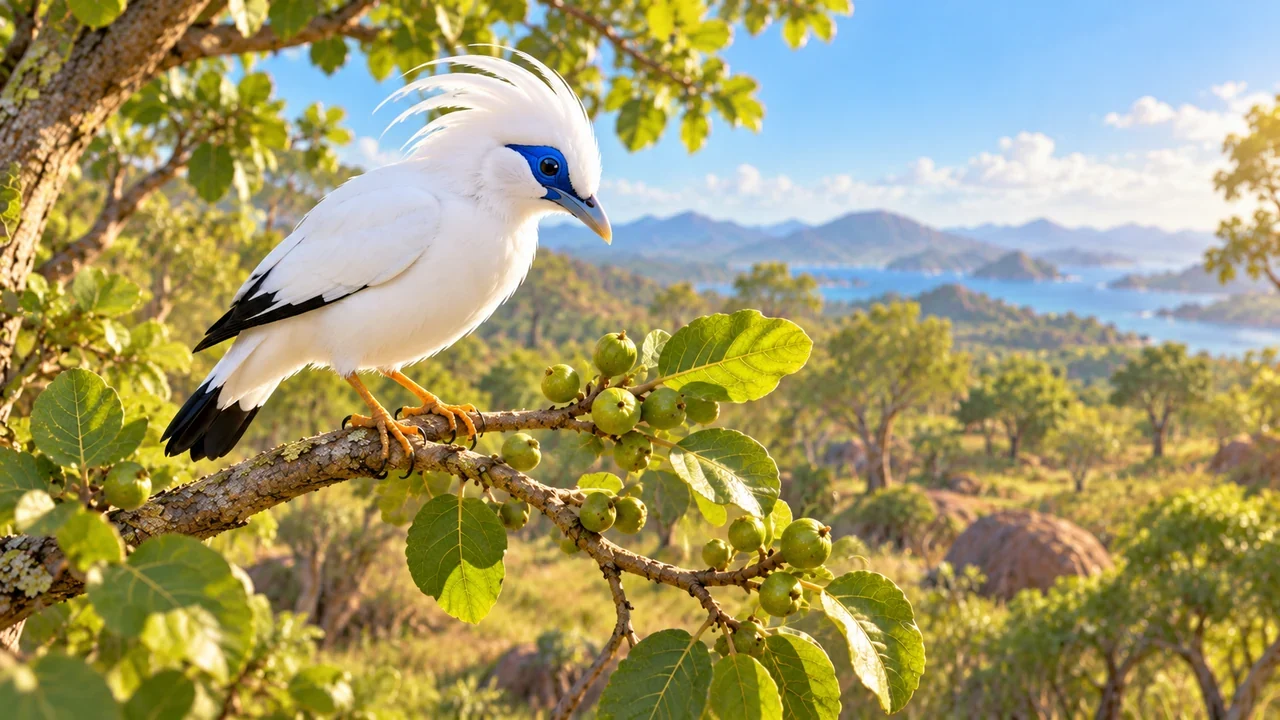
The branches of Jali's favorite fruit were empty. Many fruits are still small and hard. Jali didn't force him. He jumped onto another branch while saying, "If it's not ripe yet, let's just wait. Fruit also takes time!" Jali was not disappointed.
Looking for seeds
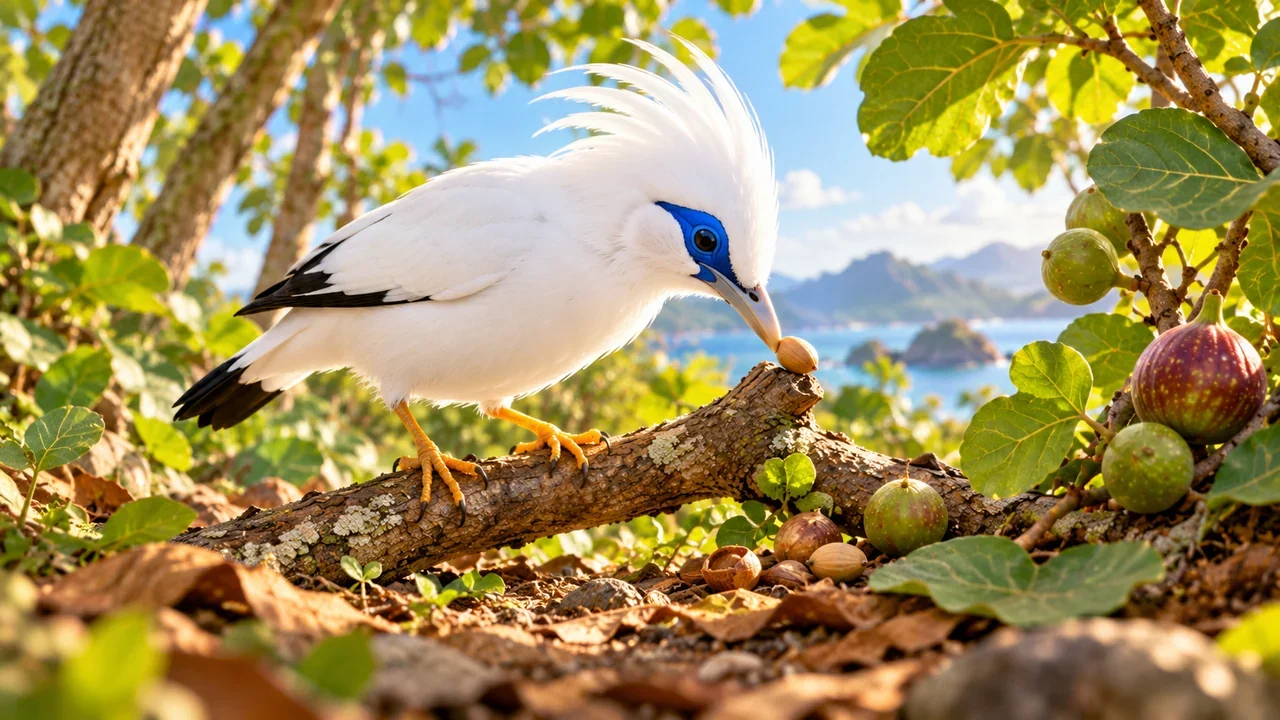
Near the bush, Jali found small seeds and some fallen fruit. He pecked enough. A seed stuck to its beak. Jali shook his head, then the seed fell. “Oops, not a mustache!” He searched carefully.
Friends in the distance
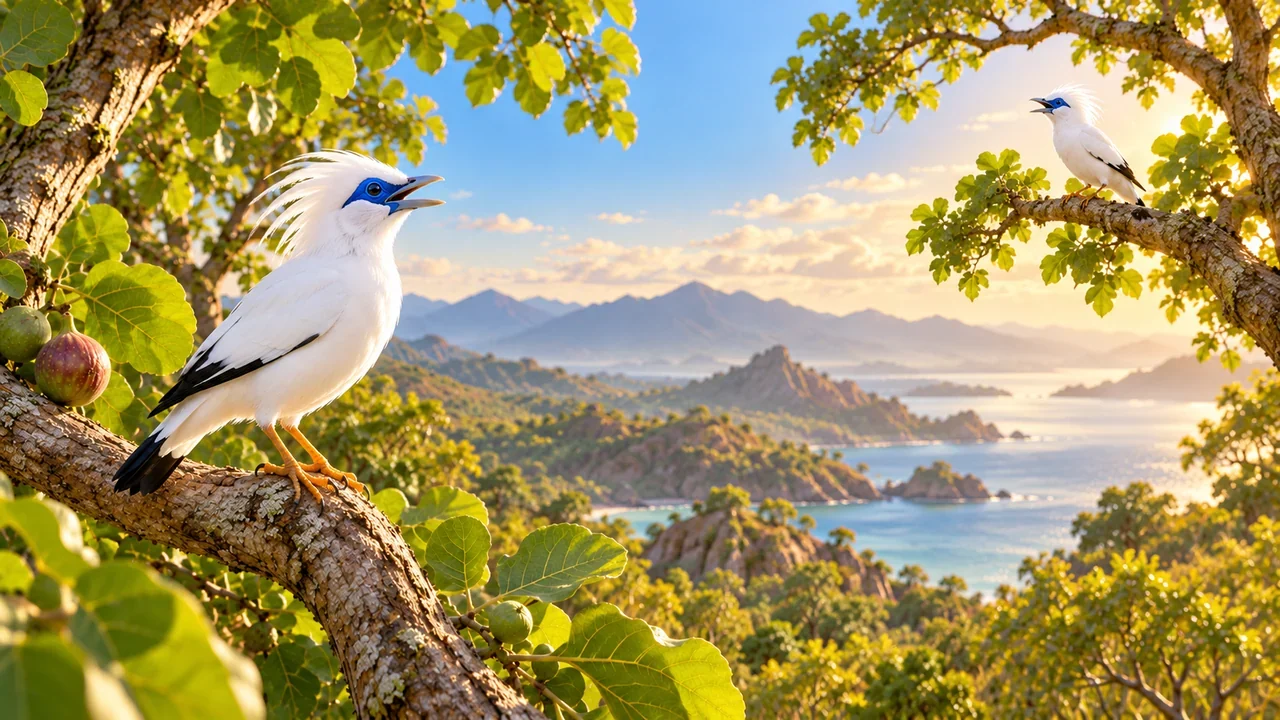
In the opposite tree, Jali saw another Bali starling. They spoke to each other from a distance. Jali replied, then went back to looking for food. "See you, friend! I have an important schedule with ripe fruit." The other bird remains free.
Step on the path
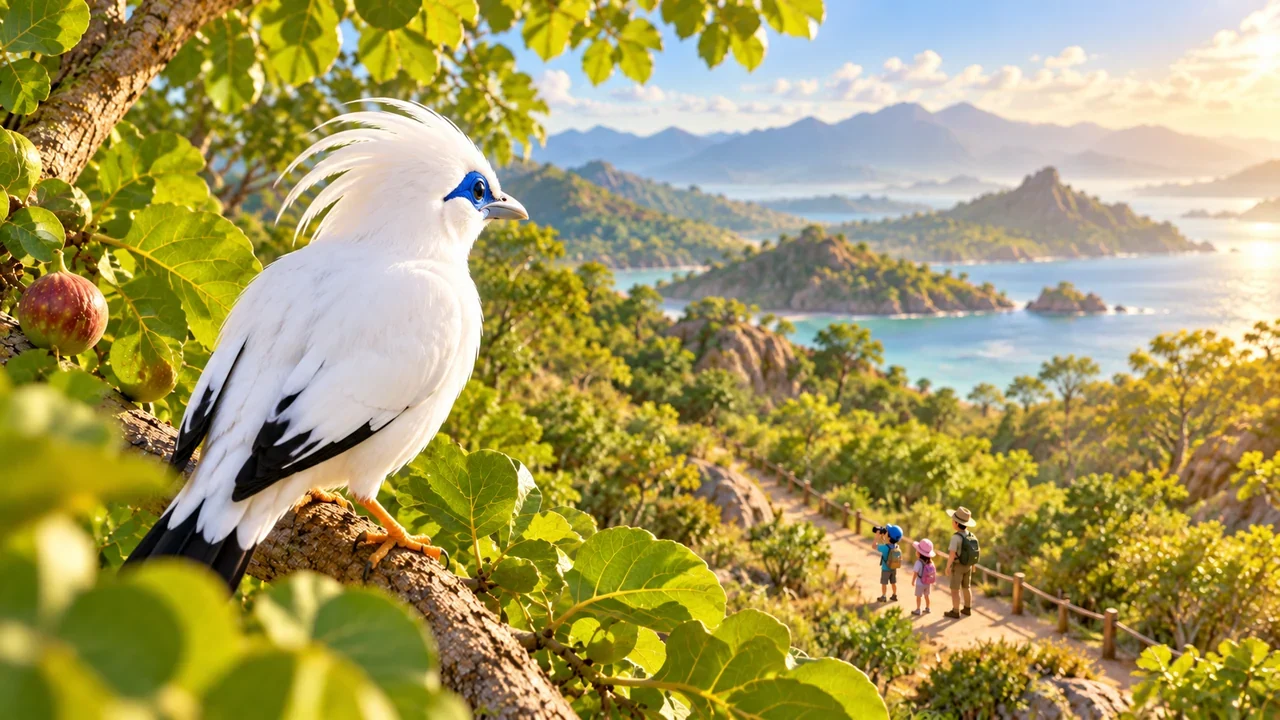
On a path far from Jali, a guide invites children to observe birds using binoculars. They stayed the course and spoke quietly. "Let's just look from a distance," said the guide. Jali continued his breakfast quietly. The child also whispered.
Fruit is not a provision for visitors
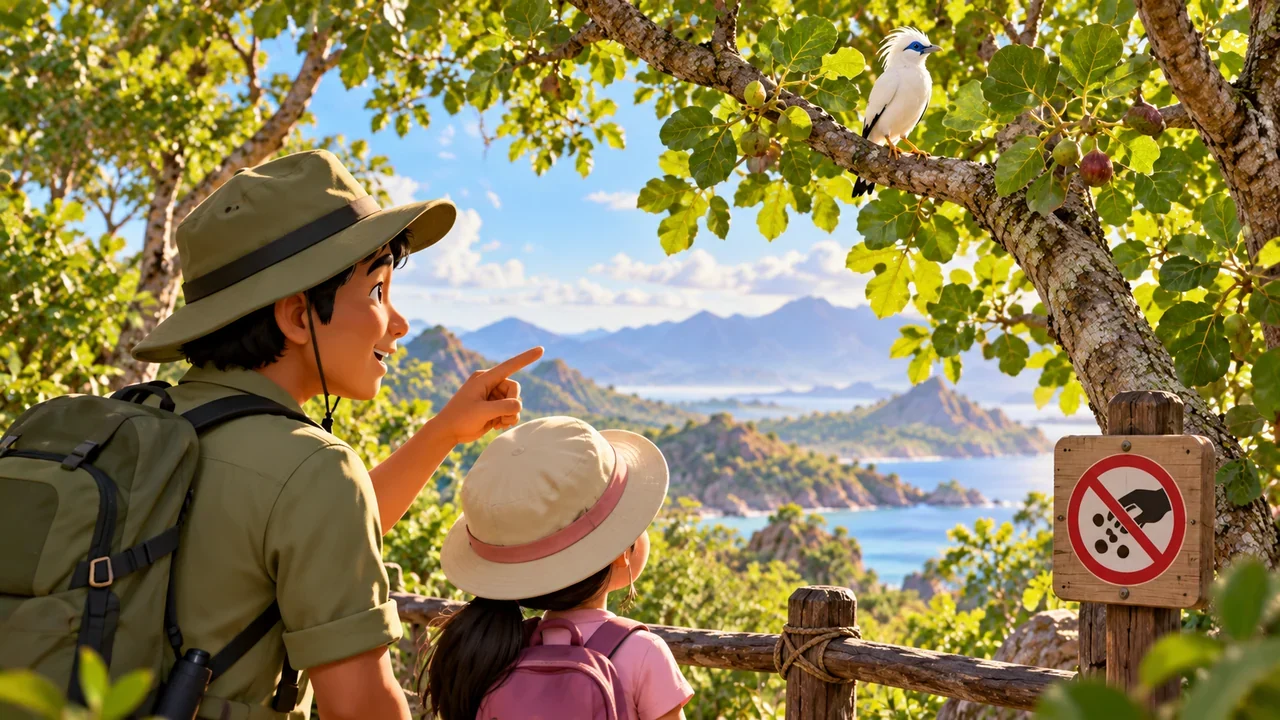
The guide explains that visitors do not need to feed the wildlife. Jali has been looking for his own natural food. The boy nodded. Jali pecked at a forest fruit, not knowing that he had just learned an important lesson. Animals still find their own food.
Safe cavity
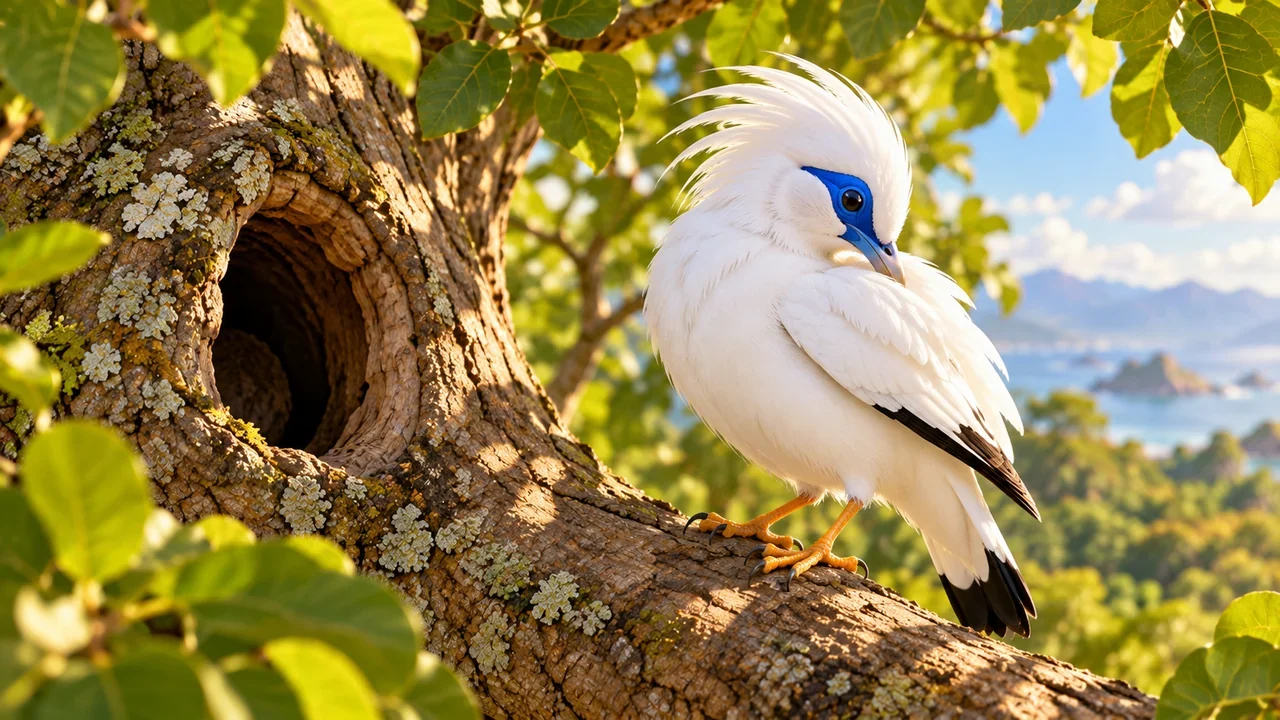
The afternoon was starting to get warm. Jali takes shelter in a branch near a safe tree cavity. It smooths its feathers with its beak. "Tidy up first, then move on!" Birds need to care for their feathers to keep them clean and orderly. Every feather is trimmed.
Connected forest

From the shelter, Jali saw trees and bushes that were connected to each other. Green belts help animals find food and shelter. Jali move via twigs, not across hot open ground. Trees provide shade.
Someone is looking after him
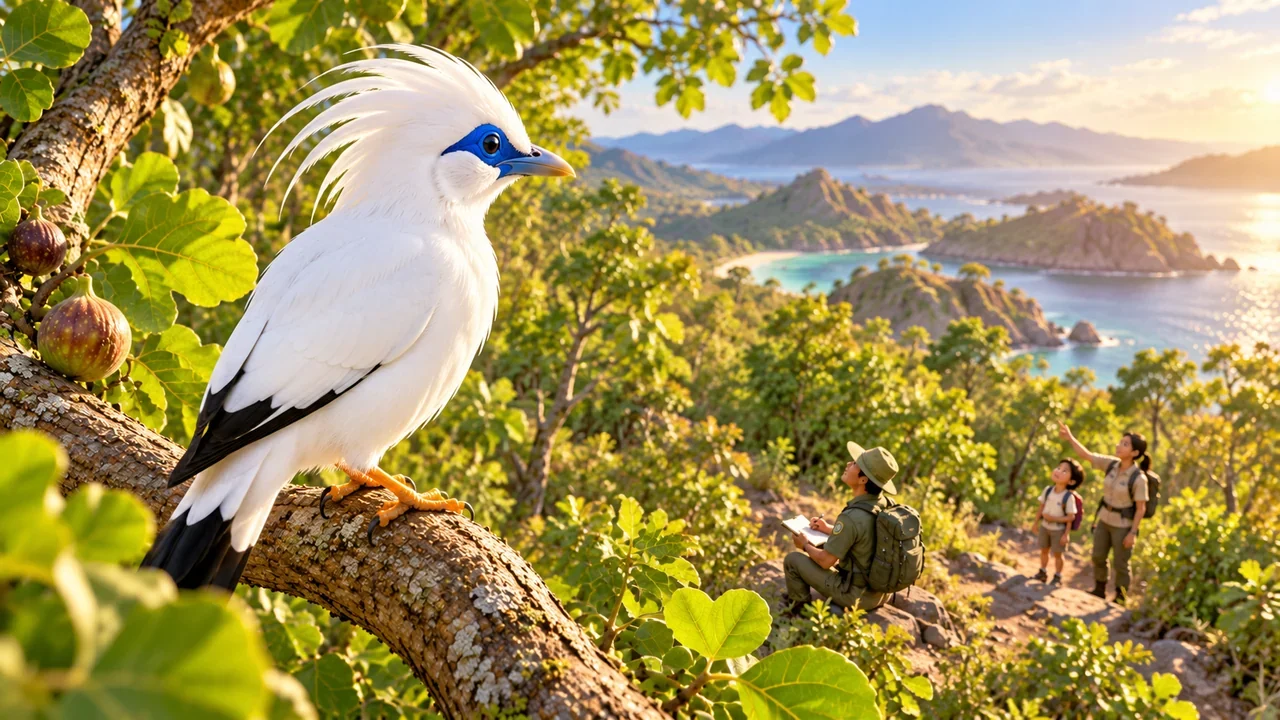
Down below, area officers noted birds seen from a safe distance. They didn't go after Jali. “Small notes help us learn,” the guide said to the children. Jali was busy observing a butterfly. Observations are carried out without being intrusive.
Friendly warning
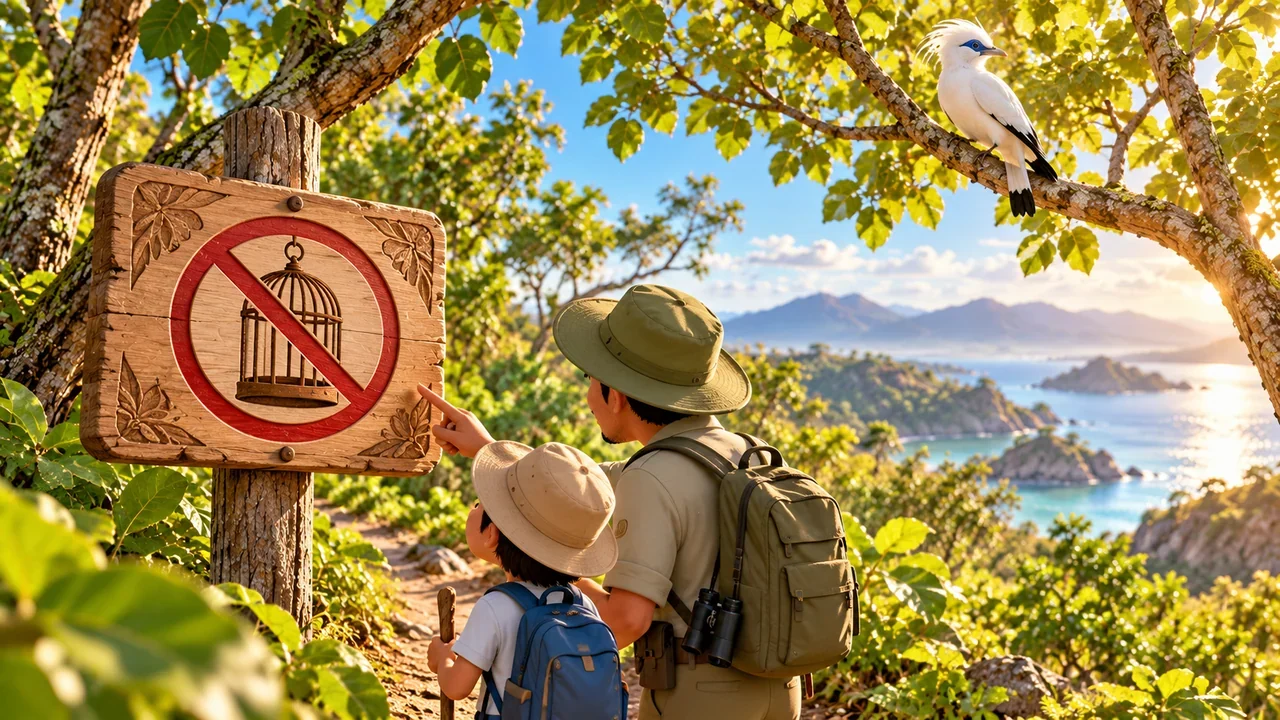
Near the trail, there is a board reminding visitors not to catch or buy wild birds. The Bali starling is protected and threatened by capture. The boy read slowly, then put away his binoculars. Buying wild animals is detrimental.
The fruit ripens again
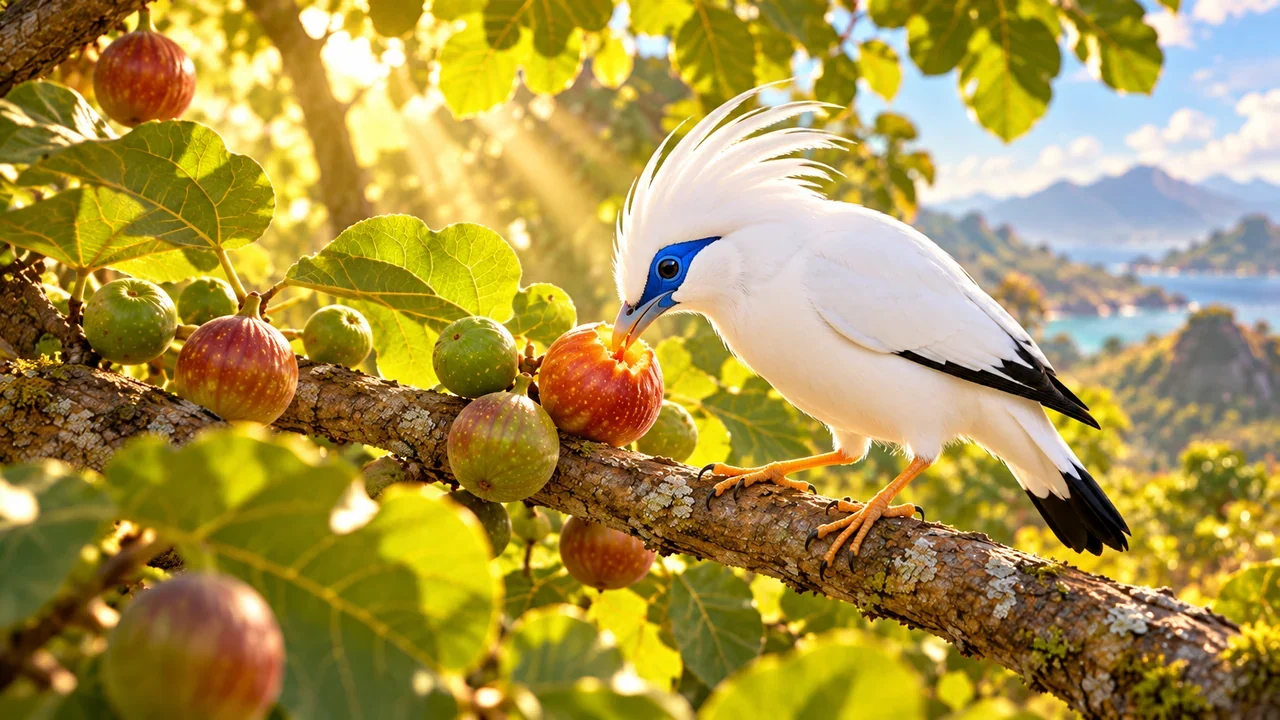
Several days passed. The fruit on the other trees was starting to ripen. Jali found it while looking for food as usual. He pecked at the fruit while nodding in satisfaction. "Patience sometimes tastes sweet!" The fruit was enough for him.
Young tree
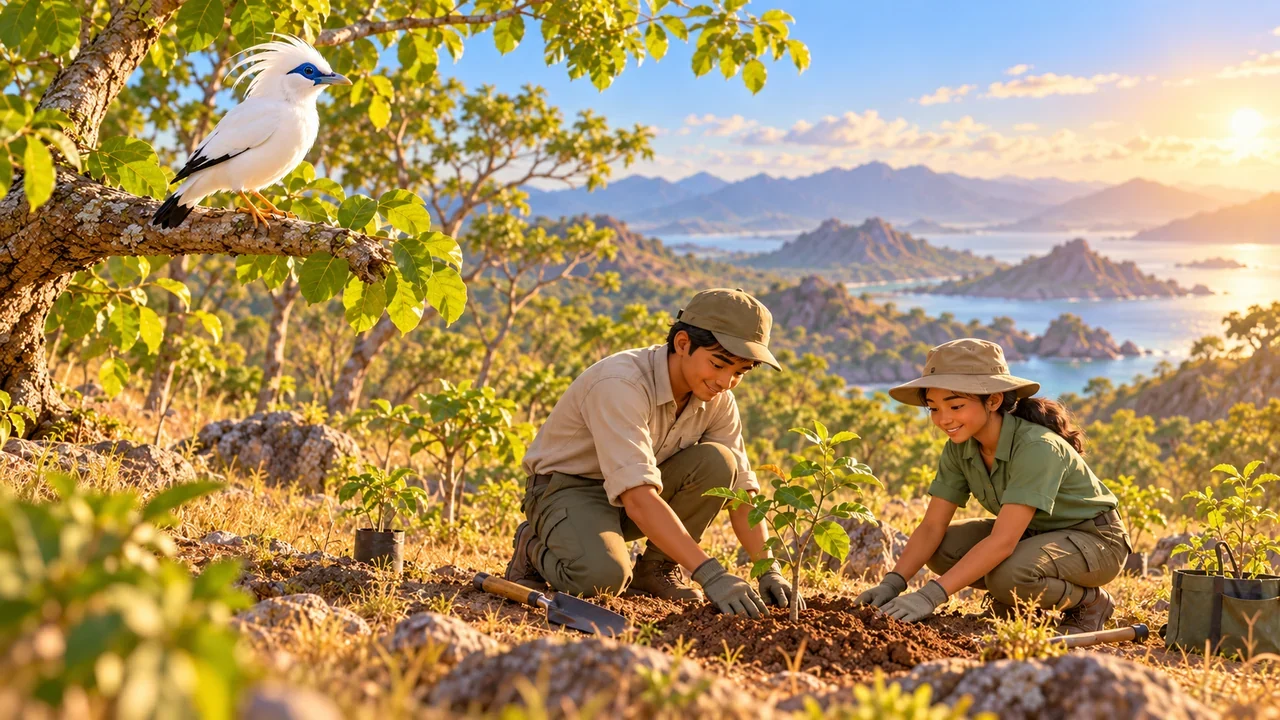
In the recovery area, officers and residents care for local tree seedlings. Young trees do not immediately become a place to eat or nest, but in the future they can add shade and living space. Jali watched from a distant branch. Treatment takes a long time.
The forest remains calm
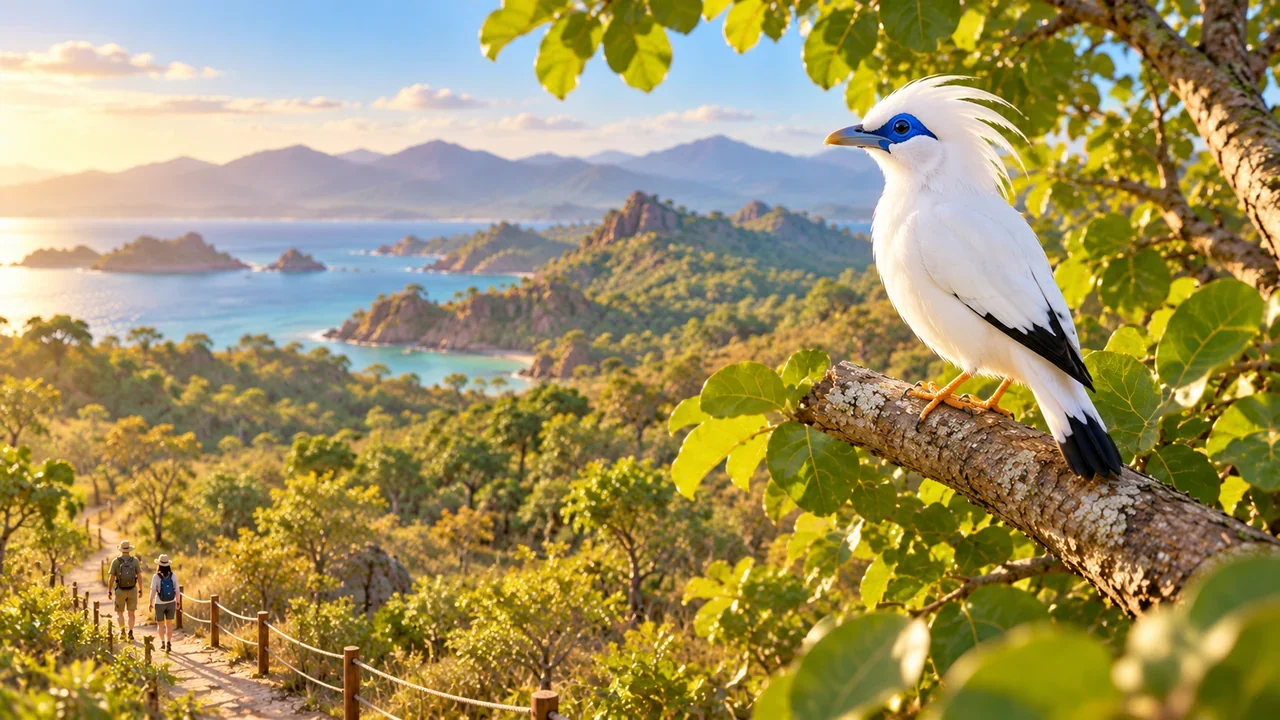
Visitors returned to walking orderly on the route. No one called or chased Jali. He rested on a high branch. "This is nice, everyone has space," he thought, straightening his topknot. Visitors keep their distance.
Twilight sound

Dusk colored the sky golden. Jali made a sound from a branch, then his friend answered from another tree. They don't need to be close to each other to hear each other. The forest feels like a busy but peaceful home. Night approaches.
A house that is guarded together

Jali returned to his sleeping branch. Bali starlings only live naturally in Bali and need forests as a place to find food and nest. We can help by protecting forests and allowing wild birds to remain free. Protect animals without keeping them.