Dara the Dugong and the Seagrass Field
Follow an adult dugong named Dara as he searches for seagrass, meets small sea dwellers, and rises to the surface to breathe.
Ages 6–10 years · 8 min · 20 scenes
Morning at calm sea

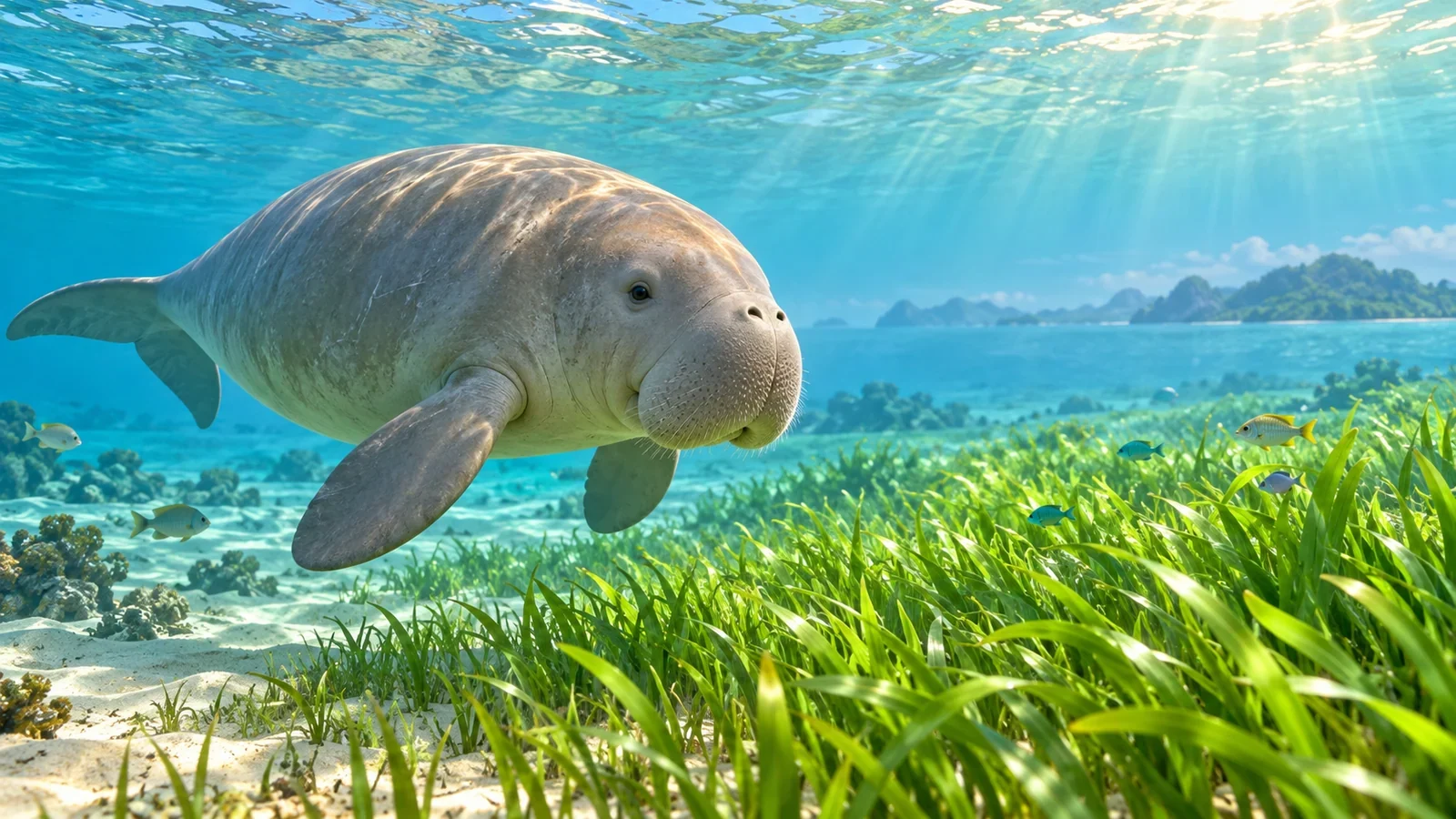
Morning comes in a calm bay. Dara, an adult dugong, swims slowly near the shore. The body is large and gray. The muzzle is rounded and facing downwards. In front of him, a stretch of seagrass swayed gently. “Good morning, seaweed!” Dara thought. But seagrass is not seaweed. We'll find out later.
Dara rose to take a breath

Dara rose to the surface. He opened his nostrils briefly to take a breath. Then he went down again. Dugongs are marine mammals, not fish. Mammals breathe air. "Inhale, then dive again," Dara reminded herself. Plop! Small bubbles followed him.
Pedaling fins
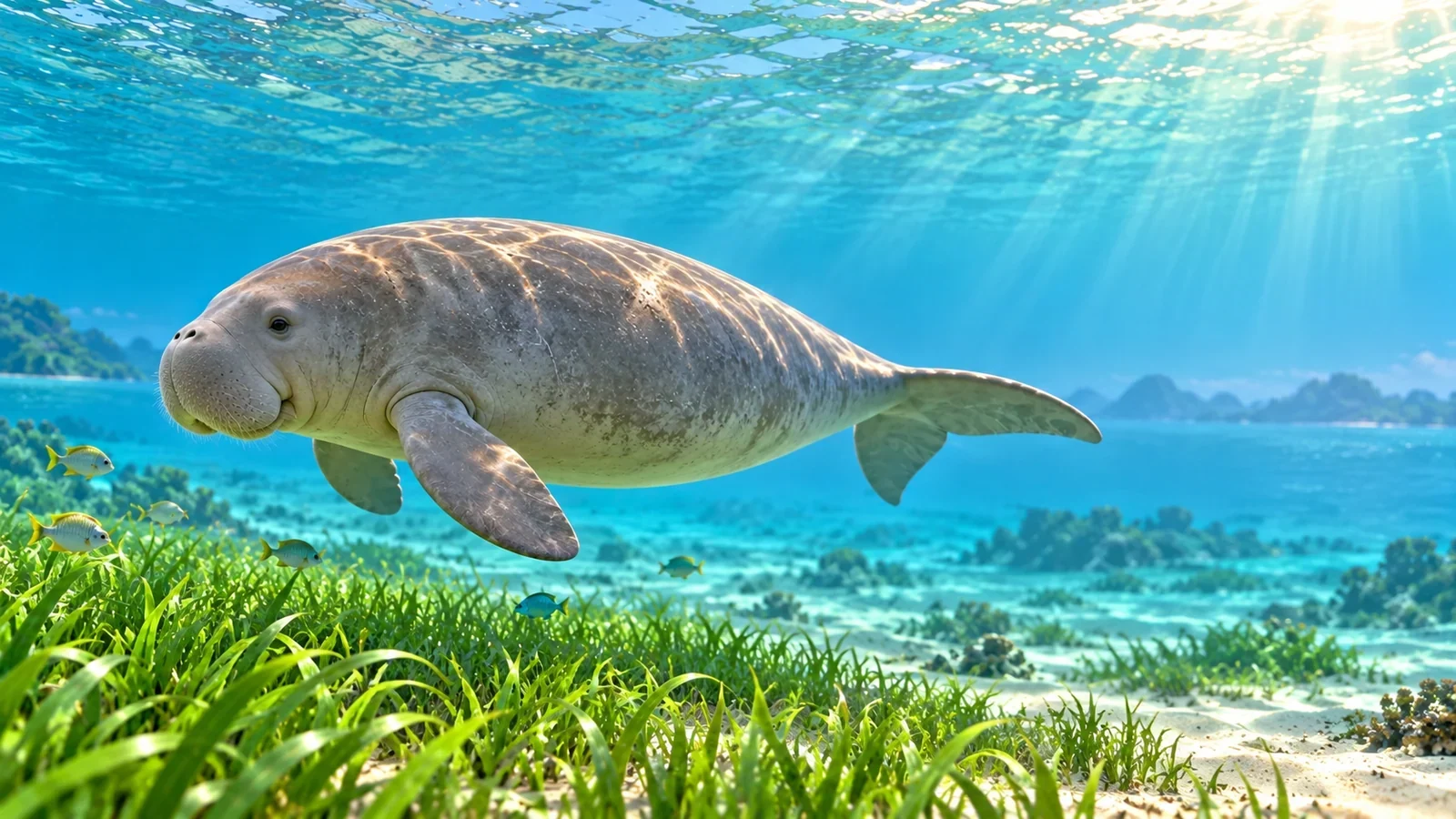
Dara paddles with its two front flippers. Its flat tail moves up and down. He swam slowly towards the shallow bottom. There are many edible sea plants there. There's nothing to chase. “A relaxing swim is just right,” he thought. He glanced at the seagrass growing on the sand.
Seagrass is not seaweed
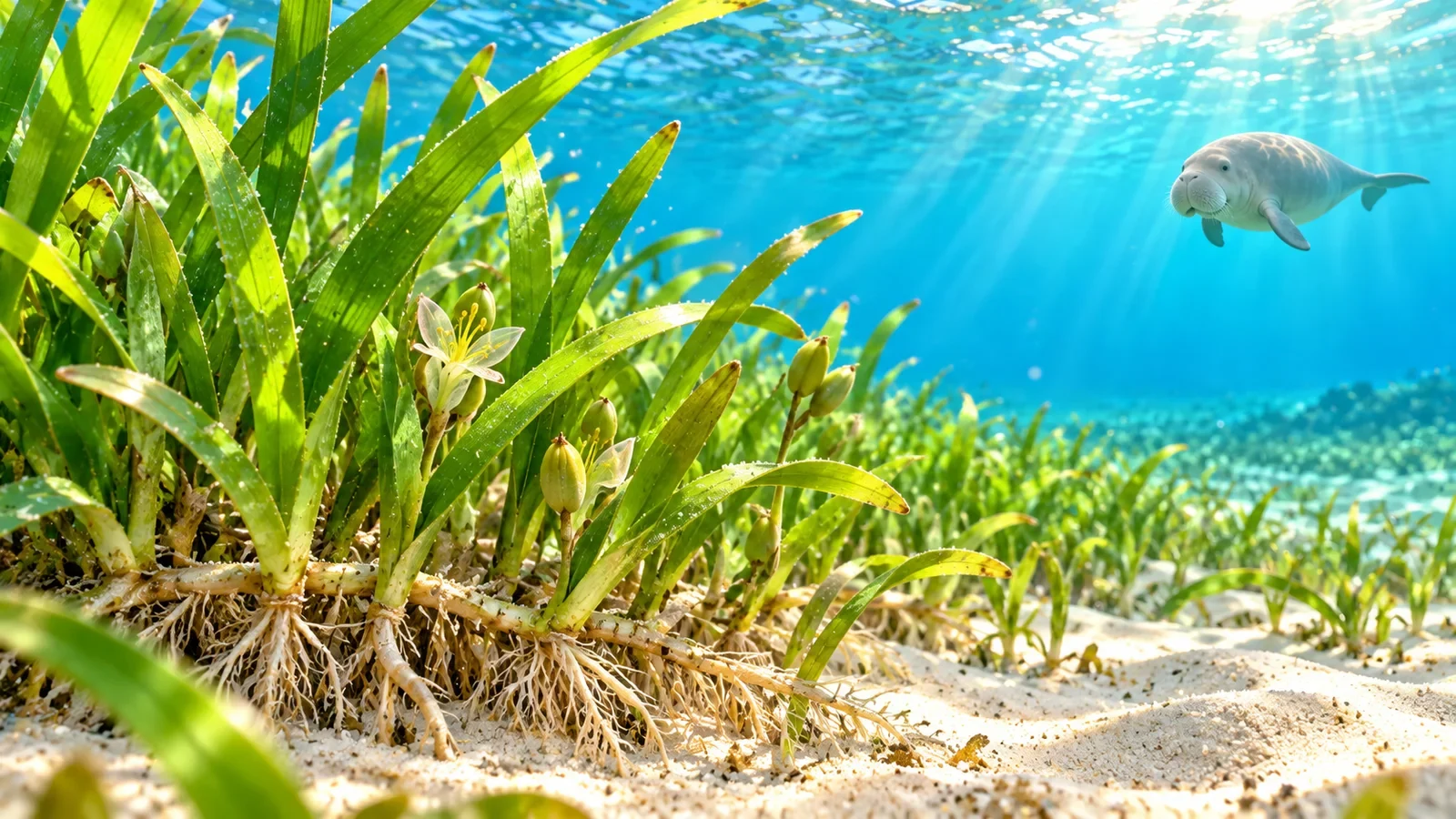
Seagrass looks like grass, but it grows in the sea. Seagrass is a flowering plant. The roots are embedded in sand or mud. The leaves move with the current. Dara knows this place provides food. He looks for parts with fresh leaves. “Green leaves, okay breakfast,” he thought.
Small fish hide
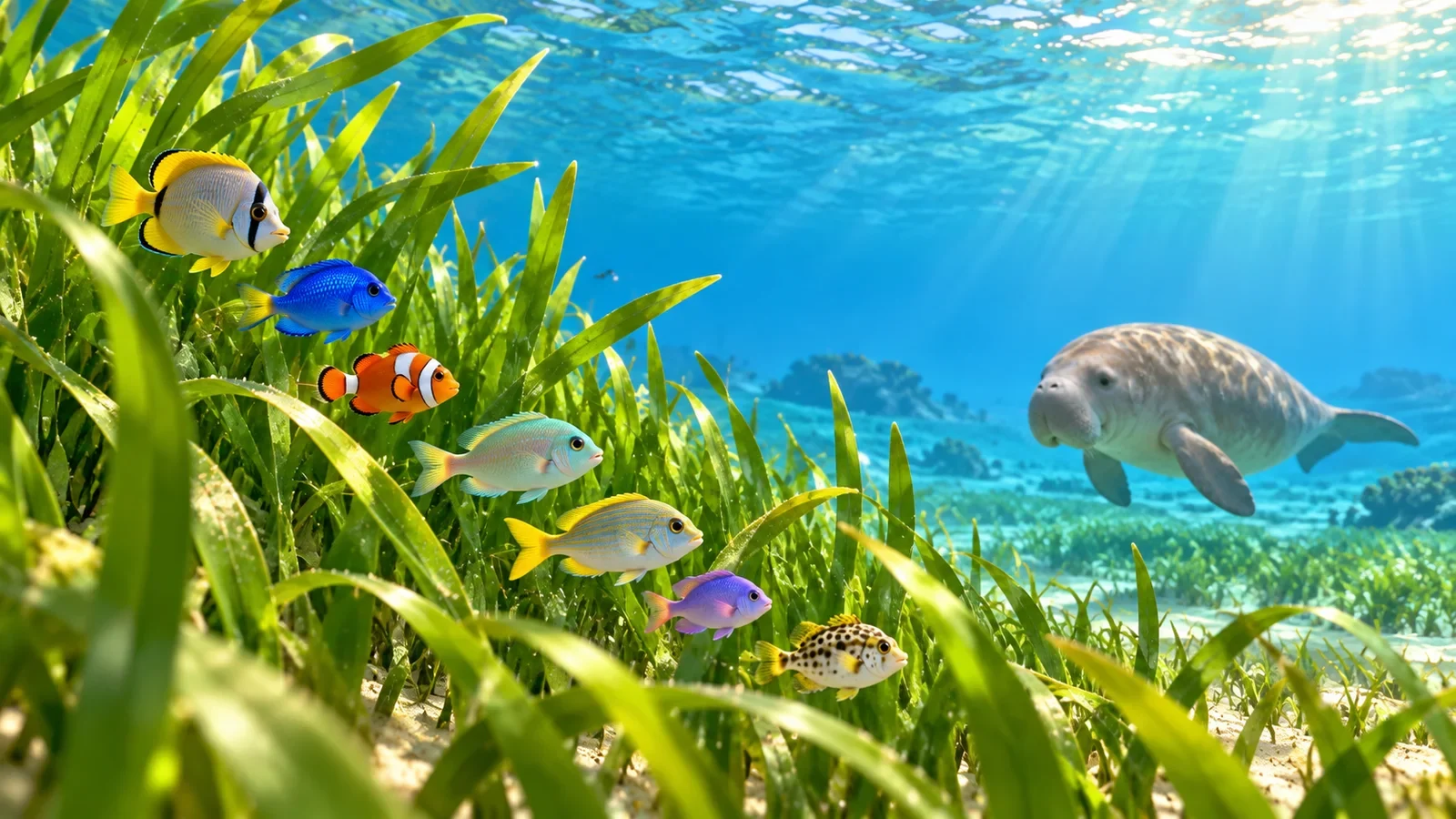
Among the seagrass leaves, small fish hide. They dart when the current changes, then come back again. Seagrass beds provide many animals with shelter. Dara swims without stirring up the water too much. He didn't want to startle his little neighbors. One fish was spinning fast, like it was practicing dancing.
Seagrass leaves for breakfast
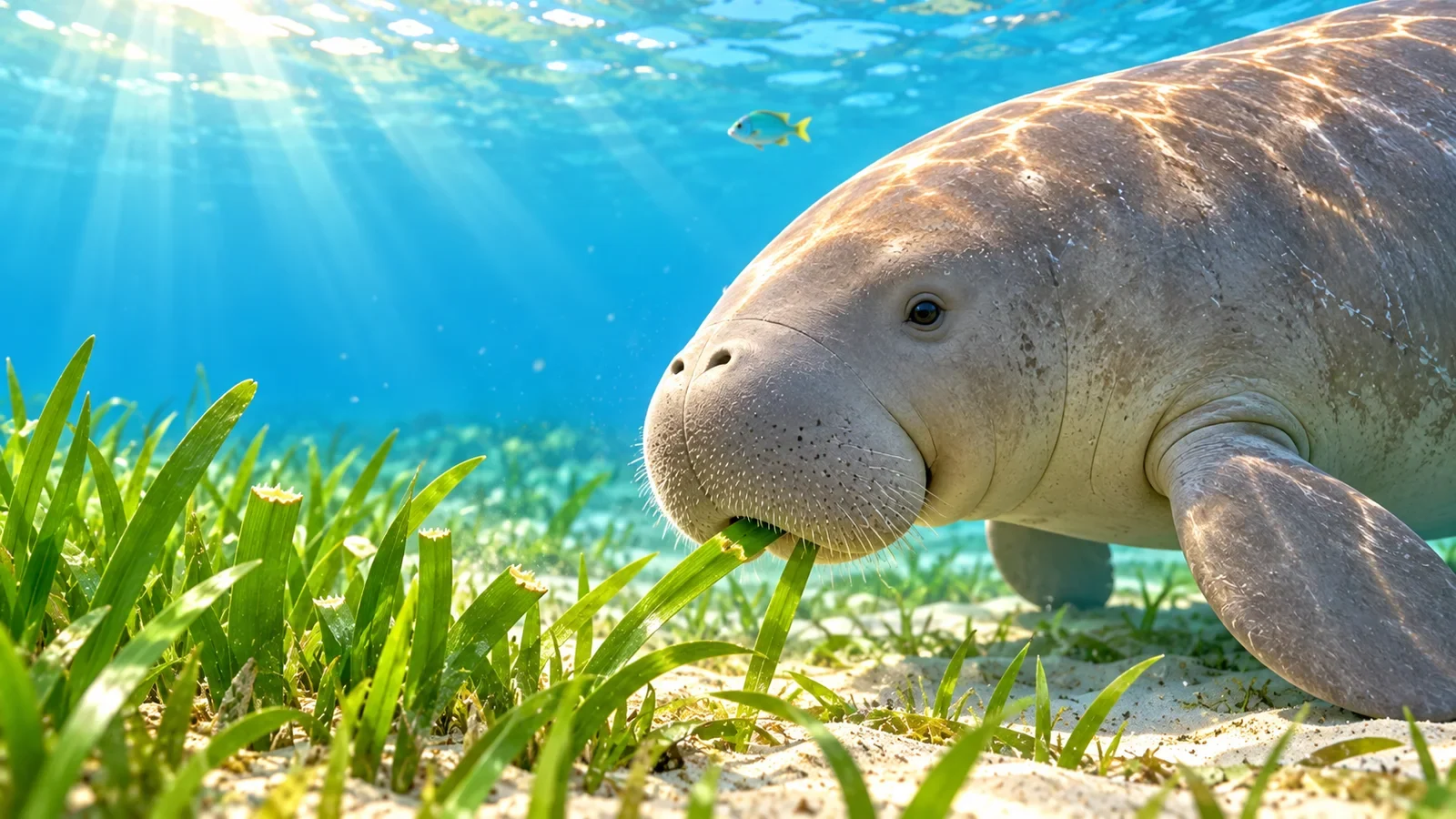
Dara looked down and ate seagrass. It bites the leaves with its strong snout. Chew, chew. That's his favorite breakfast. Dugongs are plant eaters. It eats seagrass, not fish. A tiny fish swam near its tail. Dara was still busy chewing. "My chewing is slower than the current," he thought.
Footprints in the sand
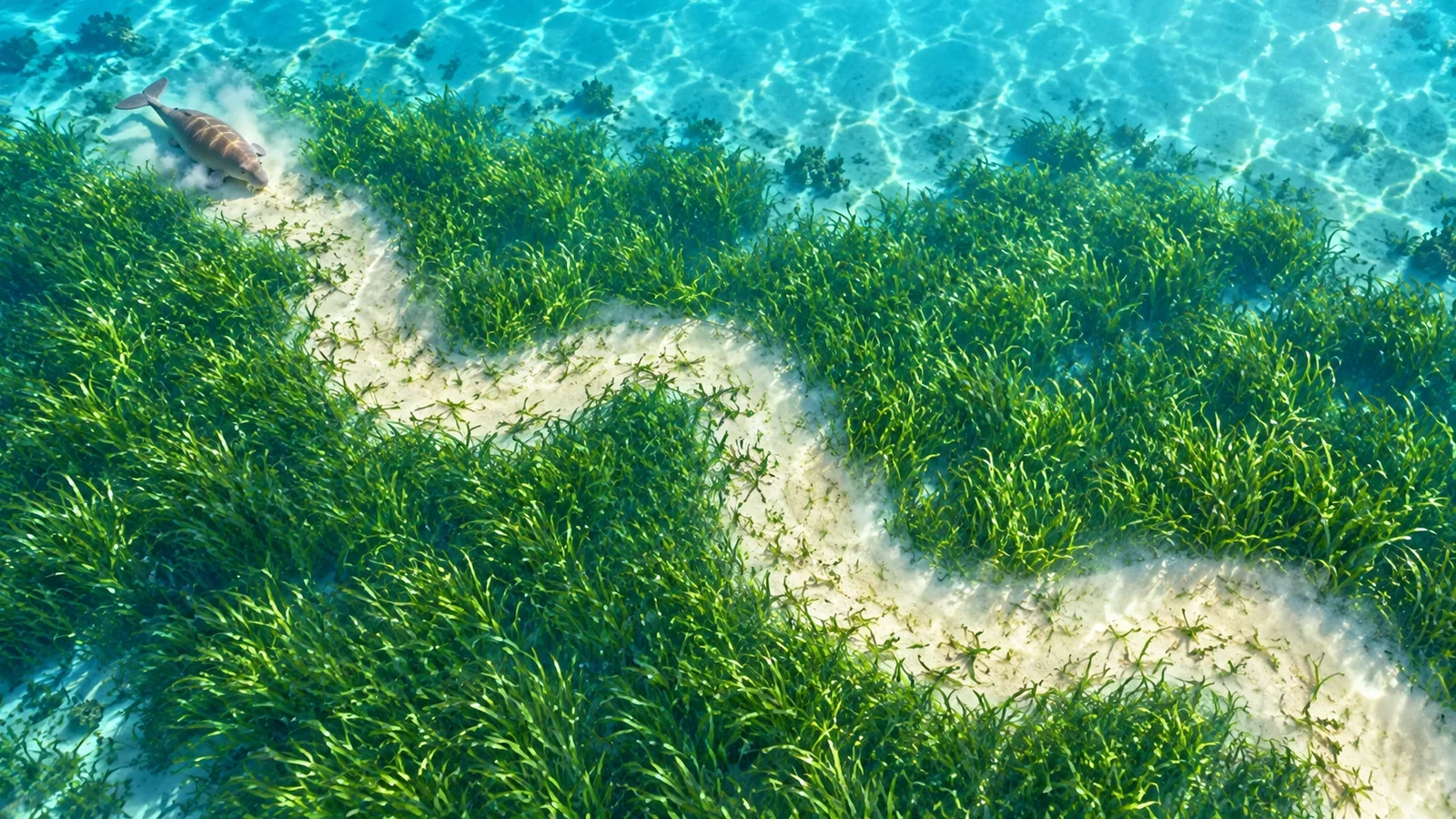
When eating, Dara leaves small trails between seagrass leaves. Some leaves appear short. The sand is slightly raised. The traces are like the lines in the picture. Dara stopped for a moment, then swam to another clump. “My road is winding, like noodles!” he thought. On the seabed, feeding tracks can help researchers know where dugongs search for food.
Time to breathe again

After looking for food, Dara climbed again to breathe. His nose appeared briefly. He sucked in air, then dived back in. He couldn't stay underwater forever. “One breath first,” he thought. On the surface, sunlight sparkled like sprinkles of silver. Dara covered her nose as she started diving.
Clouds over the sea

From underwater, Dara saw the light change as the clouds passed by. The bubbles rise to the top. It followed a safe path, then appeared again. The sea provides space for swimming, but Dara still needs to be careful. He did not approach the boat which sounded far away. “I choose a quiet bay,” he thought.
Soft sand in the bay

Dara swam through the soft sand. The water in this bay is not too deep. He saw several clumps of seagrass in the sand. He wasn't in a hurry. If he has eaten one part, he can look for another part. The sea has many corners. "Explore while relaxing," thought Dara. Its flat tail swung slowly.
Fresh seagrass out front

In front, seagrass leaves look fresh. Dara moved closer and started eating again. Seagrass needs sunlight to grow. Therefore, clean water helps light reach the leaves. "Green leaves, happy stomach," thought Dara. It ate a few pieces, then raised its head to look around.
Small crab house
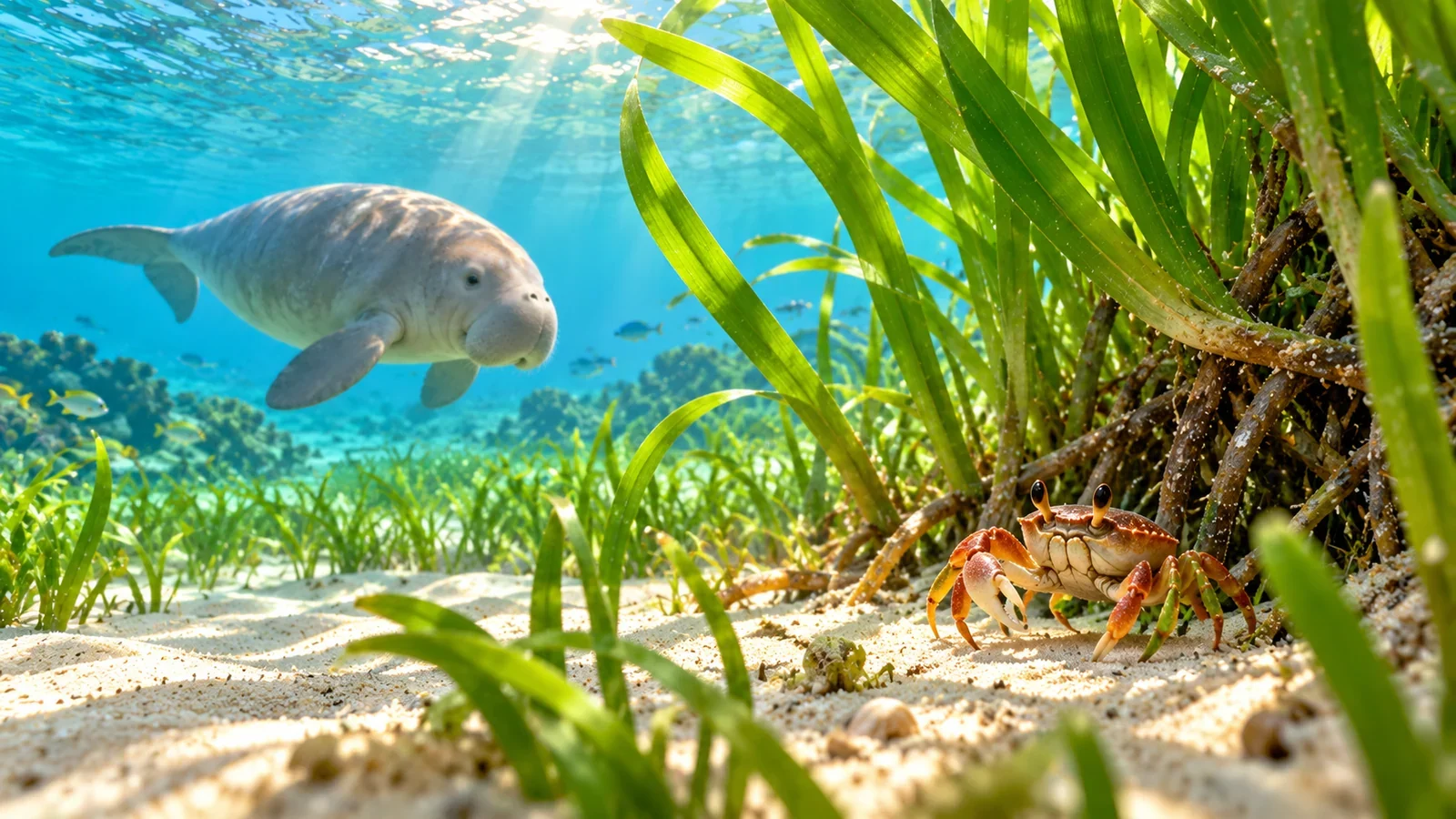
A crab comes out from behind the leaves. He walked sideways. Right, left, right, left! Dara watched him while swimming slowly. Seagrass beds are not just places where dugongs eat. Many small animals use leaves and roots to hide. The crab entered a gap in the sand. From behind the seagrass came the short squeak of another dugong. Dara was silent for a moment, then replied softly. The crab stays busy walking sideways.
The current carries the leaves
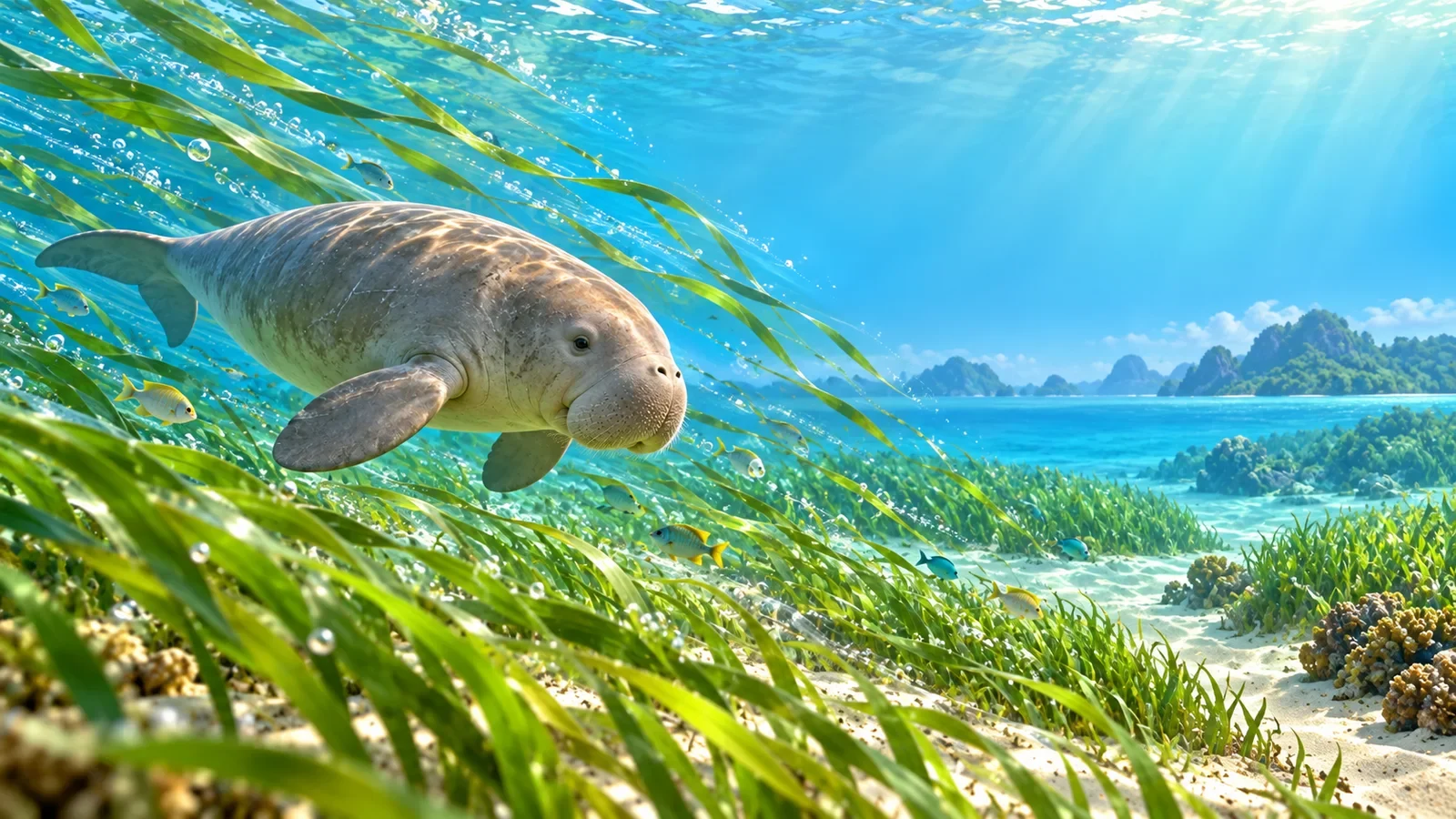
Currents carry seagrass leaves in one direction. Dara swam against it for a moment, then turned. It maintains energy so you don't get tired quickly. Around the seagrass, small fish are still looking for a safe place. "The flow is like a one-way street," thought Dara. He chose a quieter path behind a thicket of seagrass.
The boat is far away

From afar, Dara saw the shadow of a boat on the surface. He didn't come closer. The boat also does not lead to seagrass beds. Dara swam to a quieter place. Ships that drive too close can harm marine animals. A safe distance allows Dara to look for food without being disturbed. "I'll just be here," he thought.
There is a lot of life in seagrass
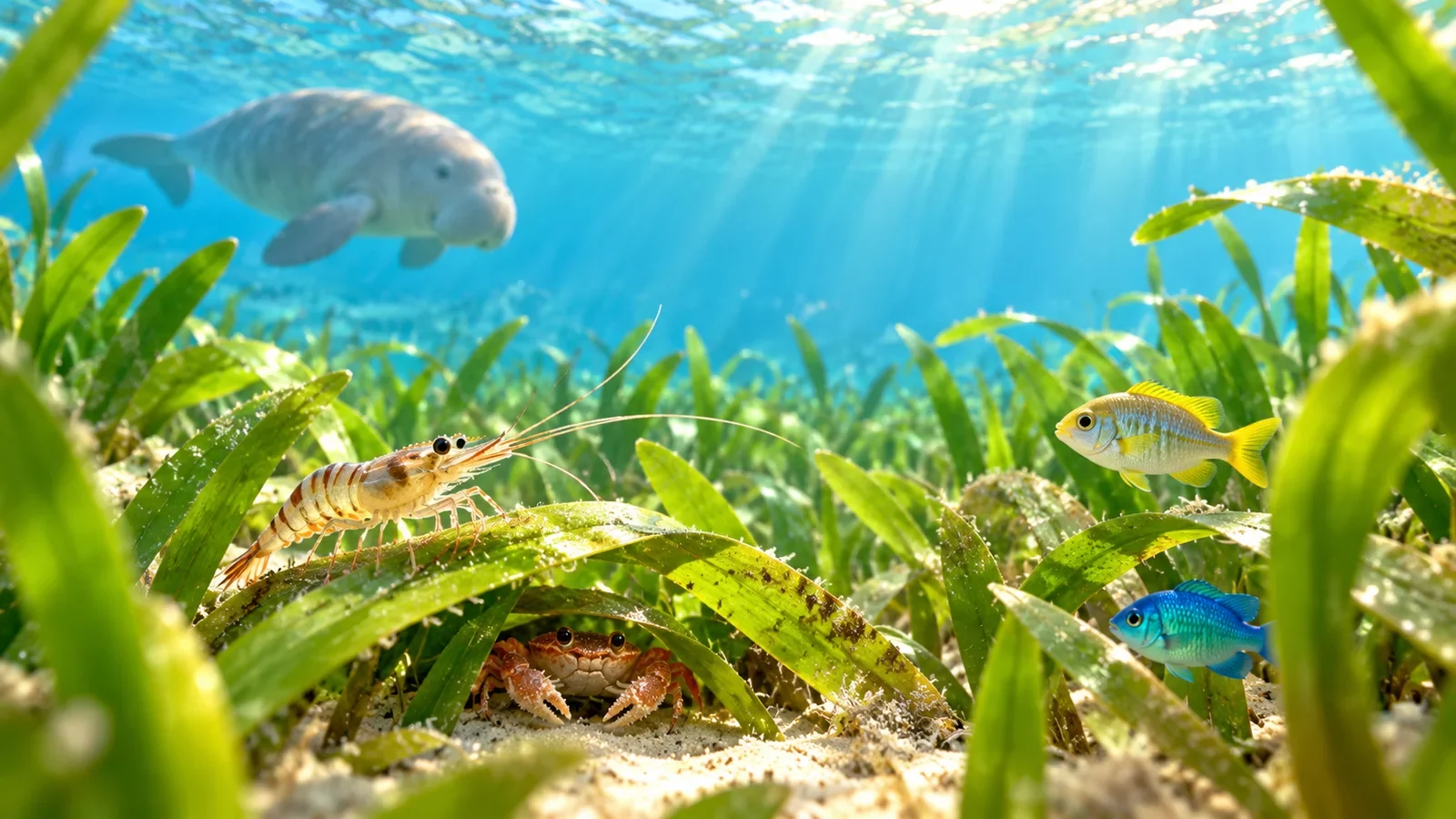
Dara saw small fish, shrimp and snails among the leaves. Seagrass beds are home to many animals. The leaves provide shelter. Its roots help hold sand on the seabed. Dara swam calmly. It is one part of a busy place, although it often looks quiet from above.
Clear water

Sunlight penetrates the clear water. Seagrass leaves are clearly visible. Dara knows a place like this is good for looking for food. If the water is full of trash or mud, it can be difficult for plants to get light. He doesn't know the words "protecting the environment", but he likes clean seas. There, he can eat and swim comfortably.
Dara pedaled home
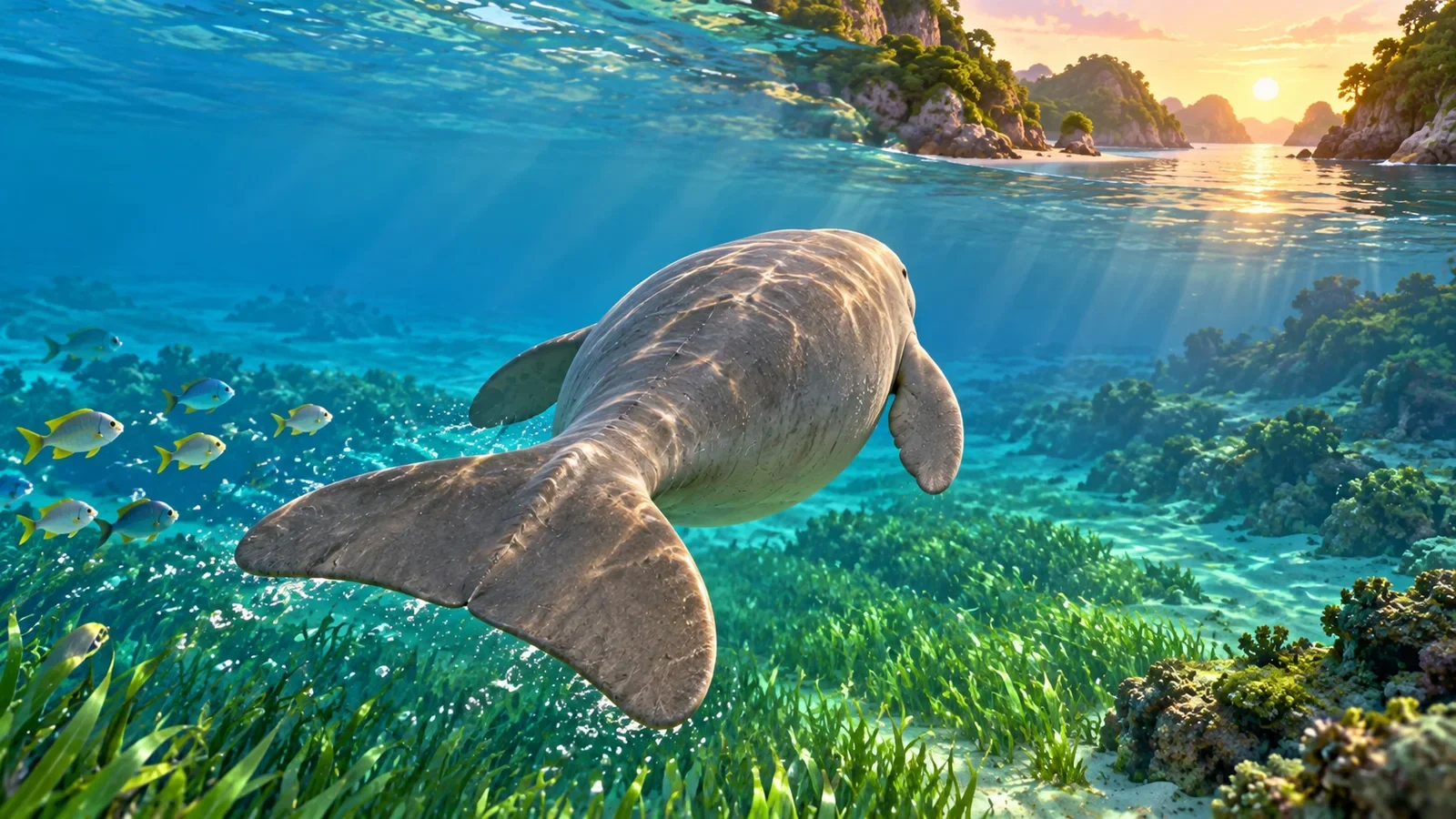
Time goes by. Dara paddled towards a shadier cove. He moved slowly and kept his distance from the beach. Its flat tail helps propel its body. In the distance, small fish circled with the current. Dara stopped for a moment, then rose to the surface to take a breath. "Just a moment's rest," he thought.
Take a twilight breath

Dusk paints the sea surface. Dara emerged, opened the nostrils above her snout, then took a breath. Dugongs breathe air, so they need to emerge from the water. From behind the stream came the squeak of another dugong. Dara replied with a soft sound, then dived back in. Plop! One small bubble is left behind.
Rest in seagrass
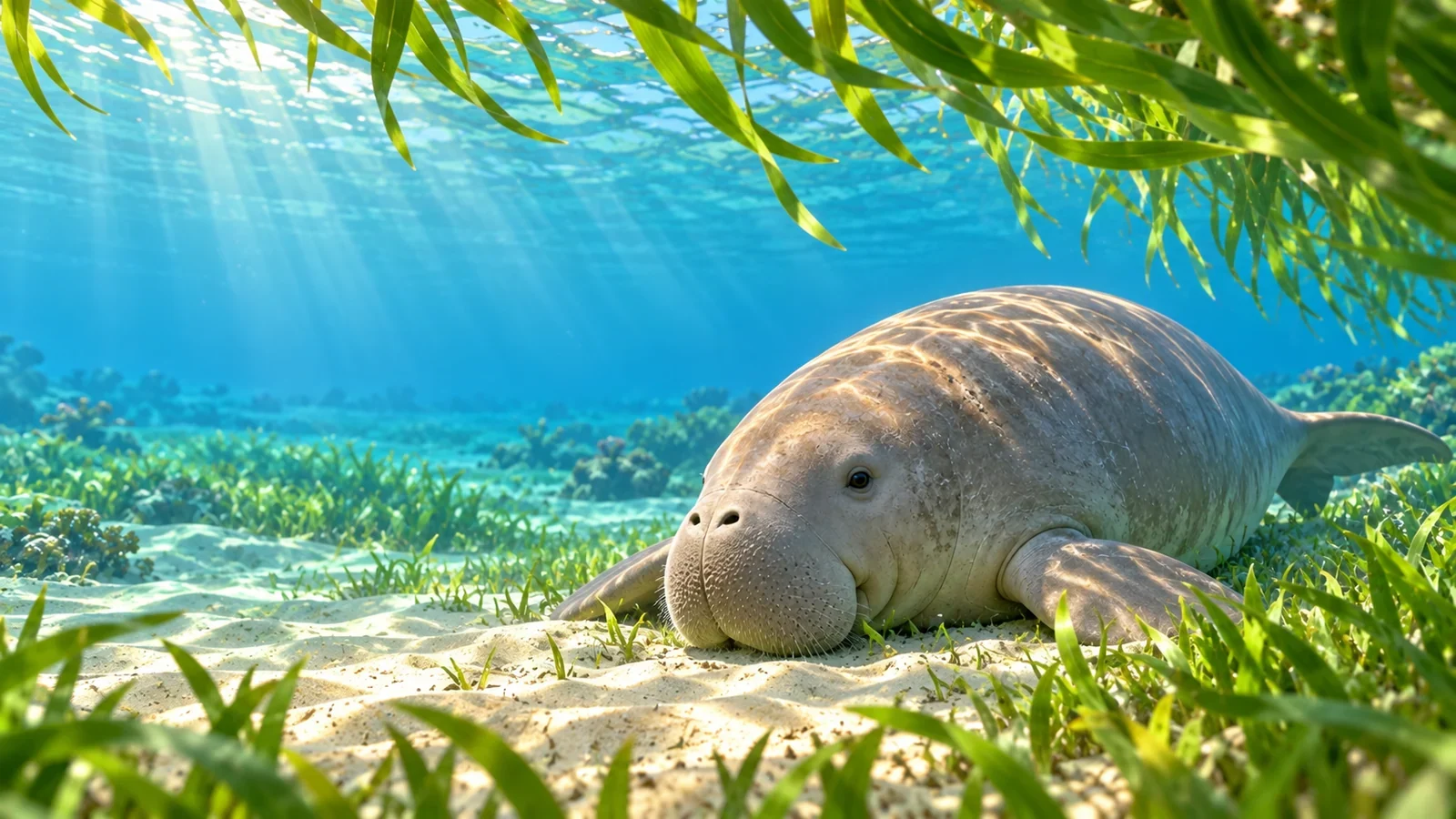
Dara rests near the seabed. Seagrass leaves swayed gently around him. He had eaten and climbed several times to breathe. Small fish passed by without startling him. Dara closed her eyes for a moment. The sea felt calm. "Tomorrow I'll swim again," he thought. Then its tail moved slowly, as if to say, "Now go to sleep."
The sea needs to be protected

The next morning, Dara swam in the seagrass meadow. It looks for food and returns to the surface to breathe. This sea is also home to fish, shrimp and crabs. Children can help by keeping beaches clean and not chasing wildlife. Dara pedaled slowly. “See you, sea house,” he thought.